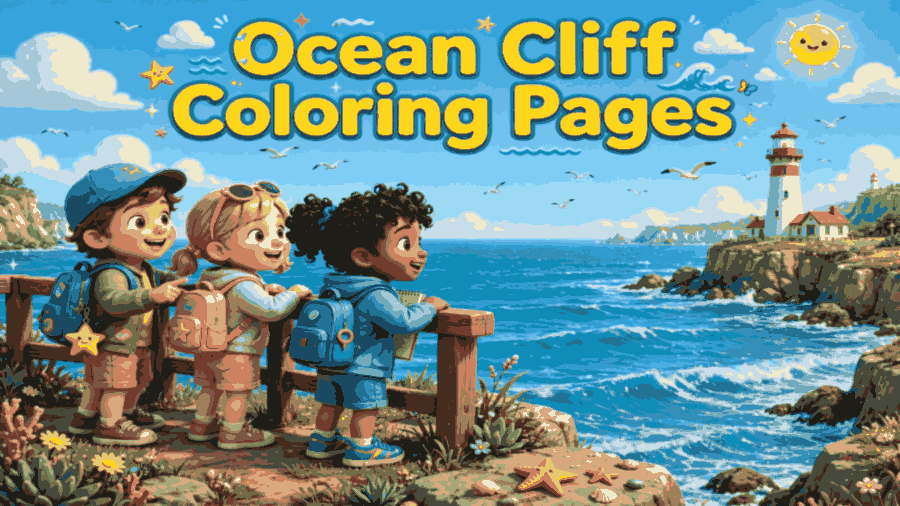
Ocean Cliff Coloring Pages introduce children to dramatic coastal landscapes, where tall rocky cliffs meet the open sea. These printable-themed activities invite young artists to explore natural scenery, experiment with colors, and create their own beautiful seaside views. From rugged rock formations to gentle ocean waves, a coastal cliff setting offers plenty of inspiration for an enjoyable coloring session at home or in the classroom.
Discover the Beauty of Ocean Cliffs
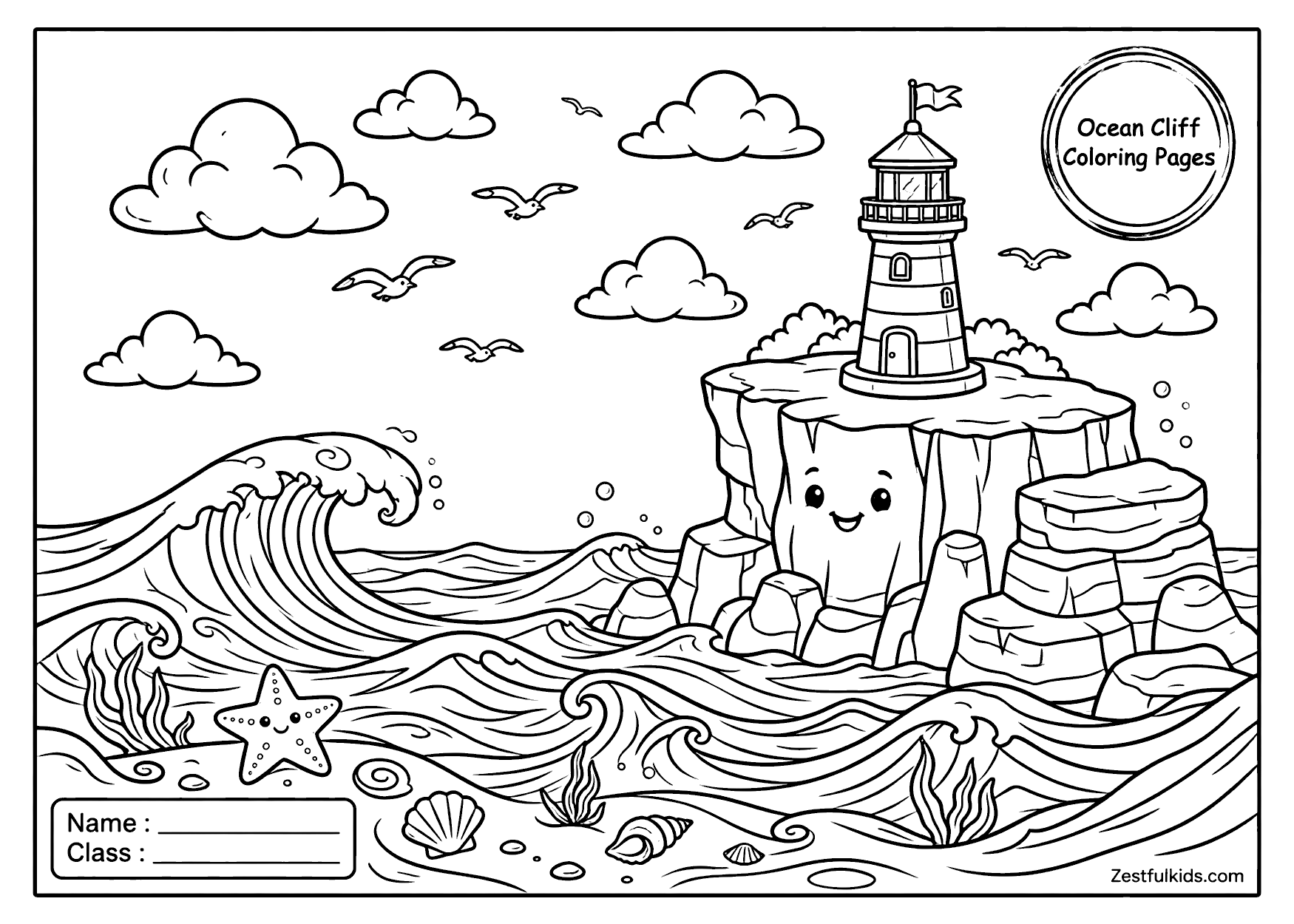
Ocean cliffs are fascinating natural formations that rise above the shoreline. Unlike flat sandy beaches, these rocky coastal areas feature steep surfaces, uneven edges, and interesting shapes created by wind, waves, and weather over long periods. Their appearance can change depending on the surrounding landscape, making them an interesting subject for children’s artwork.
Through Ocean Cliff Coloring Pages, children can become familiar with different elements of coastal scenery. They can imagine the height of the cliffs, the movement of the water below, and the wide horizon stretching into the distance. Each part of the landscape offers an opportunity to make individual coloring choices.
Rock formations can be represented with shades of gray, brown, or warm beige. Meanwhile, the ocean can take on different shades of blue, turquoise, or even green. Children who enjoy imaginative artwork can also create unusual coastal scenes with colorful skies and playful combinations that reflect their own ideas.
What Makes This Coloring Theme Interesting for Children?
A coastal cliff is more than a large rock beside the water. It brings together several natural elements that can make a landscape illustration visually interesting. The contrast between solid rock formations and flowing ocean waves gives children different shapes and textures to explore.
Here are some features that make this theme enjoyable:
- Rocky formations: Large cliff surfaces provide broad areas for coloring, while cracks and uneven edges offer smaller details.
- Ocean waves: Curved lines and overlapping wave shapes create opportunities to experiment with different blue and green tones.
- Coastal horizons: The meeting point between the ocean and sky can inspire children to create peaceful sunsets, bright mornings, or cloudy afternoons.
- Natural surroundings: Depending on the illustration, children can imagine adding grass, small coastal plants, birds, or distant rocks.
These elements also allow children to approach the activity at their own pace. Some may prefer filling large areas with simple colors, while others may enjoy spending more time on the smaller details.
Creative Color Ideas for a Coastal Landscape
One enjoyable part of coloring ocean scenery is deciding how the different natural elements should look. Although real coastal landscapes often have earthy rock colors and blue water, there is no single color combination that children must follow.
For the cliff itself, light gray can create the appearance of weathered stone, while darker gray adds depth to shaded areas. Brown and beige are also suitable choices for rocky surfaces. Children can combine several similar shades to make the cliff look less flat without needing complicated coloring techniques.
The ocean offers even more possibilities. Deep blue can represent water farther from the shoreline, while lighter blue and turquoise can suggest shallow water or sunlight reflecting on the surface. Small white spaces can be left uncolored to represent foam around the waves.
For the sky, light blue works well for a clear day. Orange, pink, and purple can transform the scene into a sunset landscape. Children may also use soft gray clouds to create a different atmosphere.
Colored pencils are useful when adding gentle shading to rocks and distant scenery. Crayons work well for filling larger spaces, while washable markers can create brighter areas of color. It is helpful to choose tools that match the paper being used and avoid pressing too hard when coloring detailed sections.
Turn the Printable into a Seaside Art Activity
Ocean Cliff Coloring Pages can become the starting point for a simple creative activity rather than just an individual coloring task. Parents and teachers can invite children to imagine that they are visiting a rocky coastline and describe what they might see, hear, or discover there.
For example, children can think about the sound of waves hitting the rocks, the movement of seabirds above the water, and the feeling of a cool ocean breeze. These imaginative details can make the coloring experience more engaging without requiring additional materials.
Another idea is to create a coastal weather challenge. Ask children to imagine the same ocean cliff during different weather conditions. One version might show a bright sunny morning, while another could feature a cloudy afternoon or a colorful sunset. They can use their chosen color combinations to express the atmosphere of each imagined setting.
Families who enjoy exploring different kinds of vehicles and outdoor scenery can also discover <a href=”https://zestfulkids.com/biplane-coloring-pages/“>biplane illustrations</a> for another creative activity. This provides a different subject while keeping the experience centered on drawing, coloring, and imagination.
Simple Ways to Make the Landscape More Detailed
Children who want to spend additional time on their artwork can experiment with a few simple coloring techniques. These ideas do not require advanced skills and can be adjusted to suit individual preferences.
Try layering similar colors. Instead of using only one shade for the cliff, begin with a light base color and add darker tones along selected edges. This can give the rocky surface a more varied appearance.
Create movement in the water. Use curved coloring strokes that follow the direction of the waves. Different shades of blue placed next to one another can make the ocean appear more dynamic.
Experiment with distance. If the illustration includes distant scenery, lighter colors can help create a sense of space. Stronger shades can be reserved for the main cliff and nearby water.
Add personal details. Children can imagine small additions such as flying birds, distant boats, coastal flowers, or sunlight reflecting across the sea. These details can be drawn separately if there is enough open space in the illustration.
The goal is not to make every picture look realistic. Instead, children can explore different approaches and develop a coloring style that feels enjoyable to them.
Choosing the Right Coloring Activity
When selecting a coastal landscape illustration, consider the amount of detail and the child’s preferred coloring style. A design with broad spaces may be more comfortable for someone who enjoys simple coloring, while a landscape with smaller rock patterns and wave details may appeal to children who like taking their time.
It is also useful to consider how long the activity should last. A simpler illustration can be suitable for a short creative break, whereas a more detailed landscape may provide a longer activity for a relaxed afternoon.
Parents and teachers can let children choose their preferred coloring tools and decide which parts of the scenery they want to color first. Giving them room to make their own choices keeps the activity flexible and enjoyable.
Children who love magical creatures and imaginative subjects may also enjoy exploring <a href=”https://zestfulkids.com/baby-phoenix-coloring-pages/“>baby phoenix illustrations</a>. The fantasy theme offers a different artistic experience from the natural scenery of ocean cliffs.
Printing and Enjoying Your Coloring Pages
Before printing a coloring activity, check the available print settings and preview the page to make sure the illustration fits properly. Adjust the scaling and margins when necessary so that important parts of the artwork are not cut off.
Choose paper that works comfortably with the coloring materials available at home or school. Standard printer paper can be suitable for crayons and colored pencils, while thicker paper may be preferable when children want to use markers.
Once the page is ready, provide a comfortable workspace with enough room for coloring materials. Children can begin with the large areas of the landscape before moving on to smaller details. After finishing, their artwork can be displayed on a bedroom wall, classroom board, or family art corner.
Ocean Cliff Coloring Pages offer a wonderful way to bring the atmosphere of the coastline into a child’s creative routine. With rocky landscapes, ocean colors, and plenty of room for personal interpretation, this theme encourages children to enjoy the process of creating their own seaside artwork.
