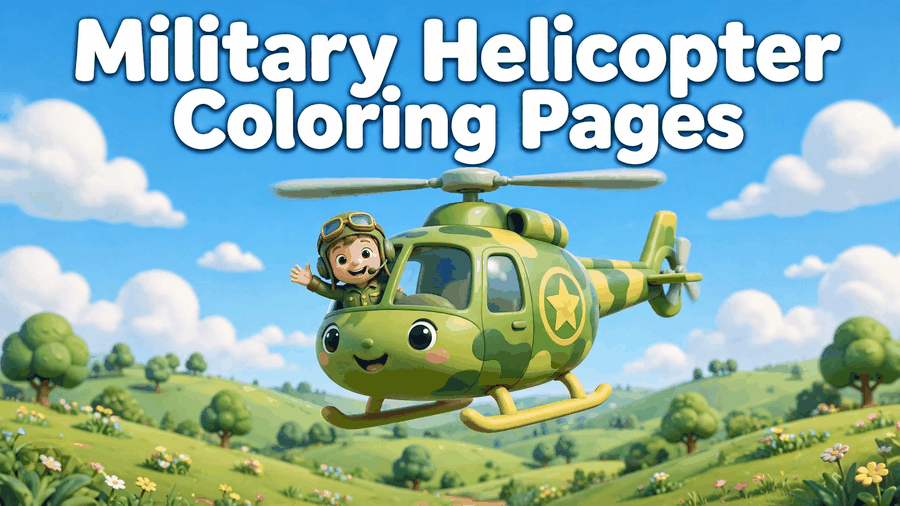
Military Helicopter Coloring Pages bring the fascinating world of military aviation to children’s creative activities. With aircraft-inspired shapes, spinning rotor blades, and imaginative flying scenes, these printables offer an engaging way to explore helicopters through drawing and color.
A military helicopter has a distinctive appearance that makes it an interesting subject for young artists. Unlike ordinary passenger aircraft, these helicopters are commonly designed for specialized operations, including transport, rescue, observation, and emergency support. Their powerful rotor systems, compact bodies, and landing skids or wheels provide plenty of recognizable details for children to explore while coloring.
Discover What Makes Military Helicopters Unique
Military helicopters are designed to perform different tasks in situations where ordinary airplanes may not be practical. Their ability to take off and land vertically allows them to operate in places with limited space, including mountain areas, ships, and remote locations. This flexibility makes them an important part of aviation and gives children an interesting subject to discover through illustrations.
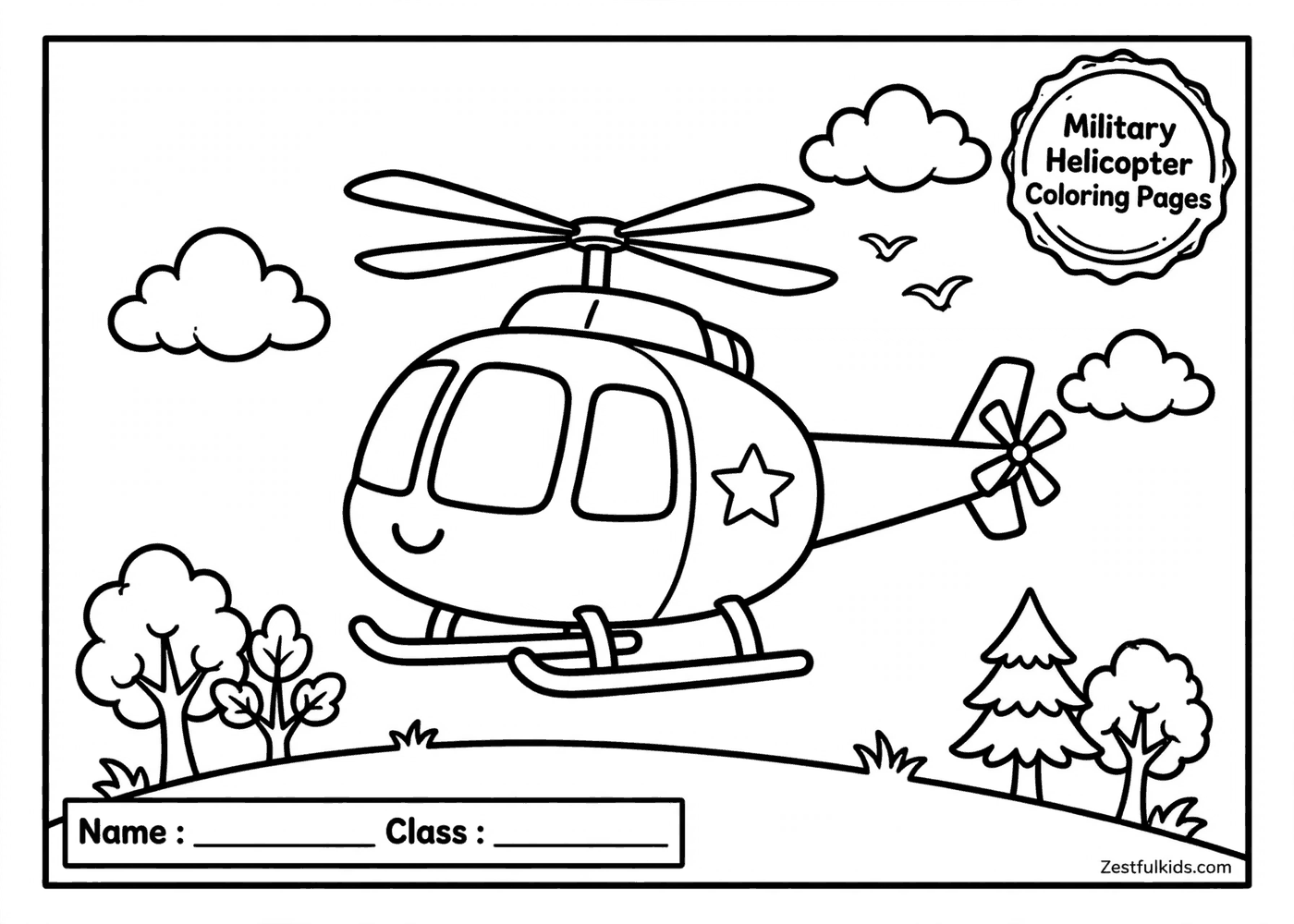
One of the most recognizable features is the large main rotor above the helicopter. These blades rotate to create the lift needed to keep the aircraft in the air. Many helicopters also have a smaller tail rotor that helps control their direction and stability. Children can pay attention to these shapes when coloring, using different shades to distinguish the rotor blades from the main body.
The overall structure can also make each illustration visually interesting. Some military helicopters have wide cabins for carrying personnel or supplies, while others have a more compact appearance. Windows, doors, landing gear, and tail sections provide additional areas for experimenting with color.
What Children Can Explore in Military Helicopter Coloring Pages
Military helicopter illustrations can introduce children to the basic appearance of aircraft without requiring complicated technical explanations. Each visible part offers an opportunity to observe shapes, patterns, and proportions.
The helicopter body is usually the largest area to color. Children might choose olive green, dark green, gray, or camouflage-inspired combinations to create a military-style appearance. These colors can be used as creative suggestions rather than strict rules, allowing every child to develop a different interpretation.
Rotor blades are another interesting feature. Their long, narrow shapes are easy to recognize and can be colored in gray, black, or another contrasting shade. Children can also experiment with different tones to make the blades stand out from the aircraft body.
Windows and cockpit details provide smaller coloring spaces. Blue, light gray, or pale green can create the appearance of glass, while darker shades can add contrast around the frames. If the illustration includes landing gear, children can use black or dark gray to distinguish these parts from the main cabin.
Creative Color Combinations for Military Aircraft
Although military helicopters are often associated with green and gray colors, children do not have to follow realistic aviation palettes. A coloring activity becomes more personal when young artists can choose their own combinations.
For a realistic-inspired design, olive green, forest green, and brown can work well together. Children can apply these shades to different sections of the helicopter to create a simple camouflage effect. Gray and black can be added to the rotor blades, landing gear, and other mechanical details.
A more imaginative approach could use blue, silver, and white. These colors can give the helicopter a futuristic appearance, especially when children imagine it flying through a bright sky. Yellow accents can also be used for selected details to make certain parts easier to notice.
The background offers another opportunity for creativity. A light blue sky with white clouds creates a peaceful flying scene, while distant mountains can introduce shades of green, brown, or gray. Children can also draw a landing area, a grassy field, or a simple airport-like setting if they want to expand the picture beyond the aircraft itself.
Turn a Helicopter Illustration into a Creative Story
Coloring does not have to stop when the helicopter is completely filled with color. Parents and teachers can encourage children to imagine a simple story about the aircraft and its purpose. This makes the activity more engaging without requiring additional materials or complicated instructions.
For example, children might imagine a rescue helicopter traveling toward a remote mountain village. They can describe the weather, the landscape, and the reason the aircraft is flying there. Another idea is to imagine a helicopter transporting important supplies to a distant location.
These imaginative situations can be developed through simple drawings around the main illustration. Children might add clouds, birds, mountains, trees, or a landing area. The additional scenery can make the finished artwork feel more complete while giving each child room to express personal ideas.
For families who enjoy seasonal creative activities, a Santa Claus coloring activity offers a completely different theme. It can be an enjoyable alternative when children want to move from aircraft and transportation subjects to festive characters and holiday scenes.
Choosing the Right Coloring Tools
The best coloring tools depend on the illustration’s level of detail and the child’s preferences. Crayons are a practical option for larger areas, such as the helicopter body and surrounding sky. Their softer application makes it easier to fill broad spaces without concentrating too much on small sections.
Colored pencils provide greater control around narrow rotor blades, cockpit windows, and other smaller details. Children can also combine different pencil shades to create subtle variations across the aircraft. For those who enjoy stronger colors, washable markers can produce a more noticeable finish, although placing a protective sheet beneath the paper is helpful when using them.
It is also useful to let children work at a comfortable pace. They can begin with the largest sections before moving toward smaller details. There is no need to finish the entire illustration in one sitting, particularly when the picture contains several individual elements.
Simple Ways to Make Coloring Time More Interesting
Parents and caregivers can make military helicopter coloring activities more interactive by introducing small observation challenges. Instead of immediately suggesting which colors to use, invite children to identify the helicopter’s main parts first. They can point out the cockpit, rotor blades, tail, and landing gear before deciding how to color each section.
Another activity is to compare different types of helicopters using books or age-appropriate educational references. Children can notice that some aircraft have different cabin shapes, rotor arrangements, and landing systems. These observations can help them understand that helicopters are designed for various purposes.
Teachers can also connect the activity with a basic transportation lesson. Explain that helicopters are aircraft capable of flying without a traditional runway and that military versions may support transport, rescue, medical assistance, or observation missions. Keeping the explanation focused on their practical roles makes the subject accessible to younger learners.
For an additional family activity, children can create a small collection of themed drawings. A helicopter picture could be followed by a festive scene inspired by a New Year family celebration. Combining different subjects gives children opportunities to explore new settings, objects, and imaginative situations.
Preparing a Military Helicopter Coloring Activity at Home
Before starting, parents and teachers can prepare a comfortable workspace with enough room for coloring materials and the printed illustration. Check the print preview before printing to ensure that the entire design fits within the selected paper settings. If the illustration contains fine details, choosing a suitable print quality can help keep the outlines clear.
Once the page is ready, allow children to decide how they want to approach the picture. Some may prefer realistic military-inspired colors, while others might create a completely imaginative aircraft. Both approaches are appropriate for a creative activity because the finished artwork reflects each child’s individual choices.
Military Helicopter Coloring Pages can also be included in transportation-themed activity sessions at home or school. They provide a starting point for discussing aircraft, exploring different shapes, and creating imaginative flying scenes. With a few coloring tools and plenty of room for personal ideas, a familiar aircraft subject can become an enjoyable addition to children’s creative learning activities.
