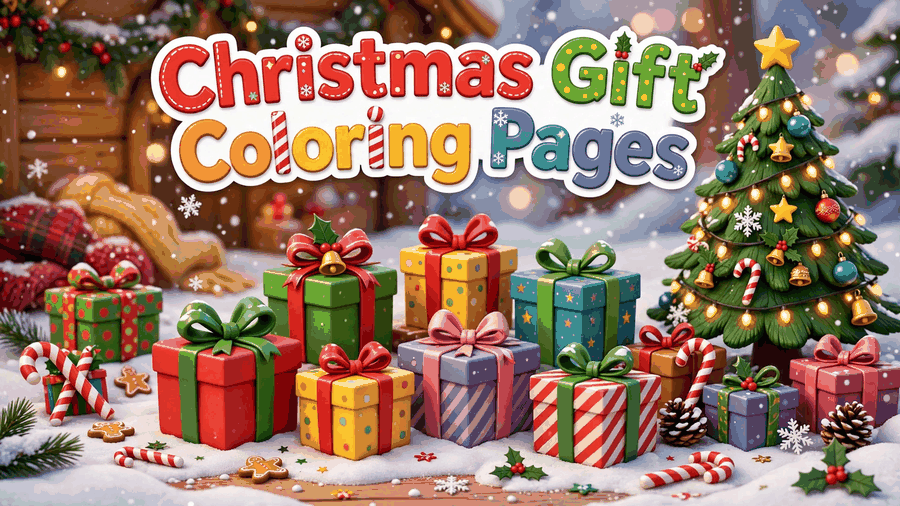
Christmas Gift Coloring Pages bring the excitement of holiday gift-giving to a creative activity for children. These festive designs let kids explore Christmas colors, imagine special surprises, and enjoy a relaxing seasonal craft at home or school.
Exploring the Joy of Christmas Through Coloring
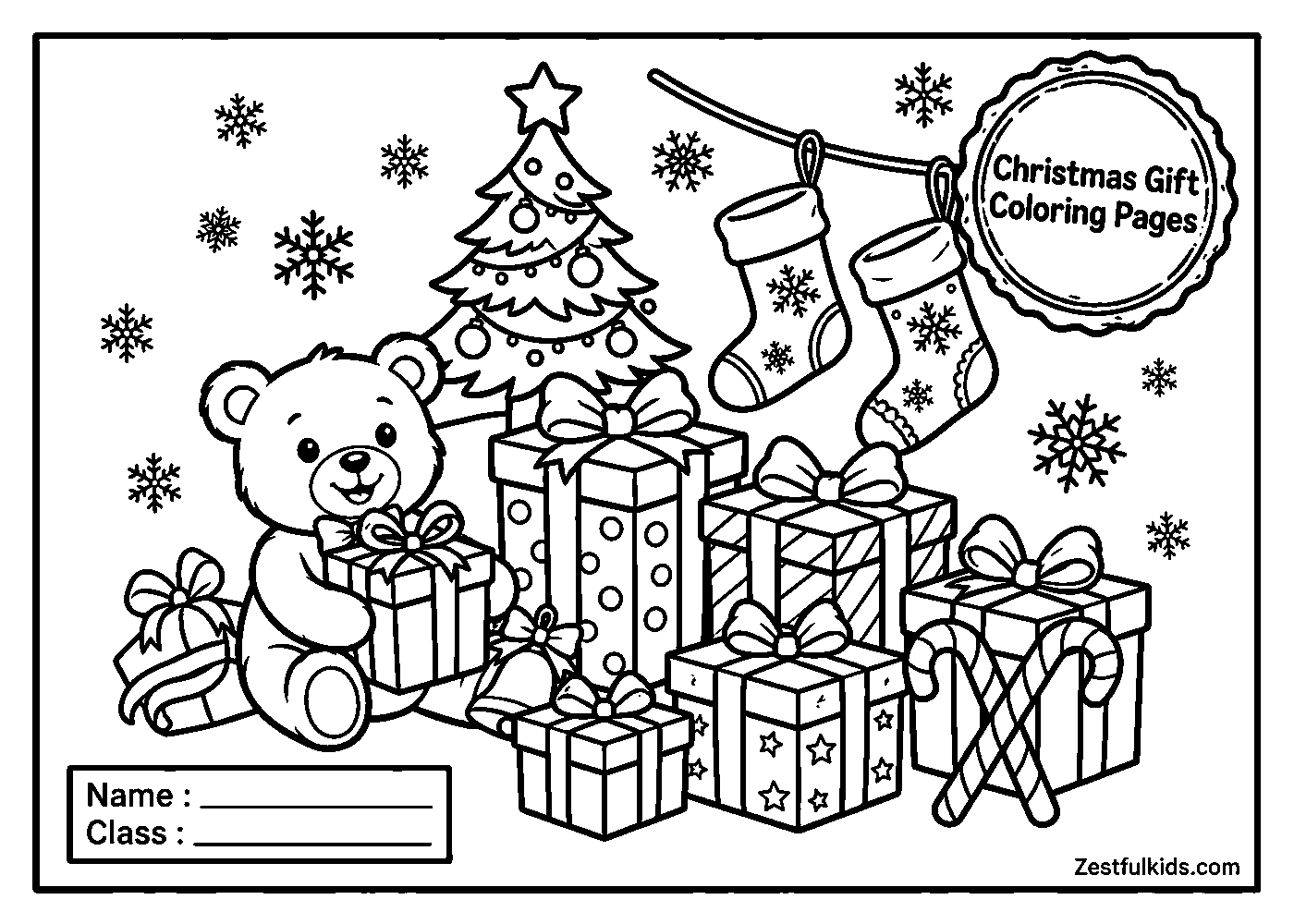
Christmas is often associated with beautifully wrapped presents, colorful ribbons, decorative bows, and the excitement of sharing gifts with loved ones. These familiar holiday elements make Christmas Gift Coloring Pages an enjoyable subject for children who want to express their creativity through art. A simple present can become an interesting coloring project when children experiment with different wrapping patterns, ribbon combinations, and decorative details.
Gift illustrations also offer plenty of room for imagination. Children can decide what colors each present should have without needing to follow a particular design rule. One box might have bright red wrapping paper with a golden ribbon, while another could feature green stripes, blue stars, or colorful dots. This freedom makes every finished picture feel personal, even when children begin with similar outlines.
For parents and teachers, Christmas gift illustrations are also convenient for introducing seasonal art activities. They can be used during holiday preparations, classroom celebrations, or quiet afternoons at home. Rather than focusing only on the finished picture, children can enjoy the process of creating their own festive designs.
What Makes Christmas Gift Illustrations Interesting?
One of the appealing features of Christmas presents is the variety of shapes and decorative possibilities. Gift boxes can be tall, short, square, or rectangular, giving children different outlines to explore. Ribbons add another visual element because they can cross over the wrapping paper, form bows, or hang down along the sides of a package.
The wrapping paper itself offers opportunities for creative choices. Children can imagine simple patterns such as polka dots, zigzags, stars, snowflakes, and small Christmas trees. If an illustration has a plain surface, they can even create their own decorations rather than leaving the wrapping paper empty.
Another interesting detail is the mystery behind a wrapped present. Since the contents are hidden, children can invent stories about what might be inside each box. Perhaps a small package contains a toy car, while a larger one holds a teddy bear or a collection of art supplies. These imaginative ideas can make a basic coloring activity more engaging.
Choosing Colors for Festive Christmas Presents
Traditional Christmas colors are a natural starting point, but children do not need to limit themselves to red and green. A combination of gold, silver, white, and blue can create a winter-inspired appearance, while pink, purple, and turquoise offer a more playful style.
Here are some color combinations children can try:
- Classic Christmas: Red wrapping paper with green ribbons and golden bows.
- Winter Celebration: Light blue, white, and silver-inspired shades.
- Bright and Playful: Pink, yellow, purple, and turquoise.
- Elegant Gift Wrapping: Deep green, burgundy, and warm brown.
- Candy-Inspired Design: Red and white stripes with small decorative patterns.
Children can also experiment with contrasting colors. For example, a dark green gift box can look interesting with a bright yellow ribbon. A pale blue package might stand out with a darker blue bow. These combinations help children see how different shades work together.
For younger children, crayons and colored pencils are practical choices because they are easy to handle and allow simple color application. Older children may enjoy using fine-tip markers for small decorations and colored pencils for adding gentle shading. The best tools depend on the paper and the child’s comfort with each material.
Creative Ways to Personalize Each Gift Box
A Christmas gift does not have to look like every other present. Children can turn ordinary wrapping surfaces into imaginative designs by adding their own decorative ideas. Small stars, hearts, snowflakes, candy canes, and festive patterns can make a simple box look more distinctive.
One enjoyable approach is to give every present a different wrapping style. Children might use stripes for one box, circles for another, and a repeating star pattern for a third. They can also choose a different ribbon color for each package to make the overall picture more varied.
Another idea is to imagine who will receive each present. A gift intended for a friend could have cheerful colors, while a present for a grandparent might feature a more traditional combination. Parents and caregivers can encourage children to explain their choices as they work.
If the illustration leaves enough open space, children can add small details around the presents. Snowflakes, Christmas ornaments, stars, or decorative leaves can help create a festive setting. These additions should remain optional so children can decide how simple or detailed they want their artwork to become.
Turning Coloring Time Into a Christmas Craft Activity
Christmas Gift Coloring Pages can be used as more than an individual drawing exercise. With a little preparation, the finished artwork can become part of a holiday craft session. Children can color their favorite designs, carefully cut them out with adult supervision, and use them to decorate handmade Christmas cards or gift tags.
For a classroom activity, teachers can invite students to create their own imaginary gift collection. Each child can choose different colors and patterns, then share a short story about the presents they have decorated. This provides a simple opportunity for children to talk about creativity and the spirit of giving.
At home, parents can place the finished pictures on a refrigerator, bedroom wall, or family activity board. Another option is to keep the artwork in a holiday folder and look through it during future Christmas celebrations. These small projects can make seasonal preparation feel more personal.
Children who enjoy other festive and imaginative themes may also like exploring friendly dinosaur illustrations for a different kind of creative activity. Switching between holiday subjects and familiar characters can keep coloring sessions interesting throughout the year.
Simple Tips for Printing and Enjoying the Activity
Before printing a coloring design, check the preview to make sure the illustration fits comfortably on the selected paper. Adjust the print settings if necessary so that important outlines and decorative details are not cut off near the edges. Ordinary printing paper may work for crayons and colored pencils, while slightly thicker paper can be useful when children plan to use markers.
It is also helpful to prepare coloring materials before starting. Put crayons, pencils, erasers, and other suitable supplies within reach so children can work without frequent interruptions. If several children are participating, providing separate sets of materials or sharing supplies in an organized way can make the activity easier.
Allow children to work at their own pace. Some may prefer coloring large gift boxes with only a few shades, while others may spend more time decorating every ribbon and wrapping pattern. There is no need for every picture to look identical or perfectly finished.
Keeping Holiday Creativity Going Beyond Christmas Gifts
Children who enjoy coloring presents may want to explore other subjects that involve imaginative objects and playful designs. Vehicles, toys, decorations, and familiar characters can provide fresh ideas once the Christmas activity is finished. For example, cartoon motorcycle illustrations offer a different subject for children who enjoy drawing bold shapes and experimenting with colors.
The variety of possible Christmas gift designs also makes this theme easy to revisit. Children can try new color combinations, invent different wrapping patterns, or create stories about the surprises hidden inside each package. With simple coloring materials and a little imagination, Christmas Gift Coloring Pages can become a cheerful part of family activities, classroom projects, and holiday preparations.
