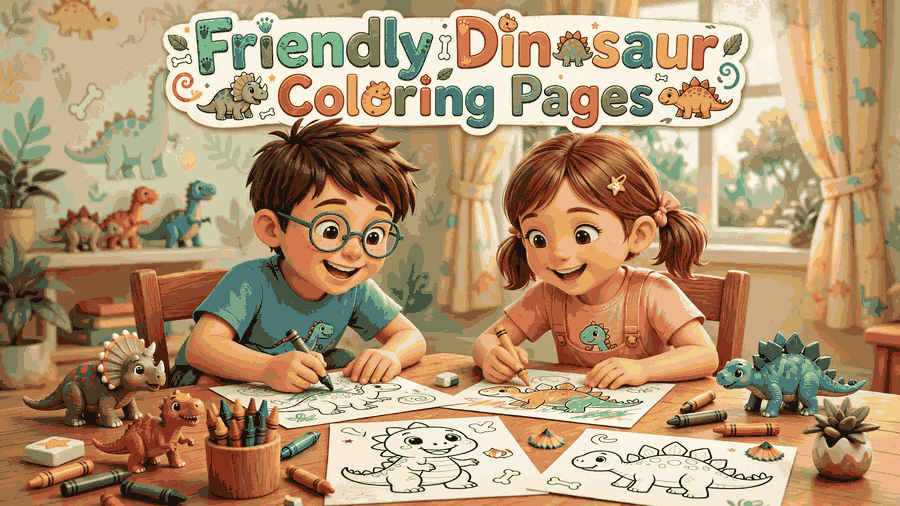
Friendly Dinosaur Coloring Pages bring prehistoric creatures into a playful world where children can explore colors, imagine dinosaur adventures, and create their own charming characters through enjoyable coloring activities.
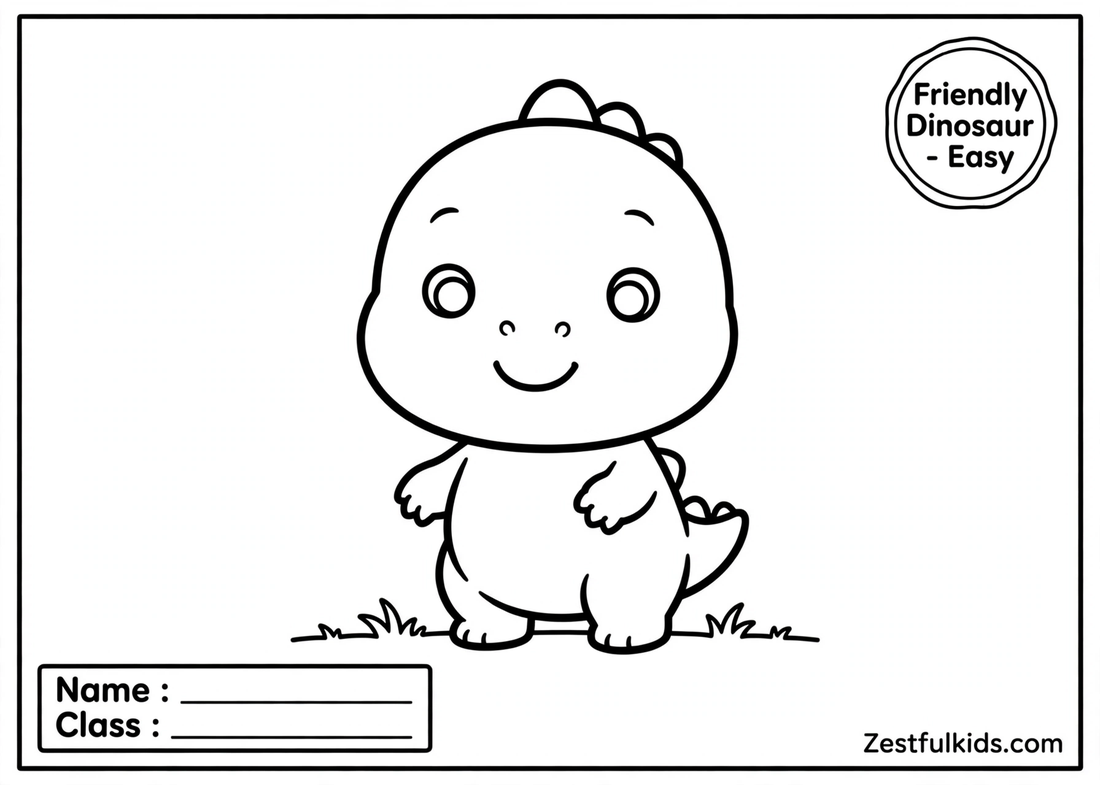
Meet Dinosaurs with a Friendly Side
Dinosaurs may have lived millions of years ago, but they remain fascinating characters in children’s imaginations. Their unusual shapes, long tails, sturdy legs, and distinctive heads make them interesting subjects for coloring. Friendly Dinosaur Coloring Pages introduce these ancient creatures in a playful way, allowing children to enjoy dinosaur-themed artwork without focusing on frightening or dramatic scenes.
A friendly dinosaur can be imagined as a curious visitor exploring a garden, a gentle giant walking through a forest, or a small creature discovering something new. Children may picture their dinosaur making friends, looking for food, or taking a peaceful walk through a prehistoric landscape. These simple ideas can turn a coloring activity into a story that grows as the picture comes to life.
The appeal of dinosaur coloring also comes from their variety. Some dinosaurs are known for their long necks, others for their large heads or unusual body shapes. Children can notice these differences and decide how they want each creature to look. They might choose natural-looking colors or invent a dinosaur with bright purple skin, orange spots, and green feet.
Give Each Dinosaur Its Own Personality
Coloring a dinosaur can be more than filling in an outline. Children can imagine what kind of personality their character might have and use colors to reflect that idea. A cheerful dinosaur might have bright colors, while a quiet dinosaur could be colored in soft shades of blue, green, or brown.
Parents and teachers can invite children to give their dinosaur a name. Perhaps it is a friendly explorer who likes discovering new places, or a gentle dinosaur who enjoys spending time with other creatures. Children can describe their character in a few sentences or share a short story about what happens after the coloring is finished.
These storytelling ideas do not require a complicated background or a detailed drawing. Even a single dinosaur can become the main character of an imaginary adventure. The child decides what happens, making the activity personal and enjoyable.
Explore Dinosaur Shapes and Color Choices
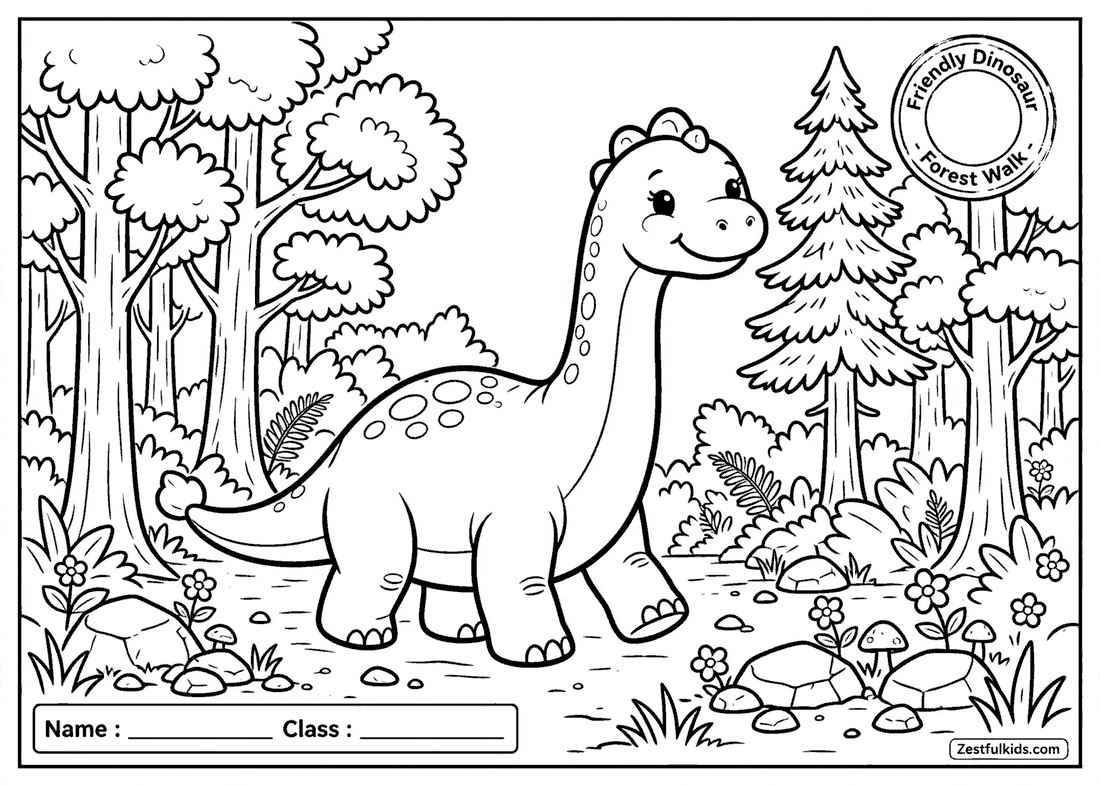
One interesting feature of dinosaur illustrations is the variety of shapes children can explore. A dinosaur with a long neck offers a large area for coloring, while one with small scales or decorative markings may invite more careful attention. Some designs may include distinctive features such as horns, plates, or a long tail, depending on the dinosaur represented.
Children can use these details as inspiration when choosing colors. A dinosaur with plates along its back might have alternating shades of green and yellow. A creature with horns could be colored in warm brown tones, while its body receives a lighter shade. These are optional ideas rather than rules about how a dinosaur must look.
For a simple coloring approach, children can choose one main color for the body and a second shade for smaller details. Those who enjoy experimenting may add spots, stripes, or other patterns if the illustration leaves room for them. A friendly dinosaur does not need to look scientifically accurate to make an interesting picture.
Create a Prehistoric Setting
A dinosaur can become part of a larger scene when children imagine the world around it. They might picture a prehistoric forest with tall trees, a rocky landscape, or a grassy field. If the coloring illustration has open space, children can add a few simple background details to create a setting for their character.
Green and brown shades can suggest plants and soil, while pale blue can represent the sky. A rocky area might use gray, beige, or muted purple. Children can also invent an imaginary environment with unusual colors, such as a pink forest or a turquoise mountain.
When adding background elements, encourage children to keep the dinosaur easy to see. A bright dinosaur against a lightly colored background can make the main character stand out. If the child prefers to leave the background blank, that is perfectly fine too. The focus can remain on the dinosaur itself.
Turn Coloring into a Dinosaur Adventure
Once the picture is finished, children can use it as the starting point for a short adventure. They might imagine their dinosaur searching for a lost friend, exploring a new valley, or finding a place to rest. The story can be spoken aloud, written in a few sentences, or shared with another child.
A parent or teacher could ask what the dinosaur eats, where it lives, or which other creatures it might meet. These questions help children build a story around their artwork without needing to follow a specific plot. If they want to extend the activity, they can draw another character on a separate sheet and imagine how the two dinosaurs interact.
Children who enjoy different animal themes may also explore zebra designs. A zebra’s distinctive stripes offer a contrast to the varied shapes and patterns of dinosaurs. Comparing the two subjects can inspire children to experiment with color and notice how different animals have different visual features.
Choose Coloring Tools for the Details
The best coloring tools depend on the illustration and the child’s preferences. Crayons are convenient for larger areas, such as a dinosaur’s body or tail. Colored pencils can help children work around smaller details, including claws, facial features, or decorative markings. Washable markers offer bold colors, although children should use them carefully on thinner paper.
A useful approach is to begin with the largest areas before coloring smaller details. Children can select a main body color, fill in the dinosaur, and then choose contrasting shades for its features. If the picture includes a background, they can decide whether to color it before or after completing the dinosaur.
Before printing a coloring activity, check the print preview to make sure the illustration fits the page and its outlines remain visible. Choosing paper that works with the coloring tools can also help prevent markers from bleeding through. These small preparations make it easier to enjoy the activity without unnecessary interruptions.
Make Dinosaur Coloring a Shared Activity
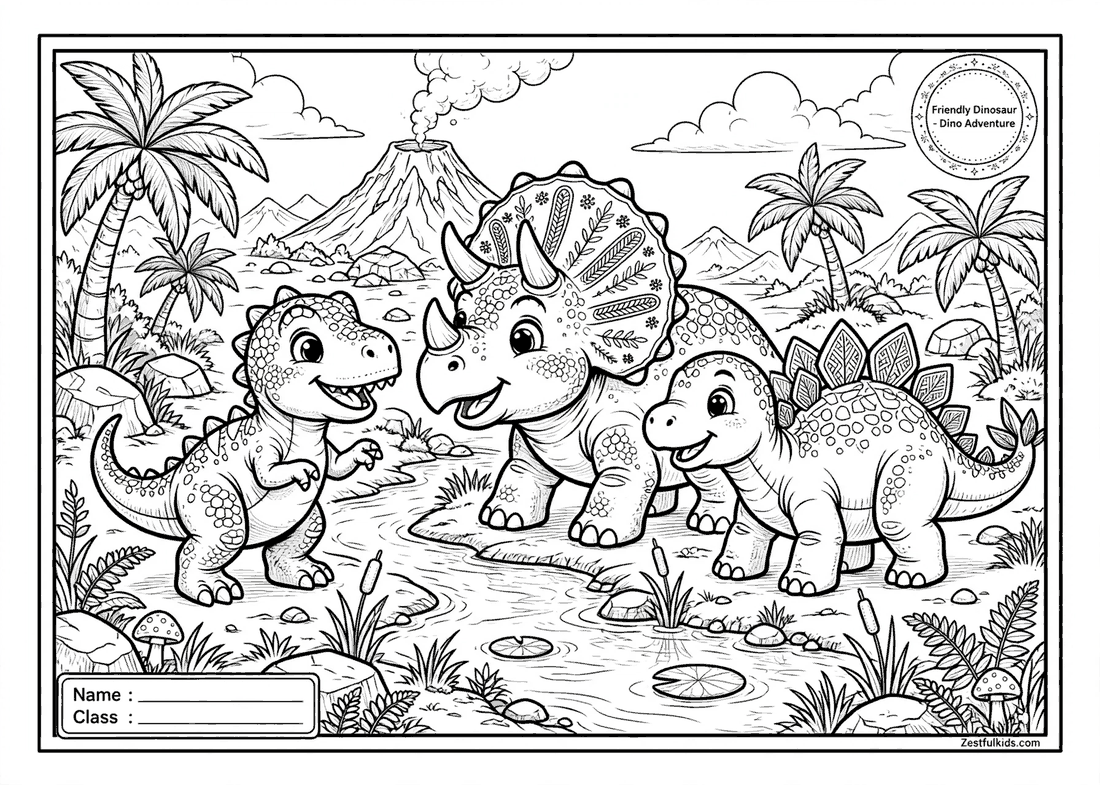
Friendly dinosaur coloring can fit into many everyday settings. At home, it may be part of a quiet afternoon or a creative break after school. In a classroom, children can color their own dinosaurs and then share the names or stories they created. Families can also collect completed pictures in a folder to revisit later.
For a broader creative theme, children can imagine their dinosaurs visiting a modern neighborhood. They might picture a dinosaur walking along a village road, greeting people, or looking at houses and shops. The village street designs can provide another coloring activity inspired by everyday places, offering a different setting from the prehistoric world.
Friendly Dinosaur Coloring Pages give children an opportunity to explore unusual creatures through their own creative choices. From selecting colors and adding patterns to imagining stories and backgrounds, every child can make the dinosaur look and feel different. The finished picture becomes more than a coloring exercise: it becomes a character created through imagination, one color at a time.
