Nature Coloring Pages invite children to explore the beauty of the outdoors through creative activities featuring plants, animals, landscapes, and familiar natural details. These printable coloring activities offer a simple way to enjoy nature while experimenting with colors and creating personal artwork.
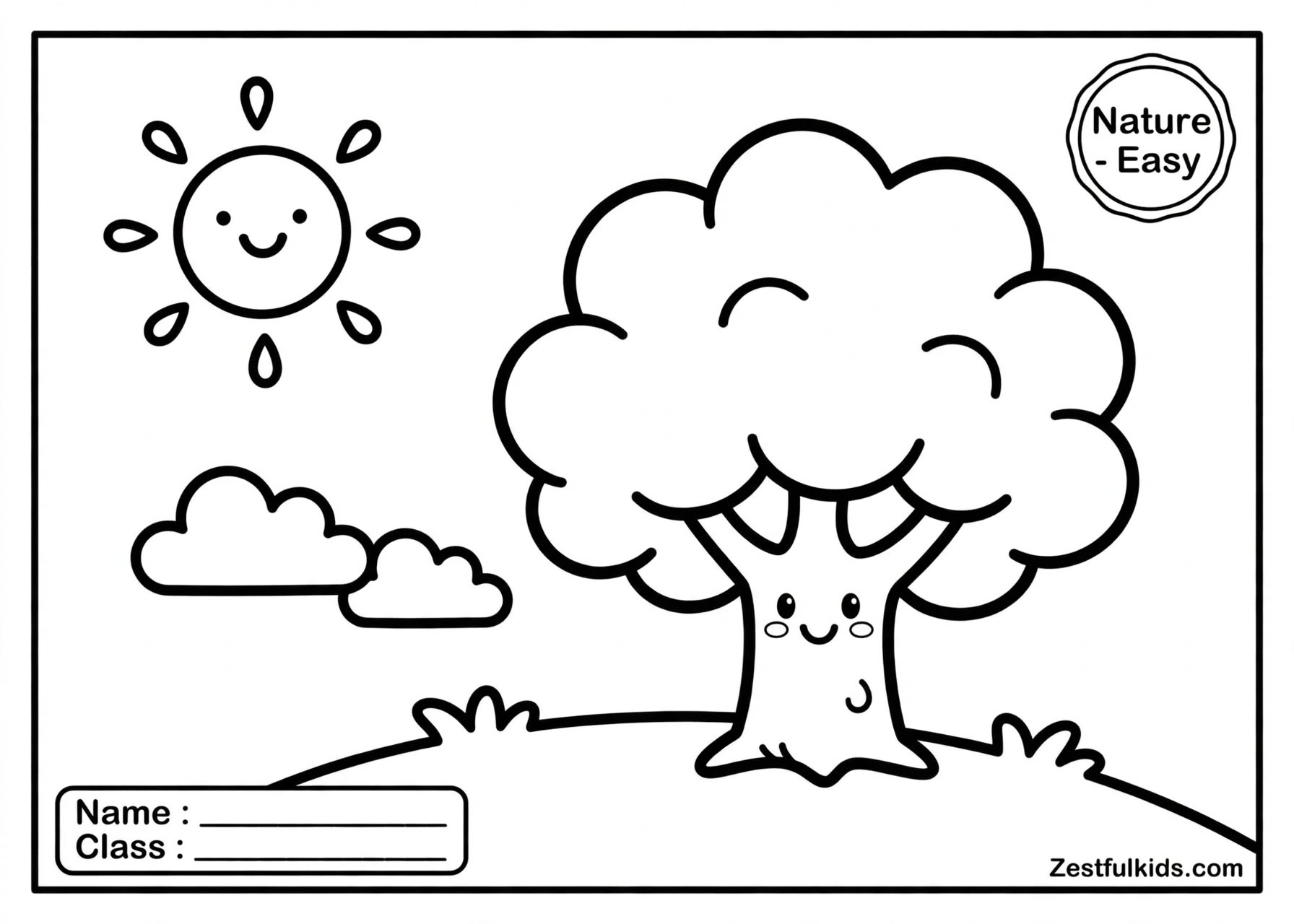
Discover Nature Through Colors and Shapes
Nature is full of interesting shapes, textures, and colors. A tree has a trunk, branches, and leaves, while flowers can have rounded petals, narrow petals, or layered blooms. Hills, rivers, clouds, and stones each have their own appearance, making them enjoyable subjects for children’s coloring activities.
Nature Coloring Pages bring these outdoor details into an activity that children can enjoy at home or in the classroom. They can color familiar things they have seen during a walk or create an imaginary landscape filled with unusual plants and animals. The pictures offer room for different choices, allowing each child to decide how the natural world should look.
A child might color a tree with deep green leaves and a brown trunk, or create a fantasy tree with purple branches and golden leaves. A landscape could show a sunny meadow, a quiet forest, or a mountain beneath a bright blue sky. The possibilities depend on the illustration and the child’s imagination.
Look Closely at the Details in Nature
One of the enjoyable parts of nature-themed coloring is noticing details that might otherwise be overlooked. Leaves come in different shapes, from long and narrow to wide and rounded. Flowers have different petal arrangements, and tree trunks may have lines or patterns that suggest bark.
Children can take a closer look at the outlines before choosing their colors. If a picture includes several plants, they can decide whether to use different shades of green or give each plant its own color. A flower might have bright petals with a contrasting center, while nearby leaves receive softer shades.
These details can inspire a simple coloring challenge. Invite children to choose one part of the picture they want to make especially colorful. It might be a large flower, a butterfly, a tree, or a patch of grass. They can then use lighter or darker shades around that area to make it stand out.
Build a Landscape with Color
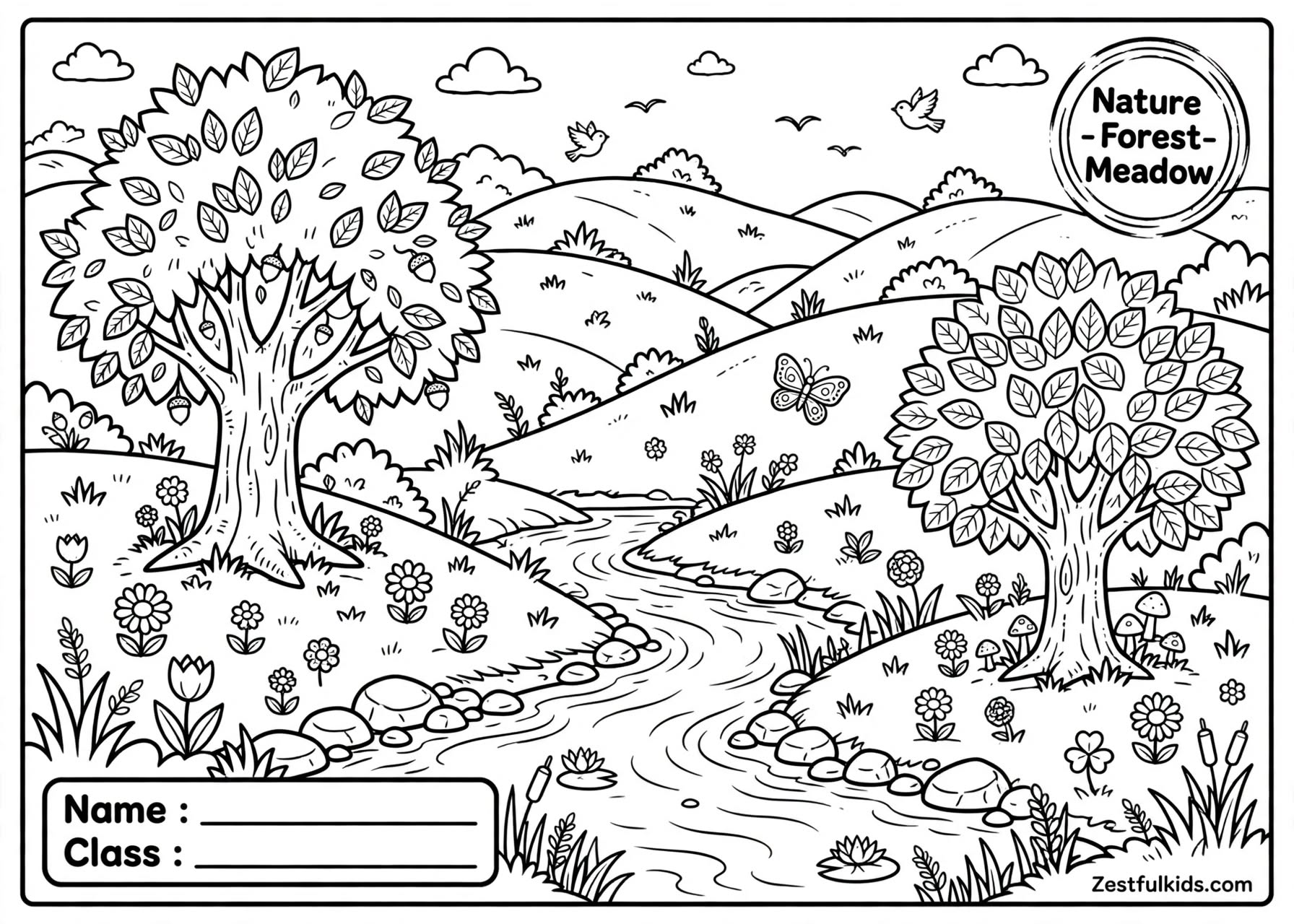
Landscape coloring offers a different experience from coloring a single object. A picture with hills, trees, and sky may contain several large areas that children can color in a coordinated way. The sky might be pale blue, while distant hills receive lighter green or gray shades. Trees closer to the front can be colored more deeply to distinguish them from the background.
Children can also imagine the landscape at different times of day. A morning scene might use light blue and yellow, while a sunset landscape could feature orange, pink, and purple. If the picture includes water, they may choose blue, turquoise, or even an imaginative color to match their own artistic idea.
The colors do not have to be realistic. A purple river or a bright orange tree can turn a familiar landscape into a fantasy setting. The important part is that children enjoy deciding how their picture will look.
Bring Plants and Animals into the Same Scene
Nature often includes more than one kind of living thing. Trees provide places for birds to perch, flowers attract butterflies, and grassy areas may be home to small animals. When an illustration contains these elements, children can think about how each part belongs in the scene.
If the picture has open space, children may add a few details of their own. A small butterfly could appear near a flower, or a bird might be drawn on a tree branch. These are optional ideas for expanding a picture, not features that every coloring design will contain.
Parents and teachers can also invite children to describe what they see in the illustration. They might identify a plant, name an animal, or explain where they have seen something similar outdoors. This creates a natural connection between the coloring activity and everyday experiences without turning the session into a formal lesson.
Choose Coloring Tools for Different Natural Details
The best coloring tools depend on the illustration and the child’s preferences. Crayons work well for large areas such as the sky, grass, and tree canopies. Colored pencils are useful for smaller details, including flower centers, narrow leaves, and animal markings. Washable markers can create bright colors, especially when the picture has clear, simple outlines.
Children may find it helpful to begin with the largest areas before moving to smaller details. Coloring the sky and landscape first can make it easier to decide which shades will stand out in the foreground. They can then color plants, flowers, and animals without rushing through the picture.
For a softer appearance, children can use light shades and leave some areas white. For a more vivid scene, they can choose stronger colors and use contrasting shades for nearby objects. There is no single correct way to finish a nature illustration.
Turn a Coloring Picture into an Outdoor Adventure
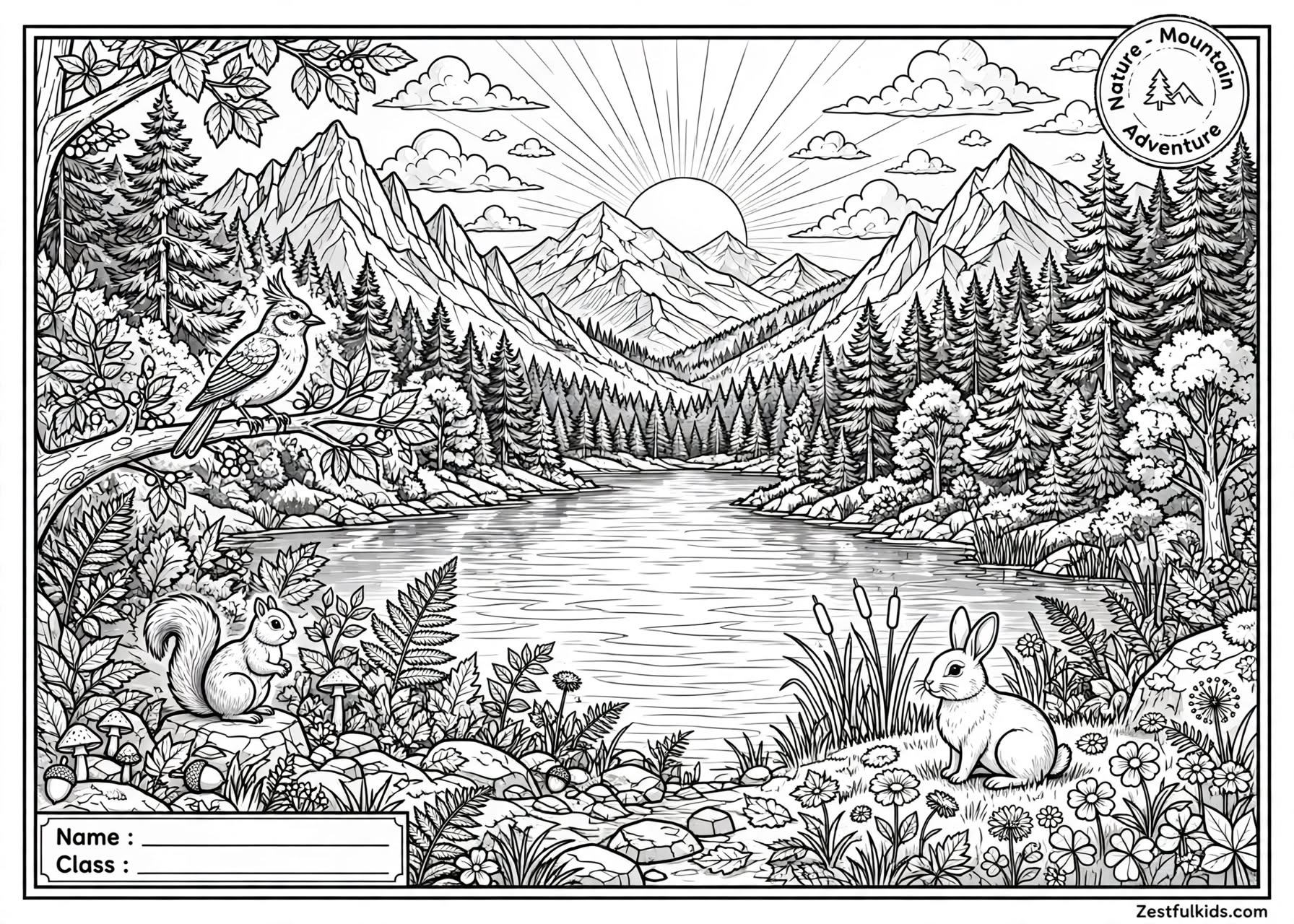
Nature-themed artwork can inspire children to imagine a place they would like to visit. A forest picture might become the setting for a walk with a family member, while a mountain scene could inspire a story about discovering a hidden path. Children can give their imaginary place a name and describe what they might find there.
For another familiar setting, explore the village street designs. These pictures offer a different perspective on the world around children, moving from natural landscapes to places where people live and travel. They can compare the colors and details of a village street with those of a garden, forest, or countryside.
Children can also create a small collection of pictures based on different environments. One page might show a forest, another a garden, and another a landscape near the water. When placed together, the pictures can become a colorful collection of places inspired by nature.
Make Coloring Time Relaxed and Enjoyable
Nature coloring activities can fit into many everyday routines. Families might use them during a quiet afternoon at home, while teachers can include them in an art session or a theme about the outdoors. Children can work independently or share their color choices with friends and family.
A finished picture does not need to be perfectly realistic. Some children may prefer simple colors and broad strokes, while others enjoy adding patterns and small details. Adults can support the process by offering coloring tools and ideas while allowing children to make their own decisions.
For a different kind of quiet coloring subject, children may also enjoy a sleeping cat illustration. The gentle animal theme offers another creative activity, with different shapes and details to explore.
Nature Coloring Pages provide children with an opportunity to bring outdoor scenes into their own artwork. Whether they choose realistic shades for plants and landscapes or invent a world filled with unusual colors, each picture can reflect their imagination. A simple coloring session can become a chance to notice the details of nature and create a scene that feels uniquely their own.
