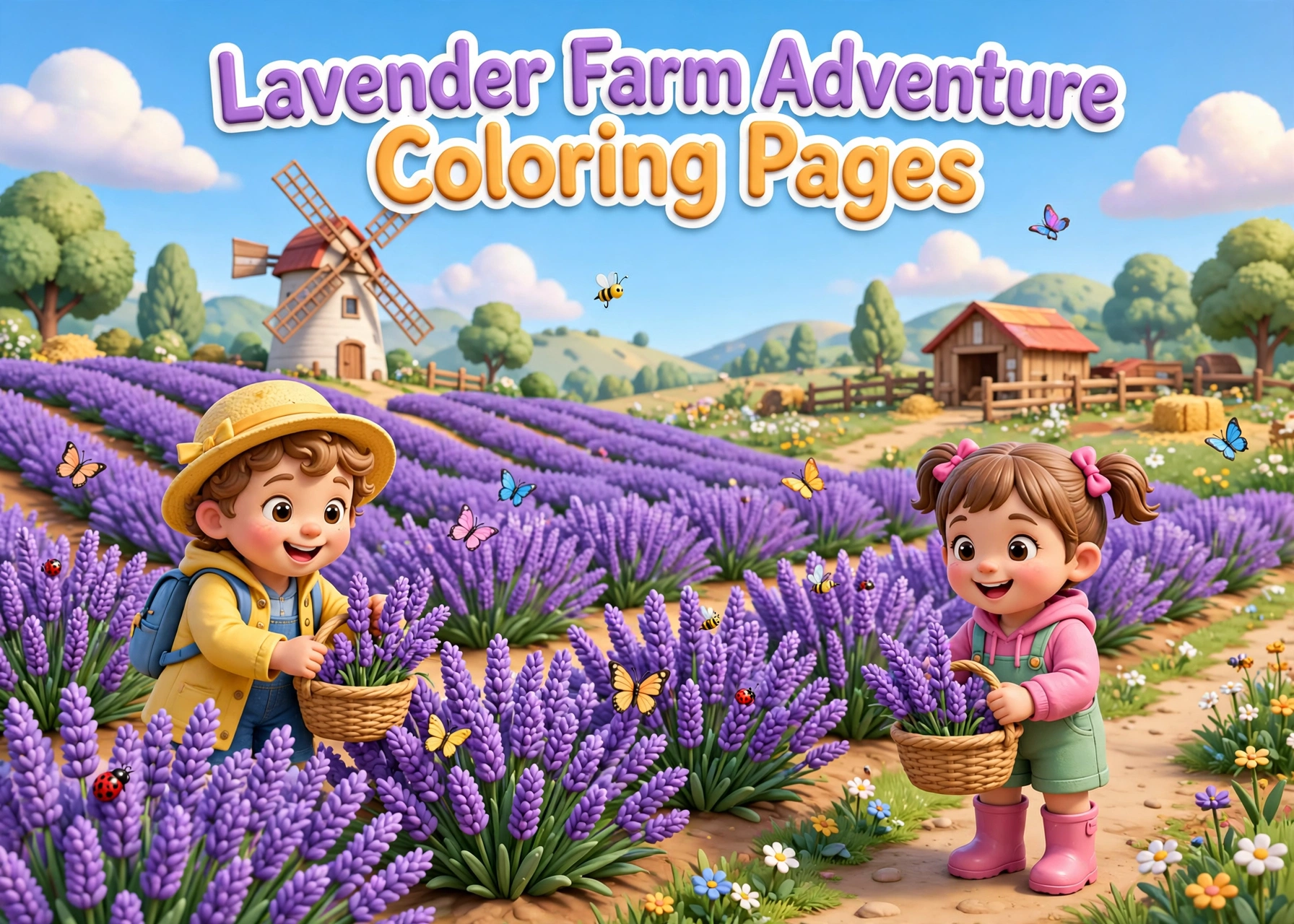
Lavender Farm Adventure Coloring Pages bring the beauty of blooming lavender fields into a creative activity for children. With rows of purple flowers, peaceful countryside scenery, and the charm of a working flower farm, this theme offers plenty of opportunities to explore colors and imagine a relaxing outdoor adventure.
Exploring the Beauty of a Lavender Farm
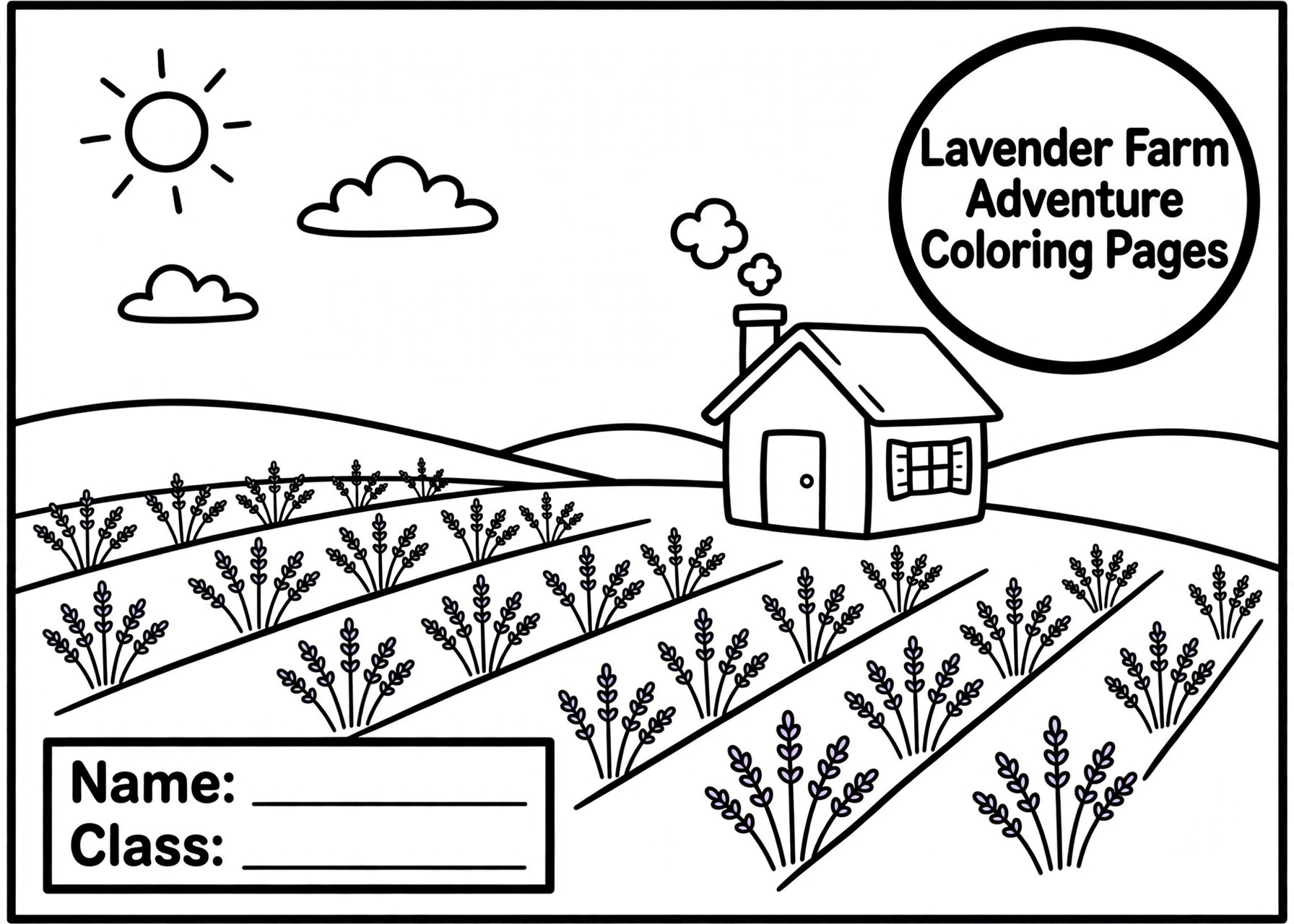
A lavender farm has a distinctive appearance that makes it an interesting subject for children’s artwork. Long rows of flowering plants create natural patterns across the landscape, while their slender stems and small blossoms give each plant a recognizable shape. When many lavender plants grow together, they form beautiful stretches of purple that can inspire children to experiment with different shades.
Unlike a single flower illustration, a lavender farm represents an entire outdoor environment. Children can imagine walking along narrow paths between the plants, looking across the flowering fields, or discovering small details that make a countryside setting feel special. These possibilities make the theme suitable for both simple coloring sessions and more imaginative art activities.
Lavender flowers are commonly associated with purple, violet, and soft lilac shades. However, children do not have to follow a realistic palette throughout their artwork. They can combine several purple tones, add touches of pink, or create an unusual lavender field with their favorite colors. The goal is to enjoy the scene while discovering how different shades work together.
A Closer Look at the Details of Lavender Flowers
One of the most recognizable features of lavender is its flower spike. Many tiny blossoms grow close together along an upright stem, creating a narrow cluster with a soft, textured appearance. This structure offers an interesting coloring challenge because children can work with small areas rather than filling one large flower shape.
A few coloring techniques can make these details easier to handle:
- Light purple and violet: Use different purple shades to create variety across the flower clusters.
- Green and olive: Apply these colors to the stems and narrow leaves.
- Soft pink: Add occasional highlights if children want a more imaginative flower palette.
- Brown and beige: Use these shades for soil, wooden features, or farm pathways when they appear in the illustration.
Children can also experiment with alternating light and dark purple across neighboring flower clusters. This creates visual variety without requiring complicated shading techniques. Colored pencils are particularly useful for small blossoms, while crayons work well for larger areas such as open fields and the sky.
Creating a Countryside Scene with Different Colors
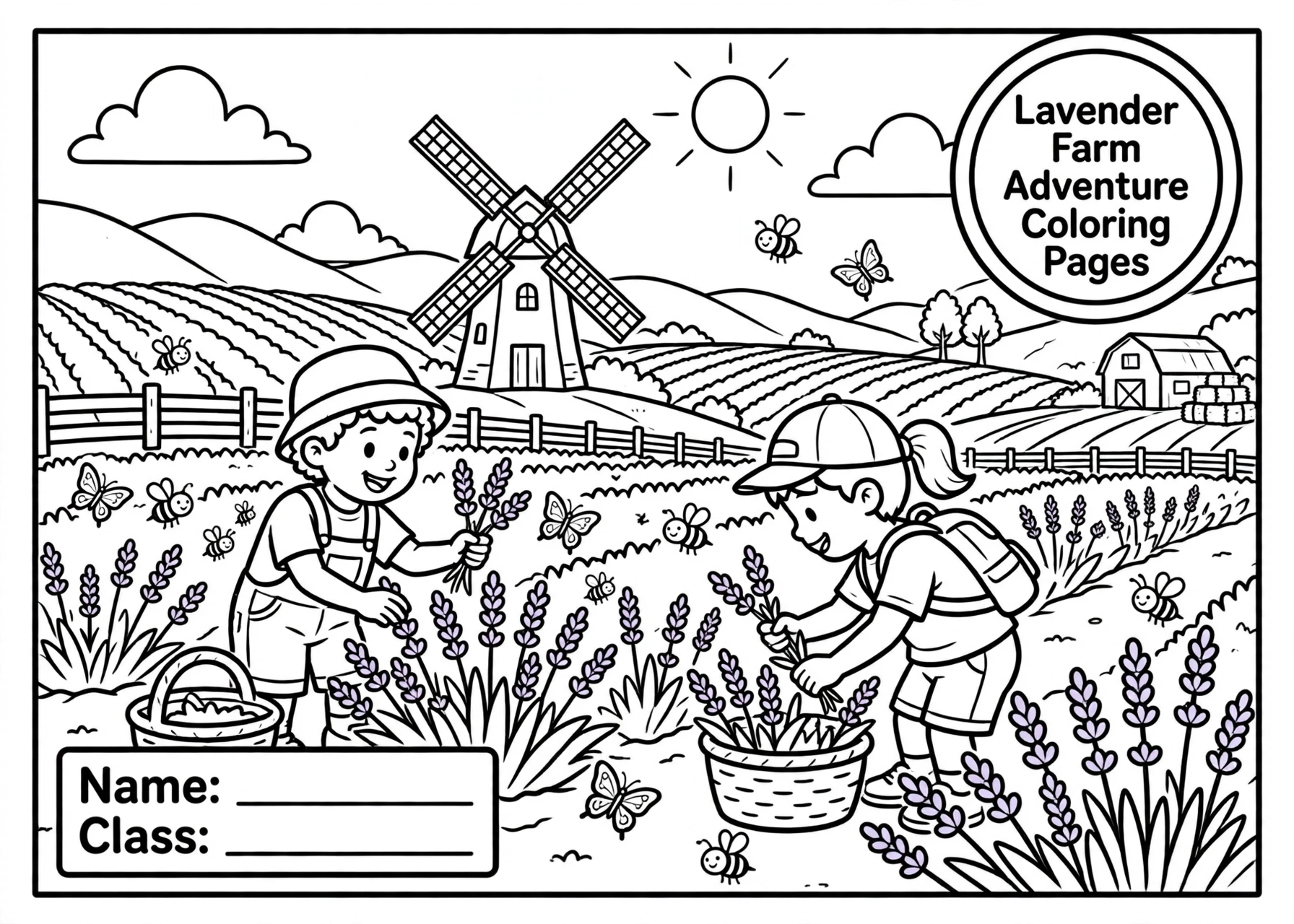
The surrounding landscape can be just as enjoyable to color as the flowers themselves. If the illustration includes an open sky, children might choose bright blue for a sunny afternoon or pale orange and pink for an imagined sunset. Green fields can provide contrast against the purple lavender, while brown pathways can help separate different sections of the landscape.
A farm setting may also inspire children to think about other details they would like to include. They could draw a small wooden sign, a basket for collecting flowers, or a distant farmhouse beside the field. These are optional additions that children can create themselves if the printable leaves enough space.
For a more natural appearance, try using several shades of green rather than coloring every leaf identically. Light green can represent fresh growth, while darker green creates contrast between overlapping plants. The same approach works for the flowers: a mixture of lavender, violet, and deep purple can make a large field look more varied.
Children who prefer imaginative artwork can take a different approach. A lavender farm with pink flowers, a turquoise sky, and colorful butterflies can become a completely original countryside scene. There is no single correct way to finish a creative illustration.
Turn the Farm Adventure into a Creative Story
The idea of visiting a lavender farm can inspire a simple storytelling activity alongside coloring. Children can imagine arriving at the farm on a sunny morning, walking between the flower rows, and discovering the different plants growing throughout the landscape. They might describe what they see, what they would bring on the visit, or which part of the farm they would explore first.
Parents and teachers can introduce a few interesting facts about lavender during the activity. Lavender is an aromatic flowering plant that is widely grown in gardens and cultivated fields. Its flowers attract pollinators such as bees and butterflies, making it a useful starting point for conversations about how flowers and insects interact.
Children can also draw a small butterfly or bee near the lavender plants if they want to extend the original scene. This addition can lead to a discussion about pollination and why flowering plants are important to the natural environment.
For another creative activity involving detailed animal-inspired patterns, children can explore these animal mandala designs. Their decorative shapes offer a different artistic experience while maintaining a connection to nature and wildlife.
Choosing the Right Tools for Flower and Landscape Details
The best coloring tools depend on the amount of detail in the illustration and the child’s preferred way of working. Colored pencils provide control when filling narrow stems and small flower clusters. Crayons are convenient for broad areas and are especially useful when children want to cover large sections of the landscape without spending too much time on tiny details.
Washable markers are another option for creating bright, defined colors. However, some markers may show through thinner paper, so placing a spare sheet underneath is a sensible precaution. A combination of colored pencils and crayons can also work well when the picture contains both detailed flowers and larger background areas.
An enjoyable way to approach the page is to divide the illustration into sections. Children can begin with the lavender plants, continue with the surrounding greenery, and finish with the sky or other background elements. This gives them a clear starting point without making the activity feel like a strict assignment.
There is also no need to complete everything in one sitting. A child can color part of the field and return later to finish the remaining details. Taking time to enjoy individual sections can make a longer landscape illustration feel more manageable.
Bringing Lavender Farm Activities into Home and Classroom
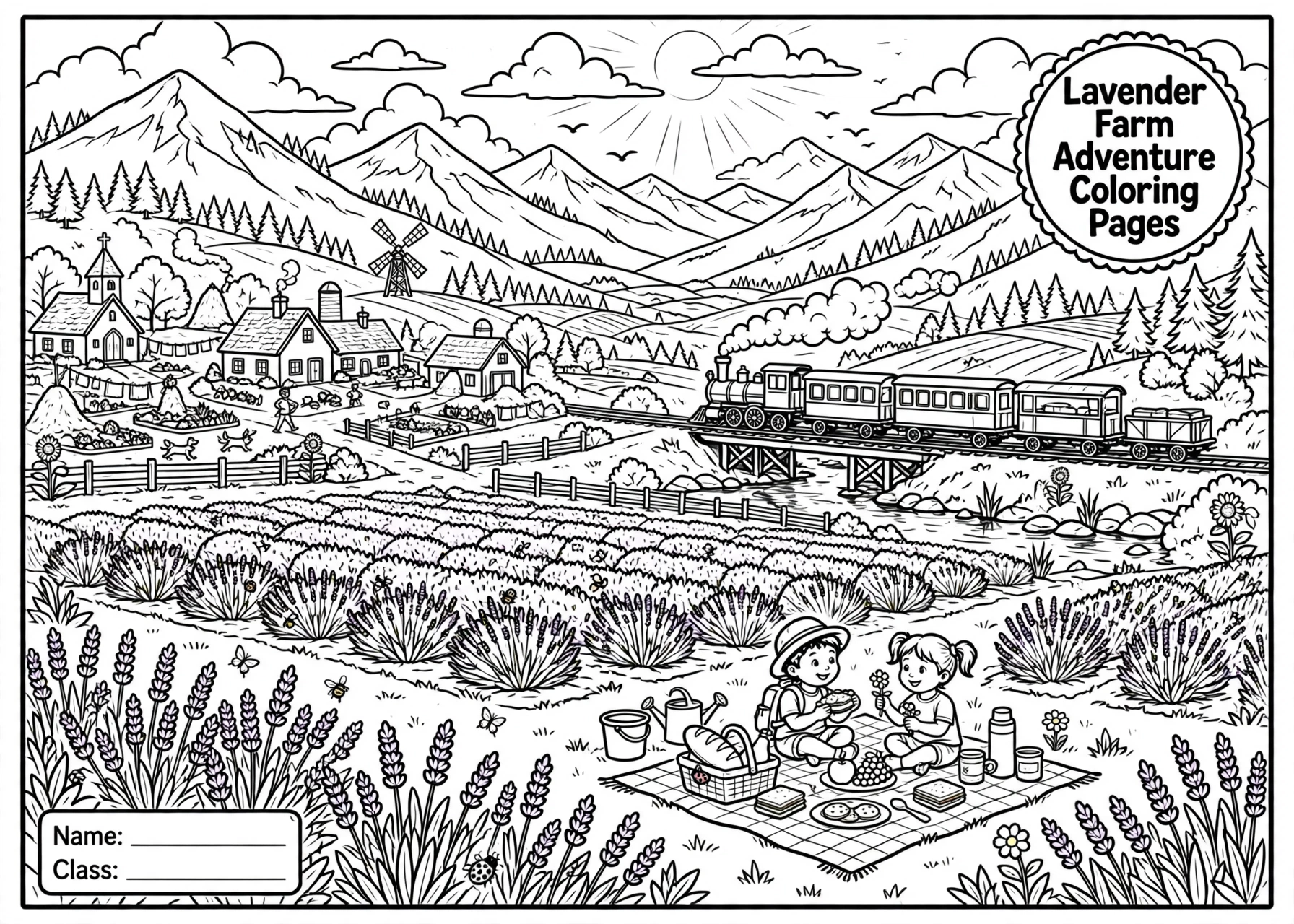
Lavender Farm Adventure Coloring Pages can be included in a nature-themed afternoon at home or a classroom activity about flowers and countryside environments. Parents can use the illustration as a starting point for conversations about gardens, farming, and the different colors found in nature. Teachers may also connect the theme with simple plant observations or a lesson about pollinating insects.
Before printing, check the image in the print preview to ensure that the illustration fits the selected paper and that its details remain visible. Choose coloring materials that suit the child’s age and working habits, and prepare a comfortable space with enough room for the paper and art supplies.
After completing the picture, children can give their imagined farm a name and write it near the artwork. They might call it Purple Valley Farm, Sunny Lavender Garden, or something entirely original. Another option is to create a short description of the farm and explain what makes it special.
Children who enjoy animal-themed adventures can also discover a different kind of creative scene through these lion cub activities. This provides an opportunity to move from peaceful flower fields to an imaginative wildlife setting.
A lavender farm offers more than rows of purple flowers to fill with color. Its combination of plants, open landscapes, and countryside atmosphere gives children plenty of room to make artistic choices. Whether they prefer realistic violet blossoms or an imaginative farm filled with unexpected colors, this activity turns a simple flower theme into a memorable creative adventure.
