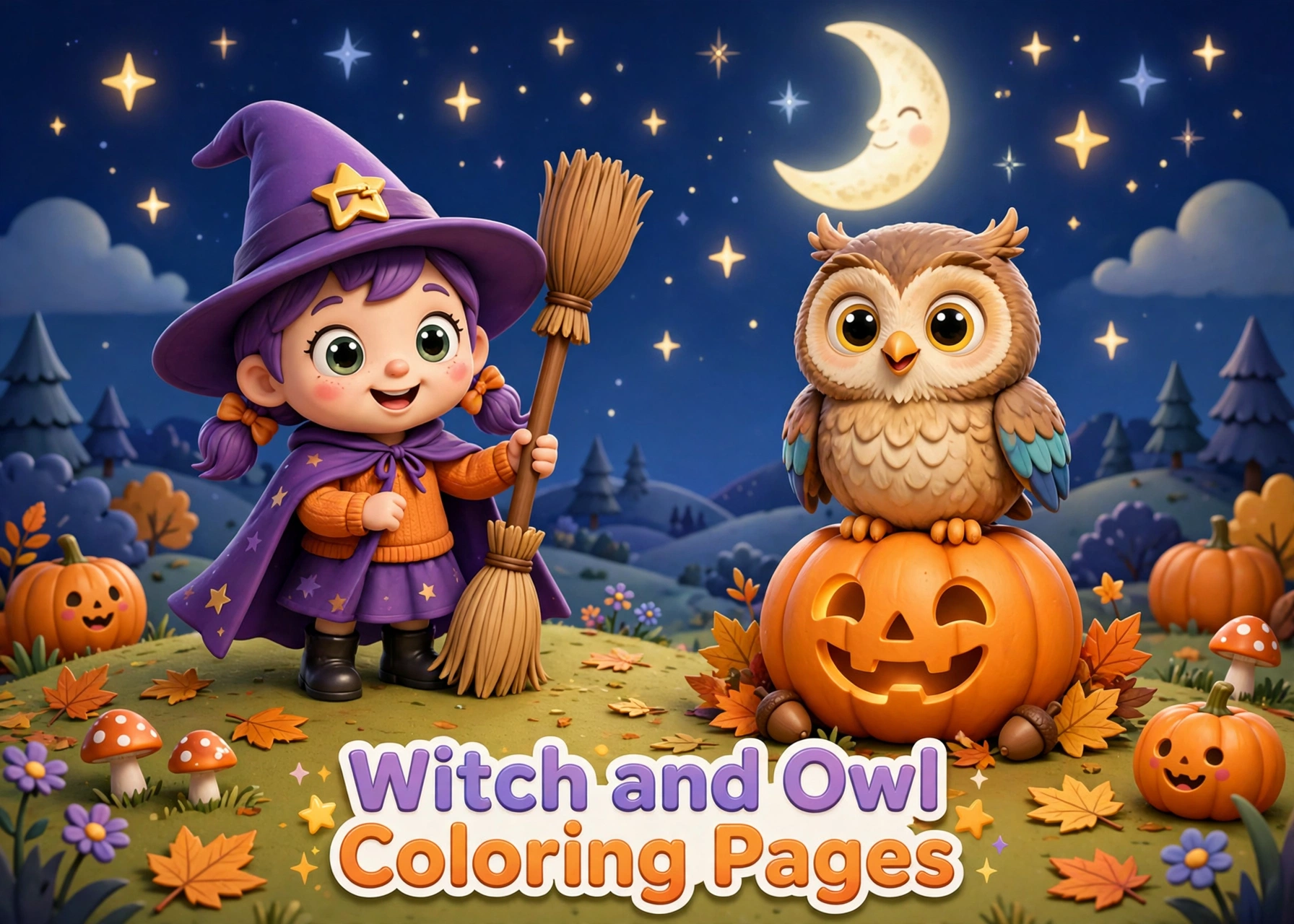
Witch and Owl Coloring Pages bring together two familiar symbols of magical nighttime stories. Featuring the imaginative world of witches and the mysterious charm of owls, this theme gives children an opportunity to explore creative color combinations, invent fantasy characters, and enjoy a playful Halloween-inspired activity.
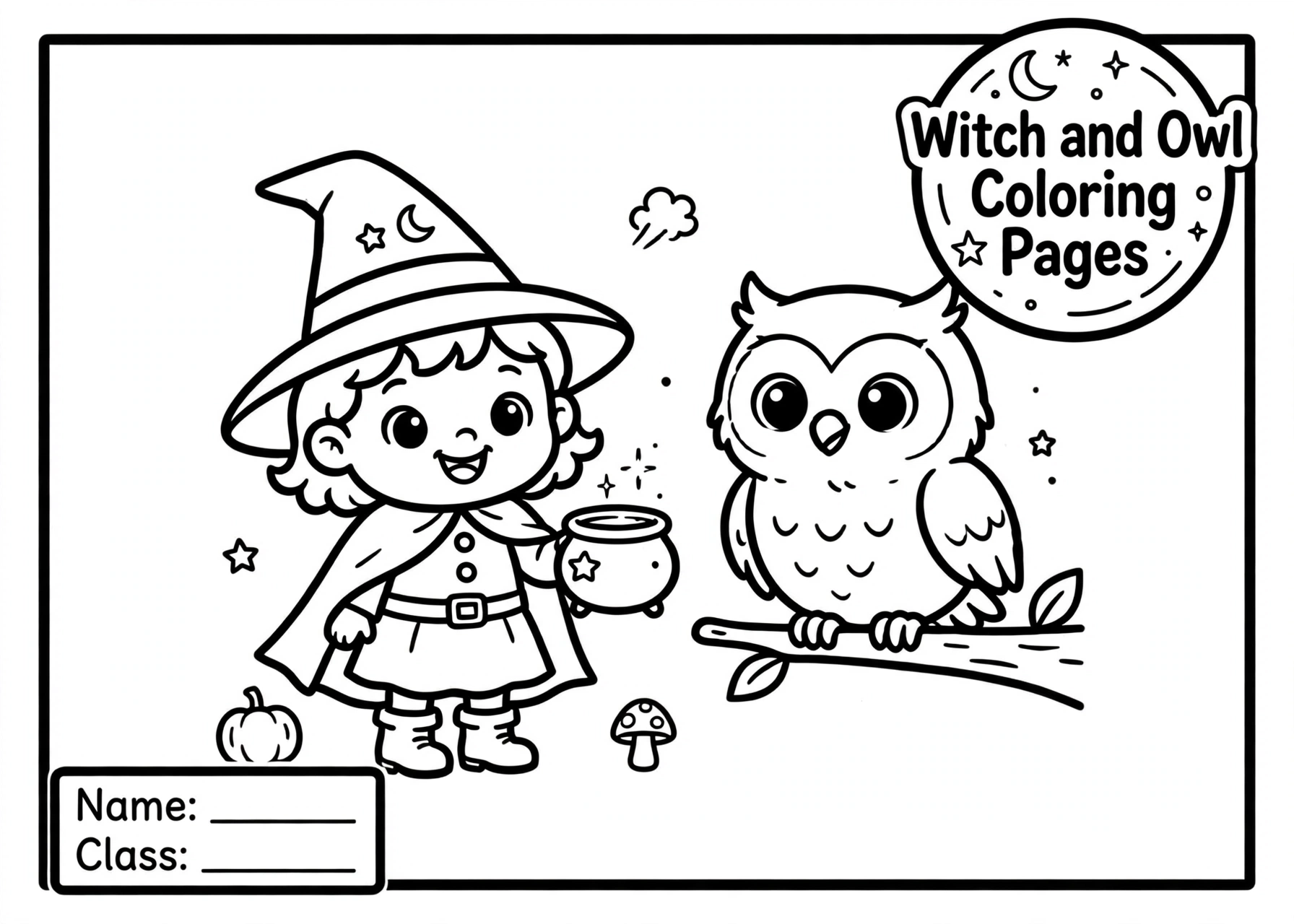
A Magical Pair in a World of Nighttime Stories
A witch and an owl make an interesting combination for a children’s coloring theme. Witches often appear in fairy tales and fantasy stories, while owls are commonly associated with quiet forests, moonlit nights, and mysterious surroundings. Together, they create an imaginative setting that can inspire many different stories.
The contrast between these two characters is part of what makes the theme enjoyable. A witch represents fantasy and magic, while an owl brings an element of wildlife into the scene. Children can imagine the owl as a magical companion, a clever forest visitor, or a friendly creature accompanying a witch on a nighttime adventure.
This combination also offers plenty of opportunities for individual color choices. A witch might wear a traditional dark outfit or a brightly colored costume, while the owl could have natural brown feathers or an unusual fantasy appearance. Children can decide how their characters look instead of following a fixed color scheme.
Exploring the Witch’s Outfit and Magical Details
A witch’s appearance often includes recognizable fantasy elements. Depending on the illustration, these may include a pointed hat, a flowing dress, a cloak, or other decorative accessories. Each feature offers a different coloring opportunity.
The hat can be colored black, purple, deep blue, or even bright orange. A dress might feature contrasting colors, while small decorative details can be highlighted with yellow, silver, or gold. If the illustration includes magical accessories, children can use brighter shades to make those elements stand out.
For a more imaginative appearance, try these combinations:
- Purple and black: A classic fantasy-inspired palette for a witch’s outfit.
- Orange and dark green: A playful combination that works particularly well for Halloween themes.
- Blue and silver: A cool color scheme for a moonlit magical character.
- Pink and lavender: A softer alternative for children who prefer cheerful fantasy designs.
- Gold and deep purple: A decorative combination for magical accessories.
Children can also experiment with patterns if the clothing has open areas. Small stars, moons, or simple geometric shapes can be added as optional decorations. These details help make each witch illustration feel different.
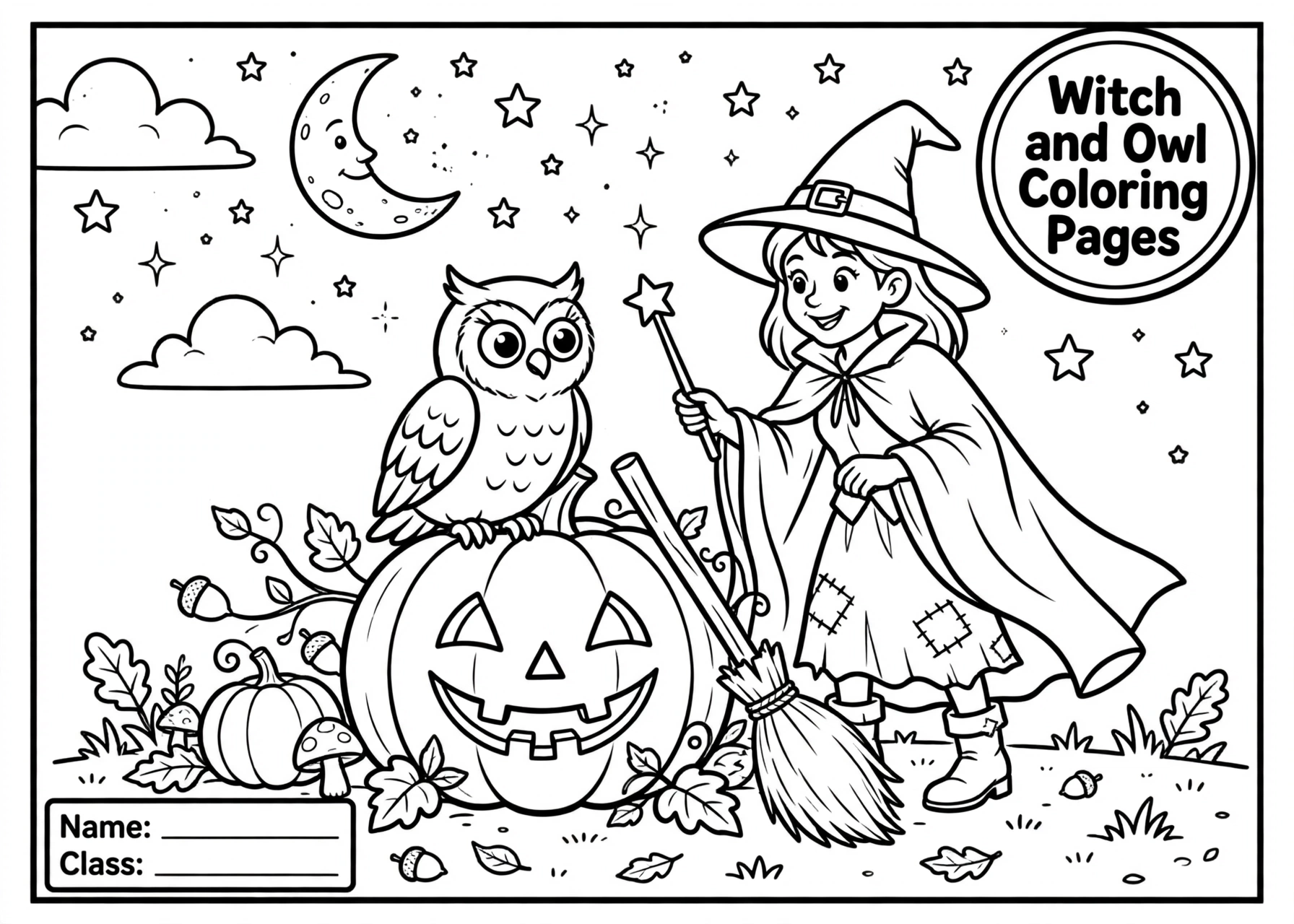
Give the Owl Its Own Personality
The owl provides an interesting contrast to the witch because its appearance is based on a real animal, even when it becomes part of a fantasy scene. Owls have large forward-facing eyes, distinctive facial discs, strong feet, and feathers that help them blend into their surroundings.
Many owls have brown, gray, cream, or white feathers, although their colors vary between species. Children can use these natural shades if they want a realistic-looking bird. A combination of light brown and dark brown can create contrast across the feathers, while yellow or orange can be used for the eyes and feet when appropriate.
For a more imaginative result, children might create an owl with purple feathers, turquoise wings, or colorful patterns. The important thing is to make the character visually interesting while enjoying the coloring process.
The owl’s eyes deserve particular attention. A small area of bright color can make the face stand out against darker feathers. Colored pencils are useful for working around the eyes and other narrow details without covering neighboring sections.
Parents can also introduce a simple nature fact during the activity. Owls are birds of prey, and many species are adapted to hunting at night. Their excellent hearing and specialized feathers help them locate and approach prey. This information can provide an interesting connection between the fantasy illustration and real wildlife.
Create a Nighttime Background for the Magical Scene
A witch and an owl naturally suggest a nighttime setting, making the background an important part of the creative experience. If the illustration includes open spaces, children can imagine a moonlit sky, distant trees, or a quiet forest surrounding the characters.
Dark blue, navy, and purple are useful colors for creating a nighttime atmosphere. A pale yellow or soft white moon can provide contrast, while small stars can add brightness to the sky. If trees appear in the illustration, different shades of green and brown can help distinguish their branches and leaves.
Children do not have to make every nighttime scene dark. A sunset-inspired background with orange, pink, and violet can create a different atmosphere. Some may even prefer a colorful fantasy forest filled with unusual plants and glowing-looking details.
An enjoyable activity is to let children choose the setting before they begin coloring. They can decide whether the witch and owl are visiting a forest, exploring a magical garden, or looking at the stars from a hilltop. This simple choice gives the illustration a story of its own.
Turn the Witch and Owl into Storytelling Characters
Once the main characters have their colors, children can invent a short story about their relationship. Perhaps the owl is a friendly companion who helps the witch find her way through the forest. Maybe the two characters are searching for something special or visiting a magical place together.
Parents and teachers can encourage children to give the owl a name and describe its personality. Is it quiet and observant, playful and curious, or always ready for an adventure? The witch can also have an imaginary name and a special ability.
Another idea is to ask children to describe what happens before or after the scene in the illustration. They might write two or three sentences or draw an additional picture showing the next part of the adventure.
For another imaginative character activity, children can explore these gingerbread man illustrations. The familiar storybook character offers a different creative theme while keeping the fun of fantasy-inspired artwork.
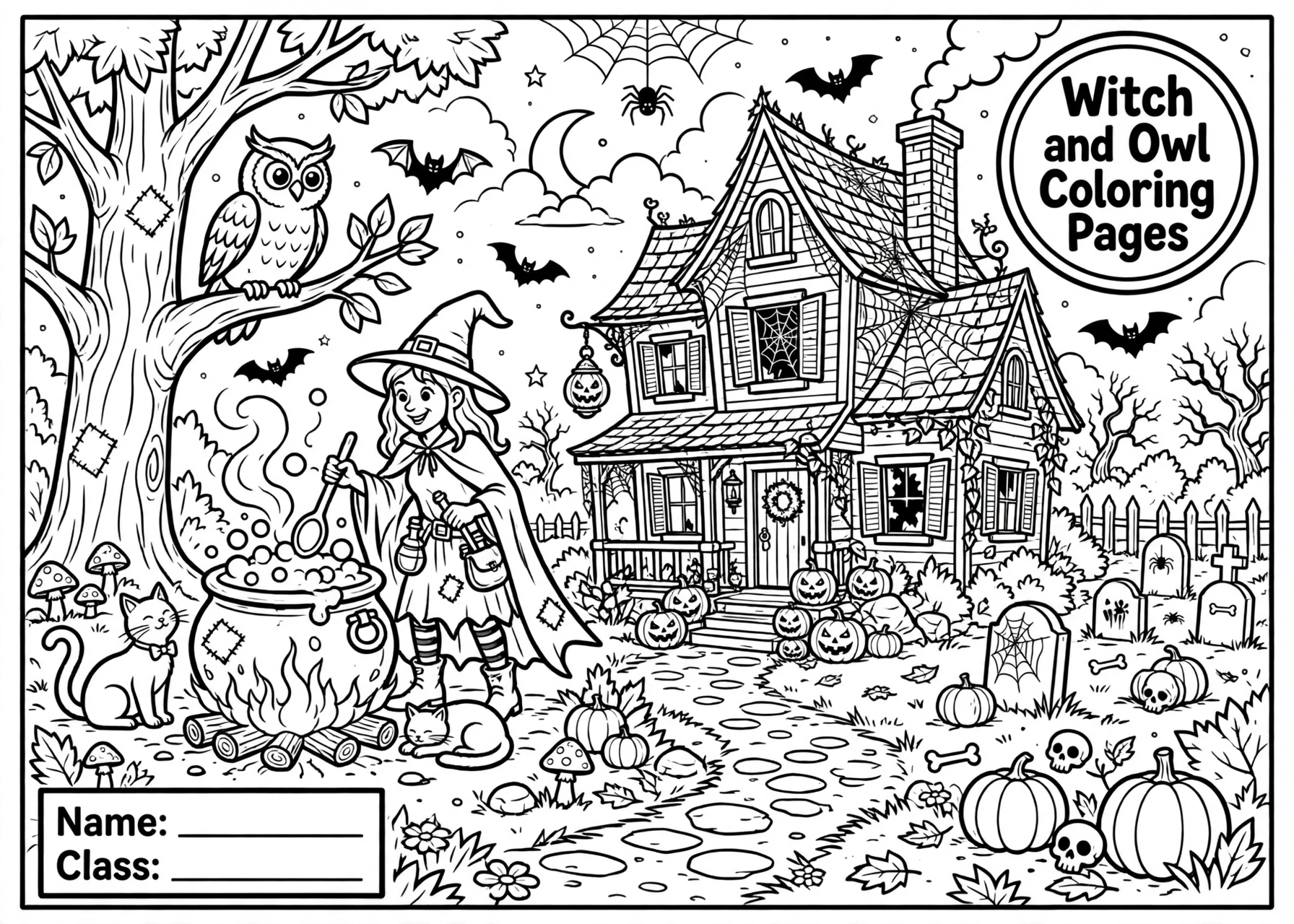
Coloring Techniques for Costumes, Feathers, and Small Details
Witch and owl illustrations may contain several different textures, so choosing suitable coloring materials can make the activity easier. Crayons are useful for larger sections such as clothing and background areas. Colored pencils provide more control when working on feather patterns, facial details, and decorative accessories.
Washable markers can produce bold colors, especially on larger shapes. However, placing an extra sheet beneath the paper is helpful if the markers are likely to show through.
A practical approach is to color the main characters first. Children can complete the witch’s clothing and the owl’s feathers before moving to smaller features. Afterward, they can work on the background and any additional decorations.
There is no need to achieve perfect shading. Children can simply use two shades of the same color to create variety. For example, light brown and dark brown can give the owl’s feathers more visual contrast, while light purple and deep violet can make the witch’s outfit more interesting.
For another nature-inspired activity featuring a small animal and flowers, explore these hedgehog and flower illustrations. This theme provides a gentler woodland alternative to the magical nighttime setting.
Enjoy a Magical Coloring Session at Home or School
Witch and Owl Coloring Pages can be used during a Halloween activity, a fantasy-themed classroom session, or a quiet afternoon at home. Parents can prepare crayons and colored pencils, allowing children to decide how their characters should look. Teachers can incorporate the illustration into a creative writing activity or a discussion about nocturnal animals.
Before printing, check the image in the print preview to ensure that the illustration fits the selected paper and that its details remain visible. Choose coloring materials that suit the child’s preferences and provide enough space to work comfortably.
When the artwork is finished, children can give their picture a title, display it with other creative projects, or share the story behind the witch and owl. Some may imagine a funny adventure, while others may create a mysterious tale about a magical forest.
With its combination of fantasy characters, fascinating wildlife, and nighttime scenery, this theme offers plenty of room for creative interpretation. Every witch and owl can have a different appearance, personality, and story, making each finished illustration a little magical world of its own.
