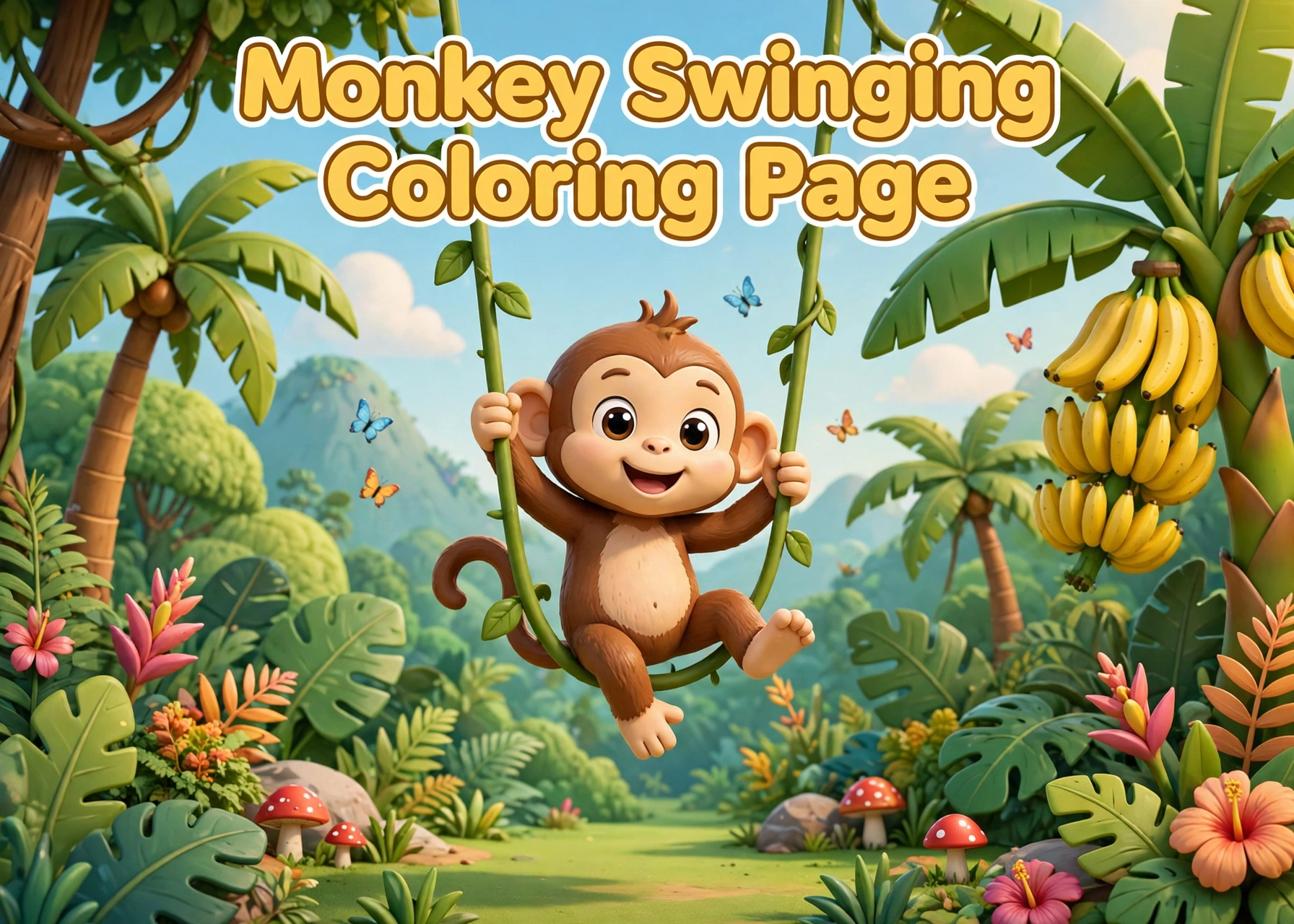
Monkey Swinging Coloring Page brings the lively world of monkeys into a fun creative activity for children. With the exciting idea of a monkey swinging through the trees, this theme invites young artists to explore jungle scenery, experiment with natural colors, and create their own imaginative wildlife adventures.
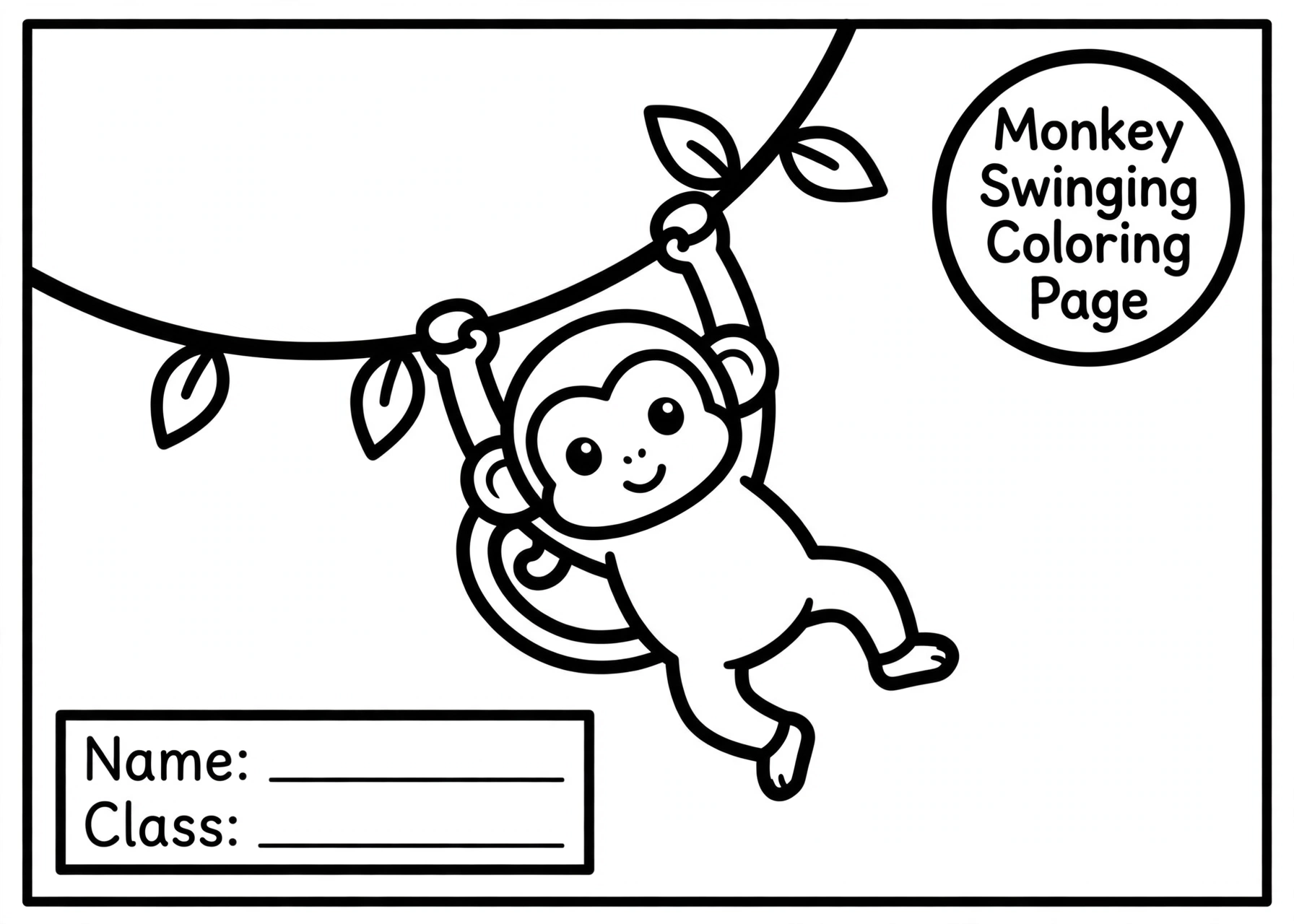
Discover the Excitement of a Monkey Swinging Through Trees
Monkeys are fascinating animals because of the way they move through their surroundings. Their strong arms, flexible bodies, and long tails help many species climb branches and travel between trees. A monkey swinging from one branch to another creates an energetic scene that naturally captures children’s attention. This movement also provides an interesting subject for coloring, especially when children want to bring an animal illustration to life.
The swinging pose offers more than a simple picture of a standing animal. Children can explore how the monkey holds a branch, stretches its body, and uses its tail for balance. Depending on the illustration, these details can become the main focus of the coloring activity. Young artists can choose realistic shades or invent their own playful combinations to make the monkey look unique.
A jungle-inspired setting can also make the experience more imaginative. Green leaves, winding branches, tall tree trunks, and distant plants are possible background elements to add if the illustration includes enough open space. These details help children think about where monkeys live and how they move around their natural environment.
What Makes Monkey Swinging Coloring Pages Interesting?
One appealing feature of this theme is its sense of movement. Many animal coloring subjects show creatures sitting, standing, or resting, while a swinging monkey suggests an active moment. Its raised arms, curved body, and extended tail can create interesting shapes that children can fill with different colors.
The monkey’s fur is another enjoyable detail to explore. Brown, golden brown, gray, and reddish shades can be used depending on the type of monkey children imagine. A lighter color around the face, hands, or belly can add contrast, while darker shades can help define the animal’s shape. Children do not need to follow realistic colors, however. A purple monkey or a bright orange jungle explorer can be just as entertaining in an imaginative coloring activity.
The surrounding branches and leaves offer a different coloring experience from the animal itself. Children can combine several shades of green to create depth in the foliage. Tree bark can be colored with brown, tan, or gray, while small details such as flowers or distant plants can introduce additional colors when appropriate.
Choosing Colors for the Monkey and Its Jungle Surroundings
A good coloring approach begins with the main subject. Children can start with the monkey’s body before moving to smaller areas such as its face, fingers, ears, and tail. Using one main fur color and a slightly lighter shade for selected areas can make the animal easier to recognize.
For a natural-looking monkey, consider these color combinations:
- Brown and beige: A familiar combination for a warm, natural fur appearance.
- Golden yellow and light brown: A cheerful option that gives the monkey a sunny look.
- Gray and cream: A softer combination for children who prefer cooler animal colors.
- Reddish brown and peach: A warm palette that creates an interesting contrast.
After coloring the monkey, children can work on the surrounding environment. Different green shades can represent fresh leaves, darker foliage, and shaded areas. Brown and tan work well for tree branches, while light blue can be used for visible sky areas. If the illustration has a simple background, children can also draw additional leaves, vines, or small jungle details around the main character.
Parents and teachers can encourage children to make their own choices instead of requiring every color to match nature. This gives each finished page a personal touch and makes the activity more enjoyable.
Simple Coloring Techniques for a Better Result
The shape of a swinging monkey includes several curved areas, so controlled coloring can help children keep their work neat. Starting with larger sections, such as the body and tail, is often easier than beginning with tiny details. Once the main areas are complete, children can carefully fill the face, hands, and other smaller sections.
Crayons are a practical choice for younger children because they are comfortable to hold and allow broad coloring strokes. Colored pencils are useful when children want more control over narrow areas, such as fingers or facial details. Washable markers can create brighter results, although it is helpful to place a spare sheet underneath the printable to protect the surface below.
Another enjoyable technique is using two shades of the same color. For example, children can apply light brown across the monkey’s body and add darker brown near selected edges. This simple approach introduces the idea of light and shadow without making the activity complicated.
There is no need to rush through the illustration. Children can complete the monkey first, take a short break, and return to the leaves and branches later. A relaxed pace allows them to pay attention to small details while enjoying the process.
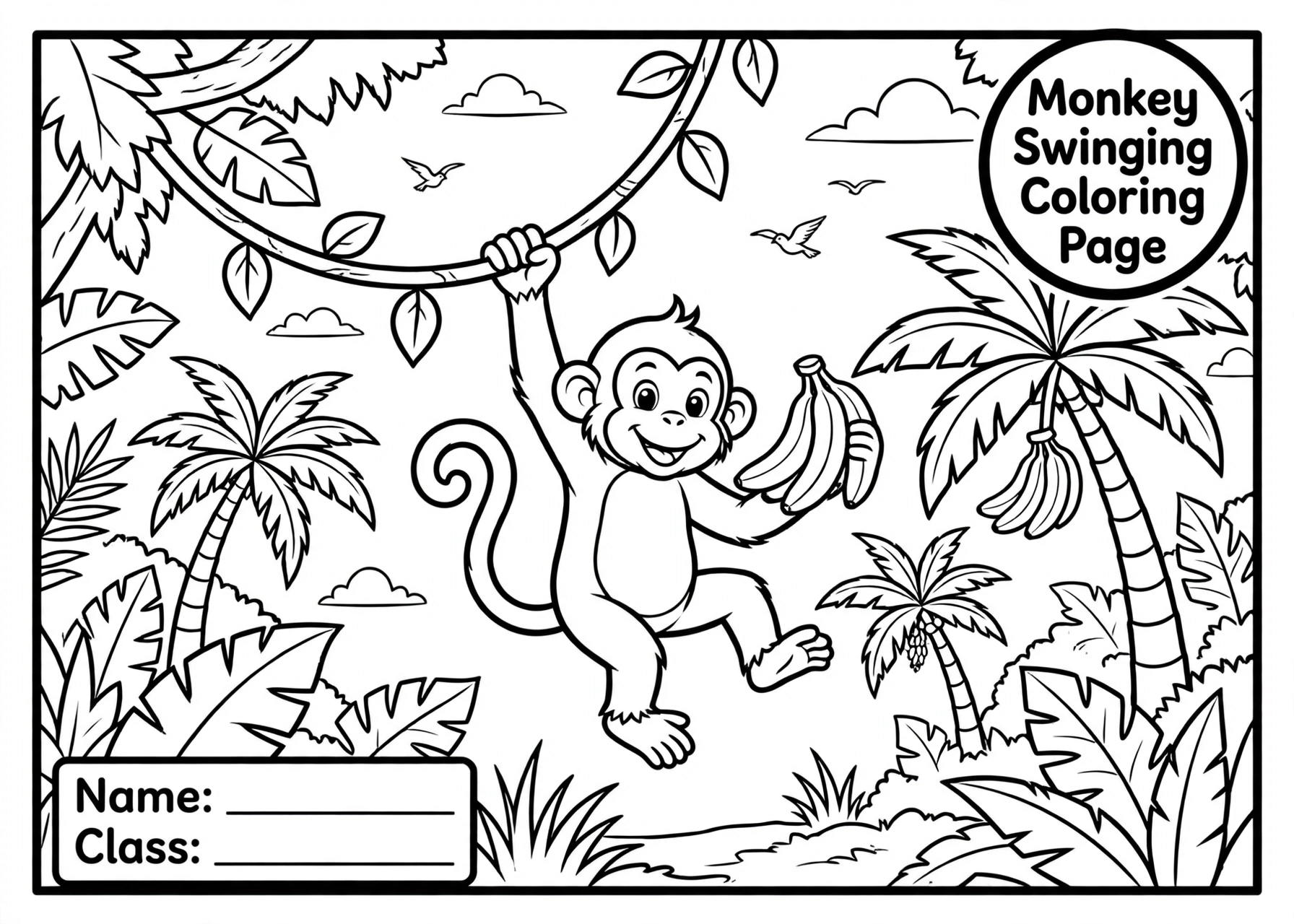
Turn the Coloring Activity into a Mini Jungle Discovery
A monkey swinging through trees can become the starting point for a short nature-themed conversation. Parents or teachers can introduce simple facts about monkeys while children work on their illustrations. For example, many monkeys have grasping hands and feet that help them hold branches, while some species also use their tails to assist with balance or movement.
Children can also compare monkeys with other animals that live in forests. They might notice that different animals have different ways of moving, finding food, and protecting themselves. For another creative nature activity, explore these cute wildflower designs and discover how plants can add variety to a nature-inspired coloring collection.
For a more decorative coloring experience, children who enjoy repeated patterns and detailed shapes may also like these animal mandala designs. The different artistic approach offers another way to explore animal themes through coloring.
An additional activity is to invite children to give their monkey a name and imagine where it is going. Perhaps it is searching for ripe fruit, joining other monkeys, or exploring a new part of the forest. They can describe the scene in a few sentences or draw a small picture showing what happens next. This turns a single coloring sheet into a simple storytelling opportunity.
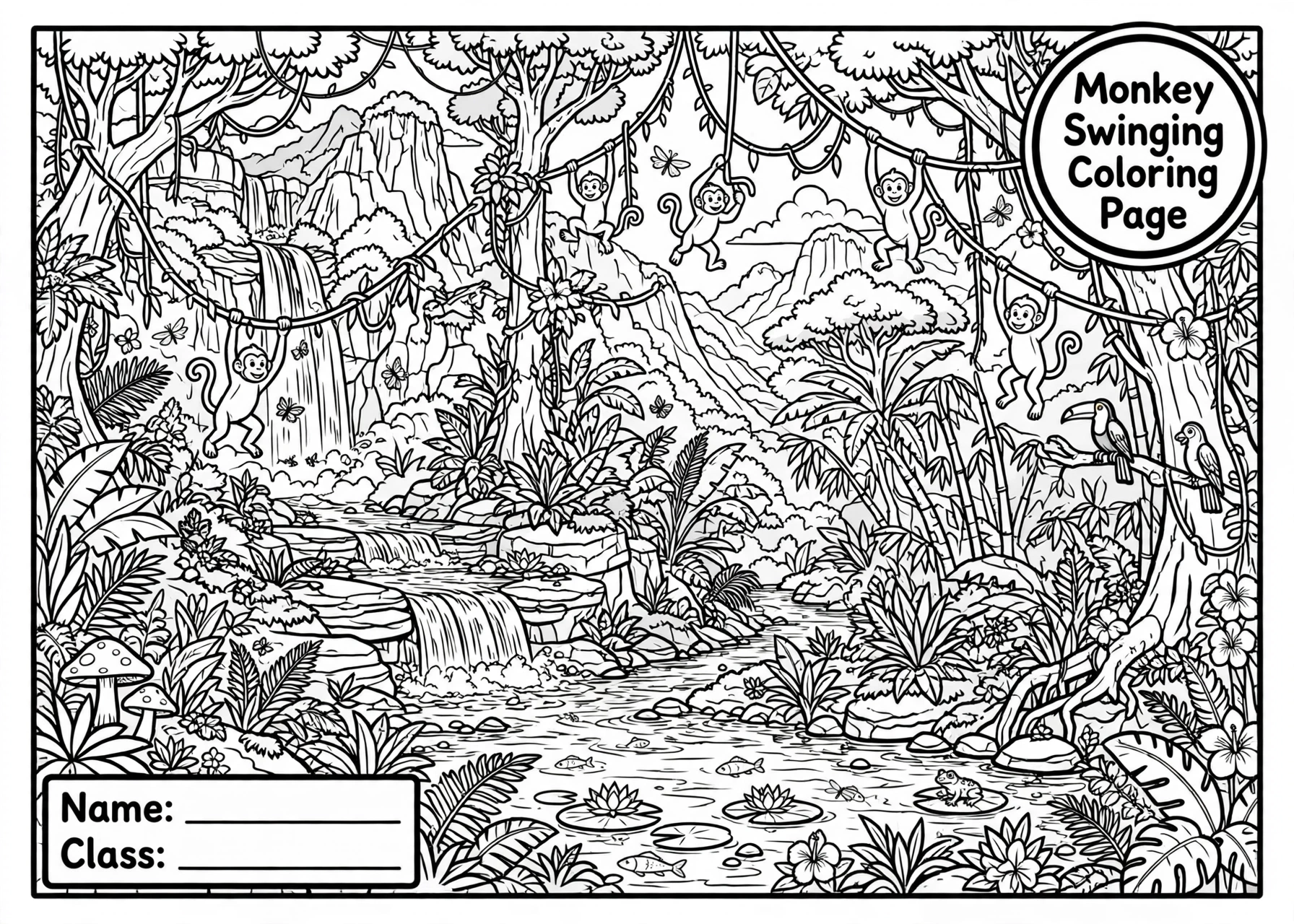
Making Monkey Swinging Coloring Time Enjoyable at Home or School
A monkey swinging coloring activity can fit naturally into a quiet afternoon at home, an animal-themed classroom session, or a creative learning corner. Parents can prepare crayons or colored pencils and let children choose their preferred colors. Teachers can use the illustration as a starting point for a lesson about forest habitats, animal movement, or the differences between wild and domestic animals.
Before printing, check the available image and its print preview to make sure the illustration appears clearly on the selected paper. Adjust the printer settings if necessary so that important parts of the picture are not cut off. Keeping a few coloring tools nearby can help children begin without interruptions.
Once the page is finished, children can display their artwork on a bedroom wall, classroom board, or personal art folder. They may also enjoy comparing their color choices with friends or family members. Each monkey can have a different appearance, even when everyone starts with the same illustration.
Monkey Swinging Coloring Page offers a lively way to combine animal appreciation, imaginative play, and creative expression. Whether children choose natural fur colors or invent a colorful jungle character, the activity gives them room to explore the world of monkeys one cheerful coloring stroke at a time.
