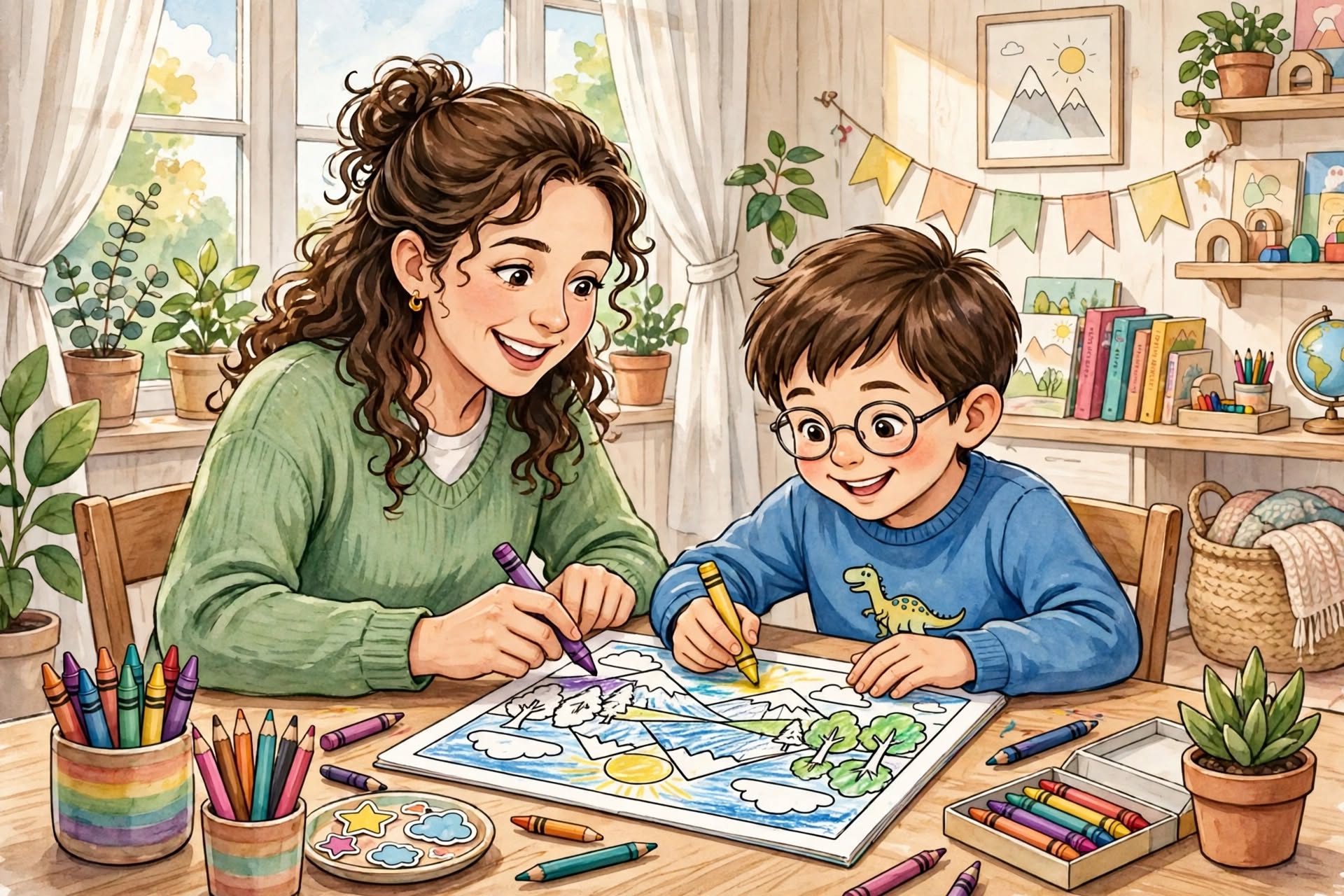
Landscape Coloring Pages invite children to explore the beauty of nature through mountains, rivers, gardens, forests, and open skies. These printable coloring activities turn scenic views into creative opportunities for children to experiment with colors and imagine their own beautiful outdoor worlds.
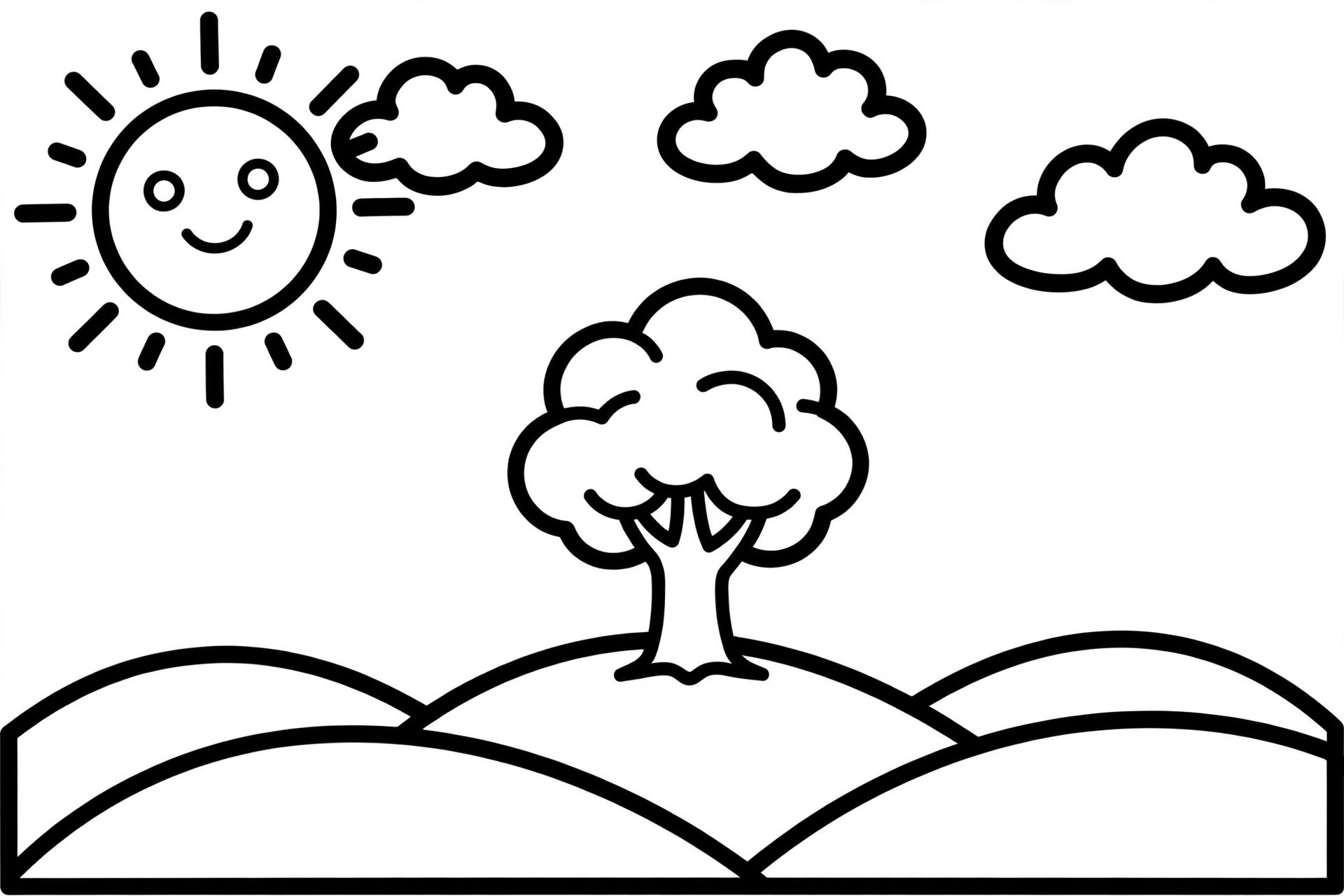
Discover the Beauty of a Landscape
A landscape is more than a picture of a place. It brings together different elements of nature, such as trees, hills, flowers, clouds, water, and the sky. When these elements appear together in an illustration, they create a scene that children can explore through coloring.
Landscape Coloring Pages offer a different experience from pictures that focus on a single object or character. Instead of coloring one main subject, children can look at the entire scene and decide how its different parts should appear. A mountain might be covered in green trees, a river could wind through a valley, or a field might stretch beneath a wide sky.
These scenes can remind children of places they have visited, such as a garden, a beach, a countryside road, or a park. They can also inspire imaginary destinations that exist only in their minds.
The appeal of landscape coloring lies in the freedom to create a setting. Children can use familiar colors to represent nature or invent a completely different world with unusual shades and combinations.
Start with the Sky and Build the Scene
The sky is often one of the largest areas in a landscape illustration, making it a natural place to begin coloring. Children can choose a light blue for a clear day, a deeper blue for a bright afternoon, or shades of orange and pink for an imagined sunset.
If the illustration includes clouds, children can leave them white or use a very light shade of blue or gray. A sunset scene might include several colors blending across the sky, while a nighttime landscape could use dark blue, purple, and small yellow stars if the design allows.
Once the sky is finished, children can move toward the other parts of the picture. Hills, mountains, trees, and buildings may appear in different sizes, giving children opportunities to experiment with colors and visual contrast.
For a simple coloring challenge, ask children to select three colors for the sky and blend them gently using colored pencils. They can also use separate shades for different parts of the sky instead of blending everything together.
Bring Natural Features to Life
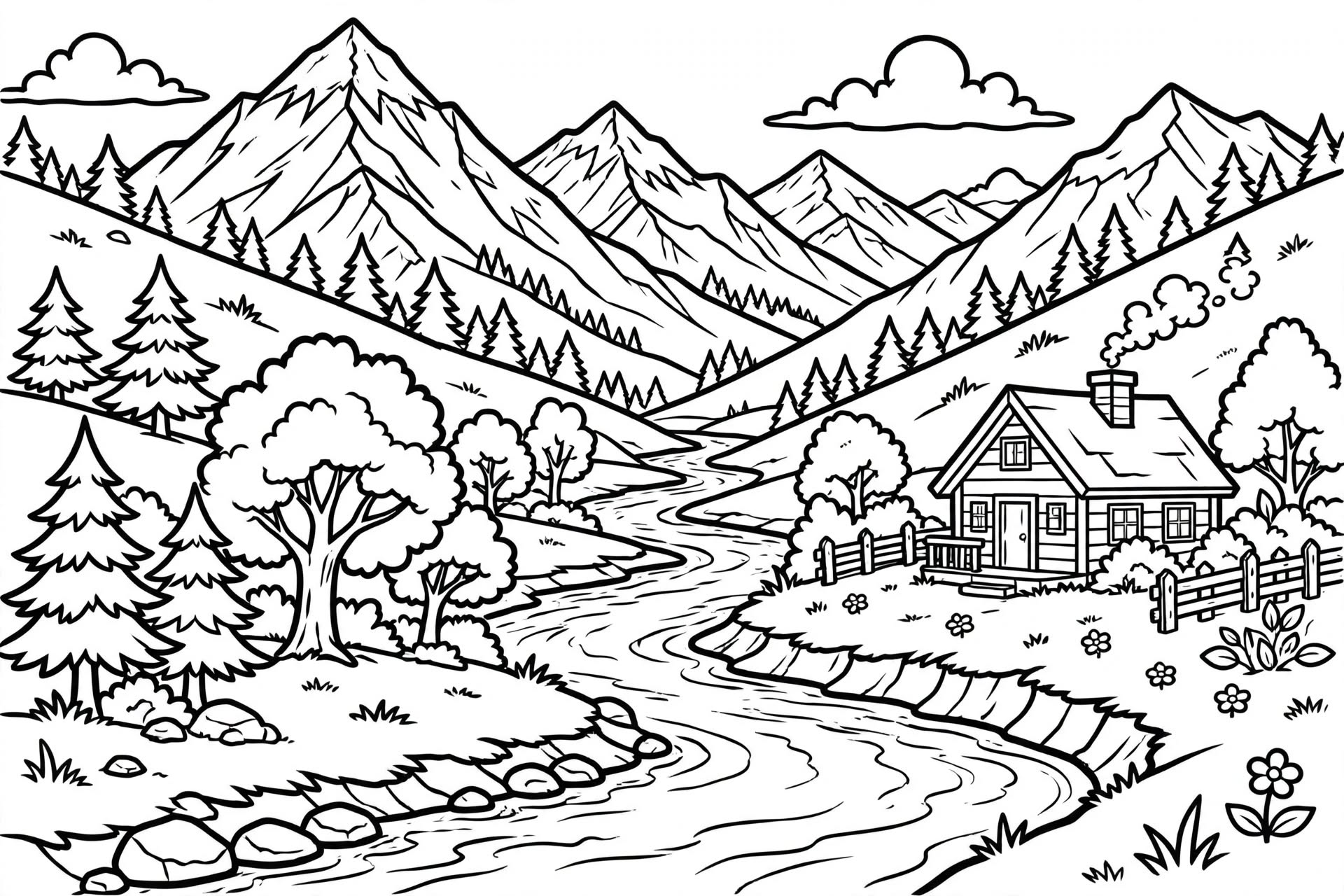
Landscapes often contain a variety of natural features, and each one offers a different coloring experience.
Trees can be colored in several shades of green, with brown trunks and branches. Children may choose darker greens for dense forests and lighter greens for trees growing in sunny areas.
Mountains can be gray, brown, green, or even purple. A snowy mountain might have white areas near the top, while a grassy hill could be covered in different shades of green.
Water provides another opportunity to experiment. Rivers, lakes, and ponds can be colored blue, turquoise, or green depending on the imaginary setting. Children can add lighter shades to suggest reflections or leave some areas white to represent sunlight on the water.
Flowers and small plants can introduce brighter colors into a landscape. Red, yellow, pink, and purple flowers can stand out against green grass, making the scene look lively without requiring every part of the picture to be brightly colored.
Choose a Landscape That Matches Your Imagination
Not every landscape has to look the same. Some children may prefer familiar outdoor scenes, while others enjoy coloring places that feel mysterious or adventurous.
A countryside landscape can include open fields, winding paths, and distant hills. A mountain scene might inspire children to imagine hiking, exploring, or looking for animals. A beach landscape could include sand, waves, and a bright sky.
If the illustration includes a garden or pond, children can think about the plants and creatures that might live there. A peaceful pond, for example, can become a setting for an imaginary story about frogs, butterflies, or birds.
Children can also create their own landscape by adding details to open areas of the illustration. They might draw a small house, a winding path, a flower patch, or a group of birds in the sky.
These additions are optional and should depend on the available space in the picture. A detailed landscape can be enjoyed as it is, while a simpler scene may leave room for children to add their own ideas.
Make Coloring a Creative Exploration
Landscape Coloring Pages can be used during a quiet afternoon at home, a classroom art activity, or a family creative session. The activity is flexible because children can work on the entire picture at once or focus on one section at a time.
Crayons are useful for coloring large areas such as the sky, grass, or water. Colored pencils can help children add smaller details and combine different shades. Washable markers can create bright colors for flowers, trees, and other features that stand out.
For younger children, adults can suggest beginning with larger areas before moving to smaller details. Older children may enjoy choosing a color palette before starting and deciding how the different parts of the landscape will work together.
Teachers can invite children to describe the scene after they finish coloring. They might explain what kind of place it is, what the weather feels like, or which part of the landscape they would most like to visit.
Explore Other Nature-Inspired Coloring Activities
Children who enjoy landscapes may also like coloring illustrations that focus on particular parts of nature. For example, a lily pond offers an opportunity to explore water, flowers, and the plants that grow around a pond.
This theme can provide a more focused coloring experience while keeping the connection to natural surroundings. Children can experiment with different shades of green, blue, and pink as they imagine a peaceful pond filled with flowers.
For a seasonal change, the Christmas kitten offers a festive subject with a different atmosphere. Moving between nature scenes and holiday illustrations can give children variety while allowing them to continue enjoying creative coloring activities.
Turn a Finished Landscape into a Story
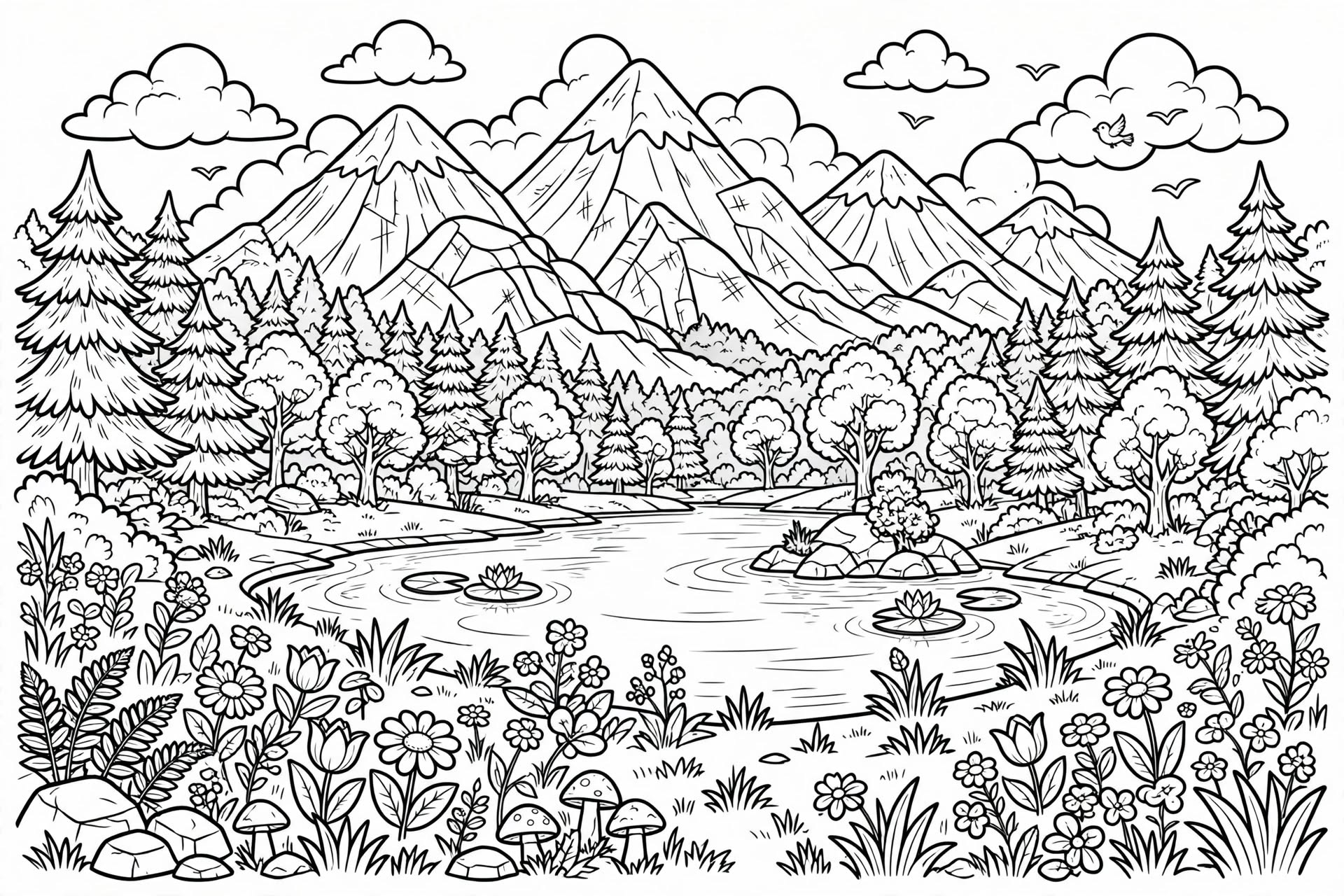
After completing a landscape, children can imagine what might happen in the place they have colored. A mountain scene could become the setting for a family adventure, while a garden might inspire a story about a little bird searching for a home.
Children can give their landscape a name, describe the weather, or imagine who lives there. They may also draw a second picture showing another part of the same imaginary place.
Landscape Coloring Pages offer a simple way for children to combine art with their own ideas about the world. Every choice, from the color of the sky to the shade of a distant hill, helps create a scene that feels personal and unique.
Whether children choose a peaceful garden, a wide countryside, or a colorful imaginary valley, landscape coloring gives them the freedom to explore nature through their own creative perspective.
