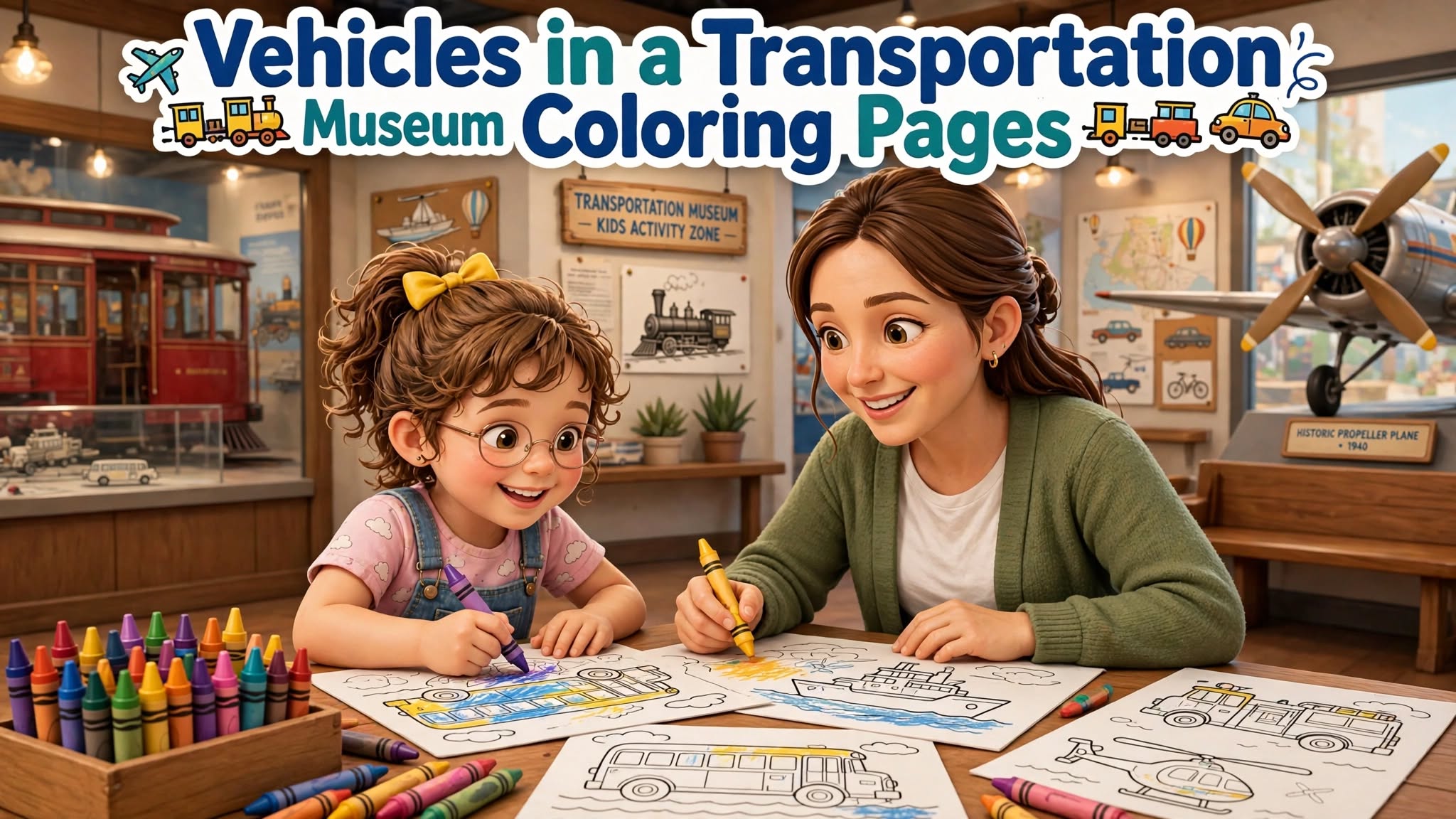
Vehicles in a Transportation Museum Coloring Pages introduce children to the fascinating world of vehicles from different times and places. With this printable coloring theme, kids can imagine exploring a museum, discovering old and modern transportation, and creating their own colorful collection of vehicles.
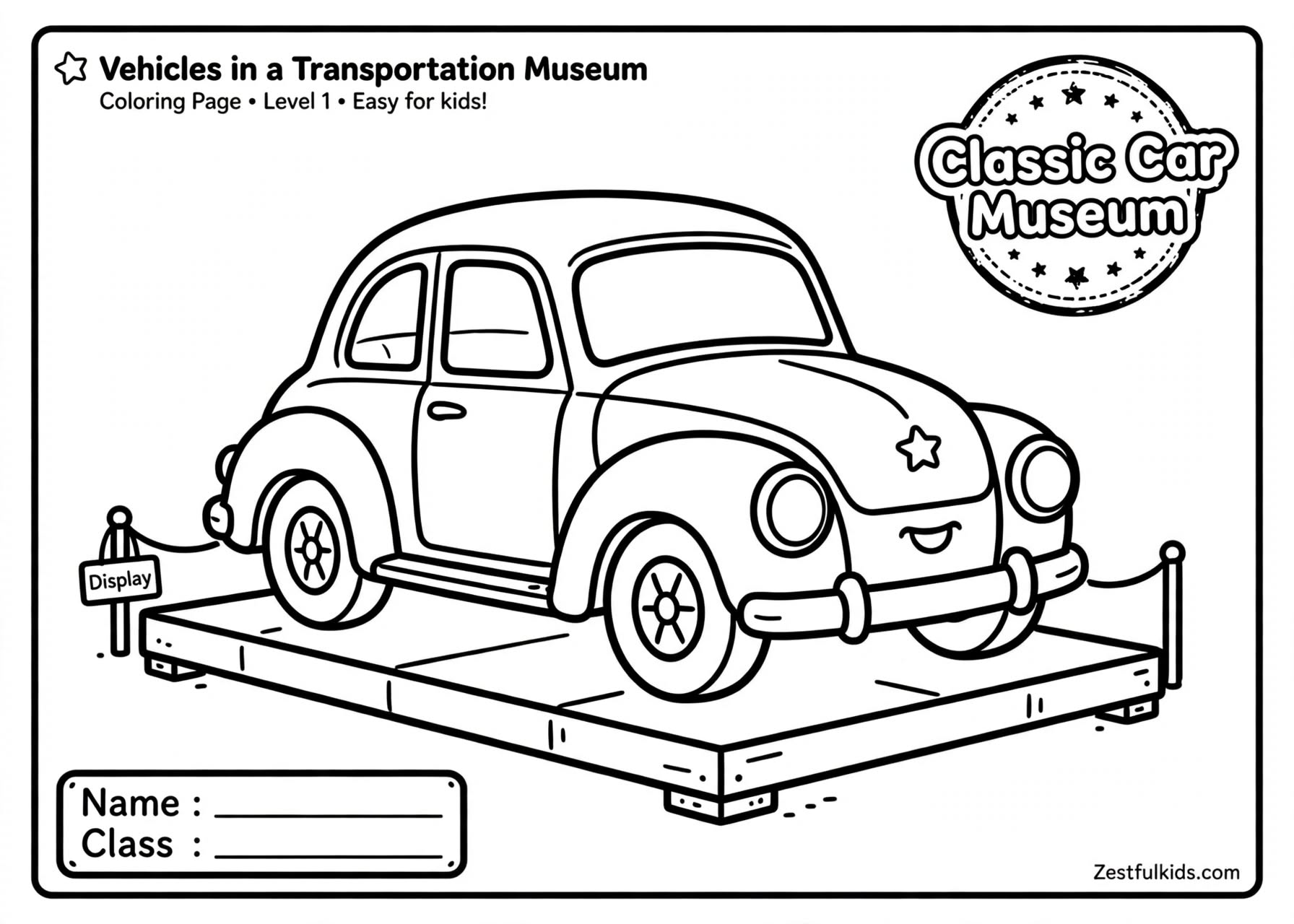
A Museum Adventure on Paper
A transportation museum is a place where visitors can learn about the many ways people have traveled and moved goods throughout history. Depending on the collection, a museum may display cars, buses, trains, bicycles, boats, or other forms of transportation. Each vehicle has its own shape, purpose, and story to inspire curiosity.
Vehicles in a Transportation Museum Coloring Pages bring this kind of exploration into a child-friendly creative activity. Instead of walking through exhibition halls, children can enjoy coloring vehicles on paper and imagining what makes each one interesting. The theme provides a chance to look closely at transportation while making personal choices about colors and details.
Children may already recognize some vehicles from everyday life, such as buses and cars. Others may seem unusual because they have different shapes or designs from the vehicles they see on the road today. Coloring gives children time to notice these differences and invent their own ideas about the vehicles.
Look Closely at Vehicle Shapes and Details
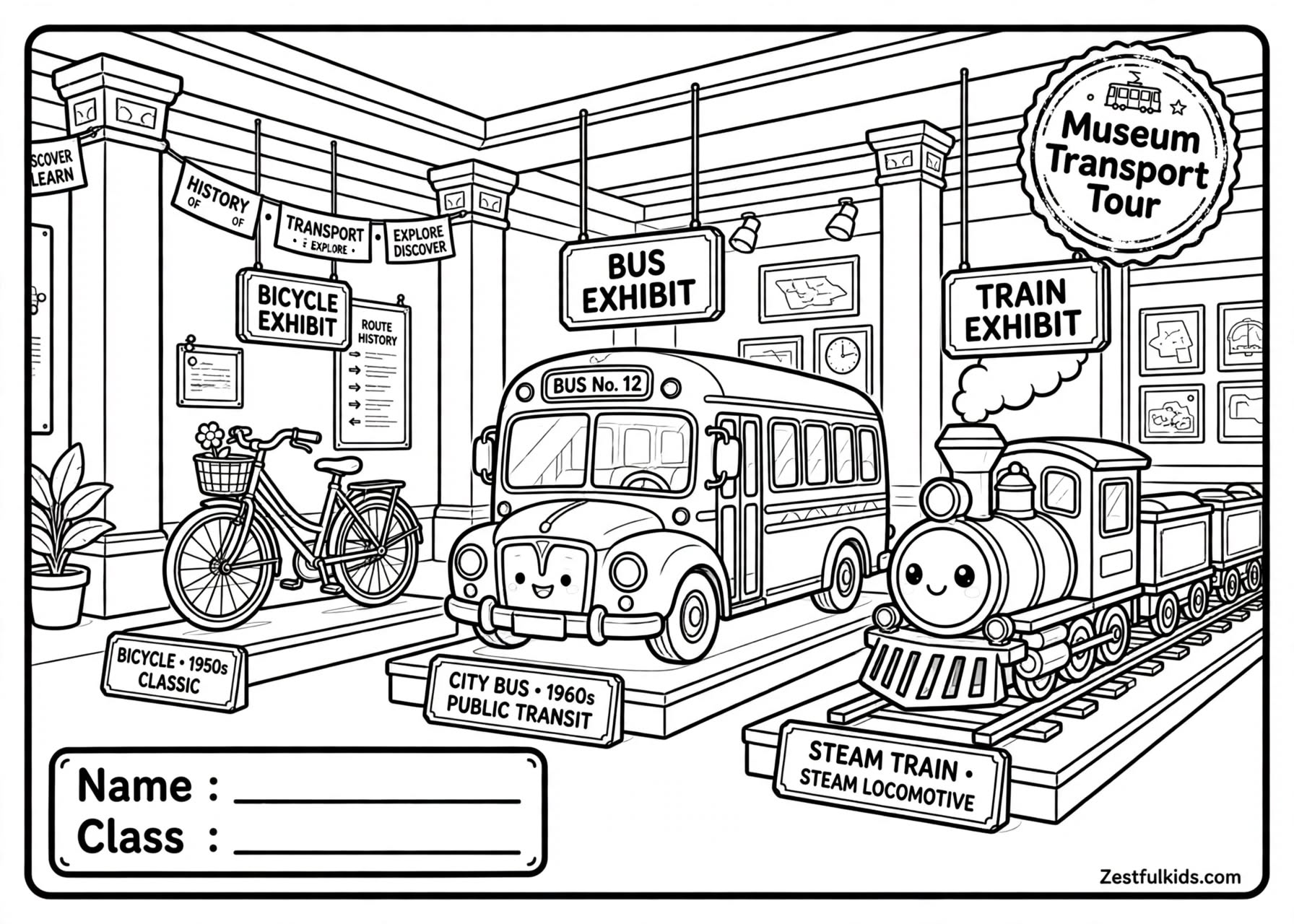
Vehicles can be recognized by their distinctive features. A train has a long body and connected carriages, while a bus often has a large passenger area and several windows. A bicycle has two wheels, a frame, and handlebars, while a boat is designed to travel on water.
When coloring a vehicle, children can begin by identifying its largest parts. They might color the body first, then choose separate shades for the wheels, windows, or other visible details. This approach can make the picture easier to work with, especially when a design includes several sections.
Color choices can also reflect different ideas about a vehicle. A child might imagine a vintage car in a classic shade, a bright yellow bus, or a train with contrasting colors across its carriages. There is no need to match a real museum exhibit exactly; the coloring activity can be guided by imagination.
Imagine Visiting a Transportation Museum
The museum theme offers a natural setting for storytelling. Children can picture themselves entering a large exhibition space, walking from one display to another, and deciding which vehicle they would like to learn about first.
Parents and caregivers can encourage this imaginative visit with simple prompts. Ask which vehicle looks most unusual, which one might carry passengers, or which one the child would choose for a pretend journey. These questions can make coloring more interactive without requiring detailed historical knowledge.
For a classroom activity, children could imagine that they are museum guides. Each child chooses a vehicle to color and then shares a short description with classmates. They might explain where the vehicle travels or what kind of job it does.
Create a Color Scheme for the Collection
A transportation museum can include vehicles with very different appearances, so children have plenty of room to experiment with colors. They may decide to use one color family across the entire picture or give every vehicle a distinct look.
Colored pencils are helpful when children want to add gentle shading or work carefully around small details. Crayons are suitable for filling larger spaces, while markers can make bold areas stand out. If children use several tools, they can try combining them on different parts of the picture.
For a coordinated museum display, children might choose a few colors and repeat them across different vehicles. Alternatively, they can make every vehicle unique, as if each one belongs to a different collection or era. Both approaches are valid, and the choice can depend on the child’s preference.
Add a Museum Setting
If the printable design includes open space, children may want to add details that suggest a museum environment. They can draw a simple floor, display signs, or a background wall. A few extra lines may be enough to make the vehicles feel as though they are arranged inside an exhibition.
Another option is to imagine an outdoor transportation museum. Children could add a path, trees, or a station-like building around their colored vehicles. These are optional ideas for extending the activity, not features that need to be present in the original illustration.
The background can remain simple if the child prefers to focus on the vehicles. A blank area is not a problem; it can leave the main subject easy to see and give the finished picture a clean appearance.
Connect the Theme with Everyday Transportation
After coloring, children can compare the museum vehicles with transportation they know from daily life. They might talk about riding a bus, seeing a train at a station, or watching cars travel along a road. These familiar experiences can help them relate the activity to the world around them.
Families can also explore how different vehicles serve different purposes. Some are designed to carry many people, some transport goods, and others help people travel across water. Children can discuss which types they have seen and which ones they would like to learn more about.
For a change of subject, children may enjoy coloring familiar pets through Cat and Dog Coloring Pages. The animal theme offers a different creative direction after spending time exploring vehicles and transportation.
Make Coloring Time a Shared Activity
Vehicles in a Transportation Museum Coloring Pages can be enjoyed at home, in a classroom, or during a quiet creative session. Adults can offer coloring tools and let children choose where to begin. There is no need to complete the picture all at once; children can return to it whenever they feel interested.
Teachers and caregivers may use the theme as a starting point for a simple show-and-tell activity. Children can share the colors they selected or describe the vehicle they found most interesting. Those who prefer not to speak in front of a group can simply display their finished artwork.
Children who enjoy drawing can extend the activity by creating their own imaginary museum vehicle on a separate sheet of paper. It could be a new kind of train, a futuristic bus, or a vehicle that combines features from several forms of transportation. The museum theme encourages them to look, imagine, and create at their own pace.
