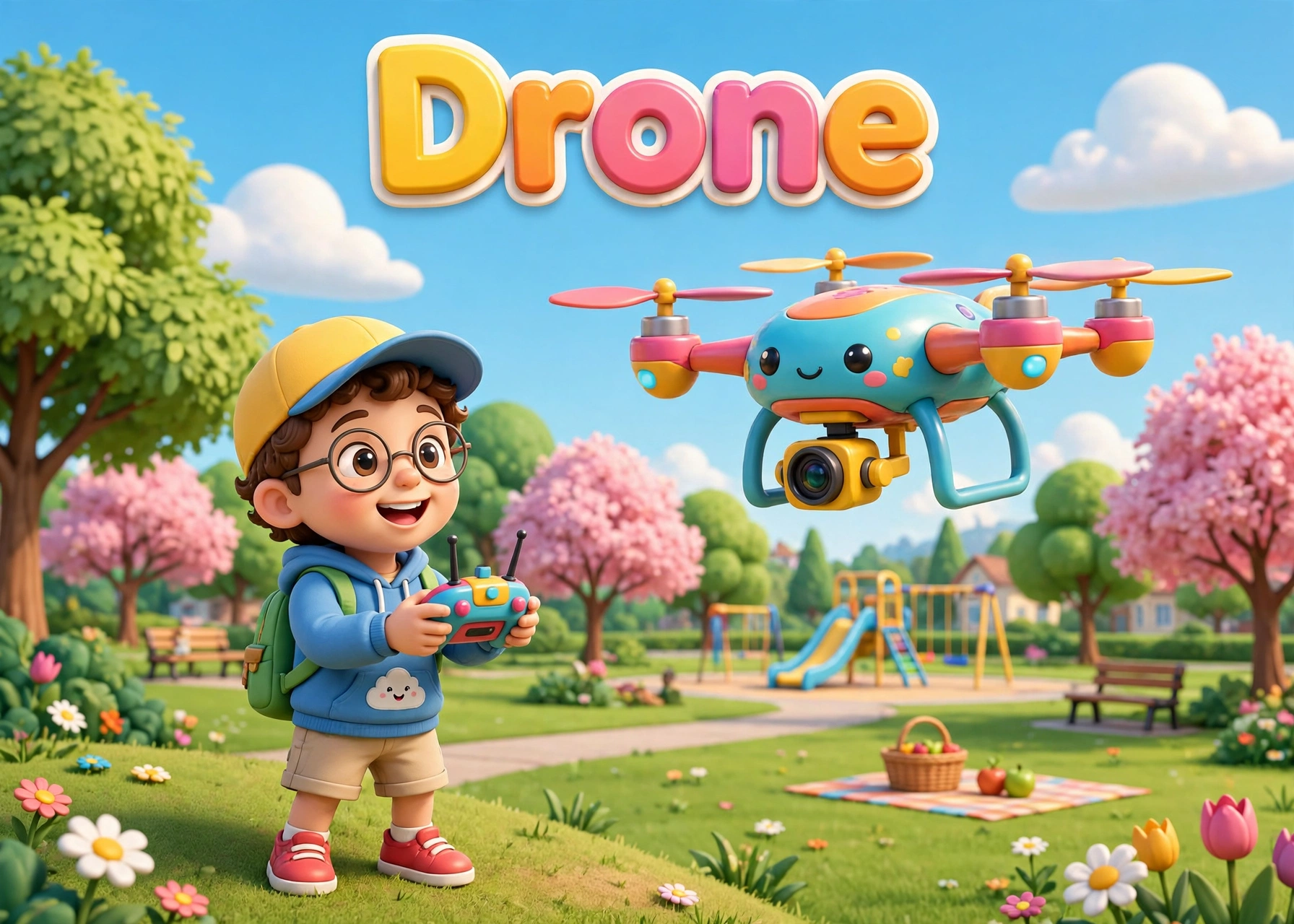
Drone Coloring Pages introduce children to the fascinating world of flying technology through a creative and enjoyable activity. From spinning propellers and compact bodies to cameras and remote controls, drones offer plenty of interesting details for children to explore while coloring.
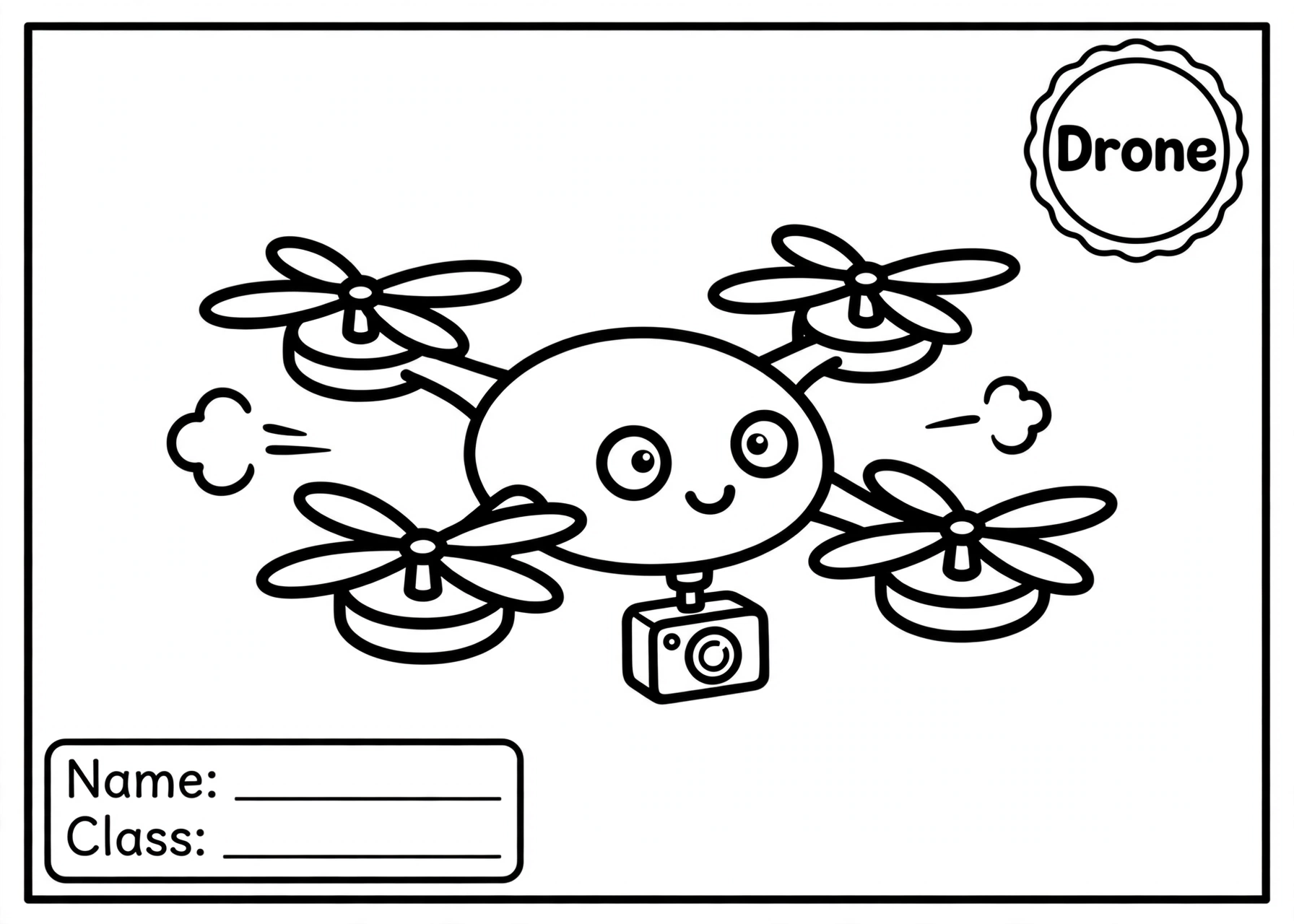
Discover the Different Parts of a Drone
A drone is a flying device that can be controlled remotely or programmed to perform certain tasks. Many familiar consumer drones have four propellers, a central body, and landing supports. Some models also carry cameras that allow users to capture photographs and videos from above.
These features make drones interesting subjects for children’s coloring activities. Unlike ordinary vehicles with wheels, drones move through the air using rotating propellers. Their distinctive structure gives children several different shapes to recognize and color.
The propellers are among the most noticeable parts. They are usually attached to arms extending from the main body, creating a balanced arrangement. Children can choose matching colors for each propeller or give every arm a different shade to create a more imaginative design.
The central body can be colored in bright combinations such as blue and yellow, red and black, or green and orange. If the illustration includes a camera, children can use gray or dark colors for the lens area. Small landing supports, buttons, and other visible details can receive contrasting shades.
Make the Drone Look Realistic or Imaginative
One enjoyable aspect of coloring a drone is the freedom to choose its appearance. Real consumer drones often feature neutral colors such as white, black, and gray. However, children’s artwork does not need to follow the appearance of actual products.
For a realistic-looking drone, try using a gray body with black propellers and small blue details. White and silver-inspired shades can also create a modern technological appearance. Children can add darker tones around the camera or body sections if they want to make certain features stand out.
A more imaginative approach might involve creating a colorful flying machine. Bright purple arms, an orange body, and green propellers can turn an ordinary drone into a fictional invention. Children can even imagine that their drone belongs to a futuristic world where flying devices help people explore distant places.
Patterns can add further variety. Small stripes, dots, geometric shapes, or simple symbols can decorate the drone’s body. If the illustration has enough open space, children may also add a fictional model name or a small emblem.
What Could a Drone See from Above?
Drones are often used to capture aerial photographs and videos. This makes them a useful starting point for imaginative conversations about landscapes, buildings, and the world from a different perspective.
Children can imagine their drone flying above a garden, a beach, a city, or a wide green field. If the printable includes a background, they can use suitable colors to create the setting. If it focuses only on the drone, they can draw an imaginary landscape on another sheet of paper.
Different backgrounds can create different stories. A drone above a forest might be exploring the treetops, while one flying over a beach could be capturing the coastline. A city setting might include buildings, roads, and rooftops viewed from above.
Parents can encourage children to describe what their imaginary drone is observing. They might invent a mission to photograph a beautiful garden or imagine using a drone to inspect a tall building. These ideas connect the coloring activity with everyday examples of how flying technology is used.
It is also worth explaining that drones should be operated responsibly. Real drones must be flown in appropriate areas, away from people and restricted locations, and under adult supervision when children are involved.
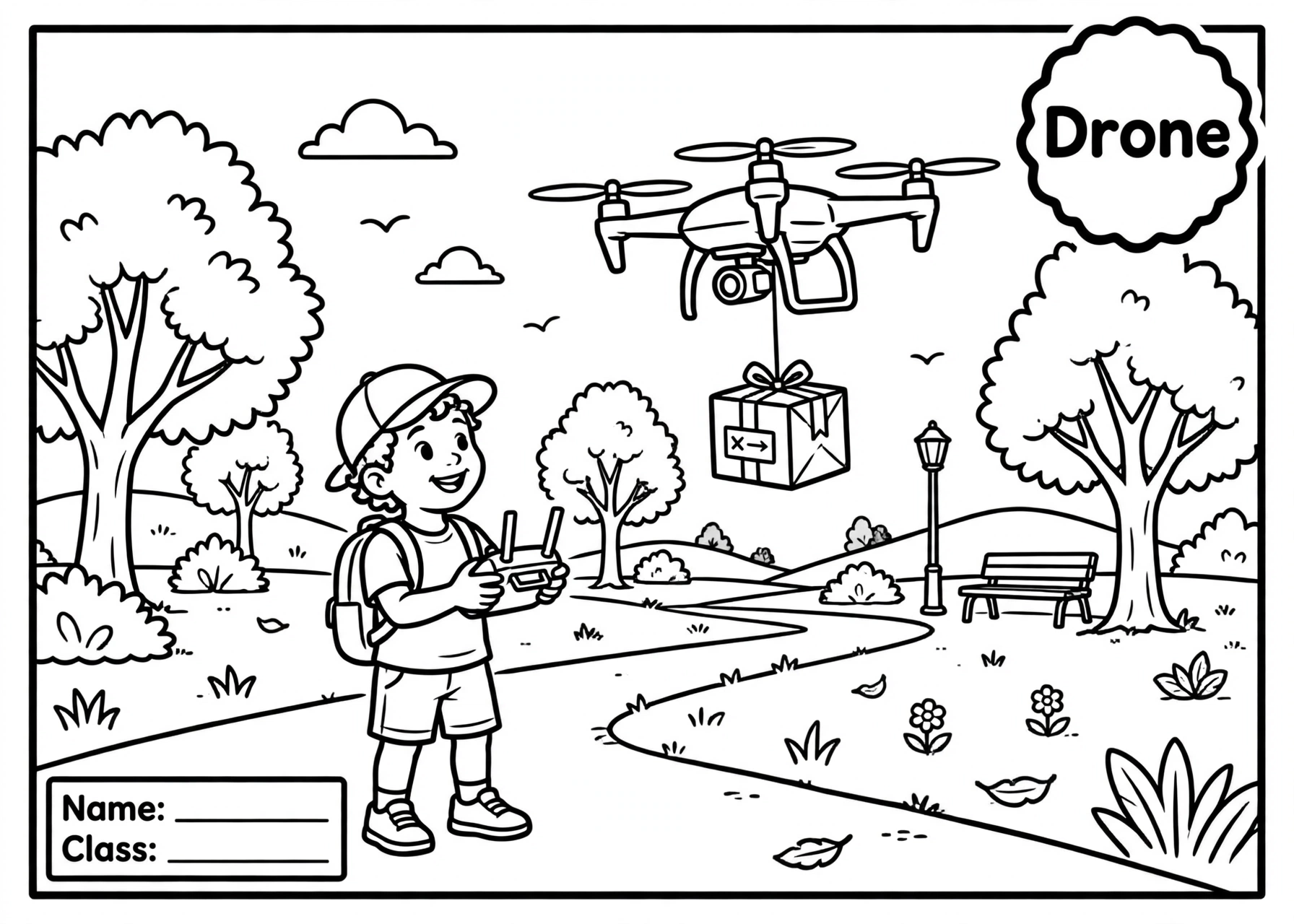
Explore Drone Features Through a Creative Activity
Rather than simply coloring every section, children can turn the illustration into a small technology-themed project. They can identify the propellers, main body, camera, and landing supports if those parts are visible in the picture.
An easy activity is to assign a different color to each major component. For example, the body could be blue, the propellers black, and the landing supports gray. This makes the different parts easier to distinguish.
Older children may enjoy drawing a simple design of their own. They can imagine a drone designed for a particular purpose, such as taking photographs, delivering small supplies, or exploring difficult-to-reach places. They can give their invention a name and describe what makes it different from an ordinary drone.
Teachers can use this idea during a classroom discussion about technology. Children can talk about how drones move, why propellers are important, and what kinds of tasks drones can perform. The discussion can remain simple and suitable for the children’s level of understanding.
Choosing the Right Colors and Coloring Tools
Drone illustrations often contain several small mechanical details, so the choice of coloring materials can make a difference.
Colored pencils are useful for narrow propellers, small buttons, camera details, and other compact sections. They allow children to control their strokes and combine different shades. Crayons work well for larger body sections and open background areas.
Washable markers can produce strong colors, especially when children want their drone to look bright and futuristic. However, thicker paper may be preferable when using markers because ink can sometimes show through ordinary printing paper.
Here are some color combinations children can try:
- Modern technology: White, gray, black, and blue.
- Bright and playful: Orange, yellow, green, and purple.
- Futuristic design: Silver-inspired gray, dark blue, and violet.
- Nature-inspired: Green, brown, cream, and light blue.
- Fantasy flying machine: Pink, turquoise, red, and golden yellow.
Children can begin with the drone itself before adding any background details. This approach helps them focus on the main subject and decide which parts should receive the brightest colors.
Turn the Finished Drone into an Imaginative Invention
Once the coloring is complete, invite children to think of a purpose for their newly decorated drone. Perhaps it is a photography drone that captures beautiful landscapes, a rescue drone that helps search teams, or an exploration device designed to study distant places.
They can give the drone a name, describe its special features, and explain where it would travel. A child might imagine a small drone with extra-large propellers for exploring mountains or a colorful model designed to photograph flowers in a garden.
For a simple extension activity, children can draw a control device beside the drone or create a fictional map showing its flight route. These additions are optional and can be completed on separate paper.
This storytelling approach gives children another way to enjoy their finished artwork. It also provides parents and teachers with an easy opportunity to discuss how technology can be used in everyday life.
Explore More Imaginative Characters and Adventures
Children who enjoy unusual subjects and imaginative designs may also like exploring other creative themes. For a fantasy-inspired change, baby phoenix illustrations introduce a mythical bird associated with fire, transformation, and magical adventures. Its feathers and distinctive appearance offer a different set of coloring possibilities.
For a quieter subject, sleeping baby dinosaurs provide an opportunity to explore prehistoric creatures in a peaceful setting. Children can experiment with dinosaur body colors and imagine a comfortable resting place for their favorite little creature.
These themes offer variety for children who enjoy switching between technology, fantasy, and animals during their creative activities.
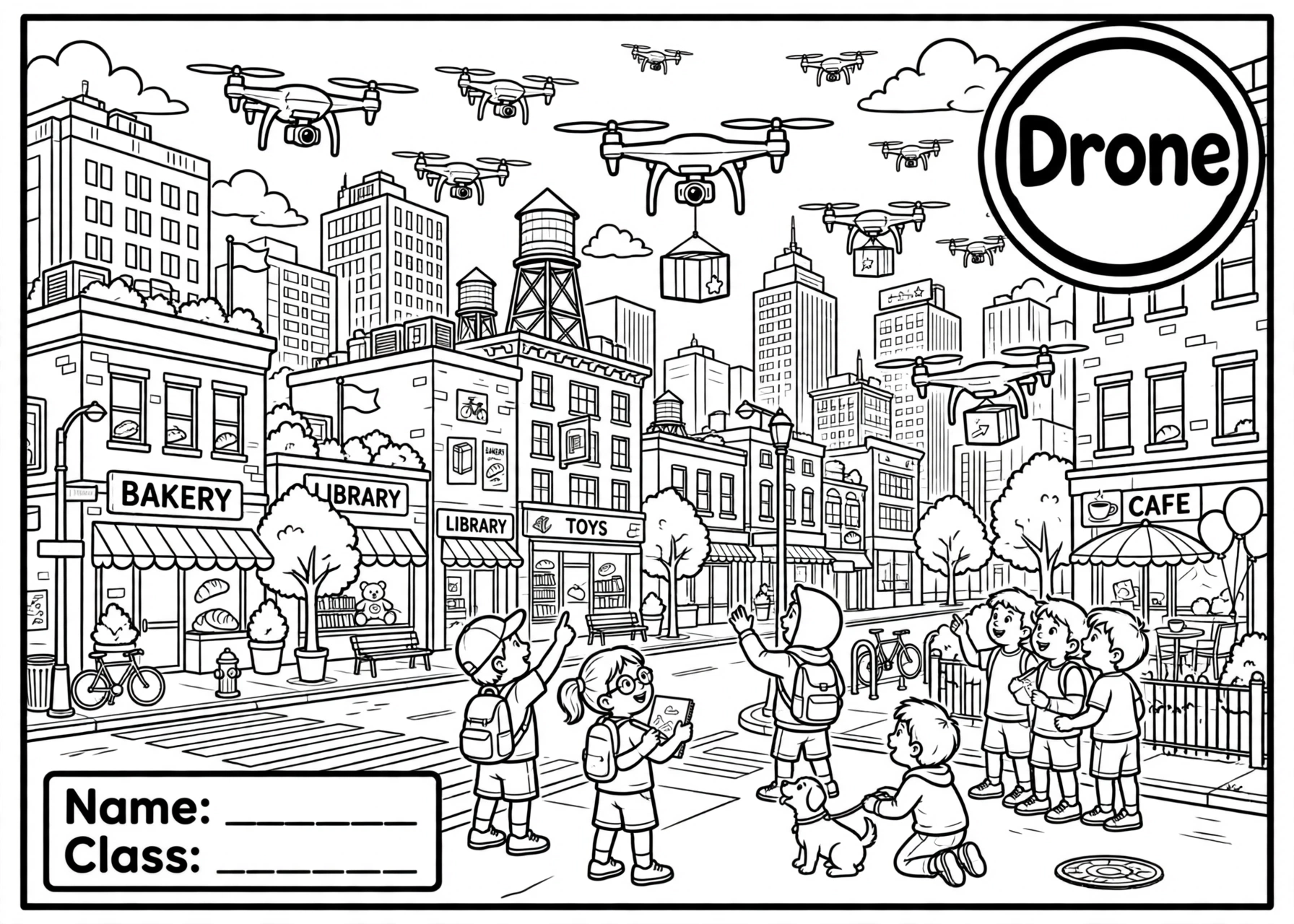
Getting Ready for a Drone Coloring Session
Before printing, parents and teachers can check the print preview to make sure the illustration is positioned correctly and important details are not cropped by the page margins. Paper selection can depend on the coloring materials children plan to use.
Prepare a comfortable workspace with enough room for the printed illustration and coloring supplies. Keep pencils, crayons, or markers organized so children can easily switch between colors. Younger children should use age-appropriate materials with adult supervision when necessary.
There is no need to finish the entire illustration at once. Children can color the main body first, work on the propellers afterward, and complete any background details when they are ready.
Drone Coloring Pages provide an enjoyable way to combine art, curiosity, and an introduction to modern technology. Whether children prefer realistic aircraft-inspired colors or invent a completely futuristic flying machine, they can use their imagination to turn a simple drone illustration into something uniquely their own.
