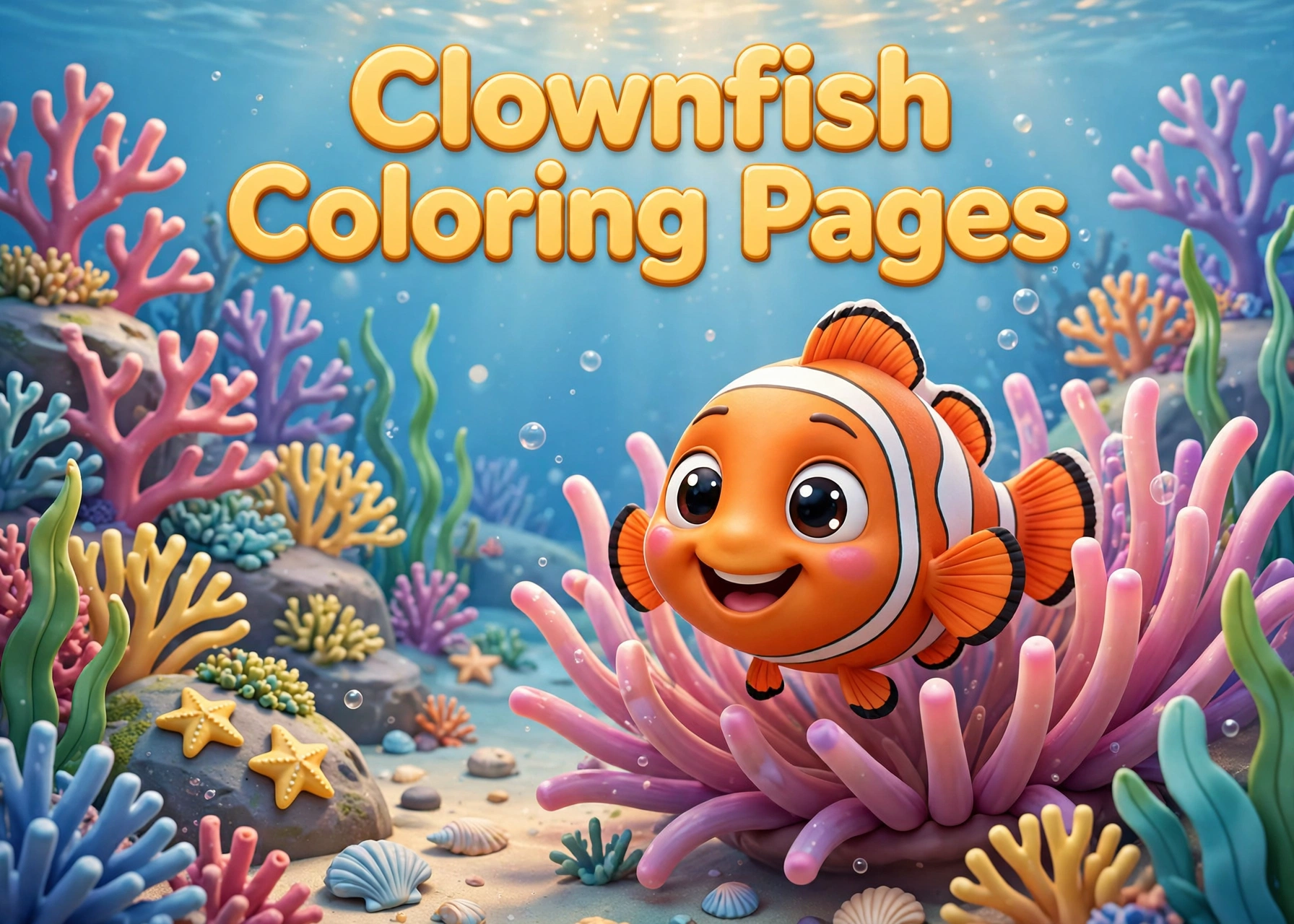
Clownfish Coloring Pages introduce children to one of the ocean’s most recognizable little fish through creative printable activities. With their distinctive orange bodies, white stripes, and dark outlines, clownfish offer an enjoyable subject for exploring colors, marine life, and imaginative underwater scenes.
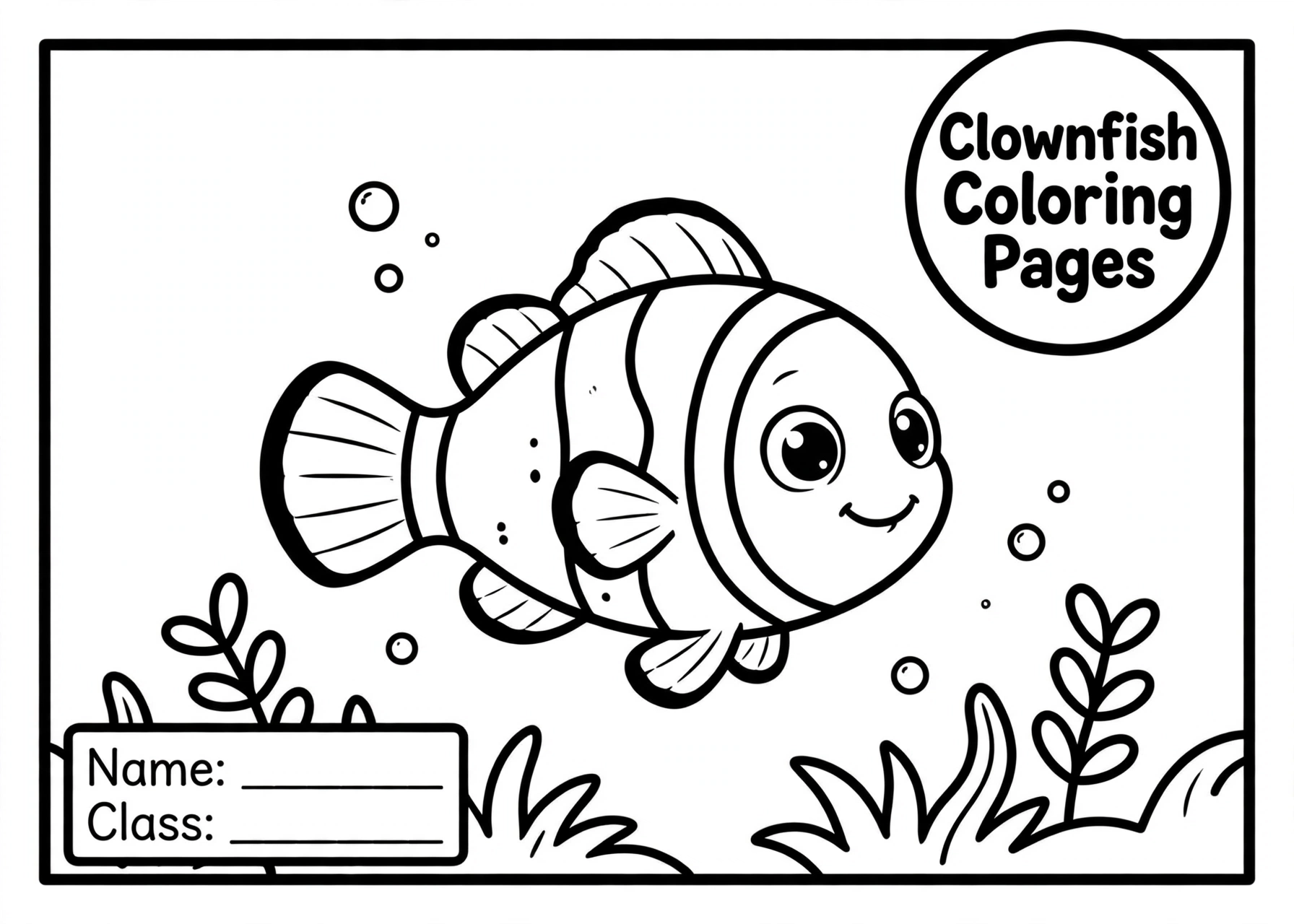
Discover What Makes Clownfish So Special
Clownfish are small marine fish that live among the tentacles of sea anemones. Their unusual partnership makes them particularly interesting to explore through children’s art activities. While many fish swim freely around coral reefs, clownfish often stay close to their anemone homes, where they find shelter from potential predators.
Their appearance also makes them easy to recognize. Most familiar clownfish have bright orange bodies decorated with white bands outlined in black. However, different clownfish species can display variations in color, including yellow, reddish-orange, and darker shades. These natural differences give children plenty of opportunities to experiment with their coloring choices.
A clownfish illustration can be more than a simple picture of a sea creature. It can introduce children to the relationship between animals and their habitats while encouraging them to notice small visual details. The shape of the fins, the arrangement of the stripes, and the movement suggested by the tail all provide interesting elements to explore.
Exploring Clownfish Coloring Pages Through Different Details
One of the enjoyable aspects of coloring marine animals is discovering how different body parts contribute to their appearance. Clownfish have several features that children can focus on while working with their coloring sheets.
The body is usually the largest area to color. Traditional orange shades are a natural starting point, but children can also try light orange, golden yellow, or coral-inspired combinations. Using two or three related shades can make the body look more interesting without making the picture unnecessarily complicated.
The white stripes provide another recognizable feature. Children can leave these sections uncolored or use a very light cream shade. The dark outlines around the stripes can be emphasized with a black pencil or marker, helping the characteristic pattern stand out.
The fins and tail offer additional opportunities for creativity. Although they are often orange, children can experiment with lighter or darker tones to distinguish these areas from the main body. Small details around the eyes and mouth can also make the finished illustration look expressive.
Creating an Underwater Scene Around a Clownfish
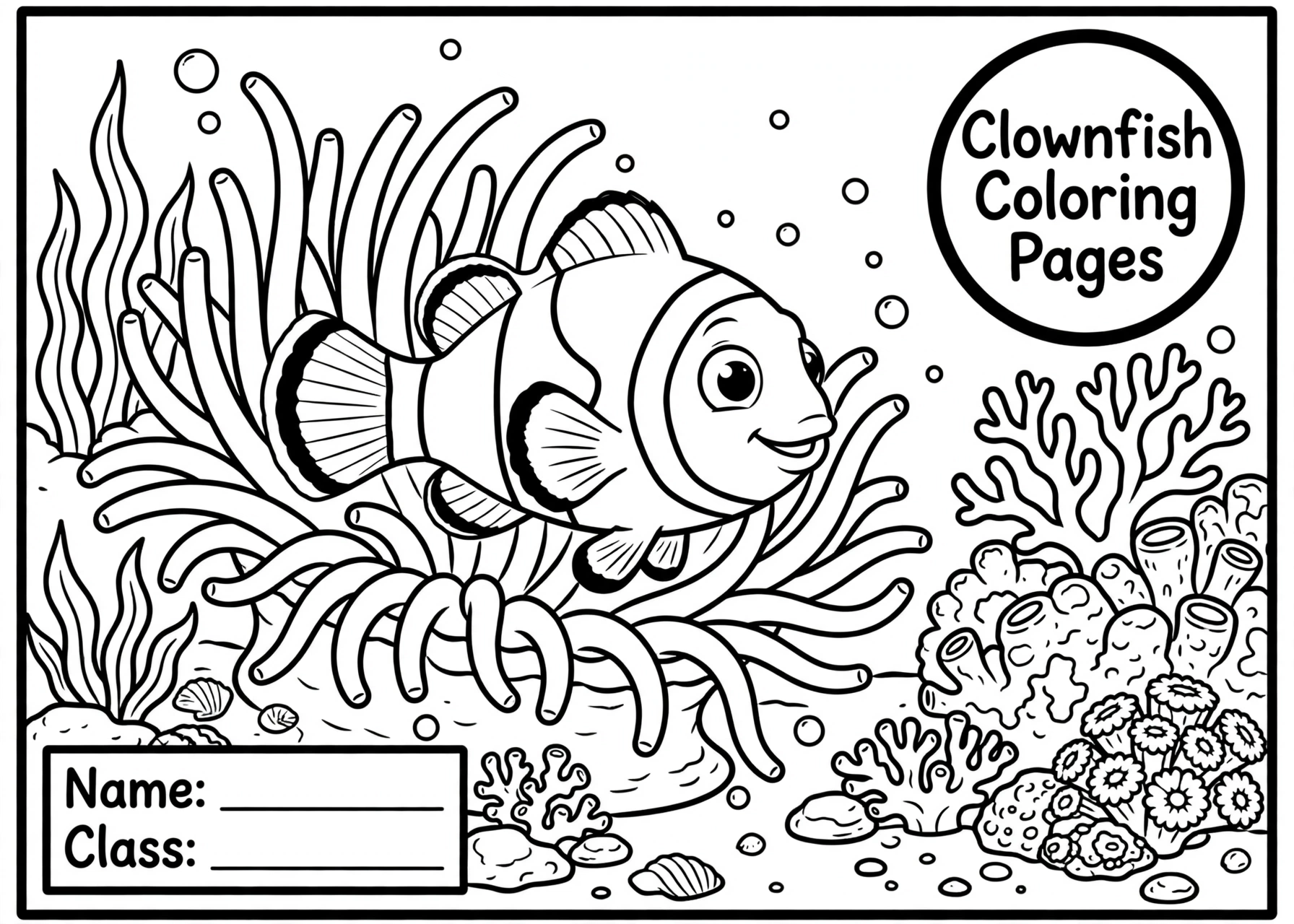
A clownfish becomes even more interesting when children imagine the underwater environment surrounding it. If the illustration includes open space around the fish, that area can be used to create a colorful ocean setting. Children can add background elements themselves if the printable design allows room for drawing.
A sea anemone is one of the most relevant elements to include. Its soft, flowing tentacles create an interesting contrast with the clownfish’s compact body. Children can use pink, purple, green, or reddish shades to make the anemone stand out. Different colors can be applied to individual tentacles for a more playful appearance.
Coral reefs are another suitable source of inspiration. Natural reefs contain a wide variety of shapes and colors, from branching structures to rounded coral formations. Children can imagine a reef using shades of pink, yellow, orange, purple, and brown.
Other possible background details include small bubbles, sea plants, rocks, and distant fish. Blue and turquoise are popular choices for the water, although children do not need to make the entire background one solid color. Combining lighter and darker blue areas can suggest different depths in the ocean.
These ideas are optional rather than requirements. A simple clownfish illustration can look just as appealing without an elaborate background, particularly when the goal is to let younger children focus on the main subject.
Choosing the Right Coloring Approach
Not every child approaches a coloring activity in the same way. Some enjoy filling large spaces with bold colors, while others prefer working carefully on smaller details. Choosing a suitable design and coloring method can make the activity more comfortable and enjoyable.
For children who are beginning to color, larger spaces and clearly defined outlines can be helpful. They can start with the main body, continue with the fins, and finish with the surrounding details. There is no need to complete every section perfectly.
Children who already enjoy more detailed artwork may prefer experimenting with color transitions. For example, they can apply a lighter orange near the middle of the body and a deeper shade toward the edges. Colored pencils are useful for gradual shading, while crayons work well for filling larger areas.
Markers can produce strong, noticeable colors, especially for the familiar orange-and-white clownfish pattern. However, parents and teachers should check whether the paper is suitable for markers to prevent ink from showing through to the other side.
Another interesting approach is to let children create their own clownfish varieties. Instead of following the traditional color pattern, they might design a purple clownfish, a golden underwater character, or a fish with imaginative patterns. This gives them room to make independent artistic choices.
Turning a Coloring Activity into an Ocean Discovery
Clownfish coloring can also provide a natural starting point for a short conversation about marine environments. Parents and teachers can introduce simple facts while children work, without turning the activity into a formal lesson.
For example, children can learn that clownfish are native to the warm waters of the Indo-Pacific region. They live in coral reef environments and have a special relationship with sea anemones. The protective mucus covering their bodies helps them live among anemone tentacles that can sting other animals.
This unusual relationship makes a good topic for a simple discussion. Adults can explain that the clownfish receives protection from the anemone, while the anemone may benefit from food scraps, nutrients, and other interactions with the fish. It is an interesting example of how different living things can depend on one another.
For a related creative activity, children who enjoy unusual fantasy creatures can also explore the Hippogriff and imagine a completely different world beyond the ocean. This provides a change of subject while keeping the same enjoyable combination of imagination and coloring.
Another way to extend the experience is to compare animals that live in different environments. Children can explore the Brachiosaurus and talk about how prehistoric dinosaurs differed from modern marine animals. Such comparisons can make a collection of printable activities feel more varied and engaging.
Making Clownfish Coloring Time Enjoyable at Home or School
A coloring activity does not need complicated preparation. Parents and teachers can begin by providing suitable coloring materials and a comfortable working surface. If the printable is available as a downloadable file, check its actual format and use the available print settings before producing a paper copy.
The print preview is useful for checking whether the illustration fits properly on the selected paper. Pay attention to the margins and make sure important parts of the design are not cut off. For repeated classroom activities, printing one sample first can help confirm that the result is suitable.
Once the page is ready, children can choose their own color combinations. Adults may introduce the traditional orange, white, and black pattern as a reference, but allowing children to make their own decisions can make the activity more personal.
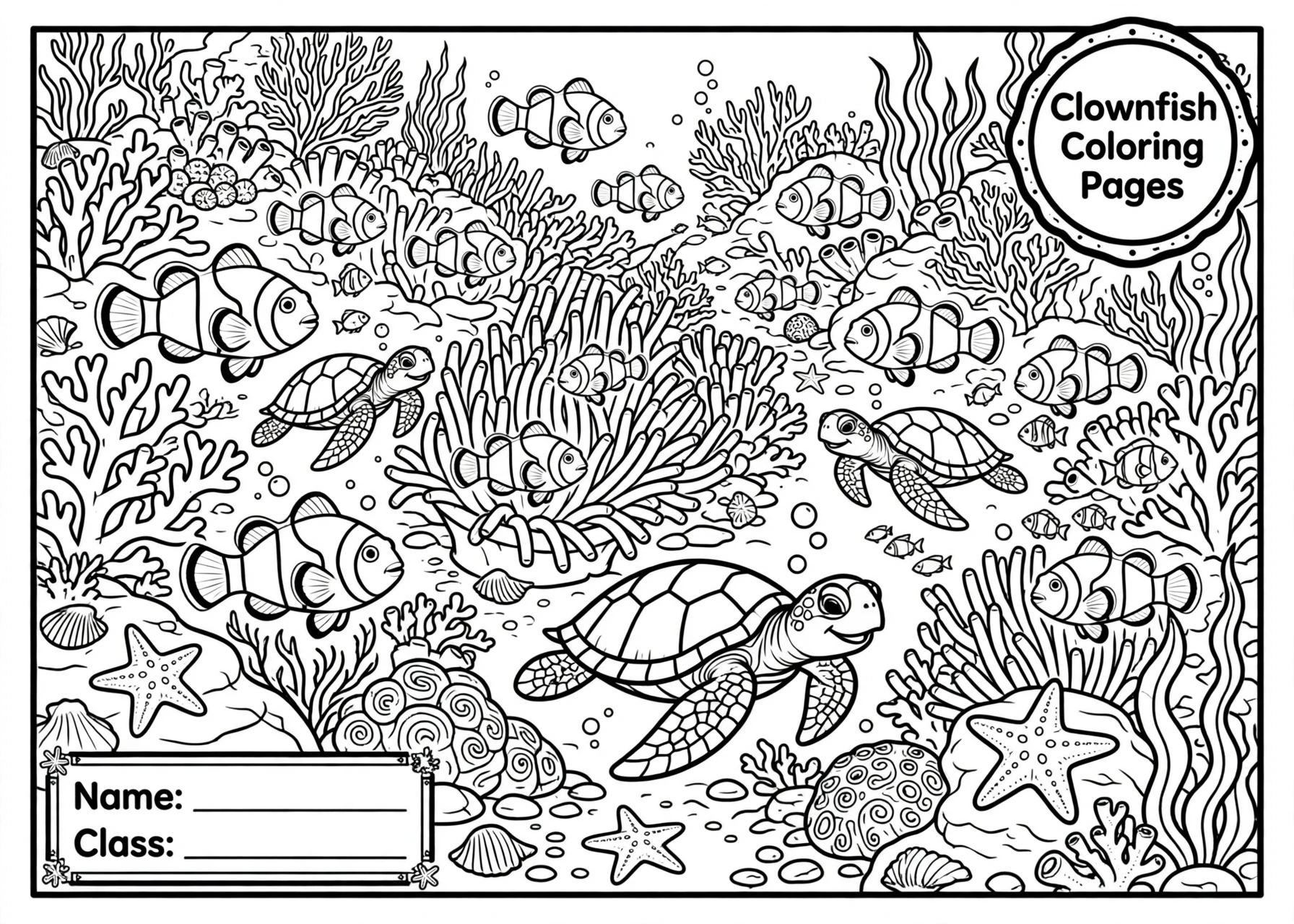
For group activities, each child can create a different underwater color scheme. Afterward, the finished pictures can be displayed together to create a small ocean-themed gallery. Children can also describe their clownfish, give it a name, or invent a short story about where it lives.
Clownfish coloring activities bring together recognizable animal features, fascinating marine life, and opportunities for artistic exploration. Whether children prefer natural ocean colors or imaginative designs, these printable activities offer a simple way to enjoy the underwater world through creativity.
