Wizard Hat Coloring Pages bring a touch of magic to children’s art activities through pointed hats, mysterious decorations, and imaginative fantasy details. These printable designs give kids a creative way to explore colors while imagining their own magical worlds.
Discover the Magic Behind Wizard Hats
A wizard’s hat is one of the most recognizable accessories in fantasy stories. Its tall, pointed shape often represents mystery, adventure, and magical abilities. Children may have seen similar hats in fairy tales, fantasy books, cartoons, or Halloween decorations, making this subject familiar and exciting to explore through coloring.
One of the interesting features of a wizard hat is its distinctive silhouette. Unlike ordinary caps or sun hats, it often has a wide brim and a cone-shaped crown that bends or curves toward the tip. This unusual shape creates several areas where children can experiment with different colors, patterns, and shading techniques.
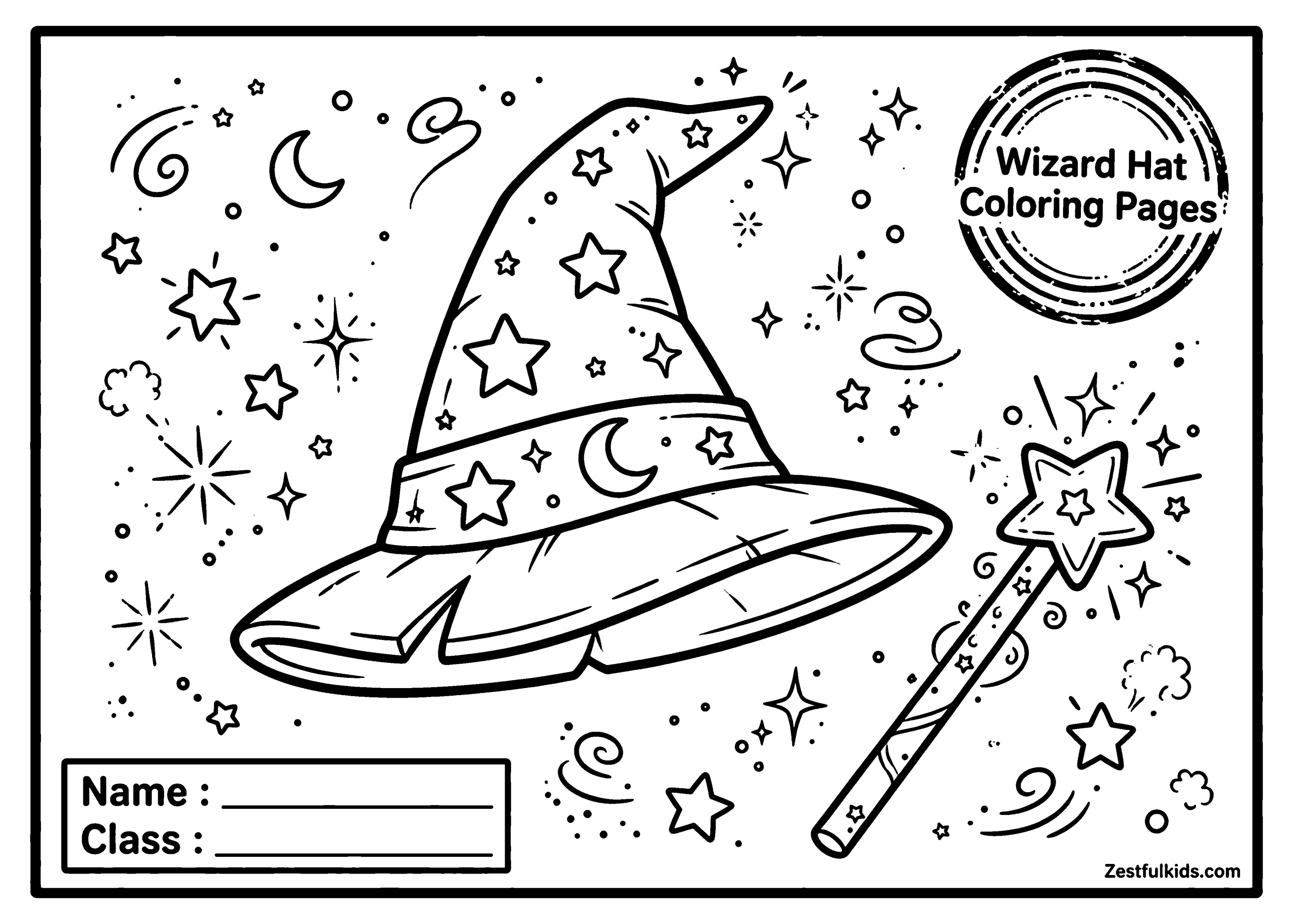
Traditional fantasy illustrations sometimes feature stars, moons, or other celestial decorations on wizard hats. These details can inspire children to create their own designs, although a simple hat can be just as enjoyable to color. The result does not have to follow a particular fantasy tradition. Every child can decide what their imaginary wizard’s hat should look like.
Exploring Colors and Patterns on a Wizard Hat
Coloring a wizard hat offers plenty of opportunities to experiment with combinations that create different moods. Dark purple, midnight blue, and deep green can give the hat a mysterious appearance. Meanwhile, bright yellow, turquoise, pink, or orange can make it look cheerful and playful.
Children can also choose a single main color and use another shade for the brim or decorative elements. For example, a purple hat with golden stars creates a classic magical appearance. A blue hat with silver details can suggest a night sky, while a green hat with colorful patterns might look like something belonging to a forest wizard.
Patterns are another enjoyable part of this activity. If the illustration includes empty spaces, children can add small circles, stripes, zigzags, or imaginary symbols. They can also create their own decorative ideas without needing to make every section symmetrical.
For younger children, larger coloring areas may be easier to work with. Older children who enjoy more detailed artwork can try blending two similar shades or adding small highlights along the curved crown. These are optional techniques, so children can simply use their favorite crayons and enjoy the process.
Choosing a Wizard Hat Coloring Design
Not every wizard hat illustration offers the same coloring experience. Some designs focus on a simple outline, while others may include decorative elements that invite more detailed work. Choosing a suitable design can make the activity more comfortable and enjoyable.
A simple wizard hat is a practical starting point for children who prefer clear shapes and larger spaces. They can concentrate on the crown, brim, and any visible decorations without feeling overwhelmed by too many small details.
More elaborate illustrations can provide an interesting challenge for children who already enjoy careful coloring. Designs featuring stars, moons, ornamental lines, or additional fantasy-inspired elements offer more opportunities to experiment with contrasting shades.
Parents and teachers can let children choose their preferred illustration rather than assigning everyone the same design. This small choice gives them room to express their interests and decide how much detail they want to work with.
It is also helpful to consider the coloring materials available. Crayons are convenient for broad areas, colored pencils allow more precise work around small decorations, and washable markers can produce brighter results when used with suitable paper.
Creative Activities to Try After Coloring
A finished wizard hat can become the starting point for a few imaginative activities. Children can give their hat a magical name, invent a character who wears it, or describe what kind of imaginary powers it represents. These ideas allow the artwork to develop into a small storytelling project.
Another activity is to create a color theme for an imaginary wizard. A child might choose purple and gold for a wizard who studies the stars, or green and brown for a character who lives in an enchanted forest. The story can be entirely invented, giving each child freedom to build a character around their artwork.
For a group activity, parents or teachers can invite children to compare their finished hats. They can talk about their color choices, favorite decorations, and the imaginary places where their characters might live. There is no need to decide which design looks best because each creation can represent a different idea.
Children who enjoy seasonal crafts can also connect their artwork with other festive themes. For example, a wizard hat can be part of a larger Halloween-inspired creative session alongside a <a href=”https://zestfulkids.com/christmas-house-coloring-page/“>charming Christmas house illustration</a> during a broader holiday-themed art collection. The two subjects have different visual styles, but both can encourage children to explore imaginative settings through art.
Making the Most of a Printable Coloring Activity
Before starting, prepare a comfortable workspace with enough room for the paper and coloring supplies. A flat table makes it easier for children to control their crayons or pencils, especially when working on the pointed crown and curved brim of a wizard hat.
If a printable design is available for download, check the file and print preview before printing. Make sure the illustration is positioned clearly on the page and that important outlines are not cut off by the printer margins. The appropriate paper size and print settings will depend on the actual file and printer being used.
Children can begin by coloring the largest areas first. Filling the main crown and brim before moving to smaller decorations can make the process easier to manage. They can then add contrasting colors to stars, moons, or other details if those elements appear in the selected illustration.
There is no requirement to finish everything in one sitting. Some children prefer to complete their artwork at once, while others enjoy returning to it later. Keeping the activity relaxed allows them to work at a comfortable pace.
Bringing More Fantasy Into Children’s Art Time
Wizard hats fit naturally into a larger collection of fantasy-inspired creative activities. After finishing one illustration, children might enjoy inventing a magical character, drawing a castle, or creating a landscape for their imaginary world.
Nature-themed artwork can also provide an interesting contrast to fantasy accessories. A family camping scene, for instance, introduces tents, trees, and outdoor surroundings that offer a different setting for creative exploration. Children can discover another imaginative outdoor theme through the <a href=”https://zestfulkids.com/family-camping-in-nature-coloring-pages/“>family camping in nature activity</a>.
For parents, caregivers, and teachers, Wizard Hat Coloring Pages offer a straightforward way to introduce fantasy into an art session. The recognizable pointed shape makes the subject easy to approach, while the decorative possibilities leave plenty of room for personal choices.
Whether children prefer a traditional purple wizard hat, a colorful creation covered in imaginary symbols, or a simple design with just a few decorations, the most enjoyable part is making the illustration their own. Each finished page can become a small piece of a magical world created through their imagination.
