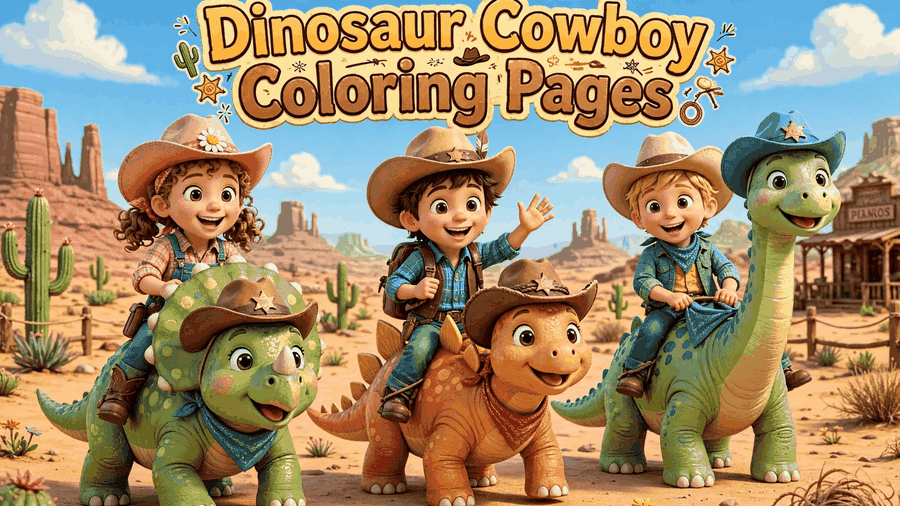
Dinosaur Cowboy Coloring Pages bring prehistoric creatures into the exciting world of the Wild West. Children can explore creative coloring ideas while imagining dinosaurs wearing cowboy hats and enjoying a western adventure.
When Dinosaurs Meet the Wild West
Dinosaurs and cowboys come from two very different worlds, but combining them creates a playful theme full of imagination. Dinosaur cowboy illustrations give children an opportunity to picture prehistoric creatures in a setting inspired by classic western stories. A dinosaur wearing a cowboy hat, for example, can become a friendly ranch visitor, a brave explorer, or the main character of an imaginary adventure.
This theme is particularly interesting because it combines recognizable dinosaur shapes with familiar cowboy elements. Children may already know dinosaurs such as the Tyrannosaurus rex, Triceratops, and Stegosaurus from books, toys, or educational programs. Adding western accessories gives these creatures a fresh personality and makes the coloring experience feel different from ordinary dinosaur activities.
The western theme also offers plenty of room for personal interpretation. Children can imagine dusty trails, open grasslands, wooden fences, desert landscapes, and old-fashioned ranches as possible settings for their colorful creations. Even a simple illustration can inspire a longer story about a dinosaur cowboy traveling across the frontier.
Exploring the Details in Dinosaur Cowboy Coloring Pages
One enjoyable part of this activity is discovering the different details that make a dinosaur look like a cowboy. A wide-brimmed hat is one of the most recognizable accessories, while a western scarf, boots, or a decorative belt can add more personality when these elements appear in an illustration.
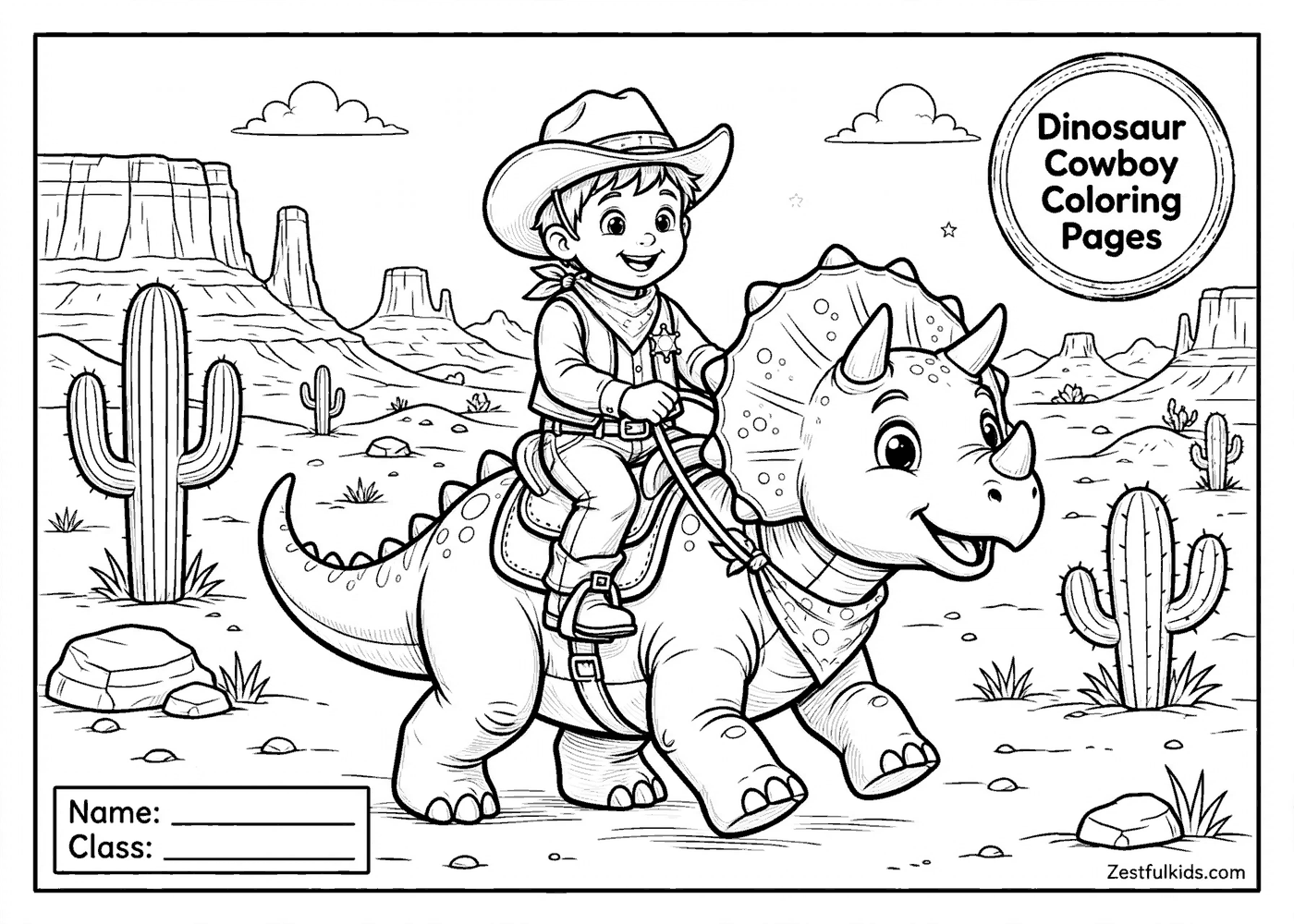
The dinosaur itself provides another interesting area to explore. Children can pay attention to its head shape, body, tail, legs, and distinctive features. A Triceratops has three prominent facial horns and a large frill, while a Stegosaurus is recognizable by the plates along its back. A Tyrannosaurus rex has a large head, powerful legs, and noticeably short arms. These differences make it possible to experiment with several coloring approaches.
Children do not need to follow realistic dinosaur colors. A green cowboy dinosaur might look like a forest explorer, while a brown or orange creature could fit naturally into a western desert setting. Purple, blue, and yellow are also interesting choices for anyone who wants to create a more imaginative character.
Creative Color Combinations for a Western Adventure
Choosing colors can make the entire illustration feel more connected to its theme. Earthy shades are a natural starting point because western landscapes are often associated with sand, dry grass, wooden buildings, and rocky surroundings. However, there is no need to limit every part of the picture to brown and yellow.
Here are several combinations children can try:
- Classic cowboy look: Use brown for cowboy boots, tan for a hat, and a warm red or blue for a western scarf.
- Desert explorer: Combine sandy yellow, orange, light brown, and muted green to suggest a sunny frontier landscape.
- Friendly dinosaur character: Choose bright green, turquoise, or purple for the dinosaur, then use contrasting colors for its accessories.
- Sunset adventure: Try orange, pink, yellow, and purple for an imaginative western sky if the illustration includes an open background.
It can also be fun to give the dinosaur a special identity through color. Children might decide that their cowboy dinosaur has a favorite hat color or wears a scarf that represents its imaginary ranch. These small decisions make each finished picture feel personal rather than simply following a coloring example.
Turning a Coloring Activity into a Storytelling Game
Dinosaur cowboy illustrations can easily become the starting point for a simple storytelling activity at home or in the classroom. Once children have selected their colors, invite them to imagine where their dinosaur cowboy is going and what it might discover along the way.
For instance, a child might create a story about a Triceratops who travels across the desert to find a new ranch. Another might imagine a small dinosaur helping other prehistoric animals explore a western village. The story does not need to be long or complicated. A few sentences about the character, its destination, and an interesting event are enough to make the activity more engaging.
Parents and teachers can also introduce simple descriptive prompts. Ask children to name their dinosaur, describe its cowboy outfit, or explain what kind of landscape would suit its adventure. Younger children can answer verbally, while older children may enjoy writing a short caption beneath their finished artwork.
For another animal-themed creative activity, families can explore baby bunny activities and enjoy a completely different illustration theme. Moving between prehistoric creatures and familiar animals can give children fresh ideas for their next coloring session.
Choosing Coloring Tools and Working with Different Techniques
The best coloring materials depend on the child’s preferences and the amount of detail in the illustration. Crayons are a comfortable option for filling larger areas, such as a dinosaur’s body or a wide-open landscape. Colored pencils provide more control when working on smaller features, including cowboy accessories, facial details, and decorative patterns.
Washable markers can produce stronger colors, particularly when children want their dinosaur cowboy to stand out. If markers are being used, placing a spare sheet of paper underneath the printable can help protect the surface below.
Children can also experiment with simple coloring techniques. Instead of filling every section with one flat shade, they can use two similar colors to create a slightly varied appearance. For example, a light brown cowboy hat can have darker brown details around its brim. A green dinosaur can feature a second shade along its back or tail.
There is no need to make the artwork look perfectly realistic. The purpose is to let children explore their own ideas while enjoying the process. Parents can demonstrate a technique when needed, but allowing children to make independent color choices keeps the activity relaxed and enjoyable.
Making Printable Coloring Time More Enjoyable
Before printing a selected design, parents and caregivers can check the available preview to see how the illustration fits on the paper. The print settings should match the actual file dimensions, with scaling and margins adjusted when necessary. It is also helpful to choose paper that feels comfortable for the coloring materials being used.
A quiet table with enough room for crayons, pencils, and markers can make the activity easier to manage. Children may prefer to complete their pictures in one sitting, while others enjoy working on smaller sections over several sessions. There is no need to rush, especially when an illustration contains several details.
After finishing, the artwork can be displayed on a bedroom wall, placed in a personal art folder, or shared with family members. Children might even give their dinosaur cowboy a name and write a short adventure beneath the picture. This turns an ordinary coloring sheet into a small piece of creative storytelling.
Families who enjoy imaginative settings can also explore village street activities. A village-inspired theme offers another opportunity to imagine buildings, roads, and everyday scenes that can complement the western world of dinosaur cowboys.
Bringing a Prehistoric Western World to Life
Dinosaur Cowboy Coloring Pages offer a fun combination of prehistoric creatures and western-inspired imagination. From choosing unusual dinosaur colors to creating a character with a memorable cowboy outfit, children have plenty of opportunities to make each illustration their own.
Parents, teachers, and caregivers can use this theme as a relaxed art activity or extend it with simple storytelling ideas. Whether a child imagines a brave dinosaur exploring a desert trail or a friendly cowboy visiting a ranch, the finished artwork becomes a personal interpretation of an unusual adventure. The result is a creative coloring experience that brings two exciting worlds together in a way children can enjoy.
