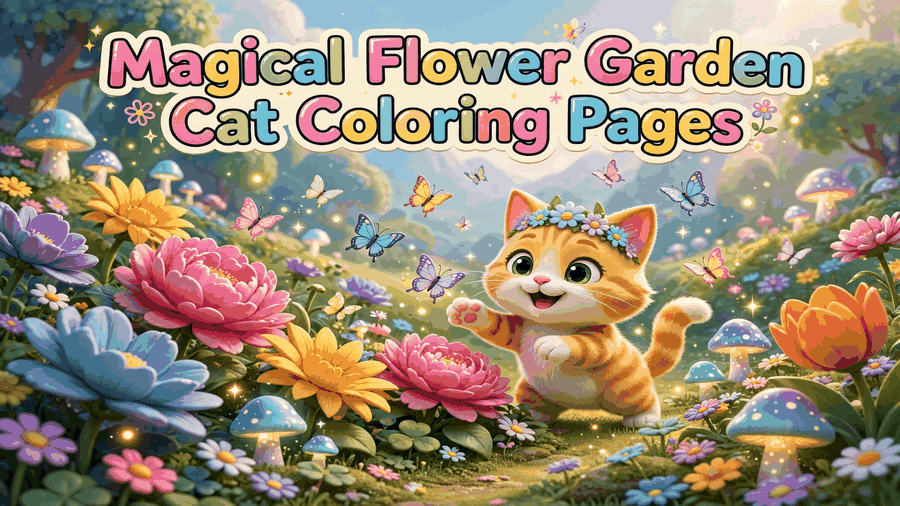
Magical Flower Garden Cat Coloring Pages invite children into a whimsical world where curious cats meet beautiful flowers. These imaginative printables offer a creative way to explore colors, nature, and playful garden scenes.
A Whimsical Meeting of Cats and Flowers
Cats have a natural charm that makes them wonderful subjects for children’s artwork. Their expressive faces, soft-looking fur, pointed ears, and playful personalities provide plenty of opportunities for creative interpretation. When cats are imagined in a magical flower garden, the familiar animal becomes part of a more enchanting setting filled with possibilities.
The combination of cats and flowers creates an interesting balance between animal features and natural scenery. Children can experiment with different colors for the cat’s fur while imagining how the surrounding garden might look. A simple flower can become bright and cheerful, while leaves and garden details can introduce contrasting shades. Each coloring choice helps turn an ordinary outline into a personal interpretation of a fantasy garden.
This theme also gives children room to create their own stories. They might imagine a curious kitten exploring a secret garden, a sleepy cat resting among blossoms, or a playful feline following butterflies between flowers. These ideas can make a coloring session feel like a small imaginative adventure.
Exploring Colors in a Magical Garden
One of the most enjoyable parts of a flower garden theme is the variety of colors children can use. Flowers naturally come in many different shapes and shades, so there is no single correct way to decorate the garden. Children can choose realistic colors inspired by nature or invent a completely imaginary setting.
For the cat, traditional shades such as orange, gray, brown, cream, and black are familiar choices. However, a fantasy-inspired design could feature lavender fur, soft blue markings, or even a rainbow-colored tail. The important thing is to let children experiment rather than worry about following realistic color combinations.
Flowers offer another opportunity to explore different palettes. Pink roses, yellow daisies, purple blossoms, and bluebell-inspired flowers can make an attractive garden. Green leaves provide contrast, while a light blue sky or warm yellow sunlight can help create a brighter atmosphere if those background elements are included in the illustration.
Children can also try using different shades of the same color. For example, light and dark pink can give flower petals more variety, while several shades of green can make leaves look less uniform. These simple choices add visual interest without making the activity complicated.
Choosing a Coloring Style for the Cat
The cat can become the main character of the artwork, so choosing its appearance is a fun place to begin. Children who enjoy familiar animals may prefer natural fur patterns, while those who love fantasy themes might want something more unusual.
A striped cat can be colored with orange and darker brown lines, while a spotted kitten could have a combination of cream and gray patches. Solid-colored fur is another option for younger children or anyone who prefers a simpler approach. If the illustration includes visible facial details, small touches of pink on the nose and soft colors around the eyes can make the expression stand out.
The garden setting can influence the cat’s color choices, too. A white or cream-colored cat may contrast nicely with colorful flowers, while a darker cat can create an interesting focal point against a bright background. There is no need to make every part of the picture equally colorful. Leaving some areas lighter can help the main subject remain noticeable.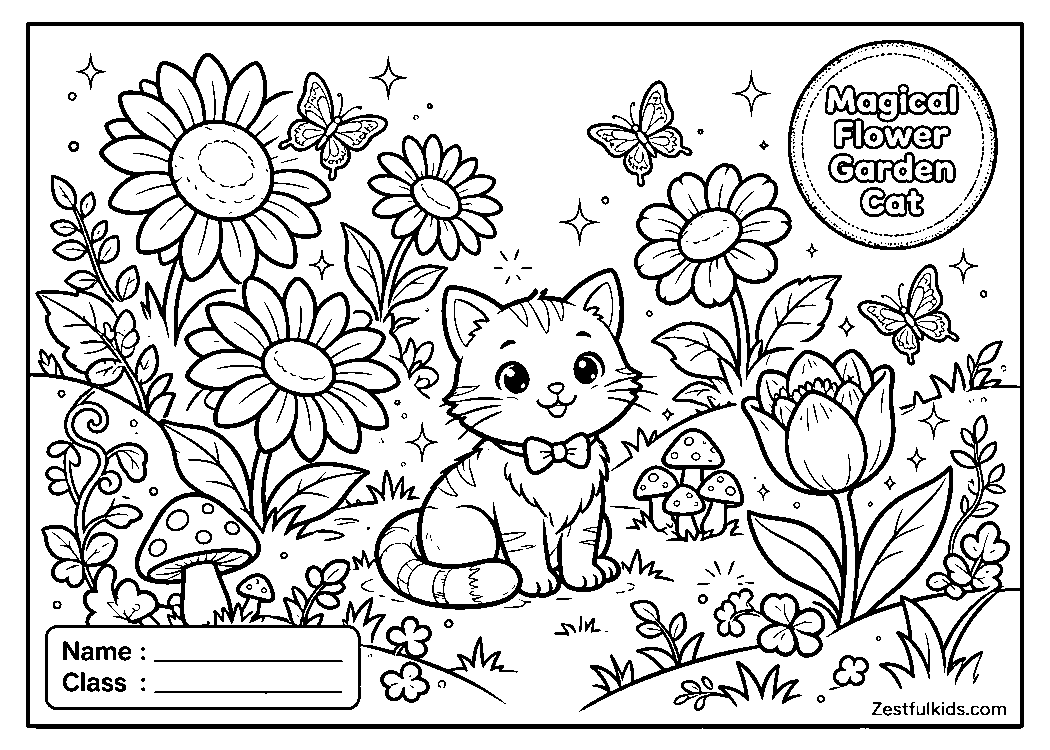
Simple Techniques for Coloring Flowers and Leaves
Flowers contain small shapes and repeated details, making them enjoyable subjects for practicing careful coloring. Children can begin with the largest petals before moving toward smaller sections. This approach makes it easier to keep colors within the outlines and decide which shades work well together.
Crayons are a practical choice for broad areas such as flower petals, the cat’s body, and the garden background. Colored pencils offer more control when working on narrow leaves, small petals, or delicate facial features. Washable markers can produce brighter colors, although children should use them with appropriate paper to reduce the possibility of ink showing through.
A few simple coloring ideas can make the finished picture more interesting:
- Petal combinations: Use two related shades on a flower to create a gentle variation in color.
- Leaf details: Combine light green and dark green to give the garden a more varied appearance.
- Cat patterns: Add stripes, spots, or patches if the illustration provides enough space.
- Garden atmosphere: Choose a soft background color to suggest a sunny afternoon or a magical evening.
- Fantasy touches: Introduce unusual colors such as turquoise, lilac, or pastel pink for a dreamlike appearance.
Children do not have to use every technique in one picture. Choosing just one or two ideas can be enough to make their artwork feel distinctive.
Connecting the Flower Garden with Nature
Although the theme has a magical atmosphere, it can also introduce children to familiar elements of nature. Flowers, leaves, grass, and garden creatures provide simple starting points for conversations about the outdoor environment. Parents and teachers can discuss how plants grow, why flowers have different colors, and which insects might visit a garden.
For children who enjoy exploring more natural scenery, nature and animal activities can provide another way to combine wildlife with outdoor settings. Comparing different nature-themed pictures may encourage children to notice the variety of animals, plants, and habitats found around them.
The cat can also become part of a storytelling activity. After finishing the picture, invite children to give the cat a name and describe its imaginary garden. Perhaps the kitten has discovered a hidden path, found a favorite resting place, or made friends with a butterfly. A few sentences are enough to turn the finished artwork into a small creative story.
Making the Coloring Session More Enjoyable
A comfortable workspace can make a big difference during a coloring activity. Place the printed sheet on a flat surface and prepare crayons, pencils, or markers before starting. Keeping the materials within reach allows children to concentrate on their artwork without repeatedly interrupting the activity.
If the design contains many small details, children can work on one section at a time. They might begin with the cat, continue with the flowers, and finish with any surrounding scenery. However, there is no strict order to follow. Some children prefer to color the background first because it helps them imagine the overall atmosphere.
Adults can participate without taking control of the artwork. Rather than suggesting that every flower should be a particular color, ask children to explain their choices. This gives them room to express their ideas while making the activity more interactive.
The finished picture can also become part of a small collection of creative work. Children may enjoy placing their completed pages in a folder, displaying a favorite design, or comparing how their coloring choices change over time. Each picture can represent a different idea, mood, or interpretation of the same magical theme.
Discover More Creative Vehicle and Nature Themes
Children who enjoy imaginative animal scenes may also like exploring different subjects through printable artwork. A change of theme can introduce fresh shapes, settings, and coloring challenges without making the activity feel repetitive.
For example, pickup truck designs offer a different experience for children who are interested in vehicles. They can experiment with body colors, wheels, windows, and other recognizable details while exploring a subject quite different from a flower garden.
Alternating between animals, flowers, vehicles, and outdoor scenes can keep a collection of coloring activities interesting. Each subject provides a new starting point for creative choices, whether children prefer familiar objects or imaginary worlds.
A Garden Full of Personal Ideas
Magical Flower Garden Cat Coloring Pages bring together two appealing subjects in one imaginative theme. The cat offers opportunities to explore animal patterns and expressions, while the flowers provide plenty of room for colorful combinations. Children can follow familiar nature-inspired shades or create an entirely fictional garden with unexpected colors.
Parents, teachers, and caregivers can use the activity as a relaxed creative session at home, in the classroom, or during family time. With a few coloring materials and plenty of imagination, children can transform a simple outline into a garden scene that reflects their own ideas and artistic preferences.
