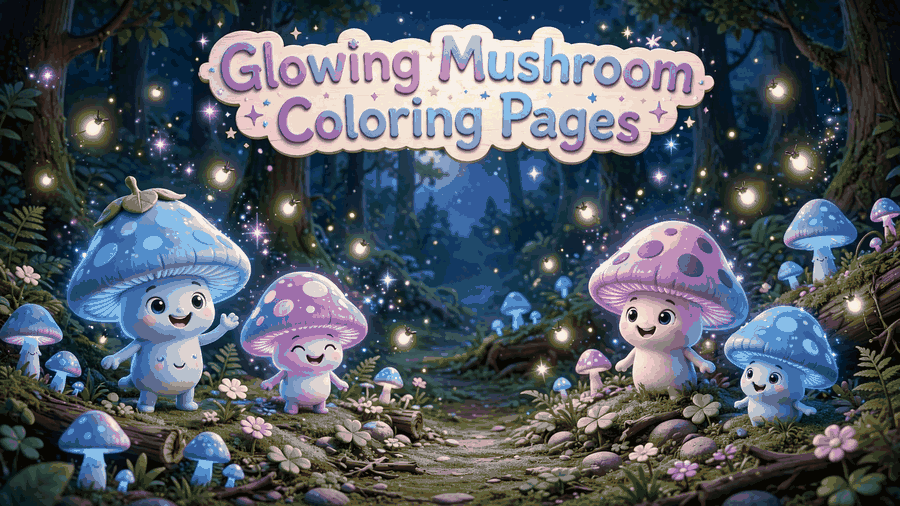
Glowing Mushroom Coloring Pages invite children to explore a magical forest filled with imagination, unusual shapes, and fascinating natural details. These printable designs offer a creative way to experiment with colors while imagining mysterious mushrooms lighting up a quiet woodland at night.
Discover the Magical Appeal of Glowing Mushrooms
Mushrooms already have an interesting appearance, but glowing mushrooms add an imaginative twist that makes them especially appealing as a coloring theme. Their unusual shapes and mysterious light create opportunities for children to explore different color combinations. Some may imagine tiny mushrooms glowing beneath tall trees, while others might picture a peaceful forest illuminated by colorful fungi. This theme brings together elements of nature and fantasy without requiring children to follow a particular color scheme.
The idea of glowing mushrooms is also connected to a real natural phenomenon called bioluminescence. Certain fungi can produce their own light through a chemical process, although not every mushroom has this ability. In nature, the light produced by some species can appear greenish and may be easier to notice in dark surroundings. This scientific detail can make the coloring activity more interesting for children who enjoy learning about unusual things in nature.
Exploring Colors and Light Effects
One of the most enjoyable parts of coloring glowing mushrooms is deciding how to represent their light. Children can choose bright shades for the mushroom caps and softer colors for the surrounding areas. Yellow, lime green, turquoise, and light blue can create an imaginary glow, while purple and pink offer a more playful fantasy appearance. There is no need to make every mushroom look the same, as different combinations can give each design its own atmosphere.
A simple coloring technique is to use a brighter shade near the center of a mushroom cap and gradually introduce a darker shade toward the edges. If the illustration includes surrounding woodland elements, children can use deeper greens and browns to create contrast. A dark blue, navy, or violet background can also suggest a nighttime setting. These choices help make the mushroom colors stand out without requiring complicated drawing skills.
Children who prefer a cheerful forest scene can take a different approach. Instead of using dark backgrounds, they can imagine glowing mushrooms growing in a colorful fantasy garden. Light green grass, soft pink flowers, and warm yellow details can make the setting feel welcoming. The same subject can therefore produce very different artistic results depending on each child’s imagination.
Creative Ideas for Different Mushroom Designs
Glowing mushroom illustrations can inspire several imaginative settings. A small mushroom might become part of a miniature fairy garden, while a group of larger mushrooms could represent a mysterious forest gathering. Children can also imagine that the light attracts tiny forest creatures or helps guide woodland animals through the darkness. These ideas can be used as storytelling prompts while coloring, rather than assuming that every illustration contains those additional elements.
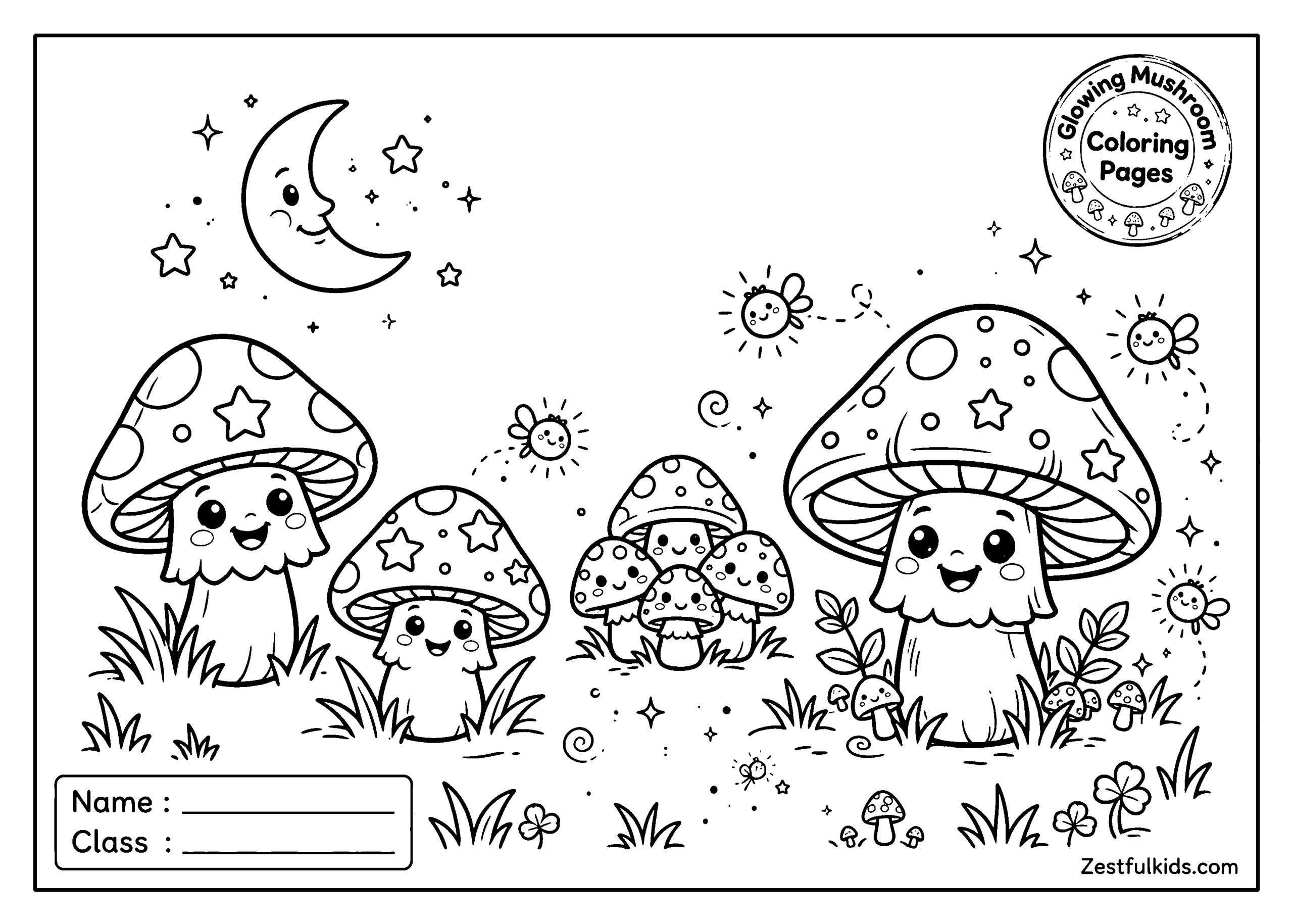
Another interesting approach is to experiment with mushroom patterns. Children can give mushroom caps colorful spots, stripes, dots, or simple decorative shapes if the illustration has enough open space. Red and white can create a familiar mushroom-inspired appearance, while blue and purple can make the design look more magical. Green and yellow combinations are another option for children who want to emphasize the glowing effect.
The surrounding environment can also become part of the creative process. If trees, leaves, grass, stones, or other natural details appear in the illustration, children can choose colors that make the mushrooms look as though they belong in a woodland environment. Small details can be colored carefully with sharpened pencils, while larger spaces are easier to fill using crayons or washable markers.
Choosing Suitable Coloring Tools
The right coloring materials depend on the complexity of the illustration and the child’s preferred technique. Crayons are convenient for filling larger mushroom caps and simple background areas. Colored pencils provide more control when adding spots, small patterns, or gradual color transitions. Washable markers are useful for creating stronger colors, particularly when children want their imaginary glowing mushrooms to look bright and noticeable.
For a softer appearance, colored pencils can be layered gradually instead of applied with heavy pressure. Children can begin with a light base color and add darker shades around selected edges. If they use markers, testing the colors on a separate sheet of paper can help them understand how bright each shade will look. Parents and teachers can also encourage children to combine different materials when the paper and coloring activity allow it.
There is no single correct technique for this theme. Some children may enjoy carefully following the outlines, while others prefer experimenting with unusual combinations. Allowing them to make their own choices keeps the activity relaxed and gives every finished picture a personal touch.
Turning Coloring Time into a Nature-Inspired Activity
Glowing mushroom coloring can become a starting point for a simple conversation about forests and fungi. Parents or teachers can explain that mushrooms are fungi rather than plants and that they grow in various environments. Some species develop on fallen wood, while others appear among leaves or in damp soil. These details provide an opportunity to introduce children to the natural world through a subject that already captures their imagination.
A small observation activity can accompany the coloring session. Children can look at pictures of different mushroom species and notice how their caps, stems, and colors vary. Adults can explain that wild mushrooms should never be touched or eaten without proper identification by an expert. This is an important distinction between imaginative mushroom illustrations and real fungi found outdoors.
For an additional creative challenge, invite children to invent a name for their imaginary glowing mushroom. They might describe where it grows, what color light it produces, and which forest creatures could discover it. Older children can write a few sentences about their imaginary woodland setting, while younger children can simply share their ideas aloud.
Families who enjoy other imaginative coloring themes can also explore Funny T-Rex designs, which introduce a completely different world of playful prehistoric adventures. Another seasonal activity worth exploring is the Christmas Owl, featuring a festive animal theme that can inspire a different set of color combinations.
Making Printable Coloring Activities Enjoyable
Before starting, parents and teachers can prepare a comfortable workspace with coloring materials arranged within easy reach. If the illustration is available as a printable file, check its actual page dimensions and use the print preview to make sure the design fits the selected paper. Choosing an appropriate print setting can help preserve the outlines and smaller details. It is also useful to place an extra sheet underneath when using markers to protect the surface of the table.
Children do not need to finish the entire picture in one sitting. Some may prefer to begin with the mushroom caps and return later to color the surrounding details. Others might complete the main shapes first and then spend extra time experimenting with background colors. Giving children enough flexibility makes the activity easier to enjoy at home, in classrooms, or during quiet creative sessions.
Glowing Mushroom Coloring Pages offer an imaginative way to combine woodland themes, unusual fungi, and colorful artistic choices. Whether children picture a mysterious nighttime forest or a cheerful fantasy garden, each coloring session gives them room to create a scene that reflects their own ideas. Parents, teachers, and caregivers can use the theme to encourage creative exploration while introducing simple facts about mushrooms and the environments where they grow.
