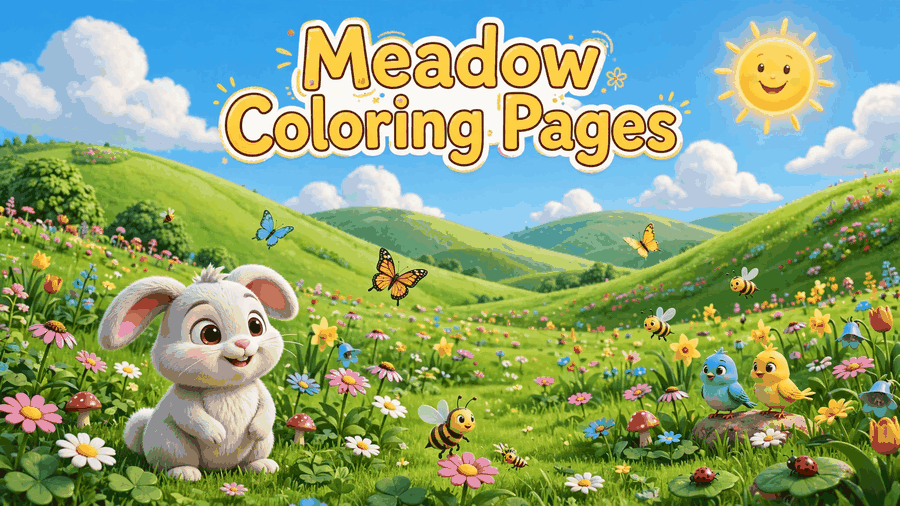
Meadow Coloring Pages invite children to explore the beauty of open fields, wildflowers, and peaceful natural landscapes. These printable activities offer a creative way to enjoy nature through colors, patterns, and imagination.
A meadow is a special kind of open landscape where grasses, flowers, and small plants grow together. Depending on the season, a meadow can look bright and colorful, with tiny blossoms scattered across the grass, or calm and fresh with different shades of green. This natural setting provides plenty of inspiration for children who enjoy drawing, coloring, and discovering the outdoors. Through meadow-themed illustrations, young artists can create their own interpretation of a beautiful countryside scene.
Discover the Natural Beauty of a Meadow
Meadows are fascinating places because they bring together many elements of nature in one open space. Unlike a garden where plants are often arranged in specific patterns, a natural meadow can have flowers growing freely among tall grasses and wild plants. Some areas may be filled with small blossoms, while others have clusters of greenery and open spaces. These details make meadow illustrations interesting subjects for children to explore with their favorite coloring tools.
Wildflowers are among the most recognizable features of a meadow. Depending on the illustration, children may encounter simple flower shapes, delicate petals, leafy stems, or larger blossoms that stand out against the grass. They can experiment with yellow, pink, purple, red, and white to create a lively landscape. There is no need to follow a single color scheme because every child can imagine a different meadow.
Grass also plays an important role in creating the appearance of an outdoor landscape. Instead of using only one green shade, children can combine light green, dark green, and yellow-green to give their picture more variety. A few brown or golden strokes can represent dry grass or patches of earth. These small choices help make the finished artwork feel more personal.
What Makes Meadow Coloring Pages Interesting for Children?
One appealing feature of meadow-themed coloring activities is their connection to familiar natural scenery. Children may recognize flowers from a backyard, a park, a countryside visit, or a picture book. This familiarity makes it easier to imagine what the landscape might look like in real life.
The theme also offers plenty of room for creative decisions. A child can turn a simple grassy field into a colorful spring meadow, a warm summer landscape, or a peaceful scene inspired by early morning. Different shades can completely change the atmosphere of the same illustration. Bright colors create an energetic appearance, while softer tones give the landscape a gentle and relaxing look.
Meadow illustrations can also encourage children to pay attention to small visual details. The shape of a flower, the direction of a grass blade, and the arrangement of leaves can all influence how a picture looks. Parents and teachers can use these details as conversation starters without turning the activity into a formal lesson.
Creative Ways to Color Flowers, Grass, and Open Fields
Choosing colors is often the most enjoyable part of a nature-themed activity. Children do not have to make every flower look realistic. They can use familiar natural colors or invent unusual combinations to make their meadow unique.
Here are some simple ideas to try:
- Wildflowers: Use purple, pink, yellow, orange, or red for flower petals. Add a different shade to the center to make each blossom stand out.
- Green grass: Combine several green shades rather than coloring the entire field with one tone.
- Flower stems and leaves: Try medium green for stems and lighter green for small leaves.
- Soil and dry plants: Use brown, beige, or golden yellow for areas that need a warmer appearance.
- The sky: If the illustration includes an open sky, light blue can create a bright daytime setting. Soft orange or pink can suggest a sunset-inspired scene.
Children can also experiment with simple coloring techniques. For example, they can use lighter pressure near the top of a grassy area and darker pressure toward the bottom to create subtle variation. Colored pencils are useful for small details such as flower centers and narrow stems, while crayons and washable markers can work well for larger spaces.
For families who enjoy combining different nature themes, rice field coloring pages offer another opportunity to explore outdoor landscapes. A rice field has a different appearance from a meadow, with organized rows of crops and broad green areas that provide another interesting subject for coloring.
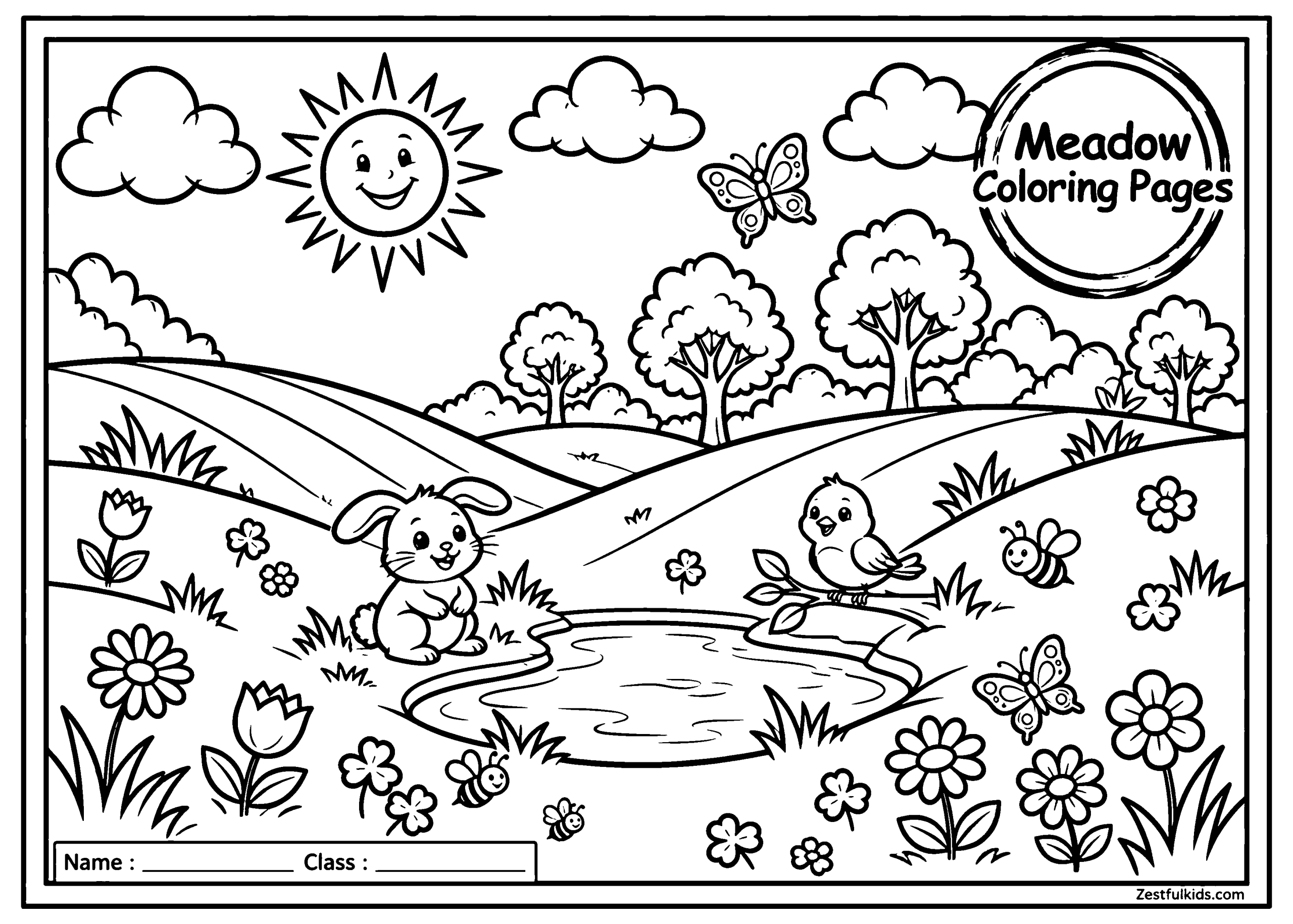
Turning a Simple Meadow into a Seasonal Scene
A meadow does not always have to look the same. Its appearance can change with the weather, time of day, and season. This gives children an opportunity to create different moods using the same basic nature theme.
A spring-inspired meadow can feature fresh green grass and colorful flowers. Children might choose pink, yellow, purple, and light blue to represent a lively landscape. For a summer setting, stronger greens and brighter flower colors can make the field appear warm and full of life.
An autumn meadow can take on a completely different character. Golden yellow, orange, reddish brown, and muted green are useful choices for creating a seasonal appearance. If the illustration contains trees or fallen leaves, these colors can help connect the different parts of the landscape.
For a more imaginative approach, children can design a meadow that does not exist in real life. They might color flowers in rainbow patterns, give the grass an unusual shade, or create a magical-looking sky. These ideas allow them to enjoy the activity without worrying about whether every detail matches nature.
How Parents and Teachers Can Use Meadow-Themed Activities
Meadow coloring activities can fit naturally into different situations at home or in the classroom. Parents may offer them during quiet afternoons, weekends, or family creative time. Teachers can also introduce the theme when discussing plants, flowers, seasons, or different outdoor environments.
One simple activity is to invite children to name the colors they plan to use before starting. They can describe why they chose certain shades for the flowers, grass, and sky. This creates an opportunity to talk about color choices while allowing each child to make independent decisions.
Another idea is to connect coloring with a short nature observation activity. If children have access to a garden or nearby green space, they can look at real plants and notice differences in leaf shapes, flower sizes, and shades of green. They can then use those observations as inspiration for their artwork.
For a creative extension, children can give their finished meadow a name. Examples include Sunny Flower Field, Rainbow Meadow, or Little Spring Garden. They can also write one or two sentences describing their imaginary landscape, turning a simple coloring session into a small storytelling activity.
Families who enjoy coloring familiar characters and festive subjects can also explore gingerbread man pages. This provides a different creative theme when children want to move from natural landscapes to playful character illustrations.
Choosing the Right Coloring Tools and Printing Tips
The best coloring materials depend on the child’s preferences and the details of the illustration. Crayons are comfortable for filling larger areas, especially grass and open spaces. Colored pencils provide greater control when working on flower petals, leaves, and narrow lines. Washable markers can create strong, noticeable colors, although adults should check the paper quality before using them.
Before printing a meadow illustration, review the available print settings. A print preview helps check whether the entire design appears properly on the page and whether any important details are cut off. Select a paper size that matches the available file and printer settings rather than assuming that every printable uses the same dimensions.
It is also helpful to prepare a clean working surface and arrange the coloring tools within easy reach. Younger children may prefer starting with larger sections before moving to smaller details. Older children can experiment with color combinations, shading, and patterns to give their landscape a more distinctive appearance.
Let Every Child Create a Meadow of Their Own
There is no single correct way to color a meadow. One child may prefer a field filled with bright flowers, while another may choose a simple landscape dominated by different shades of green. Both approaches can produce artwork that reflects individual imagination and personal color preferences.
Meadow Coloring Pages provide a pleasant opportunity for children to explore flowers, grass, and open countryside scenery through a hands-on creative activity. Parents, teachers, and caregivers can use the theme for relaxed coloring sessions, nature-related conversations, or imaginative art projects. With a few coloring tools and plenty of creative freedom, an ordinary meadow illustration can become a landscape that feels entirely their own.
