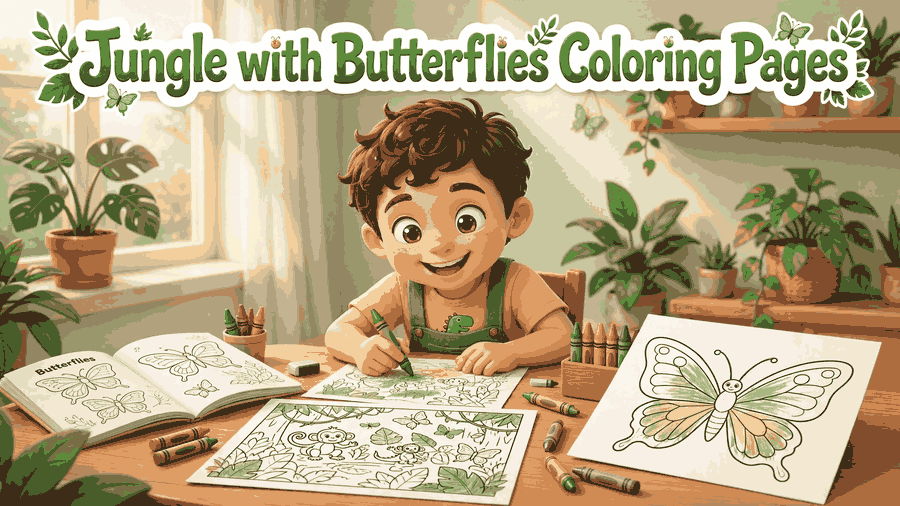
Sunlight filtering through jungle leaves, twisting vines hanging from branches, and butterflies drifting between tropical plants create a wonderful setting for artistic exploration. Jungle with Butterflies Coloring Pages bring together two fascinating parts of nature: the rich variety of jungle vegetation and the delicate wings of butterflies. This combination gives children plenty of shapes to explore, from broad leaves and curling stems to tiny flower centers and patterned wings. Parents and teachers can use these coloring activities for nature-themed lessons, creative afternoons at home, or classroom projects about insects and tropical habitats. Children can choose realistic shades of green and brown or transform the jungle into a vibrant fantasy landscape filled with unexpected colors. Each butterfly offers a chance to experiment with symmetrical patterns, while the surrounding plants provide opportunities to create depth and contrast. Whether children focus on a single butterfly or imagine an entire tropical scene, this theme encourages them to observe natural details and develop their own ideas through coloring.
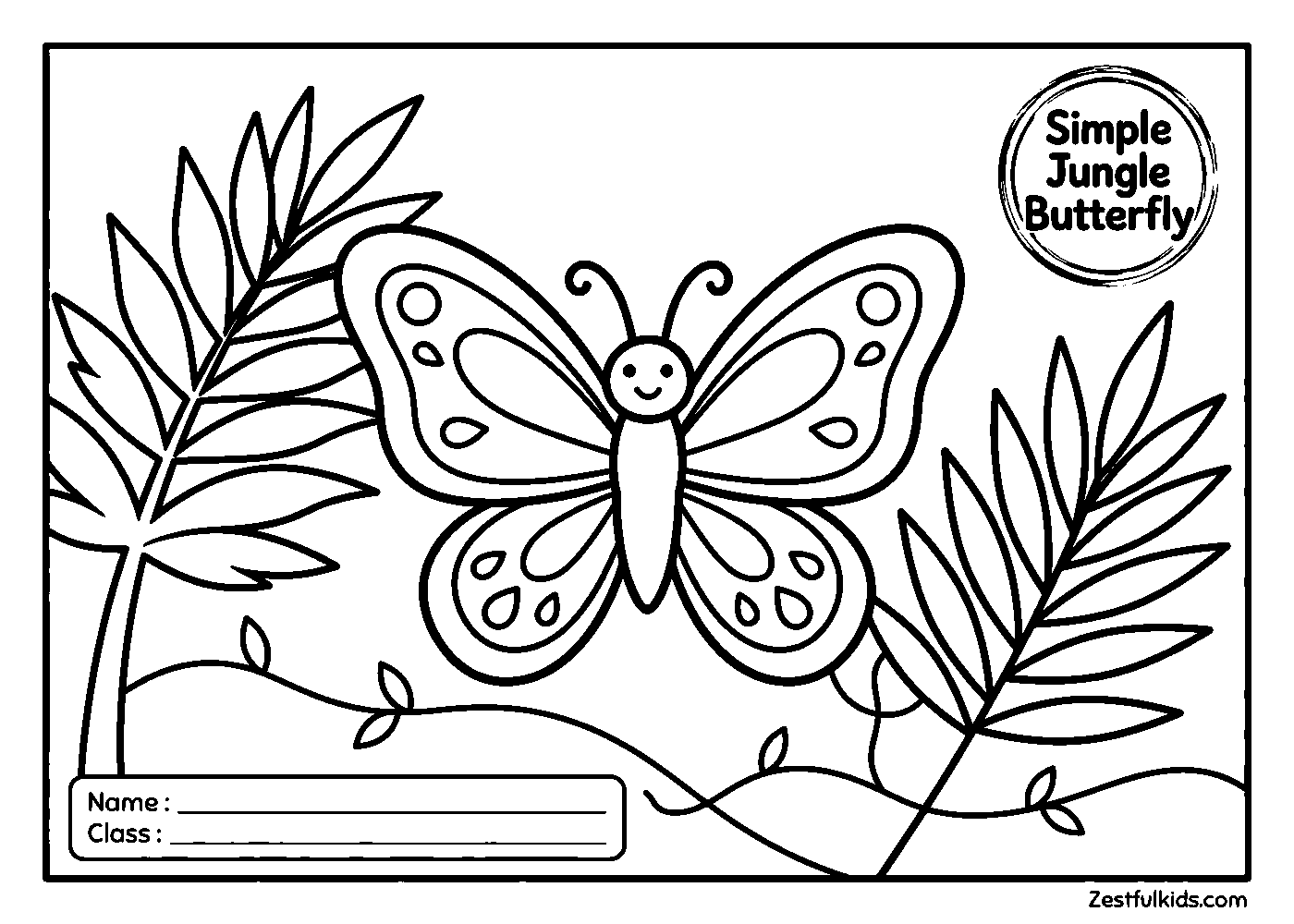
Explore the Layers of a Tropical Jungle
A jungle scene is different from a simple garden because it often contains several layers of vegetation. Tall trees may rise above smaller plants, while broad leaves, hanging vines, and dense shrubs fill the spaces between them. These overlapping shapes can make a coloring illustration feel full of life, even when the picture contains only a few main elements. Children can explore the scene one section at a time instead of trying to color every leaf immediately.
Green is an obvious starting point, but using just one shade can make the plants blend together. Light green can highlight leaves that appear closer to the sunlight, while darker green can help separate overlapping foliage. Brown works well for tree trunks and branches, and small touches of yellow can suggest sunlight falling through the canopy. These choices help children create contrast without needing complicated shading techniques.
The jungle does not have to look completely realistic, either. Some children may prefer turquoise leaves, purple vines, or bright pink flowers among the greenery. These imaginative combinations can turn an ordinary forest scene into a magical place. The important part is deciding how the different colors work together and allowing the butterflies to remain visible against the background.
Give Every Butterfly Its Own Wing Pattern
Butterflies are often the most eye-catching details in a jungle-themed picture. Their wings can feature spots, stripes, dots, borders, or patches of contrasting color, depending on the illustration. Because the two wings of a butterfly often have similar patterns, children can use matching colors on each side to create a balanced design. They can also experiment with small differences if they want a more imaginative appearance.
A simple way to begin is to choose two main colors for the wings and one accent color for the smaller details. Orange and black can create a bold pattern, while blue and purple produce a cooler combination. Yellow paired with pink can make the butterfly appear bright and cheerful. Children who enjoy more elaborate designs can add tiny dots or colored borders where the outline leaves enough space.
Parents and teachers can introduce the idea of symmetry by inviting children to compare the left and right sides of a butterfly. They might color matching spots on both wings or repeat a sequence of colors across the design. This is an optional challenge rather than a rule, and children should feel free to invent their own patterns. A fantasy butterfly with rainbow wings can be just as enjoyable as one inspired by a real species.
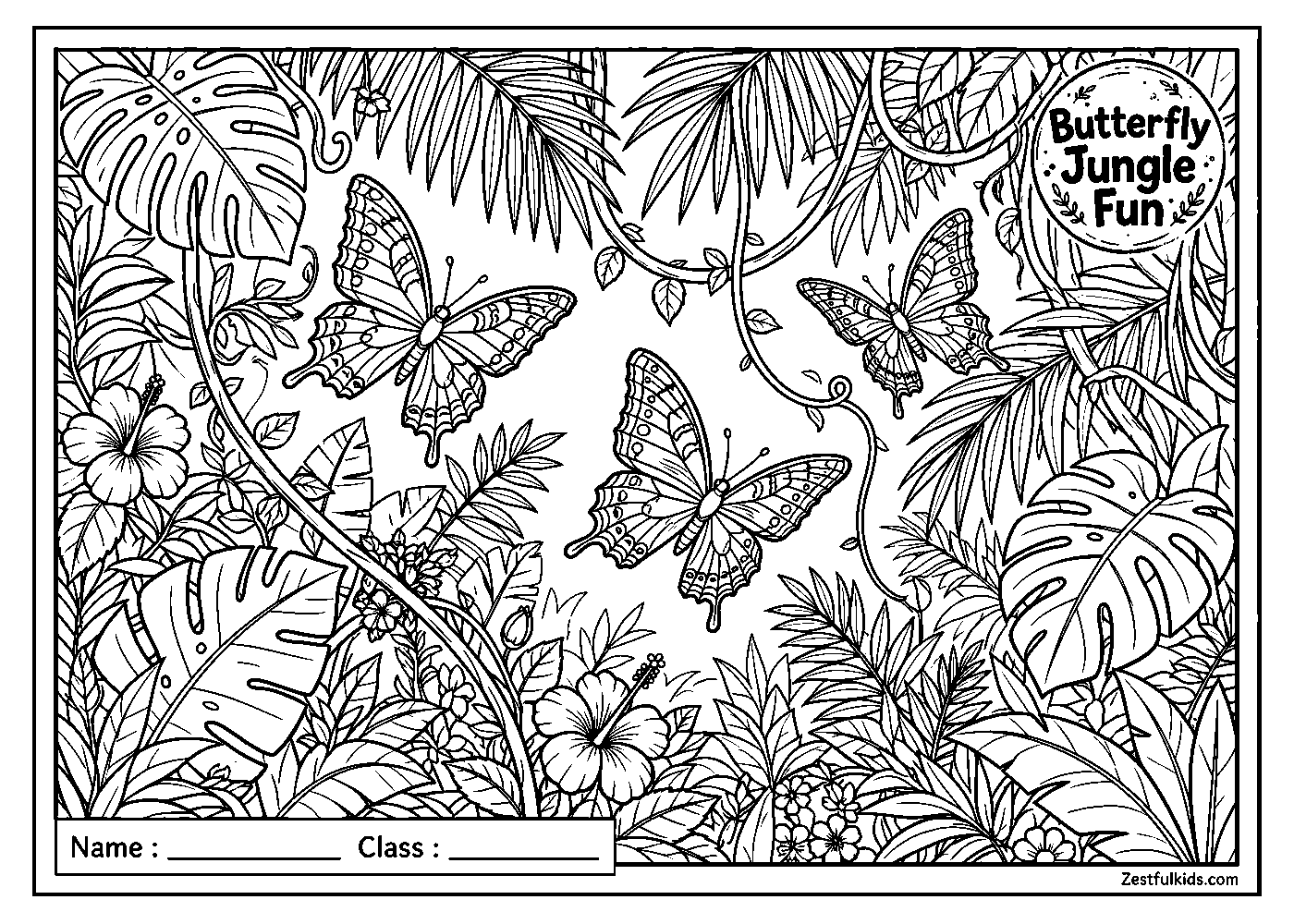
Build a Color Palette That Connects Plants and Butterflies
The relationship between the butterflies and their surroundings can help children decide which colors to use. If the jungle contains mostly dark green leaves, bright yellow or orange wings may stand out clearly. Against a lighter background, purple, blue, or red butterflies can create a similar contrast. Thinking about the whole picture before coloring can help children make deliberate choices instead of selecting every color independently.
Flowers can introduce additional shades into the scene. Small blooms in red, pink, yellow, or violet provide visual highlights among the leaves. If the illustration does not include flowers, children can draw a few in open spaces, provided they do not cover important parts of the original design. They might also add tiny buds, fallen leaves, or patches of grass to make the jungle feel more personal.
For a softer look, use related colors throughout the picture. Different shades of green can dominate the plants, while pale blue and lavender create gentle butterfly patterns. For a more dramatic result, combine dark foliage with bright wings and colorful flowers. Both approaches work well, so children can choose the mood they want their jungle to express.
What Can Children Discover About Butterflies?
A jungle coloring activity can lead naturally to conversations about the real insects that inspire the artwork. Butterflies have six legs, two antennae, and four wings, although their wings may appear as two main pairs when viewed from above. Their wing colors and patterns vary widely between species. Some butterflies have bright markings, while others use more subtle shades that help them blend into their surroundings.
Children may also learn that butterflies develop through a life cycle involving four stages: egg, caterpillar, pupa, and adult butterfly. This transformation is called complete metamorphosis. Adults can explain the stages in simple language and invite children to draw the sequence on a separate sheet after finishing their jungle scene. The extra activity can be as simple as four small pictures connected with arrows.
The jungle setting provides another opportunity to discuss habitats. Tropical forests support many kinds of plants, insects, birds, and other animals, although not every butterfly species lives in a jungle. Children can talk about how plants provide food or shelter for different creatures and why natural habitats matter. These conversations add useful context to the coloring activity without requiring the illustration to represent a scientifically exact ecosystem.
Make the Coloring Session Comfortable and Enjoyable
The right materials depend on the details in the illustration and the child’s preferred way of working. Crayons are useful for broad leaves and large areas of foliage, while colored pencils provide better control around narrow vines and small butterfly markings. Markers can create bold, saturated colors, but testing them on spare paper first helps children see how they will look and whether the ink might show through the sheet.
Before printing, check the preview to ensure that the illustration fits within the selected page layout. Follow the paper size and orientation specified with the particular file, if available, and adjust the scaling if any part of the picture appears cropped. A flat work surface and a small selection of coloring tools can make it easier to move between the jungle background and the butterfly details.
Children can work from the background toward the foreground if they want to create a sense of depth. For example, they might color the larger leaves first, then complete the butterflies and any smaller plants. Others may prefer to finish the butterflies immediately because those are their favorite part of the picture. Letting children choose their own order keeps the activity flexible and enjoyable.
Continue Exploring Nature Through Art
After completing a jungle scene, children can extend the theme by drawing a small animal among the leaves or inventing a new butterfly species with its own name and wing pattern. They could imagine where the butterfly rests, which flowers it visits, or what other creatures live nearby. These ideas can be discussed aloud or recorded in a few sentences beside the finished artwork.
Children who enjoy combining animals with natural settings may also like these baby dinosaur illustrations. The friendly prehistoric subject offers a different way to imagine creatures in a leafy environment, with plenty of opportunities to invent colors and backgrounds. For another nature-inspired project, flowers arranged in a basket provide a contrasting scene in which children can focus on individual blooms and their colors rather than dense jungle foliage.
Jungle with Butterflies Coloring Pages bring together the layered shapes of tropical plants and the intricate patterns of butterfly wings. Children can explore natural color combinations, invent fantasy designs, and discover simple facts about insects and habitats along the way. With room for individual choices, the activity can become anything from a realistic jungle illustration to a bright, imaginative world filled with unusual plants and extraordinary butterflies.

