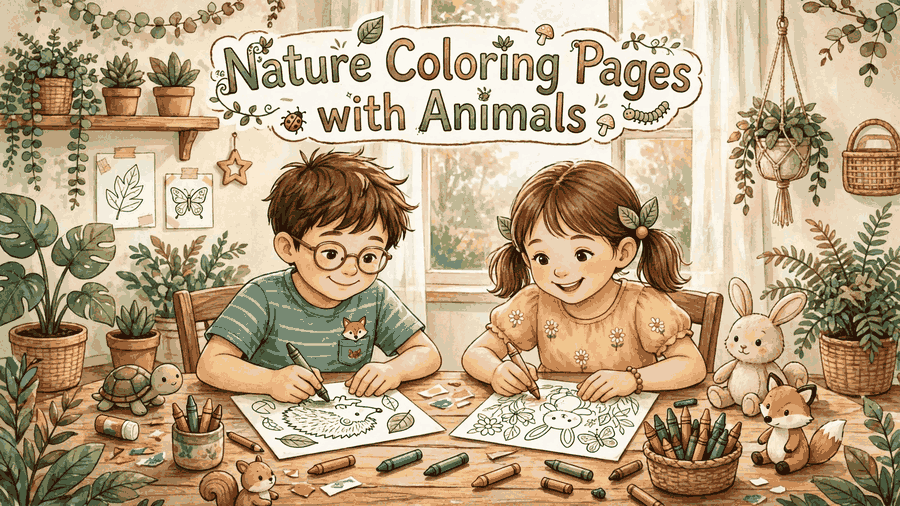
Nature Coloring Pages with Animals bring together wildlife, plants, and outdoor scenery in an enjoyable activity for children. These printable coloring ideas invite young artists to explore the natural world through colors, patterns, and imagination.
Discover the Little Details of Nature
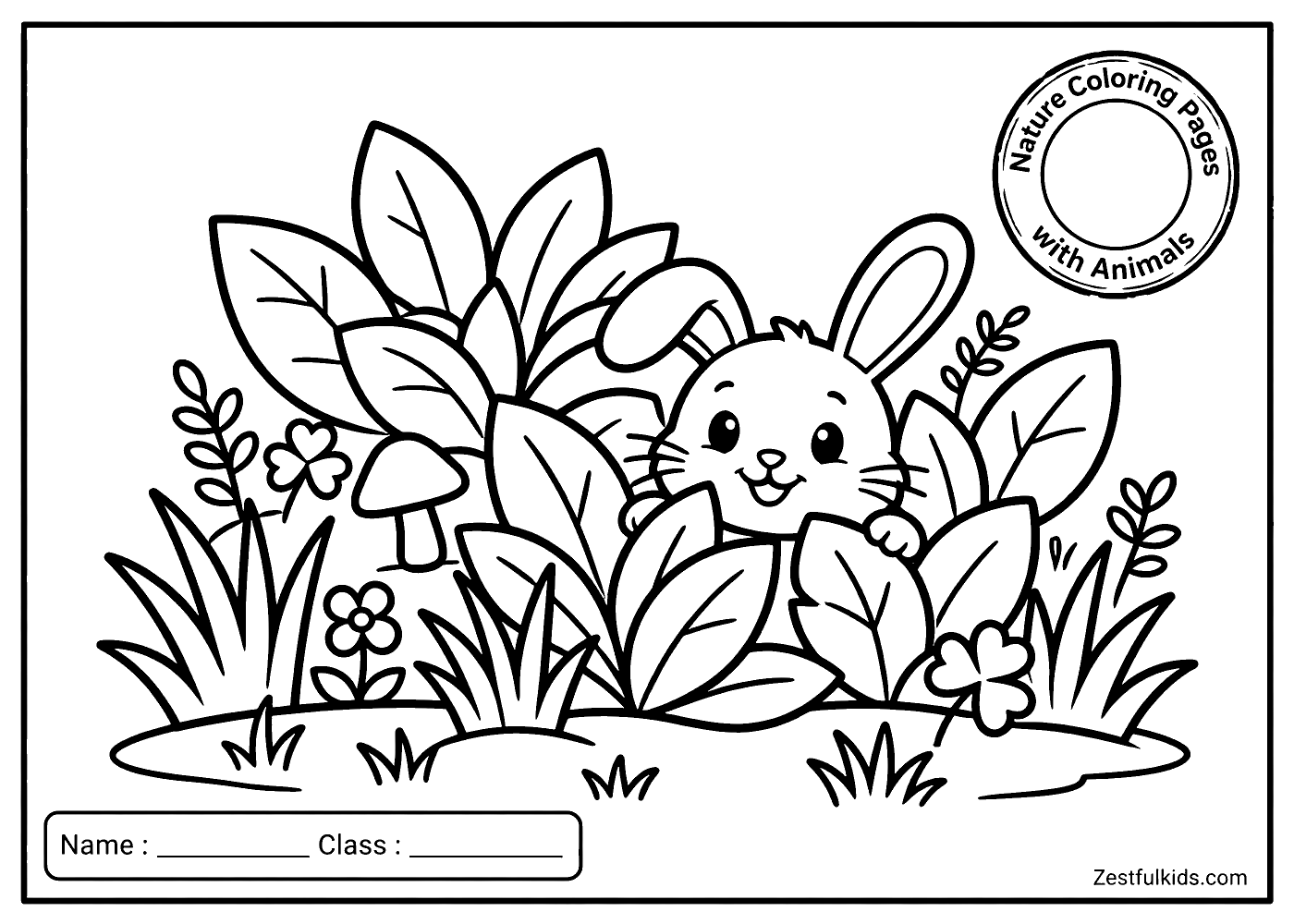
A woodland path, a bird resting on a branch, or a rabbit hiding among leafy plants can turn an ordinary coloring session into a closer look at nature. Nature Coloring Pages with Animals combine the appeal of familiar creatures with the landscapes they inhabit, giving children plenty of details to explore. Instead of focusing on an animal alone, they can imagine how it fits into its surroundings, from the grass beneath its feet to the trees growing overhead. This combination makes nature-themed coloring especially interesting for children who enjoy animals and outdoor adventures.
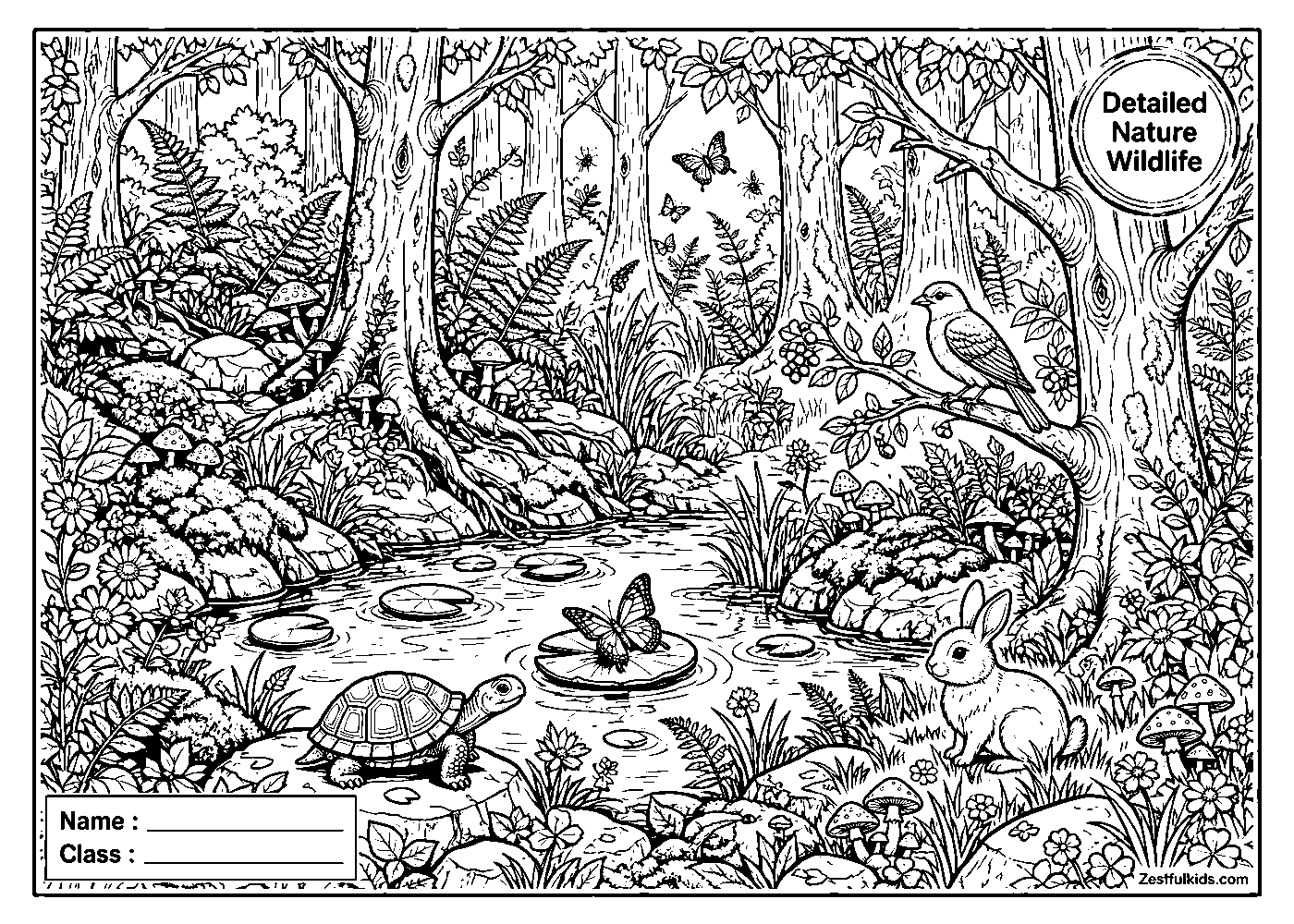
Each natural setting offers different visual possibilities. A forest scene might inspire shades of green, brown, and golden yellow, while a picture featuring a pond could include blue water, reeds, and flowers along the bank. Animals also provide opportunities to experiment with different colors and textures, whether a child is coloring the soft-looking fur of a squirrel, the feathers of a bird, or the patterned shell of a turtle. These are optional ideas that can be adapted to the illustration and the child’s imagination.
Parents and teachers can use these pictures to introduce simple observations about the outdoors without turning the activity into a formal lesson. Children might notice that leaves have different shapes or that birds have feathers while rabbits have fur. They can also talk about the places where animals find food, shelter, and space to move. The conversation can remain casual, allowing the artwork to guide what they notice and discuss.
How Animals and Their Habitats Inspire Color Choices
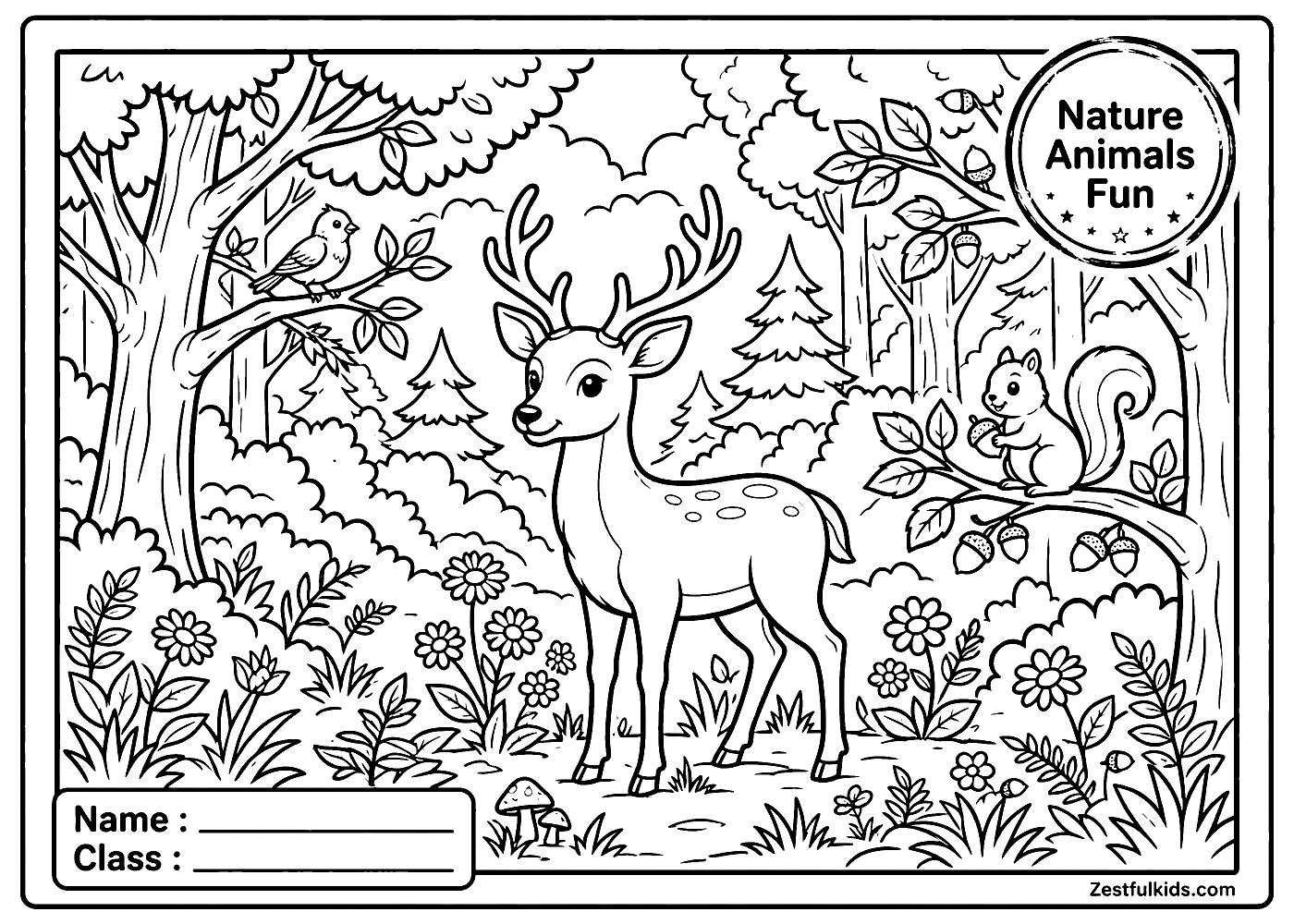
Choosing colors becomes more interesting when children consider the relationship between an animal and its environment. A deer standing among trees might be colored in natural brown tones, with darker greens for the surrounding foliage. A butterfly resting on a flower offers an opportunity to use bright, contrasting shades, while a frog near a pond might inspire a combination of green, blue, and yellow. Children can follow familiar colors or invent their own combinations to create a more imaginative scene.
The background deserves attention, too. Grass, rocks, tree trunks, clouds, and flowers can help establish the setting without competing with the main animal. If the illustration has plenty of open space, children might add a sunny sky, distant hills, or small plants around the edges, provided there is room to draw without covering the original outlines. Leaving some sections white can also make the finished picture feel balanced rather than crowded.
For a more detailed coloring session, invite children to choose three main colors before beginning. One can be used for the animal, another for the surrounding plants, and a third for small accents such as flowers, berries, or butterflies. This simple approach gives the picture a sense of coordination while still leaving room for spontaneous choices. Children who prefer a more playful style can ignore the suggested palette and create a purple fox, a rainbow bird, or a forest filled with unusual flowers.
Make Wildlife Observation Part of the Activity
Nature-themed artwork can lead naturally to conversations about real animals. Before coloring a bird, for example, children can describe its beak, wings, tail, and feet. If the picture includes a squirrel, they might discuss how squirrels climb trees and gather food, or compare its bushy tail with the tails of other animals. These observations help connect the shapes on the page with creatures children may encounter in a garden, park, or nature documentary.
You do not need to know the name of every species to make the activity worthwhile. Encourage children to describe what they can see and make reasonable guesses about an animal’s surroundings. If a particular creature catches their interest, a children’s nature book or a reliable wildlife resource can provide additional information. The coloring page becomes a starting point for curiosity rather than a test of factual knowledge.
Another option is to create a small nature journal. After completing a picture, children can write the animal’s name and add one fact they learned about it. Younger children may prefer to dictate the sentence to an adult or draw an extra detail instead. A collection of finished pictures can then become a personal record of the animals and habitats they have explored.
Families looking for another outdoor-inspired activity can also try these easy nature illustrations. A nature-focused collection can complement animal scenes by giving children more opportunities to experiment with leaves, flowers, trees, and other elements of the environment. Alternating between wildlife and landscape subjects can keep coloring sessions varied while maintaining a common theme.
Choose Coloring Tools That Suit the Picture
The best coloring materials depend on the size of the spaces and the amount of detail in the illustration. Crayons are practical for filling larger areas such as the sky, grass, or an animal’s body. Colored pencils offer greater control around small features, including eyes, feathers, whiskers, and leaf veins. Washable markers can produce bold colors, but it is sensible to test them on the chosen paper first, particularly if the ink might show through to the other side.
Children do not have to complete every detail in the same way. They might color an animal first and return to the background afterward, or work from the top of the page downward to avoid resting their hands on freshly colored areas. For a scene containing several animals, coloring one creature at a time can make the task feel more manageable. There is no need to rush; the activity can be divided into shorter sessions if the illustration contains many small sections.
Before printing, check the page preview and confirm that the main outlines fit within the printable area. Select a paper size supported by the file and printer, and review the margins to avoid cutting off important parts of the scene. Ordinary paper generally works for crayons and colored pencils, while heavier paper may be preferable for some markers. Actual results depend on the printer, paper, and coloring materials being used.
Create a Story Around the Finished Picture
Once the coloring is complete, invite children to imagine what might happen in the scene. A bird perched on a branch could be preparing to build a nest, while a rabbit among flowers might be searching for a quiet place to rest. If the picture contains several animals, children can invent a simple story about how the creatures share the same environment. These ideas can be spoken aloud, written in a few sentences, or illustrated in a separate drawing.
The story can also encourage children to think about caring for natural spaces. They might suggest keeping litter away from ponds, avoiding damage to plants, or observing wild animals without disturbing them. These are practical ideas that connect the coloring activity with everyday experiences in parks and gardens. Keep the discussion appropriate to the scene rather than adding environmental messages that do not fit the picture.
For children who enjoy imaginative gatherings, a unicorn tea party offers a different creative direction. Moving from realistic wildlife and outdoor scenery to a fantasy setting gives young artists a chance to experiment with another visual style. They can compare how they color familiar animals with how they design imaginary creatures, magical decorations, and unusual surroundings.
Nature Coloring Pages with Animals can be used at home, in classrooms, or during a quiet afternoon with family. Each picture offers a chance to notice details, explore color combinations, and invent a story connected to the natural world. Whether children prefer recognizable animal colors or imaginative designs, they can make each finished page their own while discovering more about the creatures and environments that inspire their artwork.

