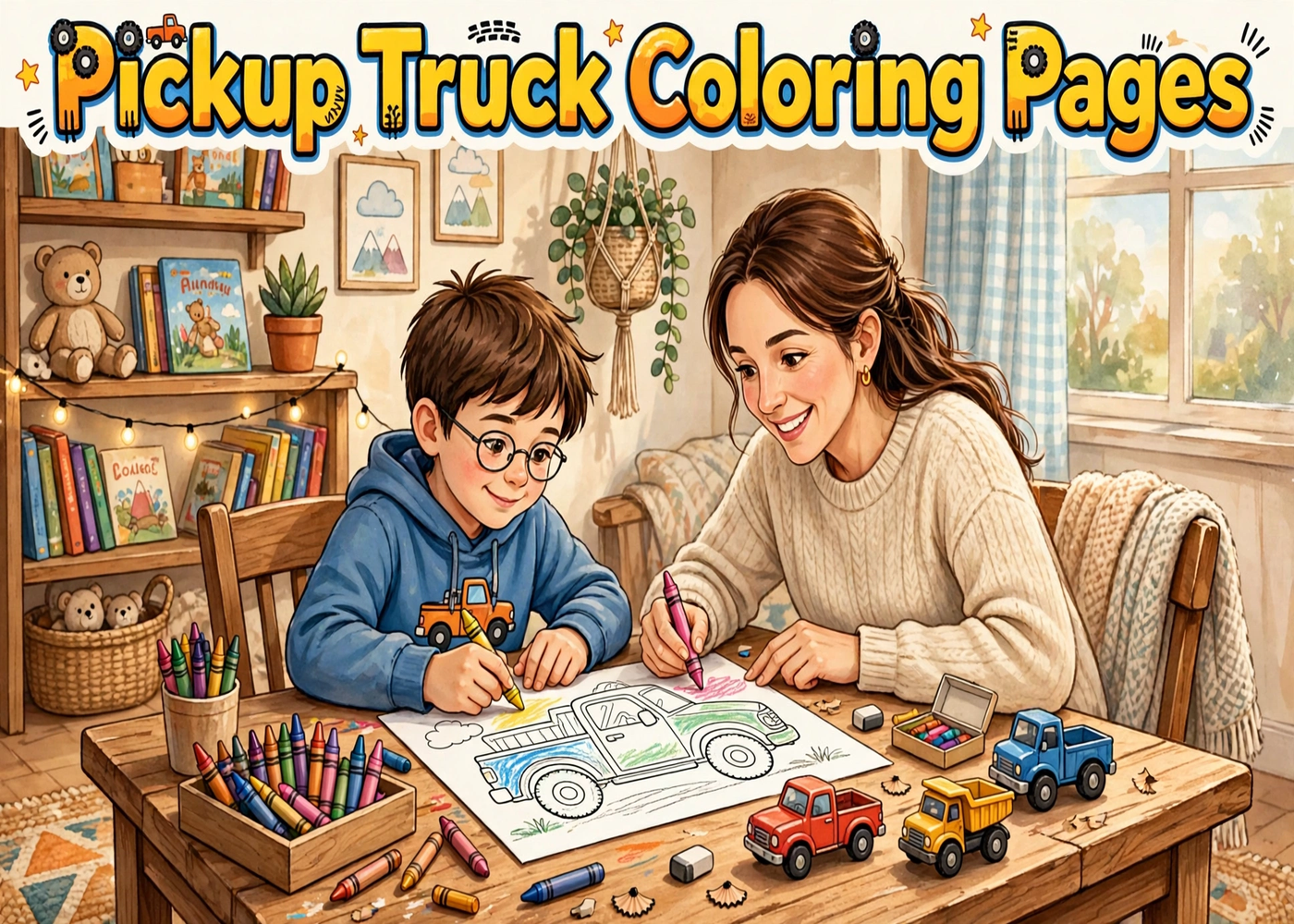
Pickup Truck Coloring Pages give children a chance to explore the details of a familiar vehicle, from its sturdy cab and open cargo bed to its large wheels and practical design. These printable activities invite young artists to experiment with colors while imagining where a pickup truck might travel and what it could carry.
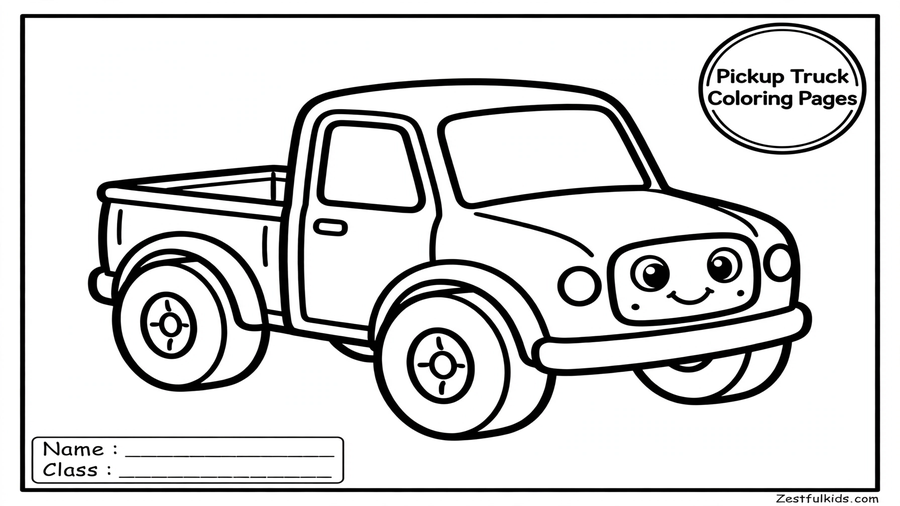
What Makes Pickup Trucks Interesting to Color?
Pickup trucks have a distinctive shape that makes them fun to explore on paper. Unlike a passenger car with a fully enclosed rear section, a typical pickup has a separate cab and an open cargo bed designed to carry different kinds of loads. Its recognizable outline, wheel arches, windows, headlights, and tailgate offer several areas for children to color individually. These features also make it easy to create a picture that looks detailed without needing complicated patterns or elaborate backgrounds.
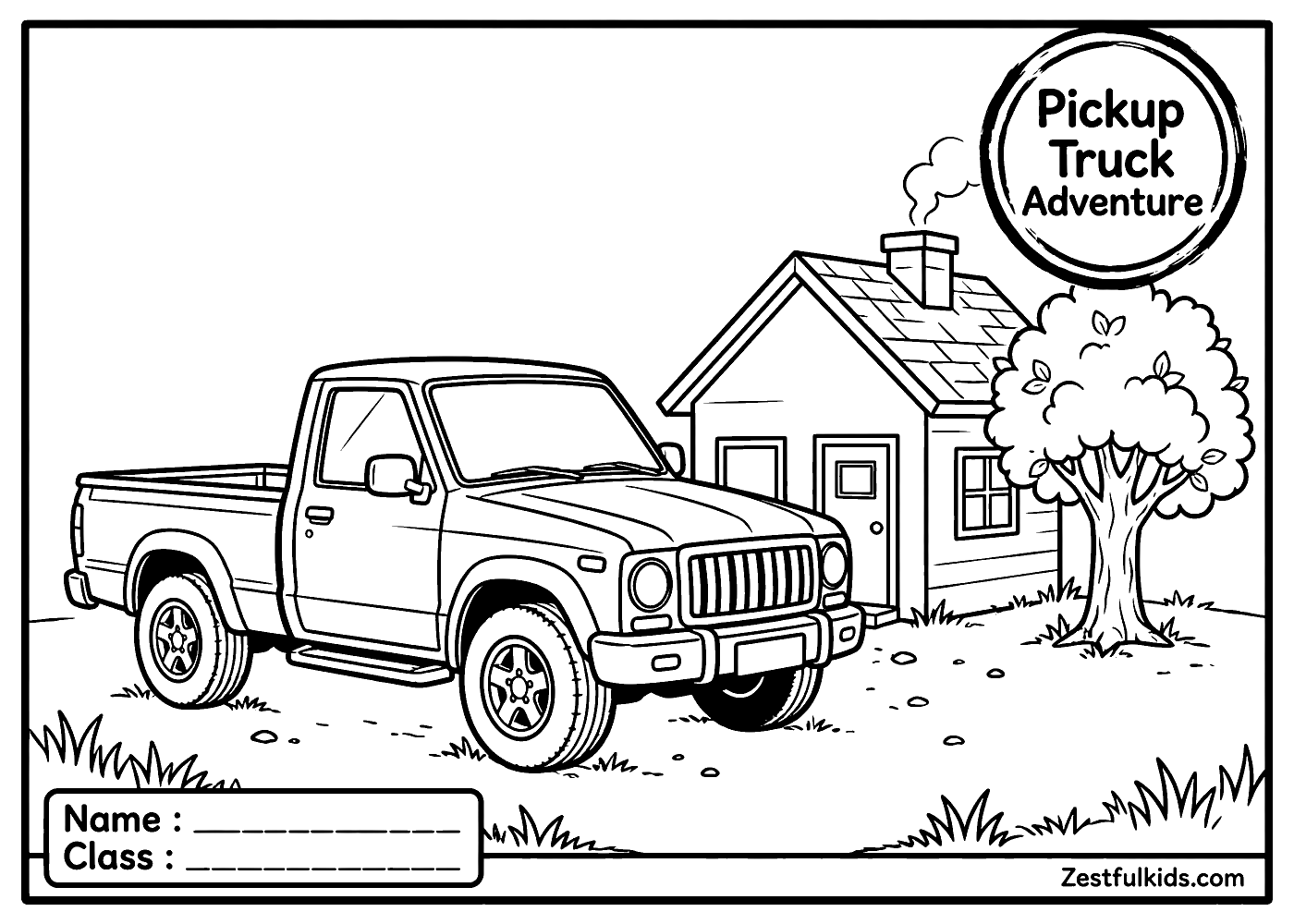
The vehicle’s practical design can inspire a variety of imaginative scenes. Children might picture a pickup parked beside a family home, traveling along a country road, or carrying gardening supplies to a backyard project. If the illustration leaves room around the truck, they can add a few simple details, such as a tree, a fence, or clouds in the sky. The setting does not need to be elaborate; even a road beneath the tires can help the vehicle feel connected to its surroundings.
Another appealing feature is the freedom to choose a personal style. Some children may prefer realistic colors, such as white, silver, dark blue, or red, while others might design a bright green truck with orange wheels. The cargo bed can be a contrasting shade, and the windows can be colored light blue or left mostly white to suggest reflections. There is no single correct combination, so each finished picture can look different even when children begin with similar outlines.
Explore the Details of a Pickup Truck
Before reaching for the crayons, children can spend a moment looking at the different parts of the vehicle. The cab is where the driver and passengers sit, while the cargo bed provides space for carrying items. At the front, headlights help illuminate the road, and the grille gives the truck a recognizable appearance. The tires, mirrors, doors, and tailgate provide additional shapes that children can identify as they work.
These details offer a natural way to approach a picture in stages. Start with the largest area, such as the body, and then move to smaller sections like the windows, lights, and wheels. Coloring the tires in dark gray or black can create a clear contrast with the body, while a lighter shade around the windows can help distinguish the cab from the rest of the vehicle. If the drawing includes visible seams or door handles, children can use careful strokes to keep those features distinct.
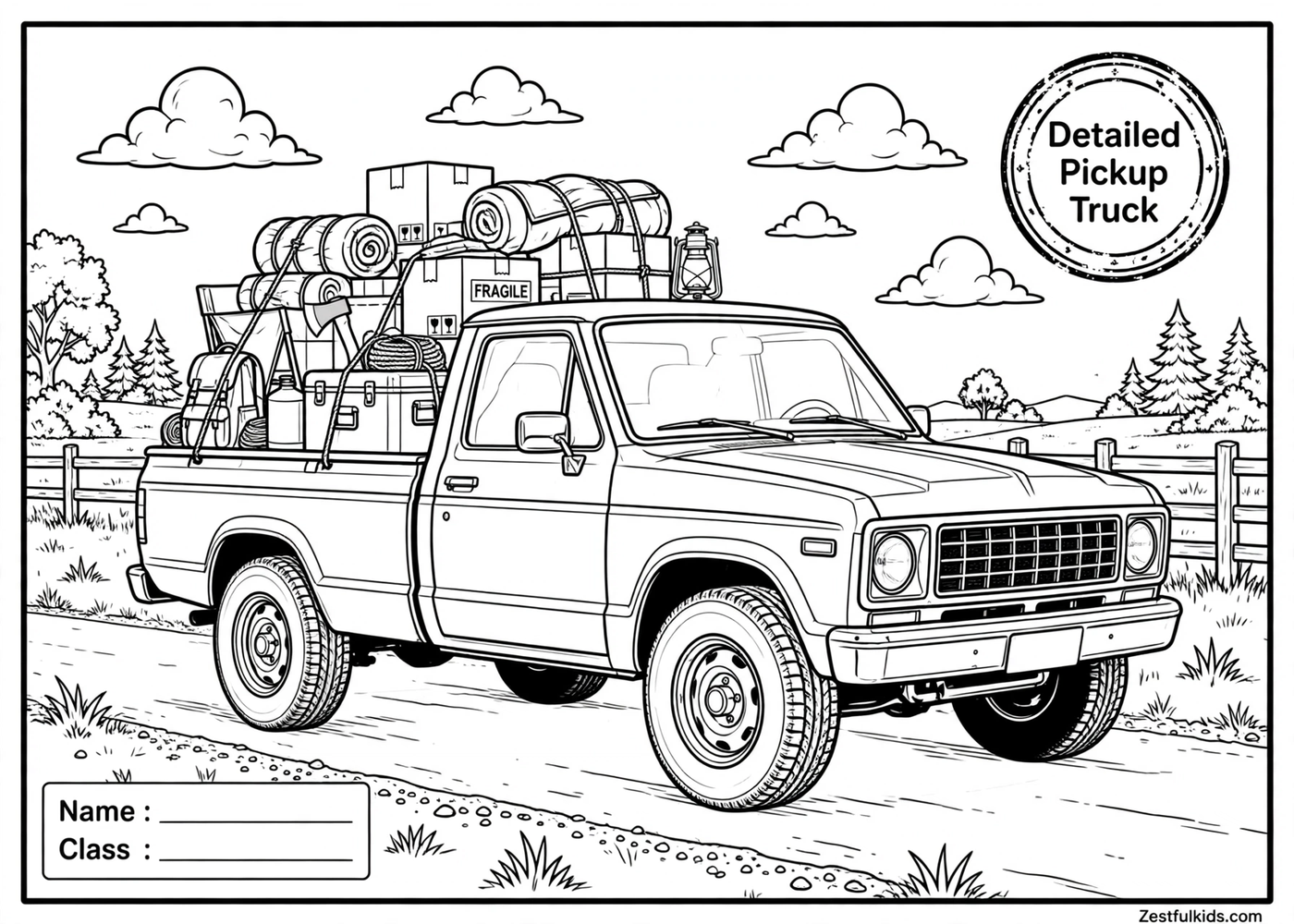
The cargo bed also creates an opportunity to personalize the design. Depending on the illustration, children can imagine carrying boxes, sports equipment, plants, or camping supplies. If the bed is empty, they might draw a simple load in the available space, provided they do not cover important outlines. This small addition can turn a straightforward vehicle picture into a scene with a purpose.
Choose a Color Scheme That Tells a Story
A pickup truck’s color can suggest the kind of adventure a child imagines. A red truck might belong to a family preparing for a weekend trip, while a green one could be used for an imaginary gardening project. A blue or silver pickup may suit a quiet drive through the countryside. These are creative possibilities rather than fixed meanings, and children should feel free to invent their own stories for the vehicles they color.
For a more coordinated picture, encourage children to select a main color and two supporting shades. The main color can cover the truck’s body, the second can be used for smaller details, and the third can help finish the wheels or background. A yellow truck with dark gray tires and a pale blue sky, for example, offers a clear contrast without requiring many different materials. Children who enjoy intricate coloring can add subtle differences between the cab, doors, and cargo bed.
Colored pencils are useful for small features such as mirrors, headlights, and door handles. Crayons work well for larger body panels, while washable markers can create bold areas of color when used with suitable paper. Children can combine materials if they wish, but it helps to test markers first to check whether the ink shows through the page. For younger artists, starting with broad areas before moving to small details can make the process easier to manage.
Turn a Truck Picture into a Creative Challenge
A pickup truck coloring activity can become more engaging when children have a simple goal beyond filling in the outlines. Invite them to design a truck for a particular journey, such as a drive to the beach, a visit to a farm, or a trip to a campsite. They can choose the body color and imagine what belongs in the cargo bed. If the picture includes a road or outdoor scenery, they can use those details to build a setting around their chosen adventure.
Another idea is to create a small delivery story. The truck might carry flowerpots to a garden, boxes to a new house, or supplies for a picnic. After coloring, children can describe where the vehicle is going and what happens when it arrives. They can also give the truck a name or draw a simple sign on the door if the illustration has enough space. These additions connect the artwork with everyday situations while leaving the imaginative decisions in the child’s hands.
For a different kind of creative activity, children who enjoy repeating shapes and adding small details may appreciate these mandala designs with cute animals and beautiful patterns. The subject is quite different from a pickup truck, but it offers another opportunity to experiment with color combinations, repeated marks, and careful attention to individual sections. Switching between vehicles and patterned designs can provide variety during a family art session.
Make Printing and Coloring Easier
A comfortable workspace can make the activity more enjoyable. Place the printed sheet on a flat table and arrange crayons, pencils, or markers where children can reach them without stretching across the page. If several children are coloring together, providing separate sets of materials or a shared tray can help keep the workspace organized. Allow enough time for children to finish at their own pace rather than treating the picture as a race.
Before printing, review the page preview to ensure that the truck’s outline fits within the printable area. Choose a paper size supported by the file and check the printer margins so that important details are not cut off. Standard paper is generally suitable for crayons and colored pencils, while thicker paper may work better with some markers. The best choice depends on the printer and the materials being used.
Once the truck is finished, children can display the picture, add it to an art folder, or use it as the starting point for another drawing. They might sketch a garage, a country road, or a place where the truck makes its delivery. Families who enjoy seasonal activities can also explore children wearing Halloween costumes for a change of subject and a chance to create a festive scene.
Pickup Truck Coloring Pages offer more than an opportunity to fill a vehicle with color. The recognizable parts of the truck invite children to notice shapes and details, while the cargo bed and surrounding setting provide room for simple stories. Whether they choose a realistic work truck or a bright, imaginative design, children can turn an everyday vehicle into a picture that reflects their own ideas.

