
Big Rig Truck Coloring Pages bring the excitement of large trucks to children’s creative time, with opportunities to explore long trailers, powerful cabs, and the fascinating details of heavy-duty vehicles.
Discover What Makes a Big Rig Truck Special
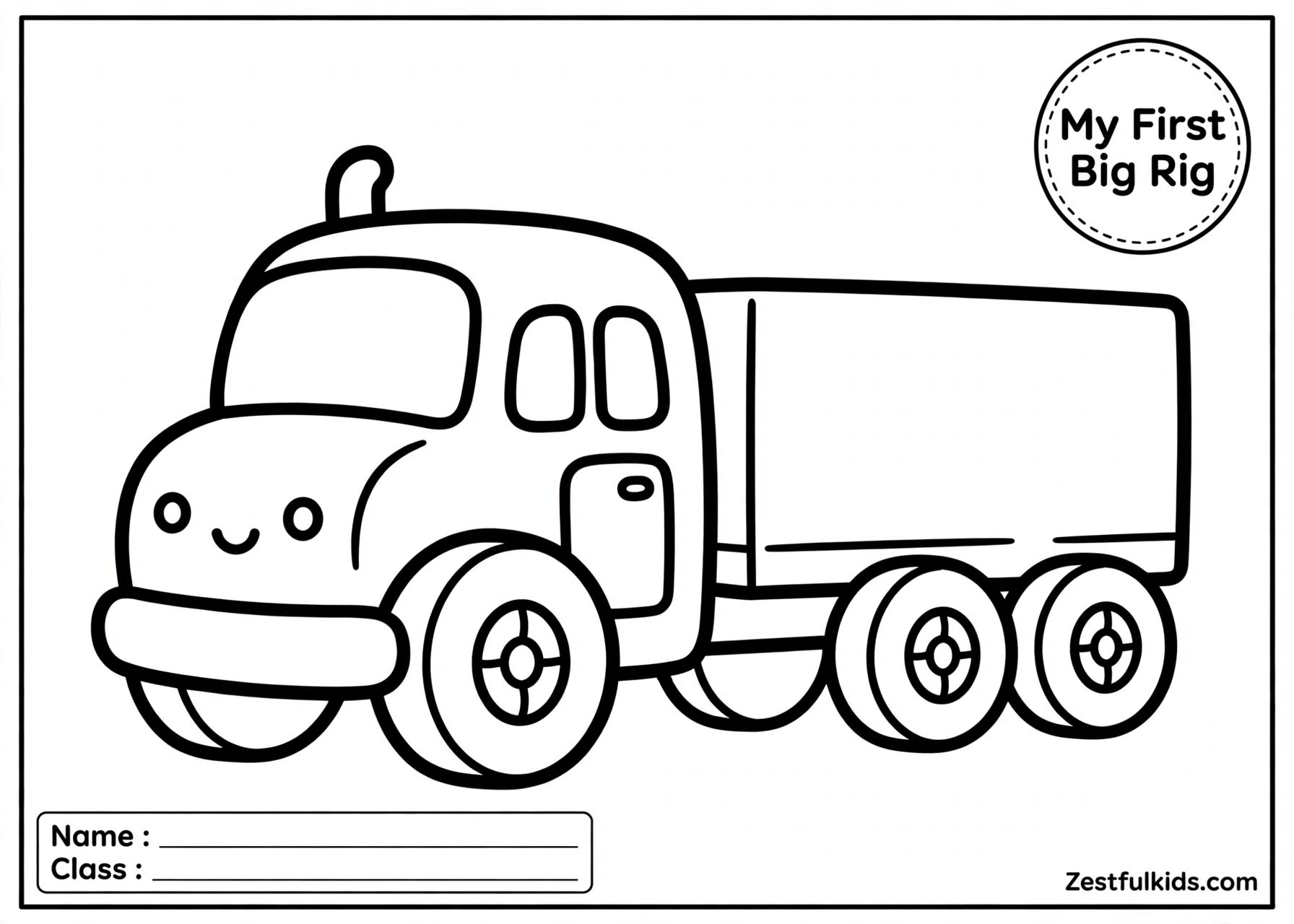
A big rig is a familiar sight on highways, where its large cab and long trailer carry goods between cities, warehouses, farms, and distribution centers. These impressive vehicles have many interesting parts that make them enjoyable subjects for children’s artwork. The front cab, large wheels, side mirrors, headlights, and long trailer each offer a different area to explore with color. Big Rig Truck Coloring Pages let children focus on these features while imagining where the truck might be traveling.
Unlike a small passenger car, a big rig is designed to move substantial loads over long distances. Many have a tractor unit at the front connected to a separate trailer, although truck configurations vary depending on their purpose. Some transport packaged goods, while others carry refrigerated products, building materials, or equipment. These differences provide inspiration for children who enjoy vehicles and want to imagine what a particular truck might be carrying.
The large shapes of a truck can make coloring feel like assembling a picture from several sections. Children might start with the cab, move to the trailer, and finish with the wheels and smaller details. They can choose realistic colors inspired by trucks they have seen on the road or create a completely imaginative vehicle with bright patterns. Either approach gives them room to make the illustration their own.
Plan a Color Scheme for the Cab and Trailer
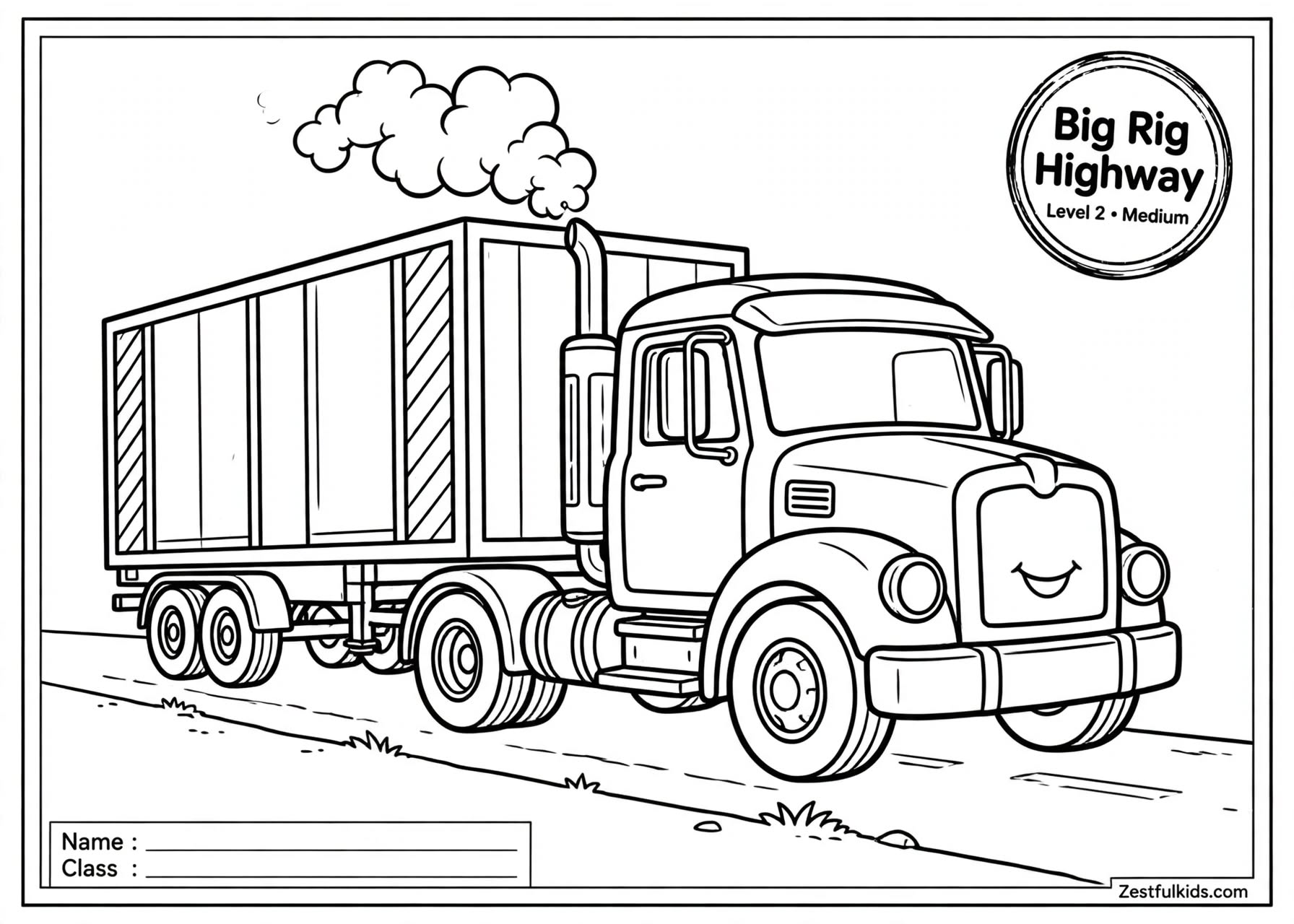
The cab is often the first part of a big rig that catches the eye. It can be colored red, blue, green, yellow, white, or almost any shade a child prefers. A contrasting color for the bumper and grille can help these sections stand out, while gray or silver works well for metal details. Windows can be colored light blue or gray, with darker outlines to distinguish them from the body.
The trailer offers a larger space for experimenting with color. Children might choose a single shade for a clean, simple look or divide the trailer into sections with stripes and geometric patterns. A white trailer with blue details can look different from a bright orange trailer with black trim. If the illustration includes a company logo or lettering area, children can invent a fictional trucking company and create their own simple emblem.
Wheels deserve attention, too. Black or dark gray tires with lighter gray hubs provide a familiar appearance, while the wheel arches and mudguards can match the cab or trailer. Children can use small circular strokes to color the tires evenly and leave the central hubs in a contrasting shade. If the drawing contains several visible wheels, repeating the same color scheme can make the finished truck look coordinated.
For an imaginative approach, invite children to design a truck for a special purpose. One might be a delivery truck for toys, another could transport colorful building blocks, and a third might carry supplies to a farm. The vehicle’s colors can reflect its imagined job, making the coloring activity a starting point for a short story.
Follow the Journey from Highway to Destination
A big rig rarely travels without a destination. It might be heading toward a warehouse, crossing a long highway, or delivering goods to a busy shop. Children can use this idea to create a setting around the truck if their illustration has enough open space. A road with dashed lane markings, a few roadside trees, and distant hills can suggest a countryside journey, while simple buildings and traffic signs can create an urban scene.
The background does not need to be complicated. A pale blue sky, green grass, and gray road may be enough to place the truck in a recognizable environment. Children who enjoy detailed pictures can add clouds, road signs, streetlights, or a bridge. Those who prefer a simpler activity can concentrate on the truck itself and leave the surrounding space mostly white.
Parents and teachers can also use the vehicle as a starting point for a practical conversation about transportation. Ask children to think about the kinds of goods people use every day, such as groceries, clothing, books, and toys. Many products travel through several stages before reaching a store or home, and trucks often play an important role in that journey. The discussion can remain informal, allowing children to share their own observations from roads and neighborhoods.
Turn the Truck into a Creative Story
Once the main vehicle is colored, children can imagine who drives it and what happens along the route. Perhaps the driver is delivering supplies to a small town, transporting furniture to a new home, or carrying food to a supermarket. They can give the driver a name and describe one stop along the journey. If they enjoy drawing, they might add a destination sign or create a separate picture of the place where the truck will unload its cargo.
Vehicle coloring can also be combined with other themes to create a more imaginative scene. Children who enjoy dinosaurs, for example, might picture a big rig transporting a carefully protected dinosaur egg to a fictional research center. These dinosaur egg designs offer another subject to explore, with rounded shapes and patterns that contrast with the truck’s straight edges and mechanical details.
For another storytelling idea, children can imagine a young dinosaur enthusiast traveling with a friendly prehistoric companion. The little boy and dinosaur illustrations provide inspiration for combining human characters and dinosaurs in an imaginative scene. Children can draw their own truck beside the characters or invent a journey to a dinosaur museum, a fossil site, or a make-believe prehistoric park.
These combinations are optional extensions, not details that need to appear in the original truck illustration. They are especially useful when children finish coloring quickly and want to continue creating their own scenes.
Coloring Techniques for Large Vehicle Details
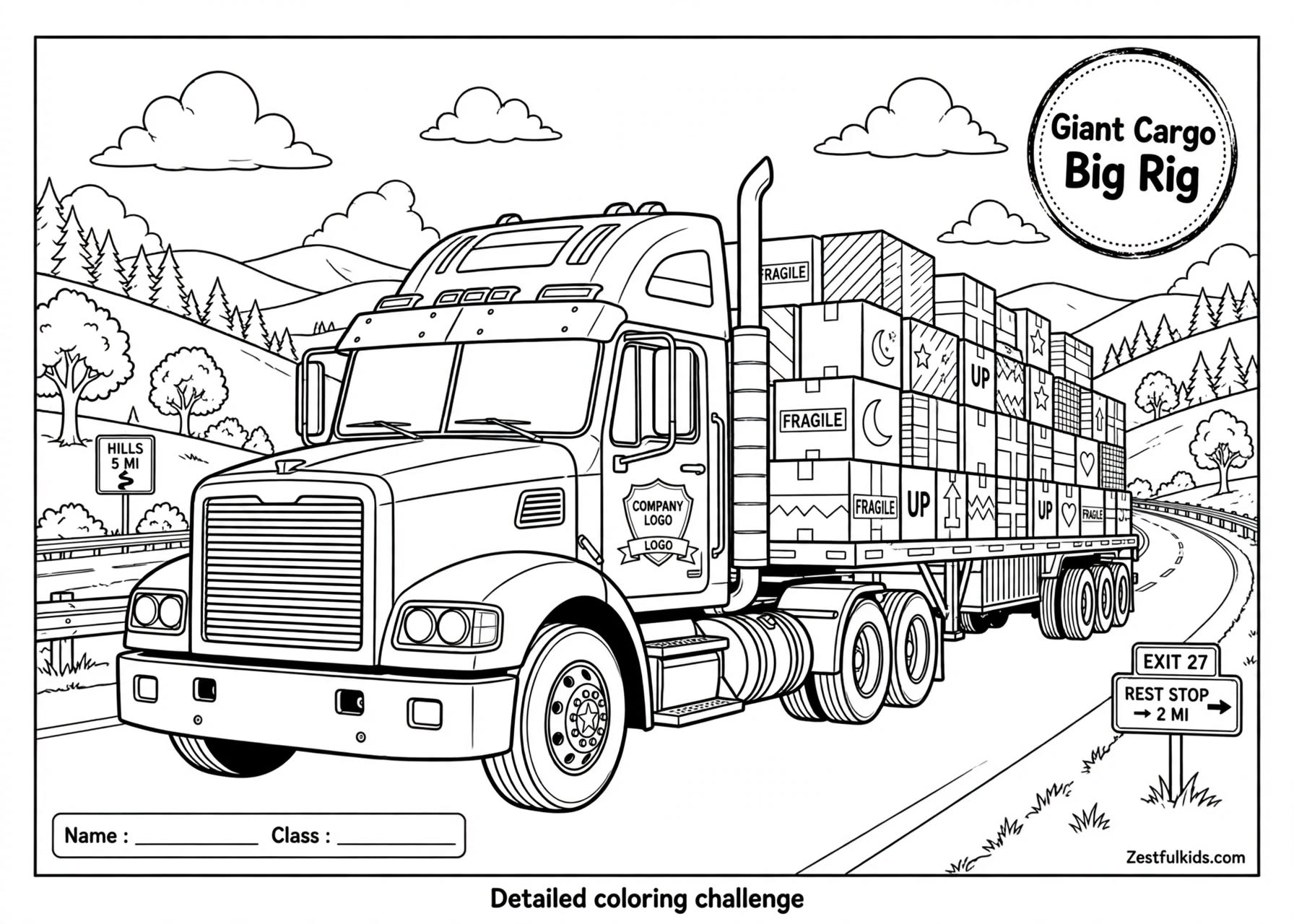
Because a big rig has both broad surfaces and small mechanical features, choosing suitable coloring tools can make the activity more comfortable. Crayons work well for filling the cab and trailer, while colored pencils provide more control around mirrors, headlights, window frames, and wheel hubs. Washable markers can produce bold colors on the larger panels, but placing a spare sheet underneath the paper can help protect the work surface from ink that passes through.
A useful approach is to color the largest sections first. Children can fill the cab and trailer before moving to the wheels, lights, grille, and other smaller details. If they want to add shadows, they can use a slightly darker shade along the bottom edge of the truck or beneath the trailer. These additions are optional; solid colors can look just as appealing, especially for children who prefer a straightforward activity.
Before printing a downloadable design, review the available instructions and check the print preview. Make sure the entire truck fits comfortably on the page and that important outlines are not cut off near the edges. Standard printer paper is generally suitable for crayons and colored pencils, while heavier paper may work better for some marker activities if the printer supports it.
Allow children to decide how much detail they want to include. Some may carefully color every wheel and window, while others will prefer a bright cab and a simple trailer. When the picture is finished, they can name their fictional trucking company, choose a destination, or describe the cargo inside the trailer. Their finished artwork becomes more than a picture of a large vehicle: it becomes a small story about a truck making its way through the world.

