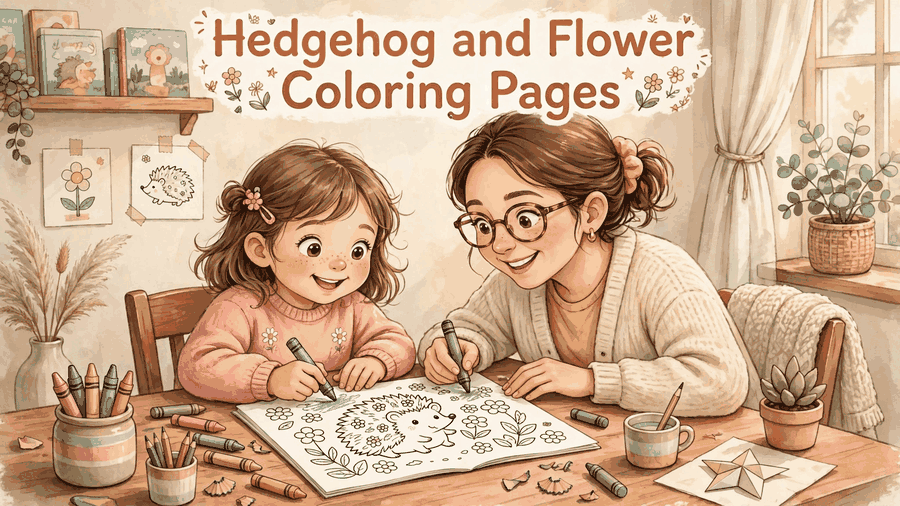
Hedgehog and Flower Coloring Pages bring tiny woodland animals and delicate garden blooms together in a charming printable activity. Children can explore natural colors, imagine peaceful garden scenes, and create their own little world with crayons or colored pencils.
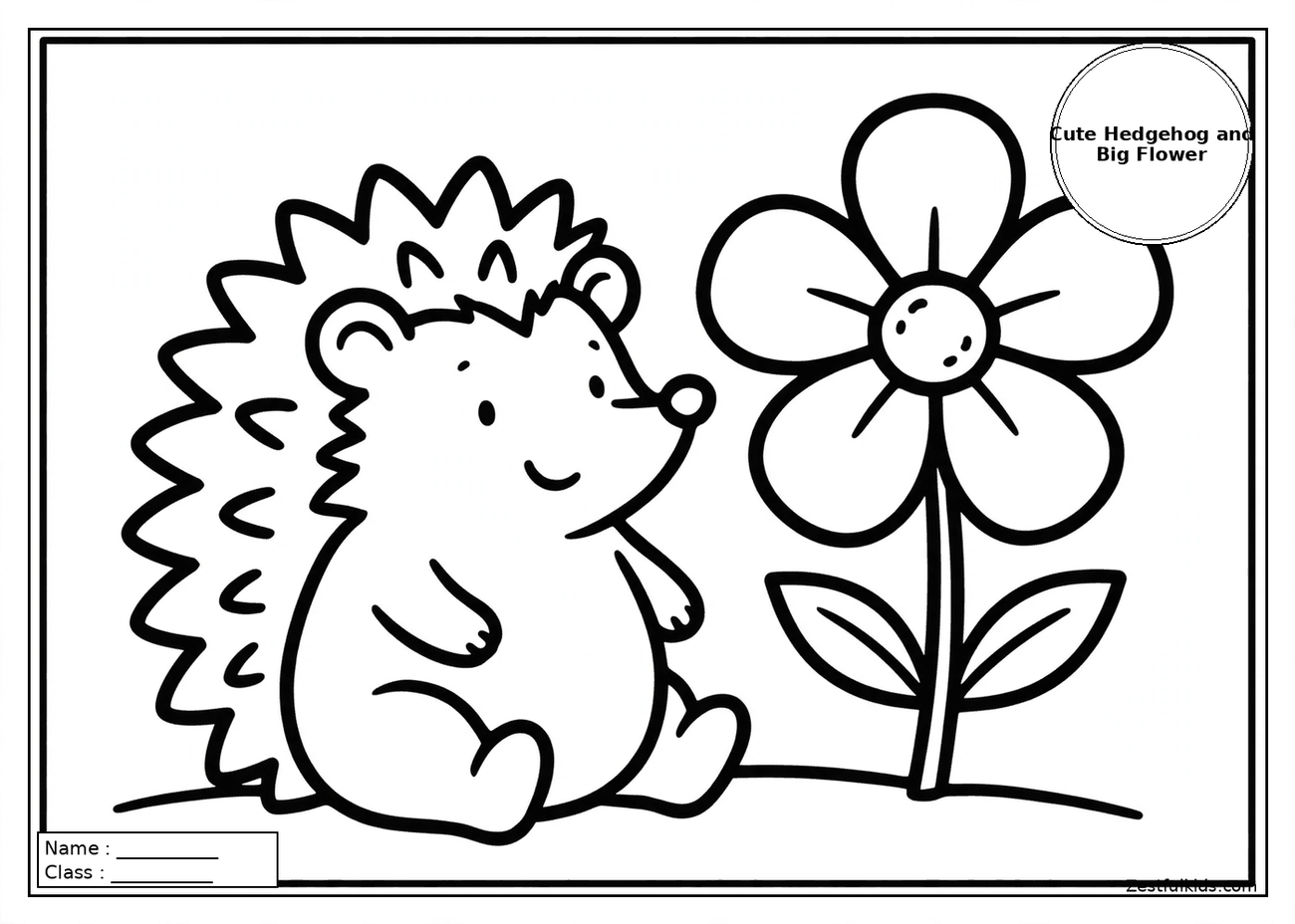
A Little Hedgehog Among the Flowers
Hedgehogs have a distinctive appearance that makes them interesting subjects for children’s art. Their rounded bodies, pointed noses, small eyes, and short legs provide recognizable shapes that are enjoyable to color. Their backs are covered with spines, which create a different texture from the softer areas around their faces and bellies. When a hedgehog appears beside flowers, the contrast between its prickly coat and the delicate petals offers plenty of opportunities for creative choices.
Flowers add another layer of visual interest to this theme. Large, open blossoms can be filled with bright colors, while smaller flowers invite children to experiment with different combinations. Leaves, stems, and flower centers can provide contrast without making the overall picture too complicated. Together, these natural elements create a scene that can feel like a quiet garden, a woodland clearing, or an imaginary place where a little hedgehog stops to explore.
Choosing Colors for Spines, Petals, and Leaves
One enjoyable part of coloring a hedgehog is deciding how its spines should look. Children can use brown, gray, tan, or dark beige to give the spines a natural appearance. The face and belly may be colored in cream, pale brown, or soft peach, depending on the look they prefer. For a more imaginative picture, the hedgehog could have golden spines or a gentle mix of warm colors.
Flowers offer more freedom because they come in many shapes and shades. Red, pink, yellow, purple, and orange are familiar choices, but children do not need to follow real-life colors. A blue flower beside a yellow blossom can make the scene feel playful, while several shades of pink can create a softer garden atmosphere. Green leaves help balance the brighter petals, and a light blue background can suggest an open sky if the illustration includes enough empty space for one.
Parents and teachers can encourage children to choose a small color palette before beginning. For example, three flower colors, two shades of green, and a few natural tones for the hedgehog may be enough to make the picture look coordinated. Children who prefer experimenting can try different combinations on separate flowers instead of deciding on every color in advance.
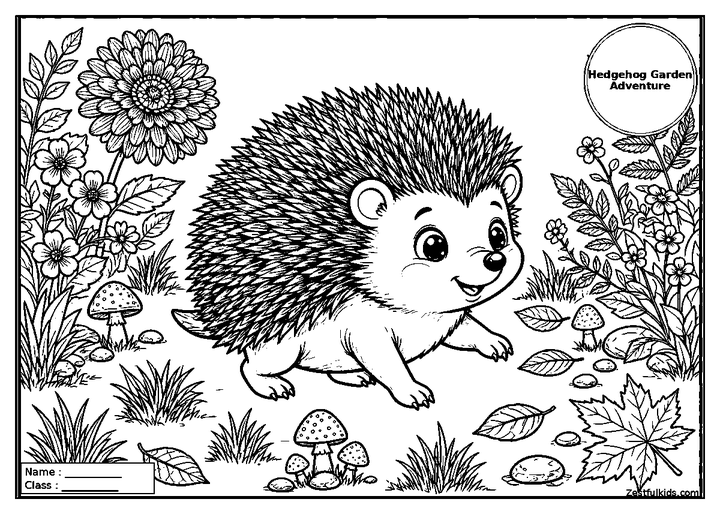
Turning a Simple Picture into a Garden Scene
The surrounding space can be just as interesting as the main subject. If the illustration includes grass, children might add different shades of green to suggest patches of sunlight and shadow. Small dots around the flowers can represent pollen or tiny garden details when there is room to draw them. A few additional leaves, pebbles, or fallen petals can also help create a setting without overcrowding the original outlines.
Not every coloring page needs a detailed background. Leaving some areas white can make the hedgehog and flowers stand out more clearly. Children can choose a pale background color, add a strip of grass along the bottom, or keep the scene simple by focusing entirely on the main shapes. These choices allow each finished page to reflect the child’s own ideas rather than follow a single expected result.
Families looking for another animal-themed activity can also explore cat sleeping illustrations. A resting cat offers a different kind of scene, with opportunities to experiment with fur patterns, cushions, blankets, and peaceful indoor surroundings. Pairing different animal themes can make a relaxed afternoon of coloring more varied without requiring a complicated craft setup.
Simple Coloring Techniques for Small Details
Hedgehog spines and flower petals can be approached in different ways depending on the child’s comfort with coloring tools. Crayons work well for filling larger spaces, while colored pencils can make it easier to add gentle shading or distinguish individual sections. Washable markers provide stronger colors, although adults should check that the paper can handle them without excessive bleeding.
For the hedgehog’s spines, children can color in the direction of the individual shapes if the outlines make that practical. They do not need to shade every spine separately; a consistent base color is often enough. A slightly darker tone along one side of the body can suggest depth, while a lighter face helps separate the animal’s features from its back.
Flowers can be colored petal by petal, using one shade throughout or alternating colors. For larger blossoms, children might use a darker color near the center and a lighter one toward the outer edges. This technique is optional rather than necessary, and solid colors can look just as appealing. The goal is to make the activity enjoyable, not to require children to reproduce professional artwork.
Adults can also turn the coloring session into a small observation activity. Invite children to notice how a flower’s petals differ from its leaves or how a hedgehog’s spines differ from its face. They can describe their color choices aloud or invent a short story about where the animal is going. These conversations connect the picture to familiar natural features while leaving plenty of room for imagination.
Using Hedgehog and Flower Coloring Pages at Home or School
At home, this theme works well for a quiet afternoon, a rainy-day activity, or a nature-inspired art session. Parents can place the coloring materials on a table and let children select their own colors without needing to prepare an elaborate project. If several children are participating, each can approach the same theme differently, making it interesting to compare the finished artwork. One child may prefer realistic woodland colors, while another may create a bright fantasy garden.
Teachers and caregivers can use the theme as part of a broader discussion about gardens and small animals. Children might talk about where flowers grow, what plants need to survive, and why hedgehogs are associated with gardens and woodland habitats. Adults can explain that hedgehogs are wild mammals with protective spines and that real animals should be observed respectfully rather than handled without appropriate guidance. Keeping these discussions brief and age-appropriate allows the coloring activity to remain the main focus.
For a related imaginative setting, mushroom house illustrations can introduce a more storybook-inspired approach to nature-themed art. Children can imagine a tiny home tucked among garden plants, then create a story about a small creature visiting the flowers nearby. This combination is particularly useful for art sessions that invite children to invent their own woodland settings.
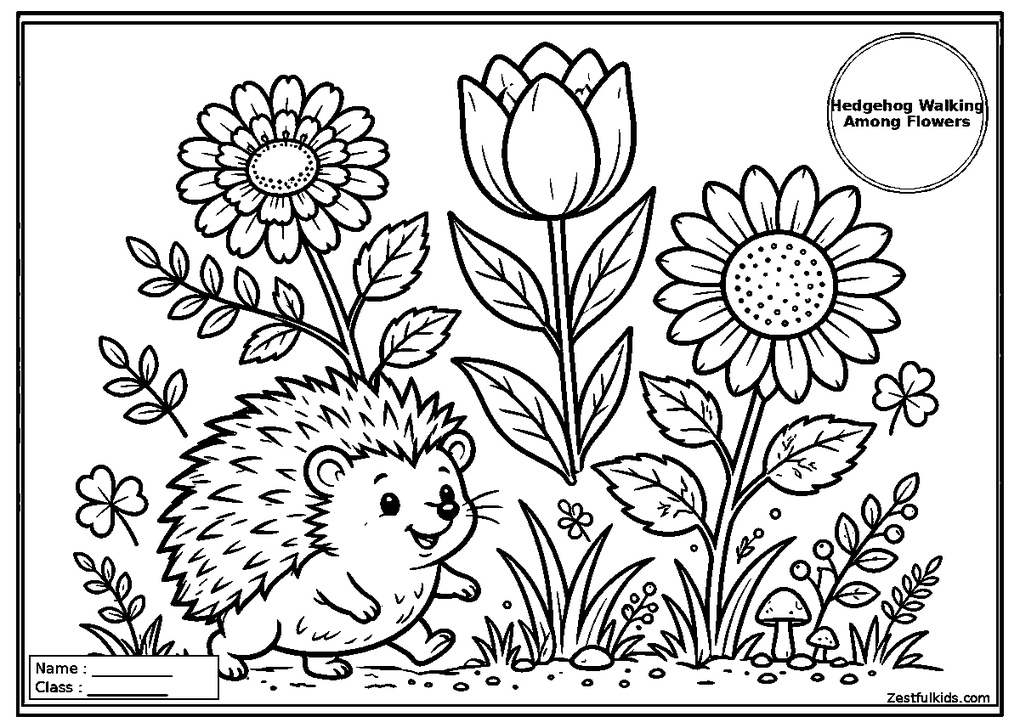
Preparing the Printable for a Comfortable Coloring Session
Before printing a selected design, check its preview to make sure the outlines are clear and the illustration fits comfortably on the page. If printing options are available, choose a page size that suits the printer and review the margins so important parts of the picture are not cut off. The appropriate paper depends on the coloring materials: ordinary printer paper is generally adequate for crayons and colored pencils, while thicker paper may be preferable for markers.
It is helpful to place a spare sheet underneath the artwork when using markers, especially if the activity takes place on a table that needs protection. Keep pencils sharpened, provide enough room for children to move their hands comfortably, and let them take breaks when needed. Younger children may appreciate larger areas and fewer small details, while children who enjoy careful coloring may prefer intricate petals and textured spines.
When the artwork is finished, children can give their hedgehog a name, describe its favorite flower, or tell a short story about its garden adventure. Their pictures can be displayed on a refrigerator, classroom board, or art wall if they wish. Each finished page becomes a personal interpretation of a small animal and its surroundings, combining familiar natural shapes with the freedom to imagine something new.

