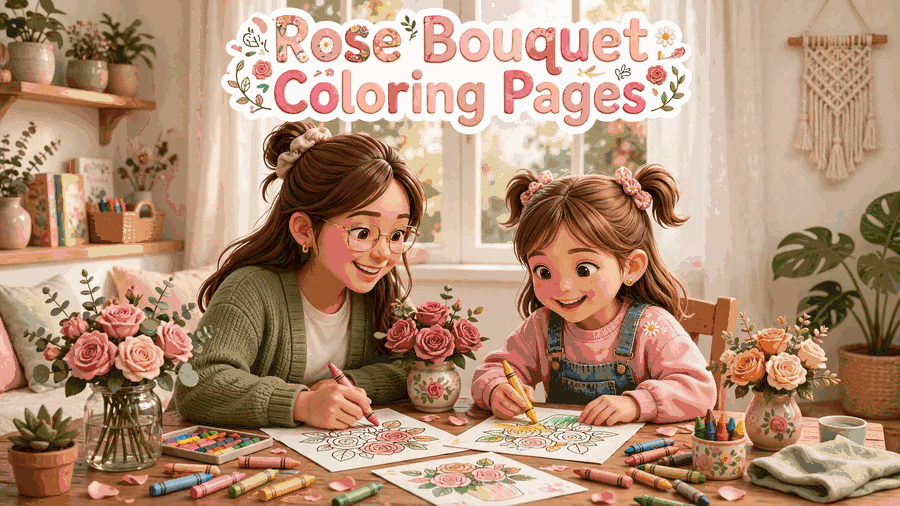
Rose Bouquet Coloring Pages invite children to explore the beauty of roses through creative color combinations, floral patterns, and imaginative arrangements. This activity offers a lovely way to enjoy flower-inspired art at home or in the classroom.
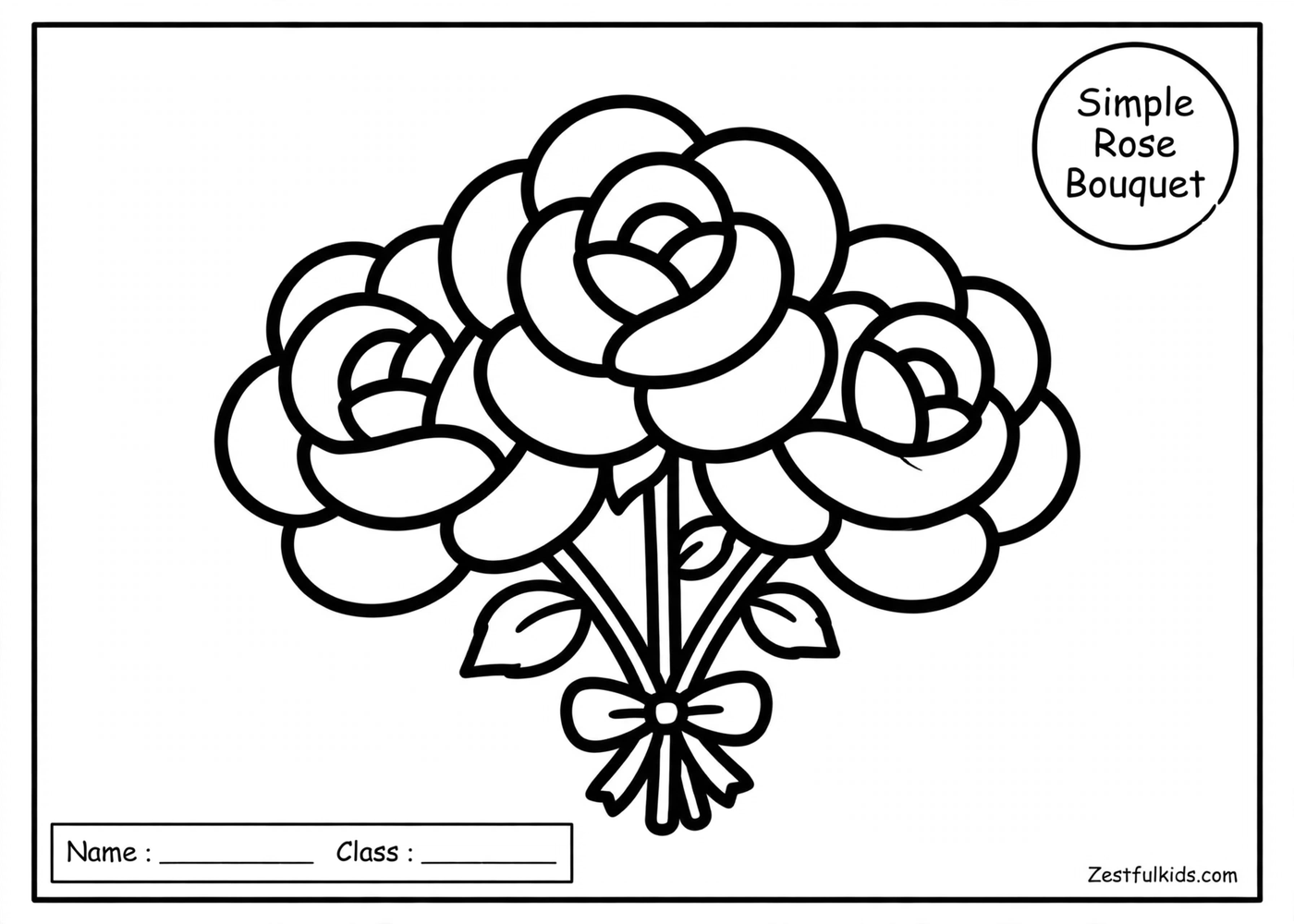
Discover the Beauty of a Rose Bouquet
A bouquet of roses brings together individual flowers to create one beautiful arrangement. Each rose has its own layered petals, curved edges, and distinctive shape, making it an interesting subject for a coloring activity. Some roses appear tightly closed, while others open into broad, rounded blooms. These details give children plenty of opportunities to experiment with shades, patterns, and contrasts.
Rose Bouquet Coloring Pages are especially appealing because flowers can be colored in many different ways. Red roses are a familiar choice, but pink, yellow, white, orange, and purple can also create attractive floral designs. Children can choose realistic colors or invent a bouquet filled with unusual combinations. There is no single correct result, and every color choice can give the arrangement a different personality.
The shape of a bouquet also makes the composition interesting. Individual roses may overlap, leaves can fill the spaces between blooms, and stems may gather together near the bottom of the arrangement. Looking at these details before coloring helps children decide which parts should stand out. It also gives them a simple way to plan how different colors will work together.
Choosing Colors for Different Rose Varieties
Color selection can change the mood of a floral illustration. Before beginning, children can choose a main rose color and then select one or two additional shades for contrast. This small decision can make the coloring process feel more organized without limiting creativity.
Red roses paired with green leaves create a classic floral appearance. Pink roses can look soft and cheerful, while orange and yellow blooms bring warmth to the picture. Purple roses offer an imaginative alternative, particularly when combined with pale pink or lavender accents. Children can also color each rose differently to create a mixed bouquet that resembles flowers gathered from several gardens.
For a more detailed effect, use a lighter shade near the center of each flower and a darker shade along selected petal edges. This approach can suggest depth without requiring complicated drawing skills. Colored pencils are useful for gradual shading, while crayons work well for broader areas. Markers can produce bold, even colors, especially when the illustration has clearly defined outlines.
It is not necessary to shade every petal. Children who prefer a simpler approach can fill each rose with one color and use contrasting shades for the leaves and wrapping. The finished artwork can be just as appealing when the coloring is bright, clear, and personal.
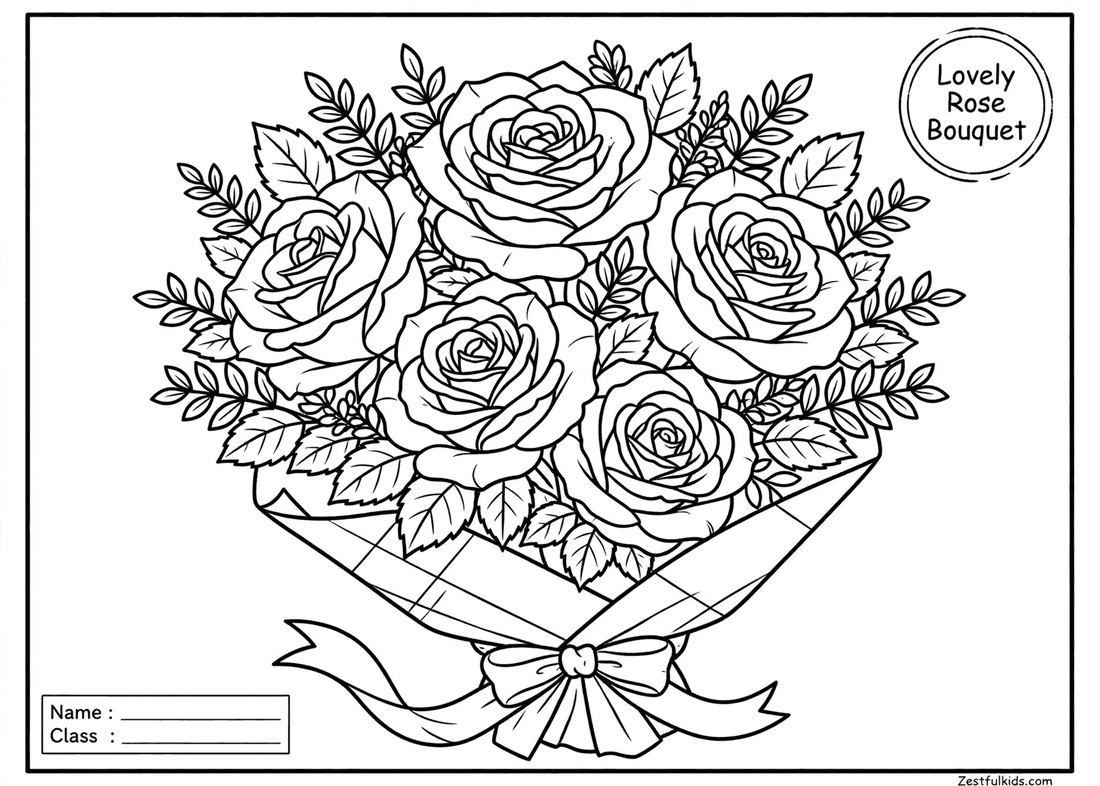
Give the Bouquet Its Own Style
A rose bouquet can look traditional, playful, elegant, or completely imaginative depending on the colors and optional details children choose. Instead of following the same approach for every flower, encourage them to think about the overall style they want to create.
Create a Classic Garden Bouquet
For a natural look, combine several shades of red or pink with green leaves and stems. A little yellow or cream can add contrast if the illustration includes other floral details. Children can use darker greens for selected leaves and lighter greens for the remaining foliage.
If the picture includes wrapping paper, a ribbon, or a vase, these areas can provide another opportunity to balance the colors. Pale blue wrapping can contrast with red roses, while beige or light brown can suggest natural paper. A simple background in soft blue or pale yellow may help the flowers stand out, provided there is enough blank space to add it.
Design a Fantasy Arrangement
Children can also imagine a bouquet that would never grow in an ordinary garden. Blue roses, rainbow petals, silver ribbons, or alternating purple and orange flowers can transform a familiar arrangement into a fantasy creation. Optional stars, tiny hearts, or decorative dots around the bouquet can add personality without overcrowding the page.
Another idea is to give the bouquet a theme. A spring bouquet might feature pink, yellow, and light green, while a nighttime-inspired arrangement could use deep purple, blue, and silver-gray. Children can name their creations and explain why they selected particular colors. This turns the finished page into a small piece of personal artwork rather than simply a coloring exercise.
Make Floral Coloring More Engaging
Rose bouquet illustrations can be used for more than practicing color choices. Parents and teachers can invite children to notice how flowers are arranged, how leaves differ from petals, and how overlapping shapes create a sense of depth. These observations can happen naturally while the child works, without interrupting the creative process.
One enjoyable activity is to choose three main colors before starting. Children can use the first color for the largest flowers, the second for smaller details or contrasting blooms, and the third for leaves or decorative accents. If the bouquet contains several roses, they can repeat the same palette across the arrangement or give each flower a slightly different combination.
For a more personal project, children can turn the finished picture into a handmade greeting card or a small decorative piece for a bedroom or classroom. An adult can help trim the artwork or attach it to a larger sheet of paper when appropriate. Children may also write a short message beside the bouquet, making it suitable for occasions such as birthdays, Mother’s Day, or a simple thank-you note.
Families who enjoy decorative patterns may also like exploring these animal mandala designs. Their repeated shapes offer a different kind of coloring experience from the flowing petals and leaves of a rose arrangement. Switching between floral and patterned illustrations can keep an art session varied while allowing children to experiment with different approaches.
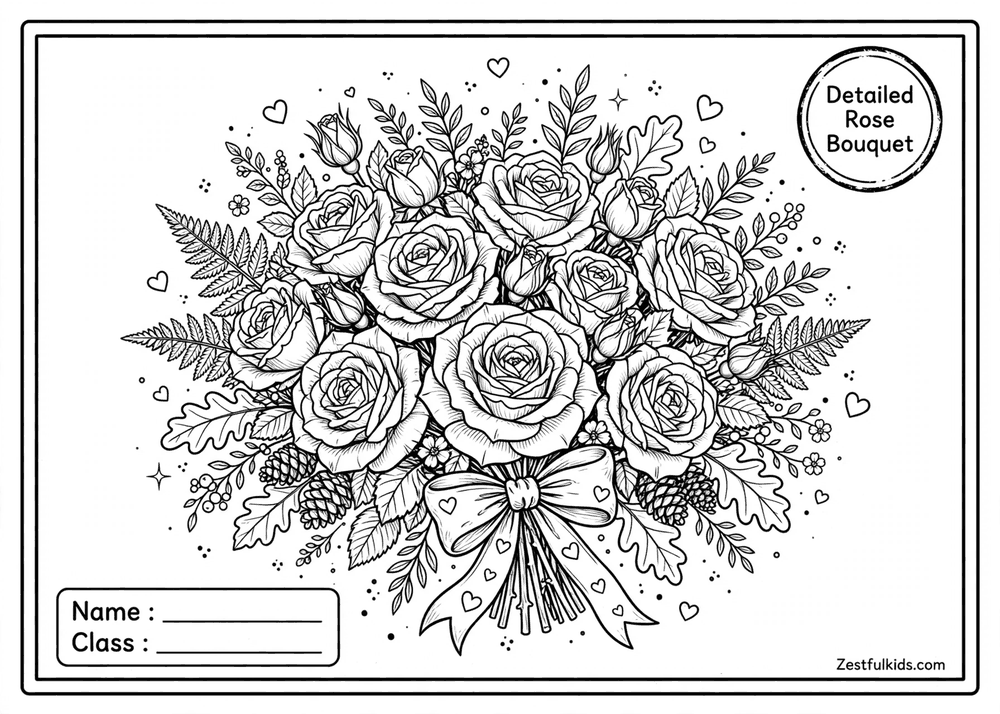
Preparing the Page and Coloring Materials
Before printing Rose Bouquet Coloring Pages, check the available file and use the print preview to make sure the illustration fits within the printable area. Confirm that the important outlines remain visible and are not cut off at the edges. The paper should suit the chosen coloring tools, particularly if children plan to use markers or build up several layers of pencil color.
Place the printed page on a stable surface and provide a few suitable materials. Crayons are convenient for broad areas, colored pencils offer more control over small petals, and washable markers can create vivid floral colors. If markers are being used, check whether the ink may show through the paper and place a spare sheet underneath when necessary.
It can help to begin with the largest flowers before moving to smaller details. Once the roses are colored, children can fill the leaves, stems, and any visible wrapping or decorative elements. Leaving the background until last gives them a chance to see which colors are already present and choose a complementary shade.
There is no need to finish everything in one sitting. A child may prefer to color a few roses, take a break, and return later to complete the leaves or background. The activity can be adjusted to suit the available time and the child’s interests.
Explore More Printable Animal Themes
After completing a floral arrangement, children may want to switch to a subject with different shapes and textures. Animal illustrations offer an easy way to continue a creative session while exploring new coloring possibilities. For example, the rabbit and hamster activity introduces small animals with soft-looking fur, rounded bodies, and distinctive ears.
Comparing flowers with animals can also inspire children to think about the colors and patterns they see in the world around them. They might use gentle pastel shades for a bouquet, then choose earthy browns or playful colors for an animal illustration. Keeping completed pages together in a folder creates a growing collection of artwork that children can revisit, share, or display.
With Rose Bouquet Coloring Pages, children can explore floral shapes, experiment with color combinations, and create an arrangement that reflects their own ideas. Whether they prefer realistic red roses or a bouquet filled with fantasy colors, the activity offers plenty of room for individual expression. A few coloring tools and a little time are enough to turn a simple floral illustration into a personal creative project.

