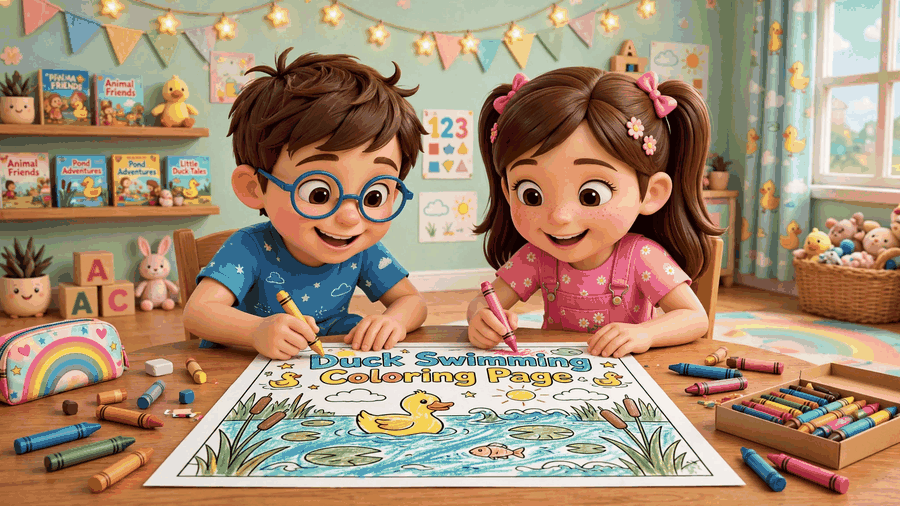
Duck Swimming Coloring Page brings the peaceful charm of a pond into a child’s art time, with opportunities to explore duck colors, water patterns, and imaginative outdoor scenes through coloring.
Discover the Charm of a Duck Swimming Coloring Page
A duck gliding across a pond creates a simple but engaging scene for children to explore with crayons, colored pencils, or markers. Its rounded body, broad bill, webbed feet, and smooth feathers offer recognizable shapes that are enjoyable to color. The water adds another interesting element, allowing children to experiment with blue shades, gentle ripples, and reflections. A Duck Swimming Coloring Page can turn an ordinary afternoon into a creative activity inspired by the natural world.
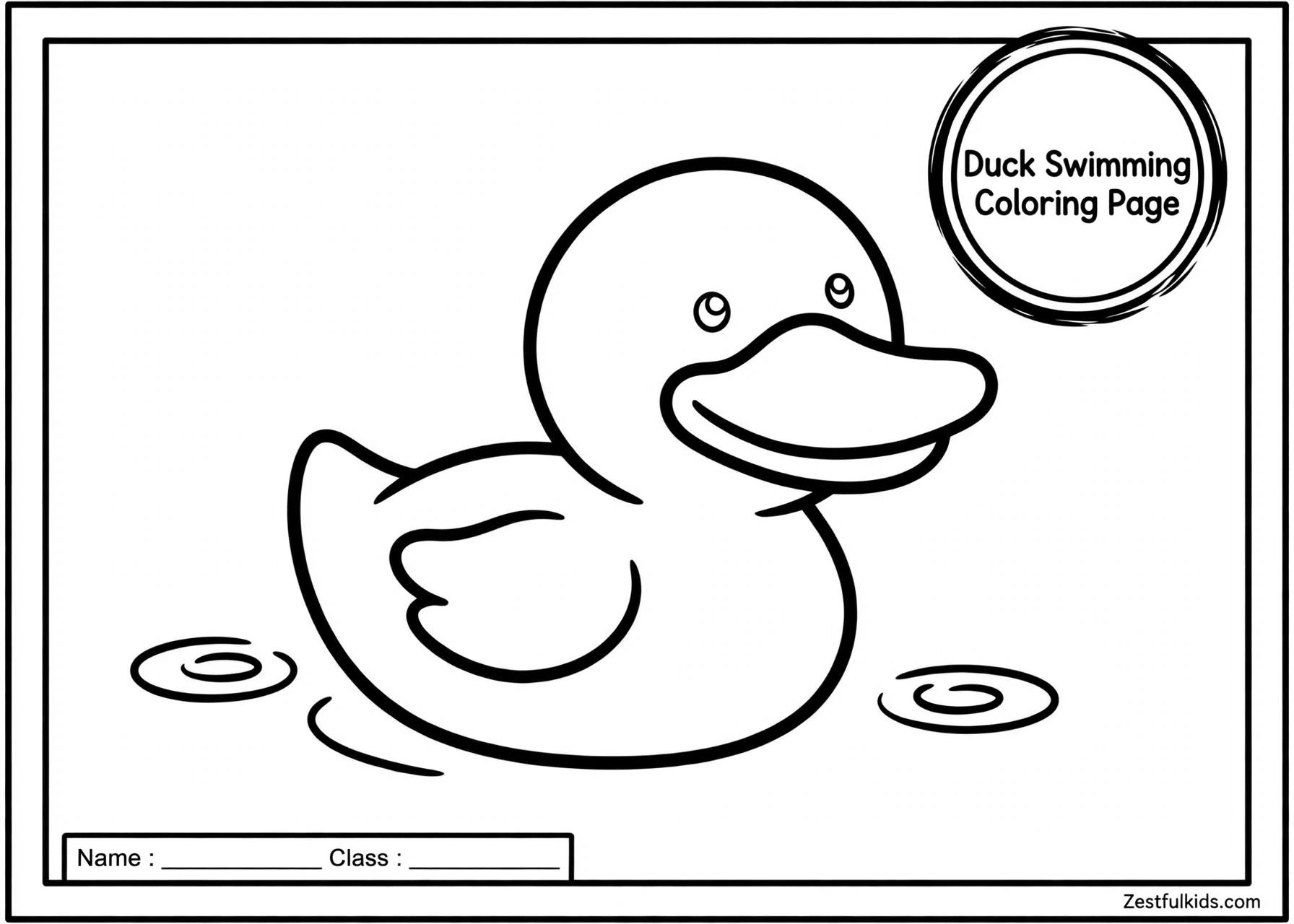
Ducks are familiar animals in many children’s stories, parks, farms, and picture books. Their movements on water are especially interesting because they appear to float effortlessly while their feet paddle beneath the surface. Children can use these familiar details as inspiration when choosing colors for their pictures. They can also imagine where the duck is swimming, whether in a quiet garden pond, a countryside lake, or a small pool surrounded by plants.
Choosing Colors for the Duck and Its Surroundings
One enjoyable part of coloring a swimming duck is deciding how realistic or imaginative the finished picture should look. Many ducks have combinations of brown, white, gray, black, or green feathers, although their appearance varies by species. A child can choose natural colors or create a cheerful duck with bright yellow feathers and an orange bill. Both approaches encourage personal expression without requiring the picture to match a particular reference.
Water deserves just as much attention as the duck itself. Light blue can suggest a shallow, sunny pond, while darker blue can represent deeper water. Children might add small strokes of white to suggest sunlight on the surface or use several shades of blue to make the pond look more varied. If the illustration includes plants, stones, or other background elements, green, brown, and gray can help create a setting that feels connected to nature.
The surrounding scenery can also change the mood of the artwork. A few green reeds make the pond look like a natural habitat, while colorful flowers can create the feeling of a garden. A bright yellow sun and soft clouds can suggest a warm day outdoors. These extra details are optional ideas children can add when the original illustration leaves enough open space.
Turn Pond Ripples into a Creative Coloring Challenge
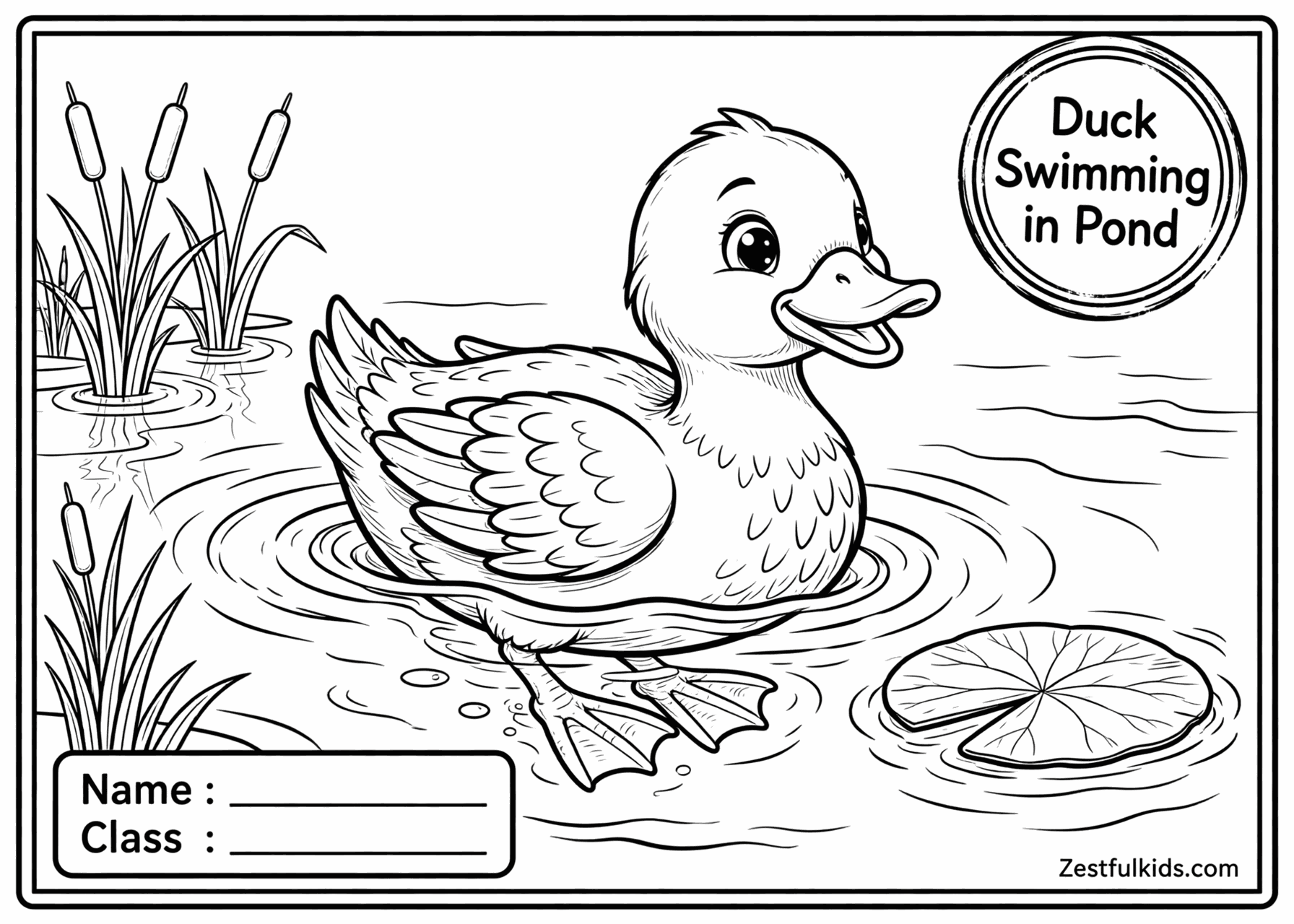
Water is often the most interesting part of a swimming-duck illustration because it does not have a single fixed shape or color. Instead of filling the entire pond with one shade, children can follow the curved lines around the duck and alternate between light and dark blue. These small variations can suggest movement as the duck travels across the water. Younger children may prefer simple coloring, while older children can experiment with reflections and layered shades.
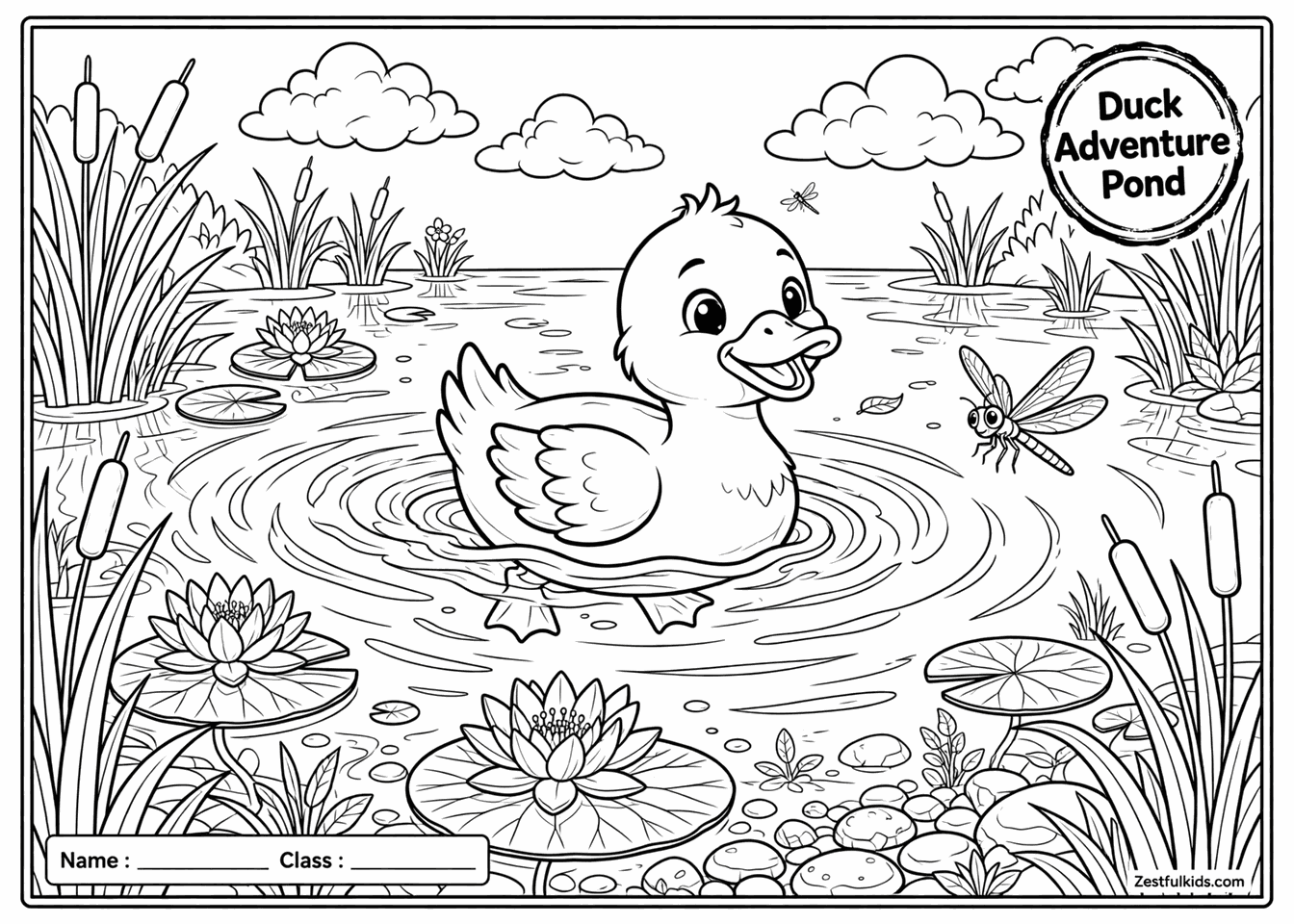
Another activity is to imagine the duck’s journey across the pond. Children can decide whether it is searching for food, swimming toward the reeds, or joining other ducks nearby. If the page has enough blank space, they can draw a few floating leaves, tiny insects, or additional ripples. This transforms the printable into a small storytelling project without making the original coloring task complicated.
For a playful change, families can connect the activity with other themed printables. An Easter egg hunt activity offers a different scene filled with seasonal details, while a swimming-duck picture focuses on water, wildlife, and outdoor surroundings. Comparing the two can inspire children to notice how different settings call for different colors and background ideas.
Simple Ways to Make Coloring Time More Engaging
A Duck Swimming Coloring Page can be used at home, in a classroom, or during a quiet activity session with caregivers. Before coloring begins, invite children to describe what they notice in the illustration. They might identify the duck’s bill, body, feathers, or the ripples surrounding it. This brief observation gives them a starting point without prescribing how the finished artwork should look.
Parents and teachers can also introduce a small nature-themed challenge. Ask children to choose three colors for the duck and three for the pond, then explain why they selected them. One child might choose brown feathers to represent a familiar wild duck, while another might prefer a yellow duck in bright blue water. The goal is to explore choices rather than produce identical pictures.
For children who enjoy adding details, provide a separate sheet of paper for drawing a pond environment. They can sketch lily pads, reeds, rocks, insects, or another duck and then color those elements alongside the main picture. If they enjoy building and designing, a printable such as kids playing with LEGO can provide another creative activity for a different day. The contrast between an outdoor animal scene and a construction-themed picture keeps art time varied.
Preparing the Printable for Comfortable Coloring
Choose coloring tools that suit the child’s age, preferences, and ability to handle them safely. Crayons are useful for filling larger areas such as the duck’s body and the pond, while colored pencils offer more control around the bill, eyes, feathers, and narrow water lines. Washable markers can produce bright colors, but it is sensible to place a spare sheet beneath the paper to help protect the table from marks that pass through.
If the coloring page is provided as a downloadable file, check the available download instructions before printing. Use the print preview to confirm that the illustration fits comfortably on the page and that important outlines are not cut off. Standard printer paper may work well for crayons and colored pencils, while slightly heavier paper can be helpful when using wetter coloring materials, provided the printer supports it.
Give children enough room to spread out their supplies and place the page on a flat surface. There is no need to finish the picture in one sitting; they can color the duck first and return later to work on the water or scenery. When the artwork is complete, invite them to give the duck a name and describe its pond. This small storytelling moment lets each child share the ideas behind their picture while celebrating a colorful interpretation of a familiar animal.

