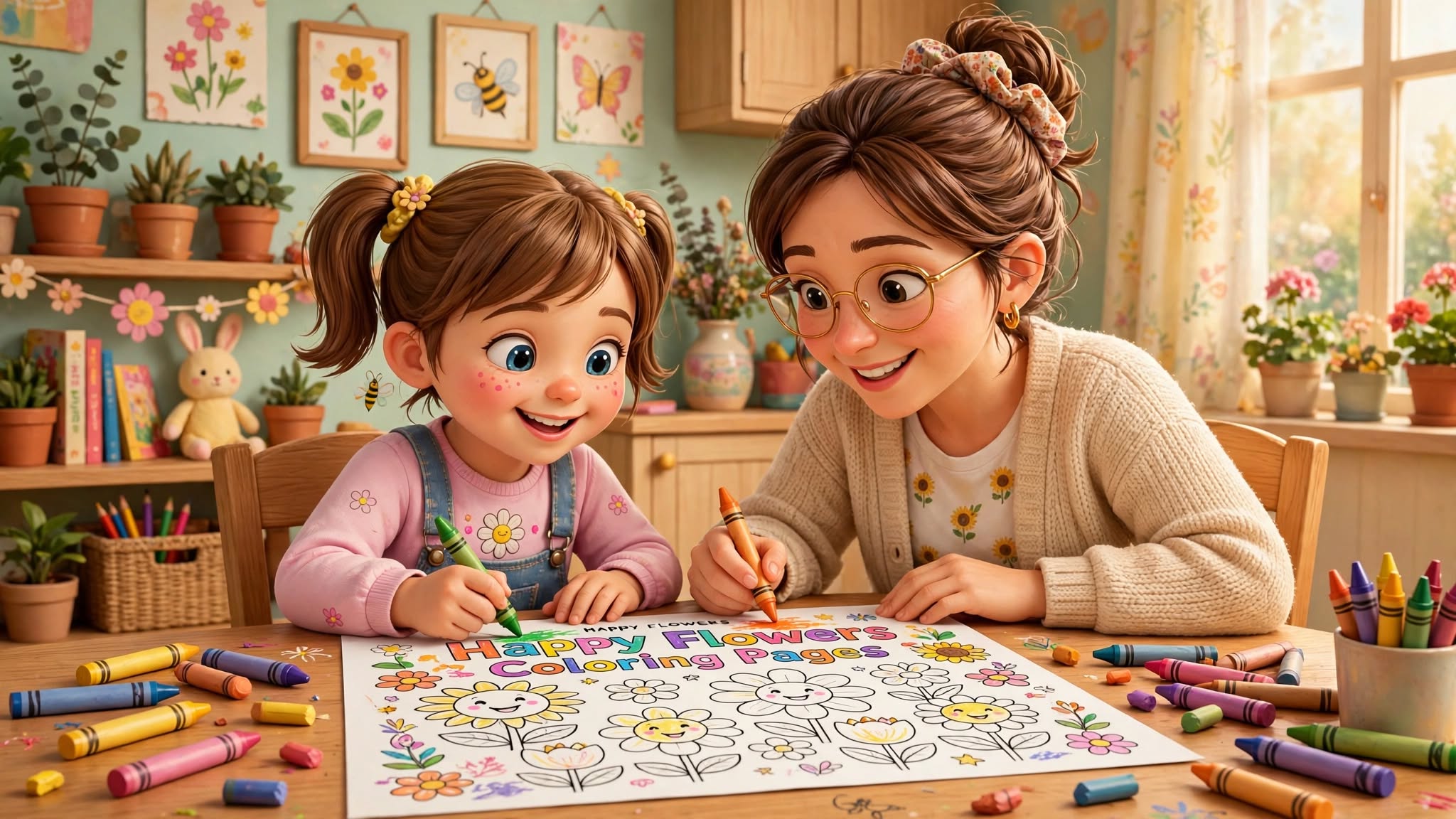
Happy Flowers Coloring Pages bring cheerful blooms to children’s art time, inviting them to explore bright colors, playful expressions, and imaginative garden scenes through a fun and creative activity.
Bring Smiling Flowers to Life with Color
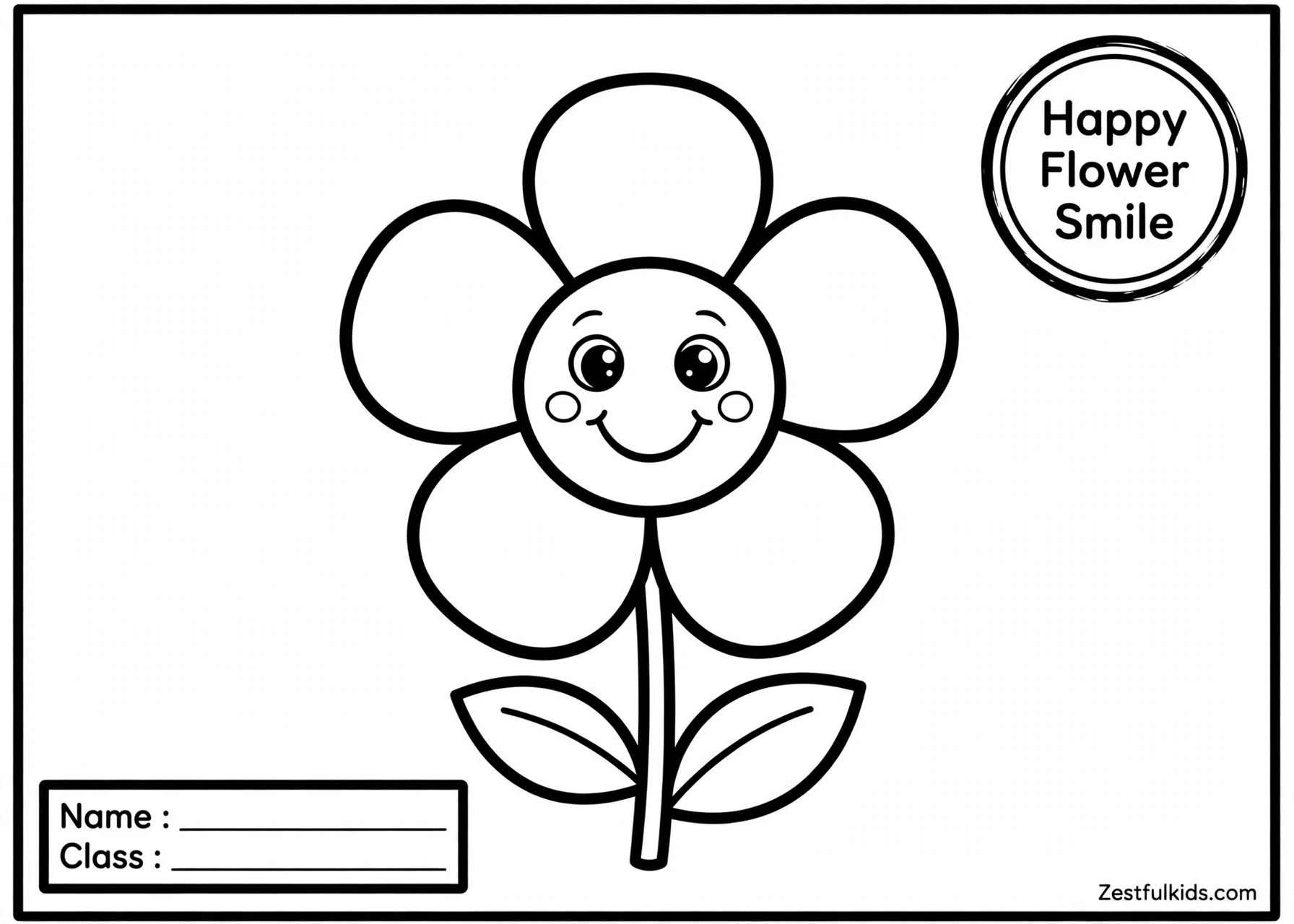
Flowers are usually recognized by their petals, stems, and leaves, but adding happy expressions gives them a playful personality that children can make their own. Happy Flowers Coloring Pages turn familiar garden plants into friendly characters that invite creativity through color and imagination. A smiling flower might look sunny and energetic in yellow and orange, while another could have soft pink petals and a bright green stem. These designs offer a simple way for children to enjoy floral themes without worrying about making every detail look realistic.
Unlike botanical illustrations that focus on the natural structure of plants, happy flower designs can encourage children to experiment with unusual color combinations. They might imagine a purple flower with turquoise leaves or a rainbow-colored bloom growing in a magical garden. The cheerful expressions can also inspire little stories about what each flower enjoys doing throughout the day. One flower could love sunshine, another might enjoy dancing in the breeze, and a third could be the friend who welcomes visitors to the garden.
For parents, teachers, and caregivers, these coloring activities can fit naturally into quiet afternoons, classroom art sessions, or creative time at home. Children can follow their own ideas, choose their favorite shades, and decide how much detail they want to add. There is no single correct way to finish a happy flower illustration, making the activity suitable for different artistic preferences.
Choosing a Color Palette for Cheerful Blooms
The colors children select can give each flower a different personality. Bright yellow and orange create a sunny appearance, while pink and red can make a bloom feel lively and bold. Purple, lavender, and blue offer cooler alternatives for children who prefer softer shades. Green is a natural choice for stems and leaves, but imaginative coloring can include almost any combination.
Instead of using one color for every petal, children can create simple patterns that make each bloom stand out. They might alternate pink and purple petals, color the tips of the petals a lighter shade, or add small dots and stripes where the illustration leaves room. A smiling flower with a yellow center could have alternating blue and white petals, while another might feature a different color on every section. These small decisions help make each finished page feel personal.
The flower’s face can become another creative detail. Children may color the cheeks pink, give the eyes a dark outline, or use a contrasting shade around the smile if the drawing allows it. They can also decide whether the flower looks excited, peaceful, surprised, or especially friendly. Even when the original expression is already drawn, the surrounding colors can change the overall mood of the picture.
Create a Little Garden Around Each Flower
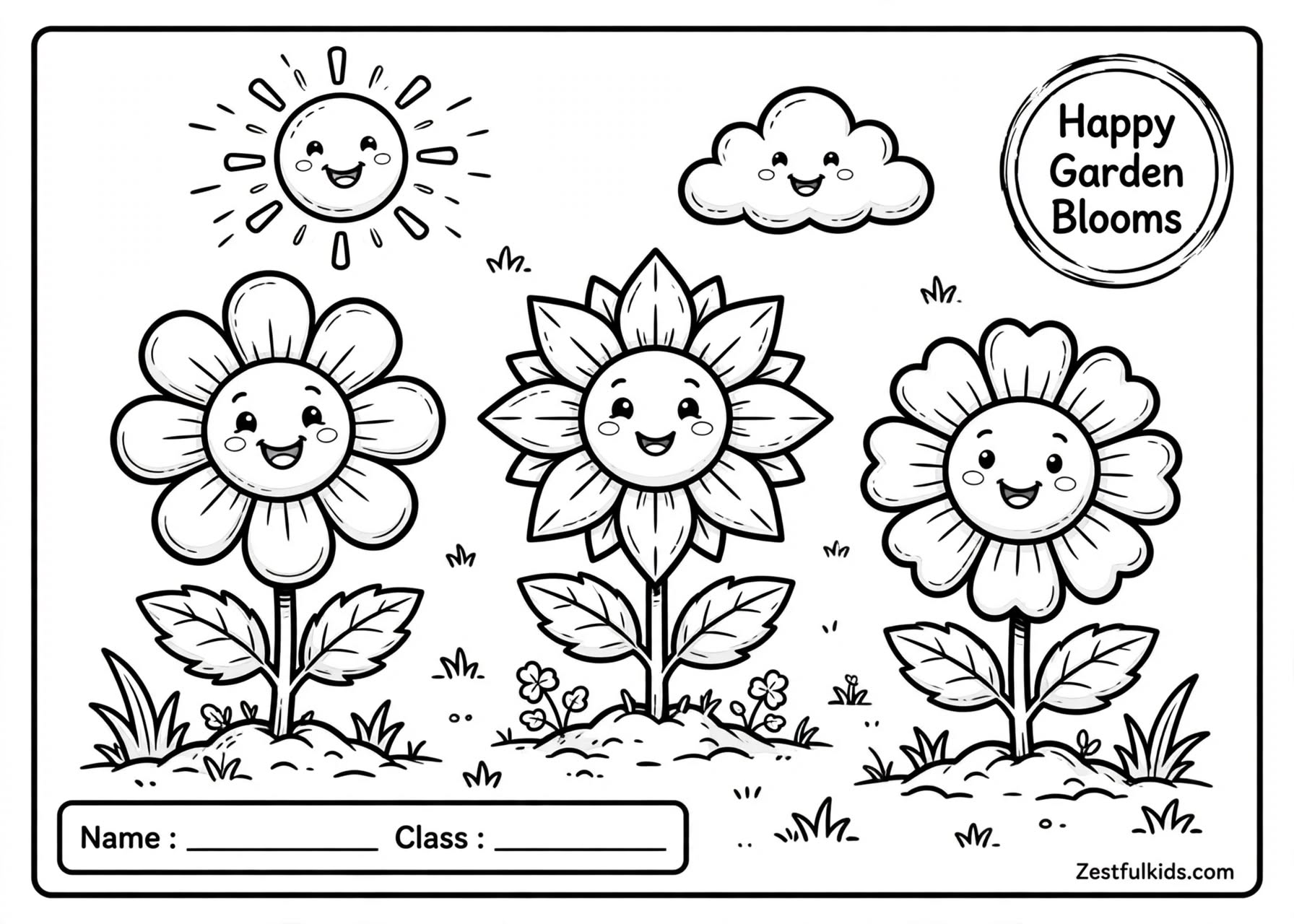
A happy flower does not have to stand alone on the page. If there is open space around the illustration, children can add grass, butterflies, clouds, sunshine, or small garden stones. A few curved lines beneath the flower can suggest a patch of soil, while green blades of grass make the scene feel connected to an outdoor setting. These additions are optional, so children can keep their artwork simple or develop a more detailed garden.
Background colors also affect how the main flower appears. A pale blue sky can make yellow petals look brighter, while a light green background may complement pink and purple blooms. Children can leave some areas white to create contrast or use gentle shades to fill the surrounding space. If they are using markers, coloring the background after the main flower may help them keep the petals neat.
For a more imaginative activity, invite children to design a garden where every flower has a different role. One might be the tallest flower in the garden, another could be a tiny bloom beside a stepping stone, and a third might grow near a butterfly’s favorite resting place. They can draw these extra details on a separate sheet if the original printable does not have enough room. The result can become a small illustrated story rather than just a completed coloring page.
Combine Flower Coloring with Imaginative Art
Floral coloring can be paired with other creative themes to give children a wider range of ideas. For example, a magical tea party with a unicorn introduces a different setting where flowers could become decorations for a table, garden path, or party backdrop. Children can explore the whimsical details in these unicorn tea party designs and then borrow ideas for creating their own cheerful flower garden.
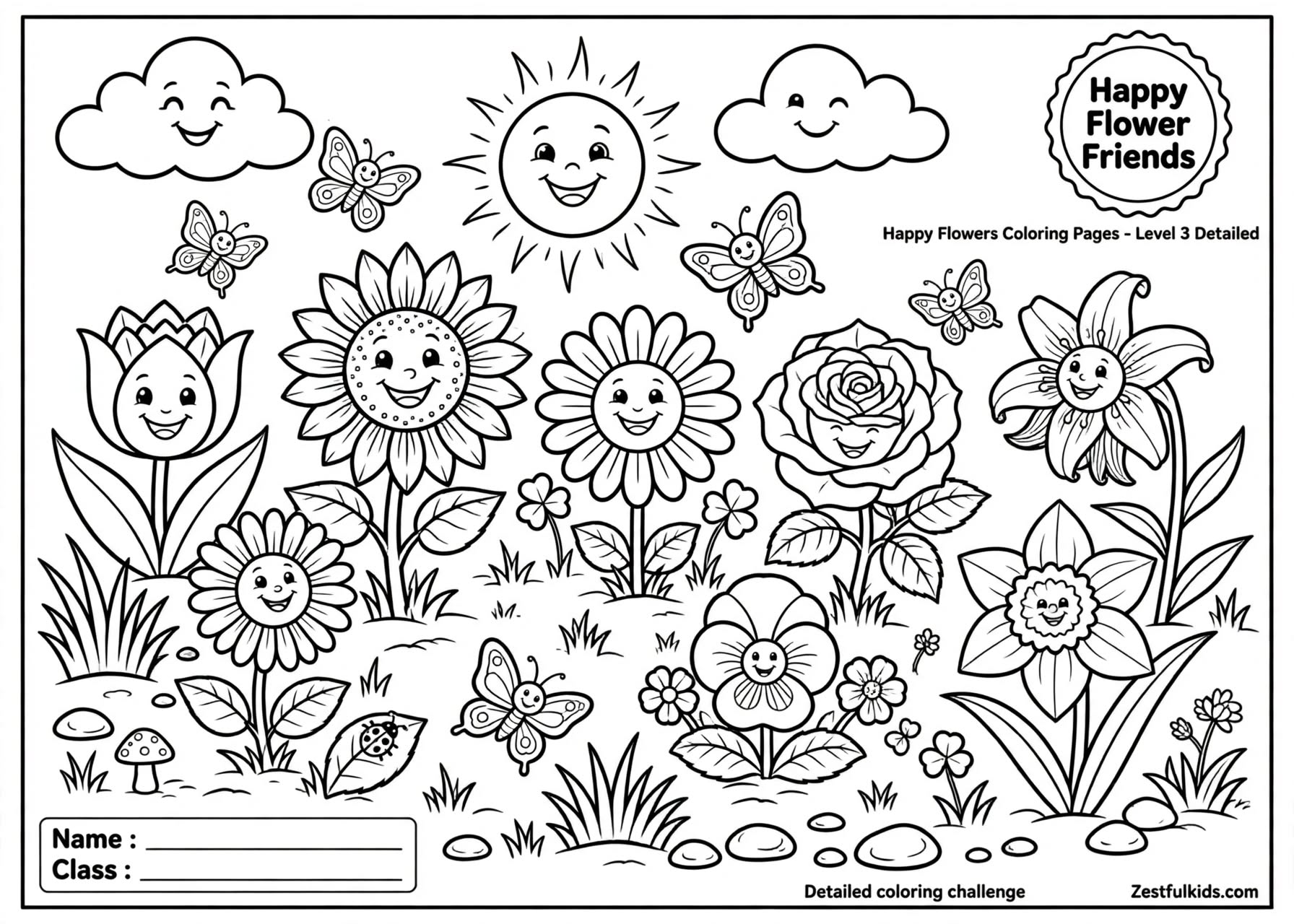
Another activity is to compare different kinds of flowers and the creatures that visit them. Roses have layered petals, while many garden flowers have simpler shapes that are easy to recognize and color. Butterflies provide a contrasting set of patterns, with wings that can be symmetrical or decorated in imaginative combinations. Children who enjoy both subjects may like exploring these roses and butterflies designs for inspiration before creating a garden scene of their own.
A simple storytelling prompt can make the activity more engaging without adding complicated instructions. Ask children to name their favorite flower and describe where it grows. They might imagine a cheerful bloom beside a cottage, a flower in a city park, or a tiny plant growing in a colorful pot on a windowsill. If they want to continue, they can draw the setting and add a few sentences about the flower’s day.
Practical Tips for a Relaxed Coloring Session
Choose coloring tools based on the child’s comfort and the amount of detail in the illustration. Crayons are useful for filling large petals and leaves, while colored pencils offer greater control around small facial features and narrow outlines. Washable markers can produce strong, vivid colors, although placing a spare sheet beneath the paper can help protect the surface underneath. Children should use age-appropriate supplies and follow any safety guidance provided with their materials.
Before printing a downloadable design, check the file’s available instructions and use the print preview to make sure the illustration fits within the page. Confirm that the important outlines are visible and not cut off at the edges. Ordinary printer paper may be sufficient for crayons and colored pencils, while heavier paper can be useful for some marker activities if it is compatible with the printer.
During the activity, allow children to work at their own pace. Some may enjoy carefully coloring each petal, while others may prefer finishing the flower quickly and spending more time on the background. Adults can offer suggestions when asked, but leaving room for individual choices helps keep the experience enjoyable. Once the picture is finished, children can give their flower a name, describe its personality, or display the artwork alongside other garden-themed creations.
Happy Flowers Coloring Pages offer a cheerful starting point for exploring color, patterns, and imaginative outdoor scenes. With a few simple coloring tools and the freedom to invent their own combinations, children can turn friendly blooms into unique works of art that reflect their personal ideas.

