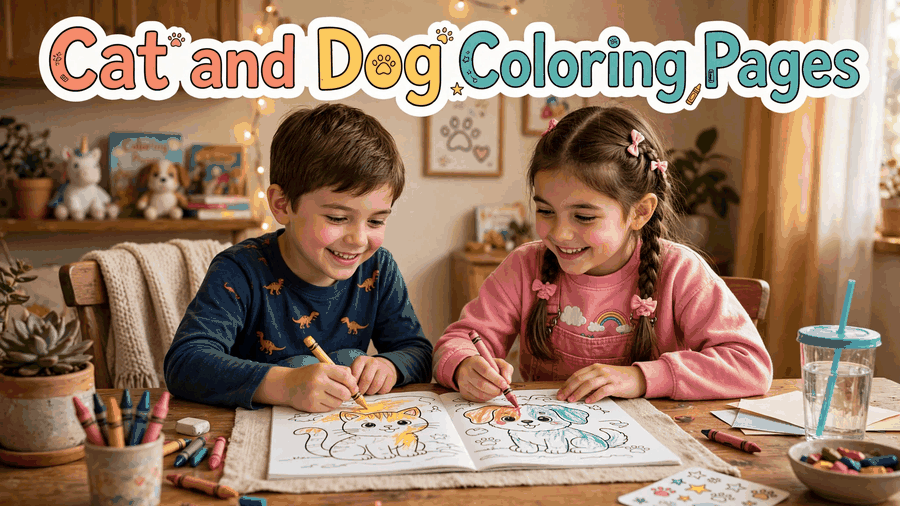
Cat and Dog Coloring Pages bring two beloved pets together in a fun, creative activity for children. With familiar animal features, playful color choices, and plenty of room for imagination, these printables offer an enjoyable way to explore the world of cats and dogs through art.
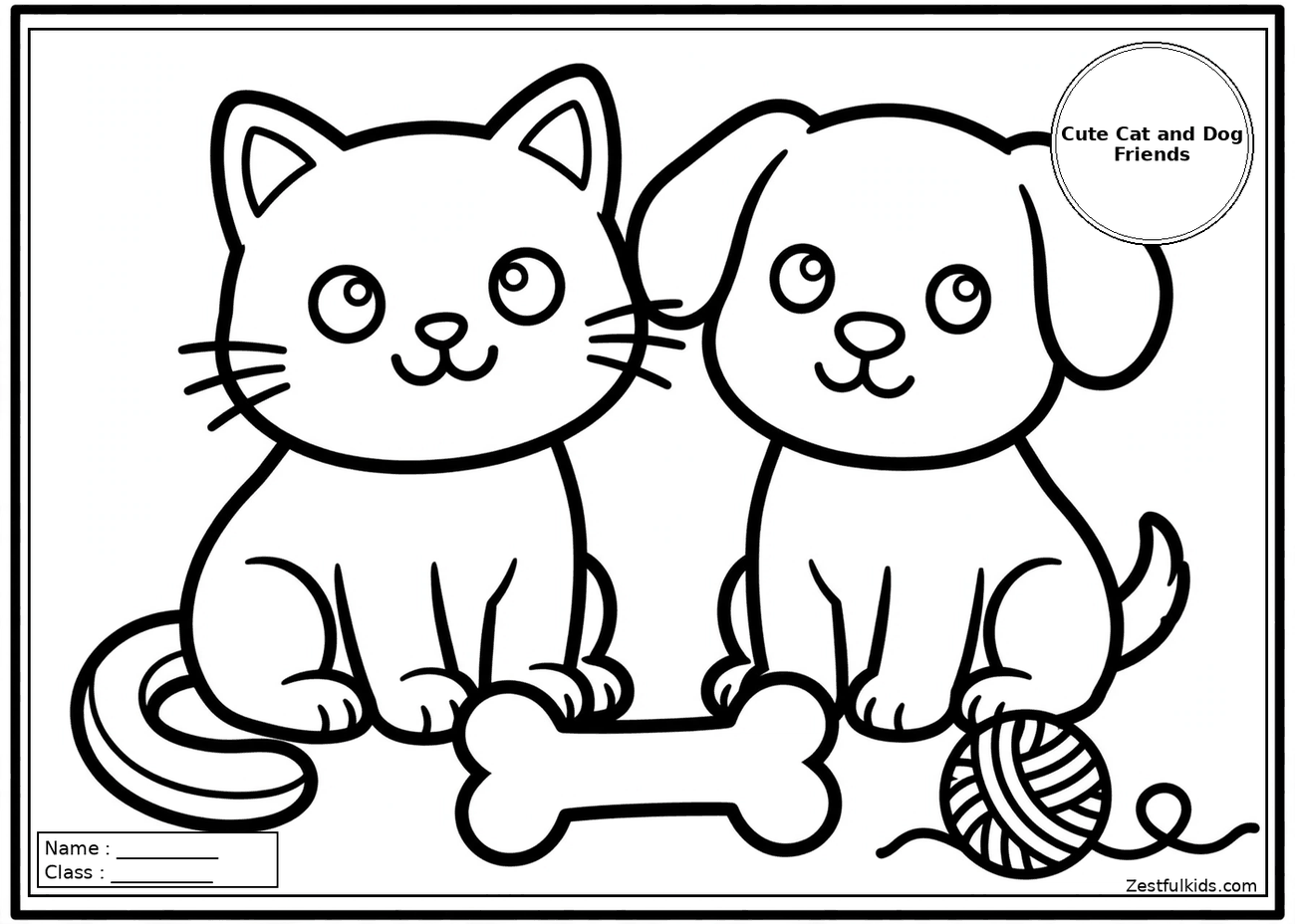
Two Favorite Pets, One Creative Activity
Cats and dogs have different personalities and physical features, making them an interesting pair for a coloring theme. Cats often have pointed ears, long whiskers, flexible tails, and soft-looking fur, while dogs come in a wide variety of sizes, ear shapes, muzzle lengths, and coat patterns. These differences give children plenty of details to notice as they decide how to color each animal. Even a simple outline can become a distinctive picture when children experiment with colors and markings.
The relationship between cats and dogs also offers opportunities for imaginative storytelling. Some children may picture two pets sharing a sunny spot, while others might imagine them playing together or meeting for the first time. These scenes are optional ideas for children who want to add their own details, rather than features that every illustration needs to include. A coloring activity can remain simple and enjoyable, whether a child prefers focusing on the animals themselves or creating a larger story around them.
Exploring Fur Colors and Distinctive Markings
One of the most enjoyable decisions is choosing the appearance of each pet. Cats can be colored orange, gray, black, white, cream, or a combination of several shades. Children might add stripes to suggest a tabby cat, dark patches for a two-colored coat, or small markings around the face. A few careful strokes around the cheeks and tail can help distinguish different areas without requiring every part of the picture to be shaded.
Dogs offer an equally wide range of possibilities. A child might choose golden brown for a friendly-looking puppy, black and white for a spotted dog, or cream with darker ears and paws. There is no need to match a particular breed unless the illustration clearly represents one. Children can invent their own combinations, giving each animal a unique appearance.
Parents and teachers can make the activity more engaging by inviting children to describe their choices. They might explain why they selected a particular color or decide which markings make their cat or dog recognizable. Children who enjoy realistic pictures can use photographs of familiar pets for inspiration, while those who prefer imaginative art can create colorful animals that would be unusual in real life.
Creating a Setting for Cats and Dogs
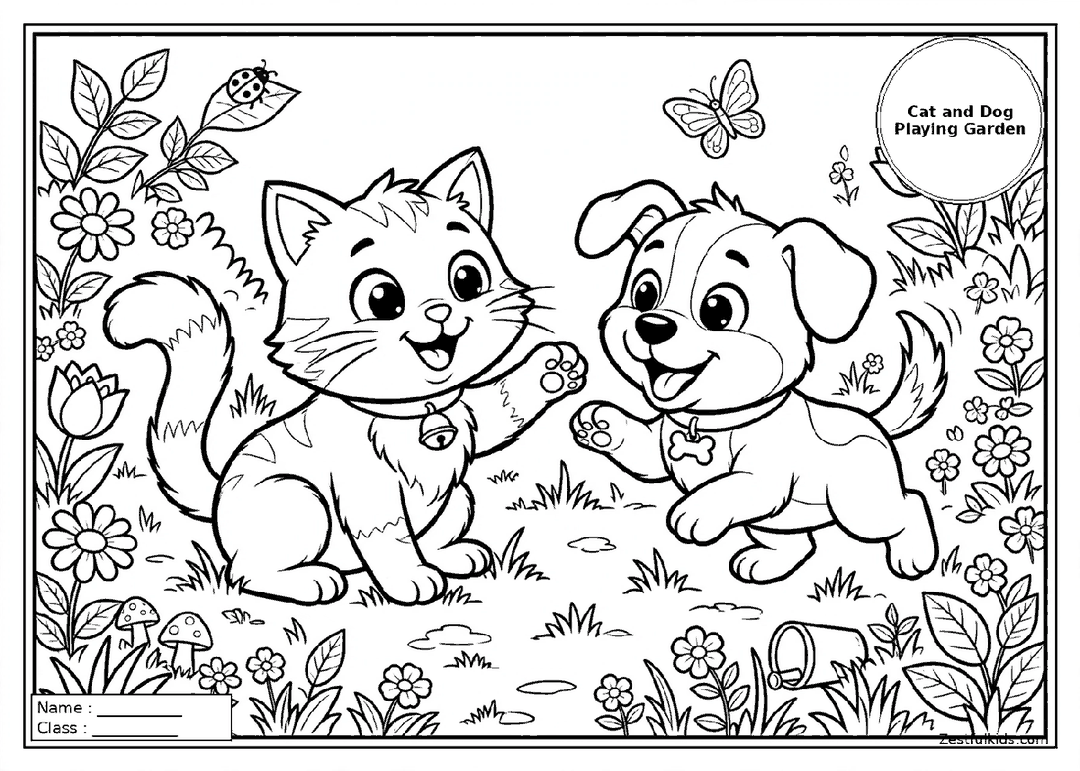
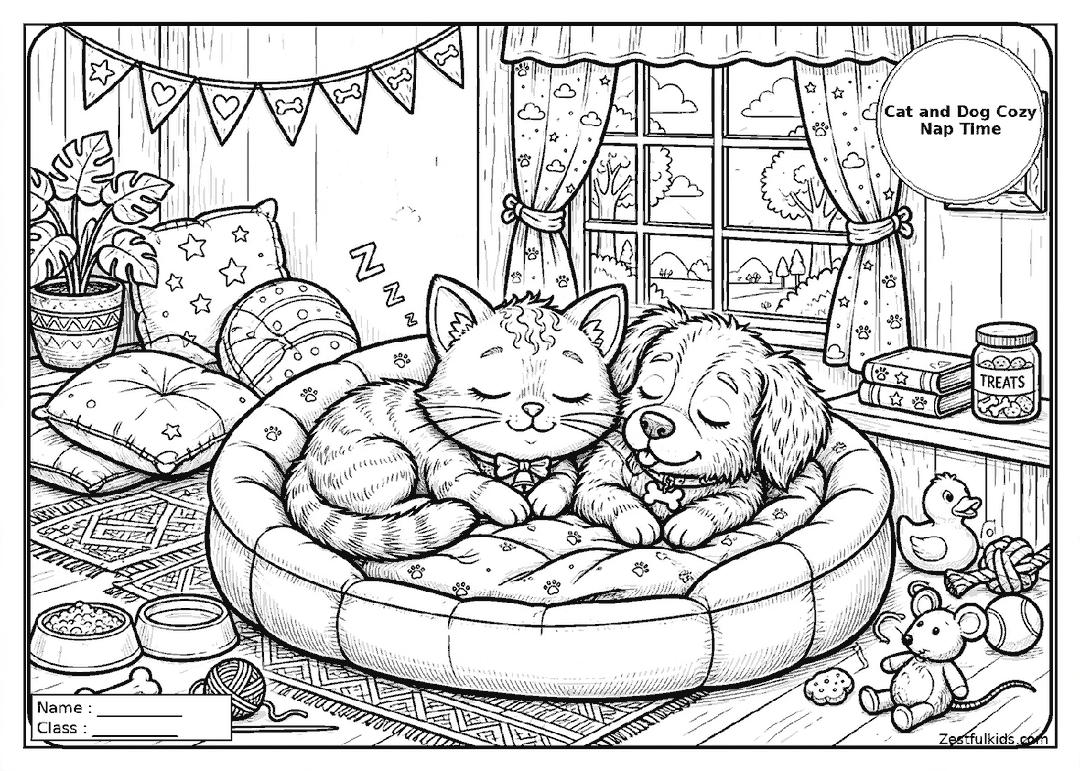
The background can help establish the mood of a picture, provided there is enough open space to add details. A garden scene might include green grass, a few flowers, and a blue sky. An indoor setting could feature a pet bed, a food bowl, a cushion, or a window where a cat might enjoy watching the world outside. Children can also leave the background mostly white, allowing the animals to remain the main focus.
Small additions can make the artwork feel personal. A child might draw a ball beside the dog, a toy mouse near the cat, or a name tag on a pet’s collar. If the picture includes more than one animal, different collar colors can help distinguish the characters. These additions should complement the original outlines rather than make the page feel crowded.
For children who enjoy decorative designs as well as familiar animals, cute animal mandala patterns offer another approach to coloring. Their repeated shapes and patterns provide a different visual experience from coloring recognizable pet features. Alternating between these styles can keep an art session interesting for children with different preferences.
Choosing Coloring Tools and Techniques
The best coloring tools depend on the size of the outlined areas and the child’s preferred way of working. Crayons are useful for filling broad sections of fur, while colored pencils allow more controlled marks around whiskers, paws, and facial details. Washable markers can create bold, bright colors, although adults should consider the paper thickness and place a protective sheet underneath when necessary.
Children can start by coloring the larger areas before moving to smaller details. For example, they might fill the dog’s body first, then color its ears, paws, nose, and collar. The same approach works for a cat: color the main body, add contrasting patches, and finish with the smaller facial features. This order can make the process feel more manageable, especially when the illustration contains several separate shapes.
Shading is another option for children who want to experiment. A slightly darker tone along one side of an animal’s body can suggest a shadow, while a lighter color around the cheeks or chest can create contrast. Stripes and spots can be added with short, controlled strokes where appropriate. However, detailed techniques are not essential; bold, even coloring can produce an attractive result, too.
Turning Pet Pictures into a Story
Cats and dogs are familiar subjects for many families, so the coloring activity can easily lead to conversations about caring for animals. Adults can discuss the importance of providing clean water, suitable food, safe shelter, and gentle handling. Children can also talk about how animals communicate through movements, sounds, and body language. These conversations should reflect the needs of both species rather than assuming that every cat and dog enjoys the same activities or interactions.
Another option is to invent a short story based on the finished picture. Children could name the pets, imagine where they live, and describe what happens during an ordinary afternoon. Perhaps the cat likes to watch butterflies while the dog searches for a favorite toy. If the child wants to extend the activity, they can draw an additional scene on a separate sheet of paper.
For a simple classroom extension, children can compare their pictures and identify visible differences between cats and dogs. They might look at ear shapes, tails, paws, or coat markings, depending on what the illustrations show. This activity encourages observation without turning a relaxed art session into a formal lesson.
Making Coloring Time Work at Home or School
At home, Cat and Dog Coloring Pages can fit into a quiet afternoon, a weekend craft session, or a pet-themed activity. Parents can offer a small selection of coloring materials and let children choose how to approach the picture. If siblings or friends color together, they can compare their ideas afterward without needing to make their artwork look alike.
Teachers and caregivers can include the activity in a broader theme about pets, animal habitats, or responsible animal care. Children might use their completed pictures to decorate a classroom display or create a collection of imaginary pets. If the group includes children with different coloring abilities, adults can allow each child to work at a comfortable pace and choose how much detail to add.
An additional printable activity can provide a change of pace when children are ready for something different. For example, a dinosaur counting worksheet introduces number practice through a dinosaur theme. Pairing an art activity with a counting task gives families and educators another way to organize a varied learning session.
Preparing the Page Before Coloring
Before printing a selected design, use the print preview to check that the illustration fits within the page and that important outlines are not cut off. Choose a paper size supported by the printer and review the margin settings if any part of the picture appears too close to the edge. Ordinary printer paper is generally suitable for crayons and colored pencils, while thicker paper may be preferable for markers.
Set up a comfortable workspace with enough room for the page and coloring tools. Keep pencils sharpened, provide an eraser if children want to correct light pencil marks, and protect the table when using materials that might leave stains. Once the picture is complete, children can write a title, give each pet a name, or display their work alongside other animal-themed creations.
Every finished picture can look different, even when children begin with the same outlines. Some may focus on realistic fur patterns, while others create bright collars, imaginative backgrounds, and unusual color combinations. That freedom makes cat-and-dog coloring a flexible activity for families, classrooms, and anyone looking for a simple way to combine art with a familiar subject.

