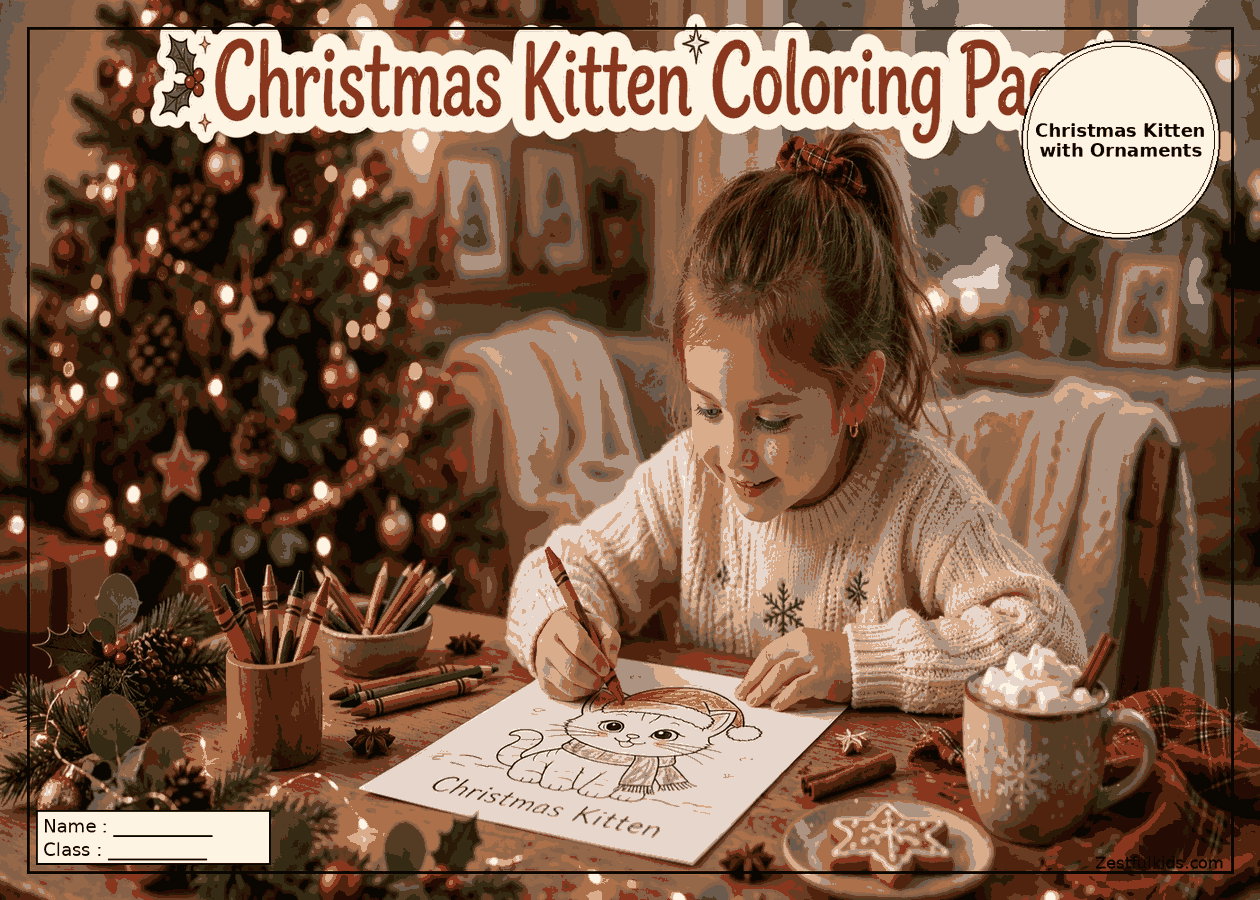
Christmas Kitten Coloring Page brings festive charm to children’s art time with the familiar appeal of a little cat and the magic of the holiday season. Children can explore Christmas colors, imagine cozy winter scenes, and create a personal holiday picture with their favorite coloring tools.
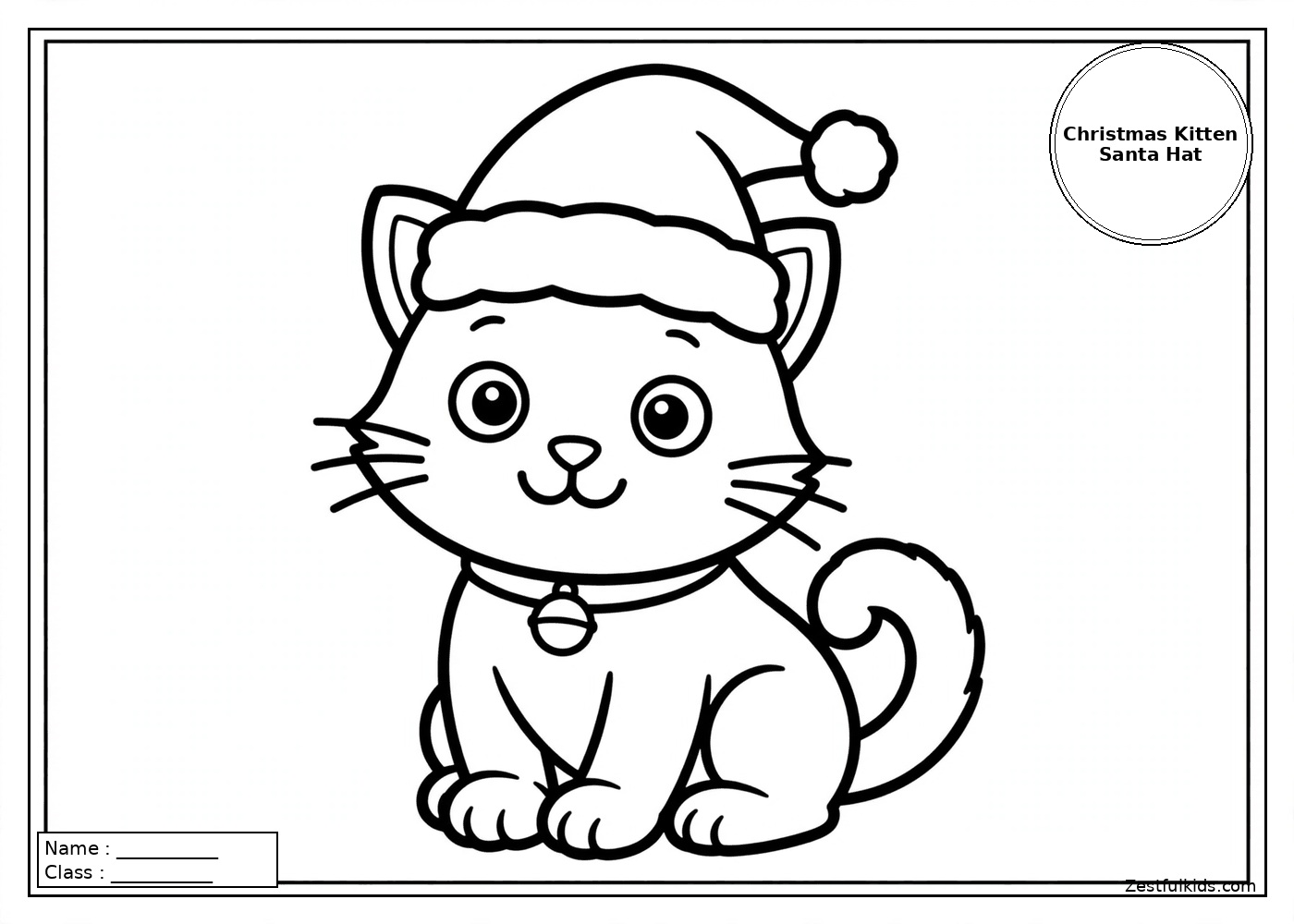
A Little Kitten Ready for Christmas
Kittens have a natural appeal in children’s illustrations because of their small paws, rounded faces, pointed ears, and curious expressions. When a kitten becomes part of a Christmas theme, those familiar features can be paired with seasonal details to inspire a festive coloring session. Depending on the illustration, children might find a kitten wearing a Santa hat, sitting beside a Christmas tree, playing with a bauble, or simply enjoying a holiday setting. These are possibilities to look for rather than details that every design necessarily includes.
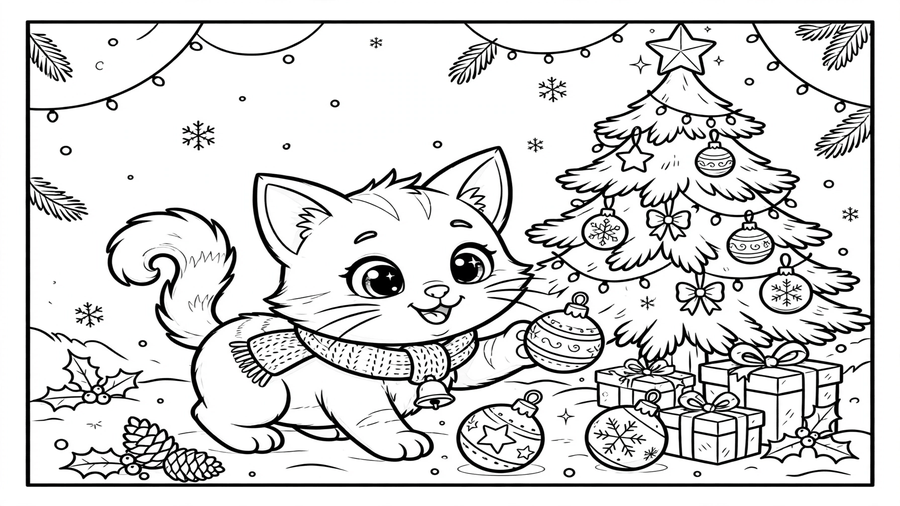
The combination of a young cat and Christmas decorations gives children several ways to approach the artwork. Some may focus on the kitten’s fur and facial features, while others will be more interested in the ornaments, presents, or festive surroundings. The scene can be colored realistically, using natural cat colors and traditional holiday shades, or transformed into a playful picture filled with unexpected combinations.
This theme also fits naturally into the excitement of December activities. Families can bring it out during a quiet afternoon at home, while teachers and caregivers can include it in a seasonal art session. There is no need for elaborate preparation; a suitable printed design and a few coloring materials can provide everything needed to get started.
Choosing Christmas Colors Without Limiting Creativity
Red, green, gold, and white are familiar Christmas colors, but children do not need to use all of them. A red Santa hat, green tree branches, and golden decorations can create a recognizable festive atmosphere. Blue and silver can suggest a cool winter evening, while soft pink and lavender offer a gentler, more imaginative look.
The kitten itself provides another opportunity for creative decisions. Children can choose orange, gray, brown, black, cream, or white fur, depending on the appearance they want to create. If the illustration includes a patterned coat, they might add stripes or patches in a contrasting shade. A white kitten could have light gray shadows, while an orange kitten might feature darker orange markings around its tail and paws.
A useful approach is to select two or three main colors before starting. Children could use red and green for the holiday decorations, then choose a separate color family for the kitten. This helps the different parts of the picture stand out without requiring a complicated plan. Children who prefer experimenting can ignore the traditional palette and give their kitten rainbow-colored fur or a brightly patterned holiday accessory.
Bringing the Small Details to Life
The kitten’s face often deserves special attention because small features can give the character a distinctive expression. Children can carefully color around the eyes, nose, ears, and whiskers, using colored pencils when greater control is helpful. If the outlines are simple and spacious, crayons can also work well for filling the face and body. The important thing is to choose tools that suit the illustration and feel comfortable for the child.
Christmas decorations offer a different kind of coloring challenge. Round ornaments can each receive a different shade, while ribbons and bows can be colored to match or contrast with nearby objects. If presents appear in the design, children can invent wrapping-paper patterns using dots, stripes, stars, or zigzags where space allows. Small details do not all need to be filled with intricate patterns; a few carefully chosen accents can be enough.
Children can also think about where light might fall in a Christmas scene. A yellow or pale gold area around a candle or a string of lights, if present, can suggest a warm glow. Darker blue or purple around the edges of a winter background can create contrast with lighter decorations. These are optional techniques for children who enjoy experimenting, not requirements for completing the picture.
Creating a Cozy Holiday Setting
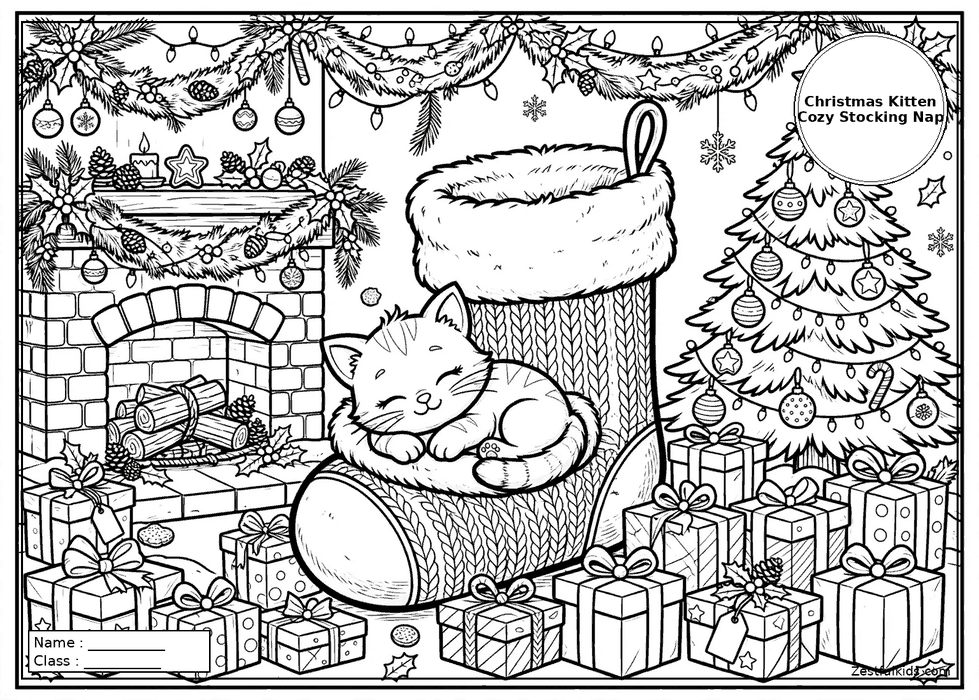
A Christmas kitten can inspire a story about a quiet evening at home. The kitten might be watching a Christmas tree, investigating a wrapped present, or resting near a window while snow falls outside. If the selected illustration has open background space, children can add simple details such as stars, snowflakes, a rug, or a few extra presents. If the design is already detailed, leaving the background mostly white can help the main subject remain clear.
Indoor and outdoor settings can produce different moods. A living room might use warm browns, soft greens, and golden light to suggest a comfortable holiday atmosphere. A snowy outdoor scene could feature pale blue shadows, white snow, and evergreen trees. Children can decide which setting they prefer, even when they are simply imagining a background that is not included in the original outline.
For a seasonal storytelling activity, invite children to give the kitten a name and describe its Christmas plans. Perhaps it is curious about a shiny ornament or has found a quiet place to nap while the family prepares for the holiday. They can tell the story aloud or write a few sentences on a separate sheet of paper. This turns the finished picture into a starting point for imaginative play without making the coloring task more demanding.
Adding More Animal and Fantasy Adventures
Children who enjoy animal characters may also like exploring cute lion illustrations. A lion’s mane, rounded paws, and distinctive face offer different shapes to color compared with a kitten’s smaller features. Placing the two completed pictures together can create an animal-themed display with a variety of fur textures, expressions, and color choices.
For a more imaginative change of pace, mermaid treasure scenes introduce an underwater fantasy setting. Children can move from Christmas reds and greens to ocean blues, coral shades, and sparkling treasure colors. These different themes work well in a collection of creative activities because each one offers a distinct setting and a new set of details to explore.
The activities do not have to be completed in one sitting. Children may enjoy finishing the kitten first and returning to another picture later. Allowing them to choose the order can make a seasonal art collection feel more personal and less like a series of tasks to complete.
Using the Christmas Kitten Theme at Home or School
At home, this activity can become part of a holiday craft afternoon or a quiet moment between seasonal celebrations. Parents can provide crayons, colored pencils, or washable markers and let children decide how to decorate their picture. If several family members participate, each person can create a different version of the same theme, using individual ideas for fur colors and holiday details.
Teachers and caregivers can include the picture in a wider Christmas art session. Children might compare their choices, describe the decorations they recognize, or talk about how families celebrate the season in different ways. The discussion can remain inclusive by acknowledging that not everyone celebrates Christmas in the same way. The picture can simply be an opportunity to explore a seasonal theme through art.
For a group display, children can write their names on the back or add a short title to the finished artwork. The pictures can then be arranged together to create a colorful holiday wall. Differences in coloring style and palette make the display interesting without requiring everyone to follow the same instructions.
Preparing the Printable for Coloring
Before printing a selected design, check the print preview to make sure the illustration fits within the page and its outlines are visible. Choose a paper size supported by the printer and review the margins to avoid cutting off important parts of the picture. Standard printer paper is generally suitable for crayons and colored pencils, while thicker paper may be preferable when children use markers.
Set up a flat workspace and place a protective sheet underneath the paper if the chosen coloring tools may bleed through. Keep the materials within easy reach, especially when the illustration contains small decorative details. Younger children may prefer filling the larger shapes first, while those who enjoy precision can spend more time on ornaments, ribbons, and facial features.
Once the picture is complete, children can display it, give it as a handmade seasonal greeting, or keep it with their other holiday artwork. The finished kitten might look traditional, whimsical, or completely unexpected. Each version offers a personal interpretation of Christmas, created one color and one small detail at a time.

