
Baby Pterodactyl Coloring Pages invite children to explore the prehistoric world through a young flying reptile. These creative printables combine imaginative coloring with opportunities to discover wings, beaks, and ancient skies.
Meet the Baby Pterodactyl
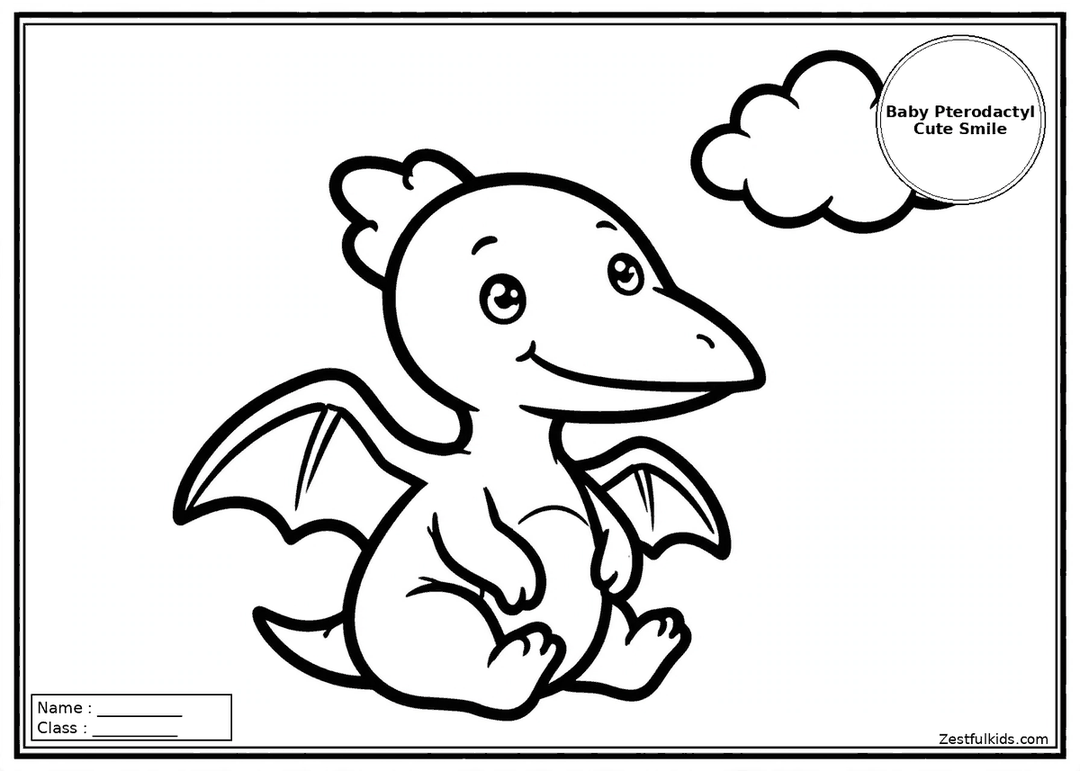
A baby pterodactyl makes an appealing subject for children’s artwork because its unusual shape is easy to recognize and fun to imagine. With a small body, a long beak, wide wings, and a distinctive head crest in some depictions, this prehistoric creature looks different from the dinosaurs children may already know. Its wings create broad areas for coloring, while its face, feet, and beak offer smaller details to explore. The result is a theme that combines familiar animal features with the excitement of a creature from a distant past.
Although pterodactyl is a popular everyday name, pterosaurs were flying reptiles rather than dinosaurs. They lived during the age of dinosaurs and developed wings supported by an elongated fourth finger. This is an interesting detail to share with curious children, especially those who enjoy learning about prehistoric animals alongside their art activities. A coloring session does not need to become a science lesson, but a simple fact can give the picture a little more meaning.
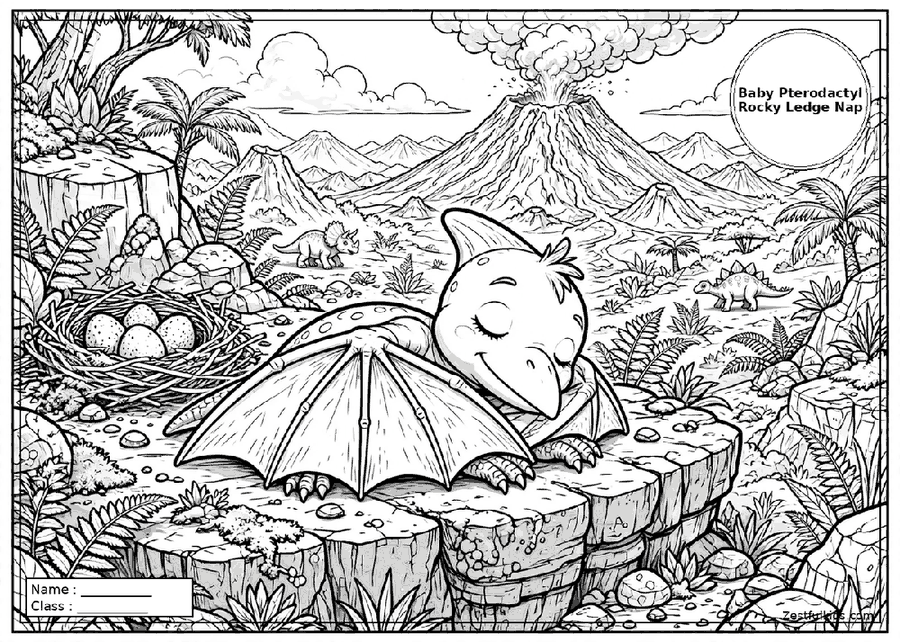
The word baby also leaves plenty of room for imagination. Children might picture a young pterosaur practicing its first flights, resting on a rocky ledge, or exploring a prehistoric landscape. These are story ideas they can invent themselves, whether or not the original illustration includes a background. The central attraction is the opportunity to bring a small prehistoric flyer to life with their own choice of colors.
How to Color Wings, Beaks, and Tiny Feet
The wings are often the most noticeable feature of a pterosaur illustration. Depending on the outlines, children may have large sections to fill with a single color or smaller areas that allow for contrasting shades. Light blue, gray, sandy brown, and muted green can create a natural-looking appearance, while orange, purple, or turquoise can turn the creature into a colorful fantasy character. Neither approach needs to follow a strict pattern.
For a coordinated design, children can choose one main color for the body and a slightly darker shade for the wings. A pale cream or light peach color may work for the underside, while a contrasting shade can help the beak stand out. If the illustration includes a crest, children can color it to match the body or make it a distinctive feature with a brighter tone.
Small feet and facial details benefit from a little extra care. Children can use colored pencils for areas that require more control, particularly around the eyes and the edges of the beak. Crayons work well for filling larger spaces, and washable markers can create bold, even colors when used on suitable paper. Adults can help children choose tools that feel comfortable without requiring them to stay within every line.
There is no need to make the pterosaur look scientifically realistic. A child might give it rainbow wings, patterned spots, or a brightly colored crest. These choices can turn a simple outline into a personal character with a recognizable appearance.
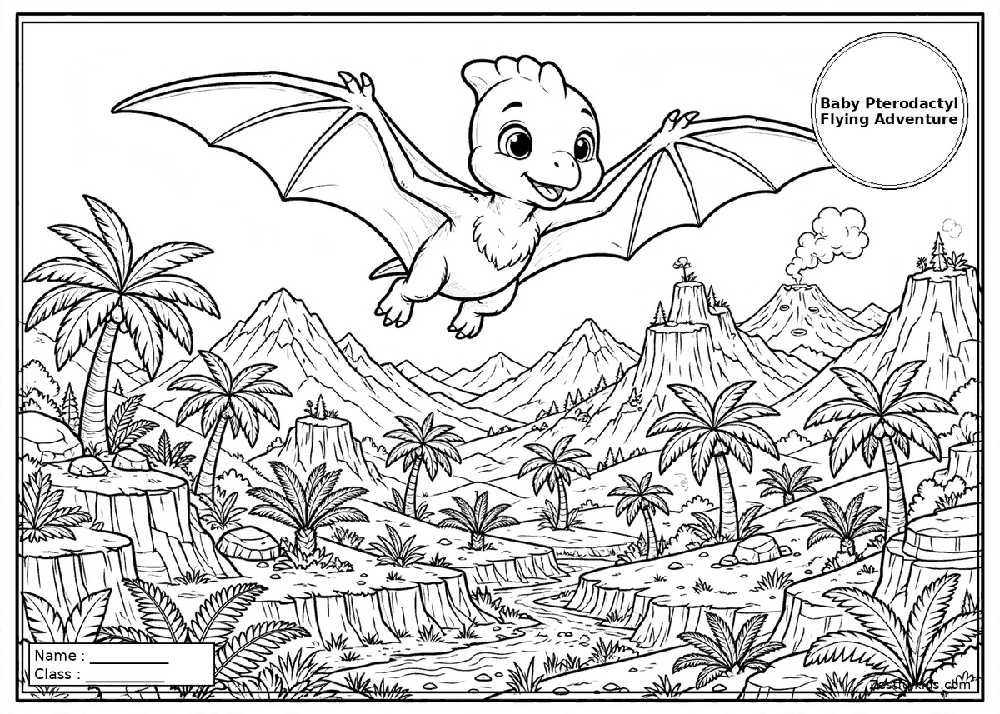
Imagine a World Above the Ancient Landscape
The setting can change the story of a baby pterosaur. If there is open space around the main figure, children might add clouds, distant mountains, or a warm sun. A rocky cliff could suggest a place to rest, while a prehistoric shoreline might inspire drawings of water, stones, and plants. These additions are optional and should depend on the available space and the child’s interest in drawing.
Background colors can also establish different moods. Pale blue and white may suggest a clear morning, while orange and pink can create the look of a sunset. Green hills and brown rocks provide contrast against a brightly colored flying reptile. Children who prefer a simpler picture can leave the background white and concentrate on the wings and body instead.
A useful creative challenge is to ask children to choose where their baby pterosaur is going. Is it gliding above a forest, looking for a safe place to rest, or flying alongside another prehistoric creature? They can explain their idea before coloring or invent the story after the picture is complete. This gives the activity a natural connection to storytelling without adding complicated instructions.
Pairing Prehistoric Art with Other Imaginative Creatures
Children who enjoy unusual flying creatures may also like exploring kawaii dragon illustrations. Dragons belong to fantasy rather than the fossil record, so comparing the two themes can lead to playful conversations about the difference between real prehistoric animals and imaginary creatures. Children can experiment with similar color palettes while deciding which features make each character distinctive.
For a change of scenery, countryside farm scenes offer familiar animals, open fields, barns, and rural surroundings. Moving between prehistoric and everyday settings gives children a different collection of shapes and details to color. A child might even invent a story about a baby pterosaur flying over a farm, combining the two themes in a separate drawing.
These related activities can be used individually or arranged into a small collection of animal-inspired artwork. There is no need to finish every picture in one sitting. Letting children choose their next subject can keep the experience relaxed and give them time to enjoy the details of each illustration.
Making the Activity Interesting for Home and Classroom
At home, Baby Pterodactyl Coloring Pages can be part of a dinosaur-themed afternoon, a rainy-day art session, or a quiet activity before story time. Parents can provide a few coloring tools and allow children to decide how their prehistoric creature should look. If a child wants to add a name or invent a personality for the pterosaur, a blank area or separate sheet of paper can become a place for those ideas.
In the classroom, teachers can connect the artwork to a short discussion about prehistoric life. Children might identify the wings, beak, and feet, then compare the pterosaur with a familiar bird or a dinosaur. Adults can explain that pterosaurs were a separate group of flying reptiles and that their wings were structured differently from those of modern birds. Keeping the explanation brief allows the art activity to remain enjoyable while introducing an accurate scientific distinction.
For a group activity, children can create different versions of the same imagined species. One might choose earthy colors, another might create a bright fantasy creature, and someone else might draw a landscape around the pterosaur. When the pictures are displayed together, the variety of choices becomes part of the experience. Each child can describe one detail they particularly enjoyed coloring.
Preparing the Printable for Coloring
Before printing a selected design, check the print preview to make sure the illustration fits on the page and the outlines are visible. Choose a paper size supported by the printer and review the margins to avoid cutting off important details. Standard printer paper is generally suitable for crayons and colored pencils, while thicker paper may be useful if children plan to use markers.
Prepare a flat workspace with enough room for the page and coloring materials. A spare sheet underneath the artwork can help protect the table from marker bleed. If the picture contains small details, sharpen colored pencils beforehand and provide an eraser for children who want to adjust light pencil marks.
The finished artwork can be displayed on a wall, added to a prehistoric-animal collection, or used as inspiration for a short story. Children may decide that their baby pterosaur is adventurous, shy, curious, or ready to explore the skies. By combining their own color choices with a few facts about ancient flying reptiles, they can turn a simple coloring activity into a creative encounter with the prehistoric world.

