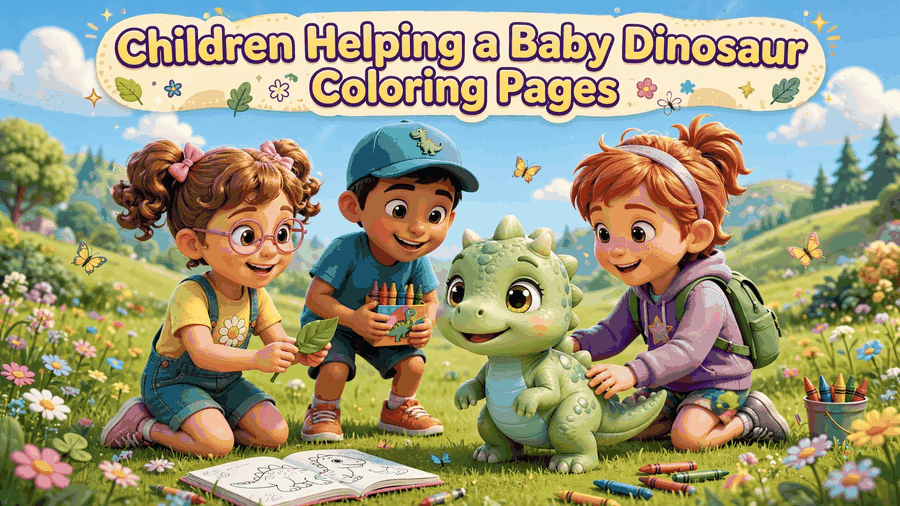
Children Helping a Baby Dinosaur Coloring Pages bring a gentle prehistoric adventure to life through creative artwork. These illustrations offer children a chance to imagine caring for a little dinosaur while exploring colors, kindness, and imaginative storytelling through a fun coloring activity.
A Heartwarming Dinosaur Adventure for Young Artists
Dinosaurs are often associated with enormous bodies, sharp teeth, and powerful roars. However, a baby dinosaur creates a different kind of experience, especially when children imagine helping and looking after one. The idea of young helpers meeting a little dinosaur gives the theme a friendly atmosphere that combines prehistoric imagination with everyday acts of kindness.
Children Helping a Baby Dinosaur Coloring Pages introduce an enjoyable subject for children who love dinosaurs but prefer a softer and more approachable adventure. Instead of focusing entirely on frightening prehistoric creatures, the theme encourages a story about friendship, curiosity, and caring for another living creature. Children can imagine that the baby dinosaur needs assistance, perhaps because it has become separated from its family or needs help finding food and shelter.
This imaginative situation makes coloring more than simply filling empty spaces with crayons. Every color choice can become part of a little story created by the child. A green baby dinosaur might be exploring a forest, while children wearing colorful clothes could be helping it feel safe and comfortable.
What Makes a Baby Dinosaur Rescue Theme Interesting?
One appealing feature of this theme is the contrast between the size of a young dinosaur and the children helping it. A baby dinosaur may look small, curious, and slightly clumsy compared with the enormous creatures commonly featured in dinosaur books. This difference gives children plenty of opportunities to imagine how the characters might interact.
The helping theme also introduces a positive situation without making the activity feel like a formal lesson. Children can picture themselves offering food, showing the dinosaur a safe place, or gently guiding it through an unfamiliar environment. These are optional storytelling ideas that can make the coloring experience more engaging.
Another interesting aspect is the prehistoric setting. Dinosaurs lived in environments that were very different from the world children see today. Imagining a landscape filled with ancient plants, tall trees, rocks, and distant mountains can make the activity feel like a journey into another time.
Parents and teachers can use these details to encourage children to describe what they see or invent their own explanation of how the baby dinosaur met its helpers.
Creative Ways to Color Children Helping a Baby Dinosaur
Choosing colors for a dinosaur illustration does not have to follow a fixed pattern. Since the characters belong to an imaginative prehistoric world, children can experiment with natural shades or invent completely unusual combinations.
Here are several ideas to make the coloring process more enjoyable:
- Baby dinosaur: Try light green, turquoise, soft blue, or yellow. Different shades can also be combined to create interesting patterns along its body.
- Children’s clothing: Use bright colors such as red, orange, purple, or blue to make the human characters stand out from the dinosaur.
- Prehistoric plants: Different greens can represent leaves, ferns, and bushes. A little yellow or brown can add variety to the vegetation.
- Ground and rocks: Light brown, gray, and sandy beige work well for a prehistoric landscape.
- Background details: Blue skies, white clouds, and warm sunlight can create a cheerful outdoor atmosphere.
Children can also experiment with simple coloring techniques. Using a lighter shade around the center of a large area and a darker shade near its edges can create a subtle sense of depth. For younger artists, choosing one color for each main object is perfectly fine.
Crayons are useful for filling larger spaces, while colored pencils provide more control around smaller details. Washable markers can also be an option when used with suitable paper and adult supervision.
Turn the Coloring Activity into a Dinosaur Story
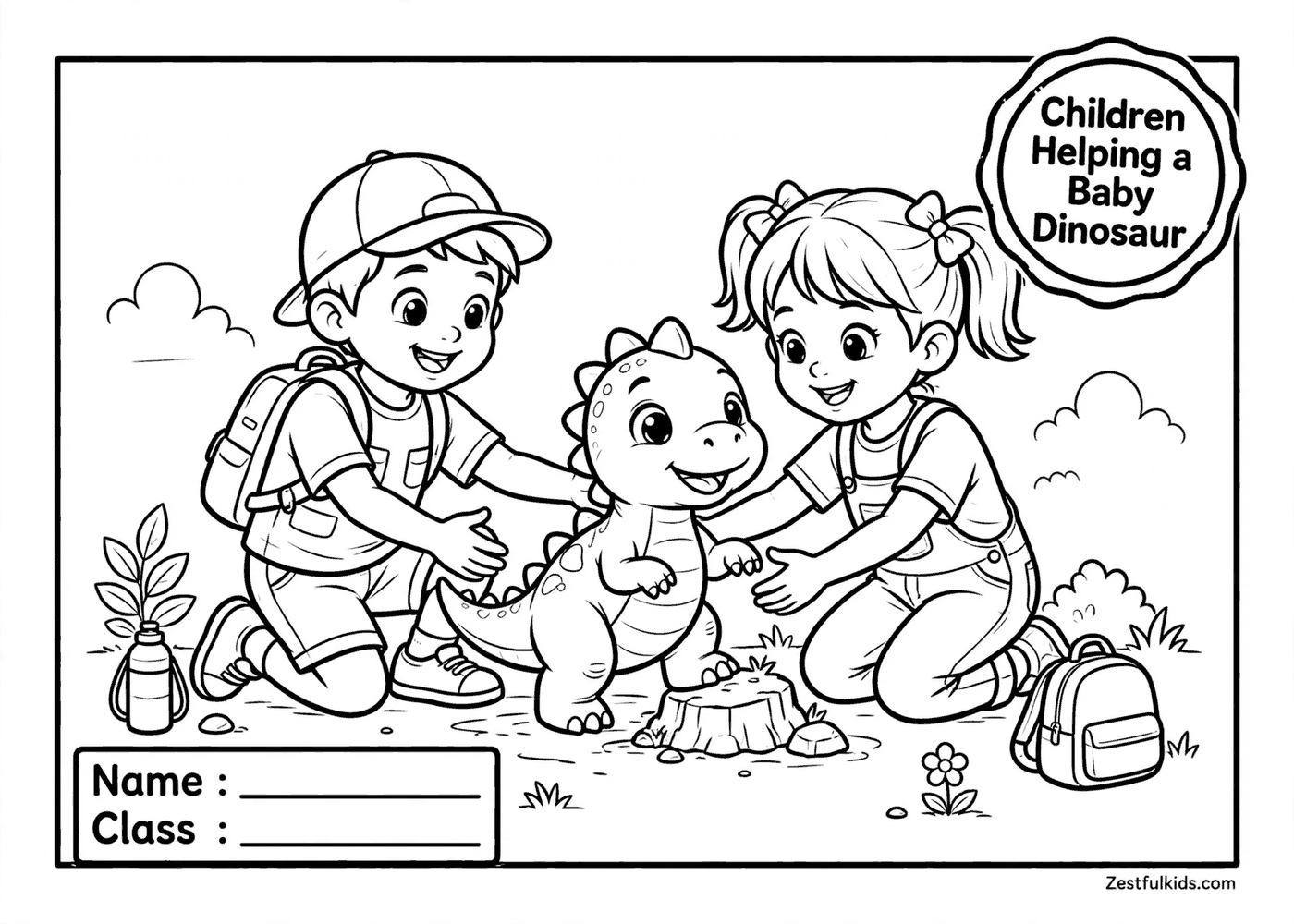
A baby dinosaur being helped by children offers a natural starting point for storytelling. Rather than asking children to finish the picture quickly, parents or teachers can invite them to imagine what happened before the scene and what might happen afterward.
For example, a child might invent a story about a little dinosaur that cannot find its way home. A group of young explorers discovers it near some prehistoric plants and decides to help it find a safe path. Another child might imagine that the dinosaur is hungry and needs help finding leaves or fruit.
There is no need to make every story scientifically accurate. The main purpose is to let children express their own ideas while enjoying the illustration.
Families can also connect the activity with other creative themes. Children who enjoy outdoor adventures may like exploring spring farm activities and imagining how different environments support plants and animals. This creates an opportunity to compare a modern farm landscape with the imaginary world of prehistoric creatures.
Bringing Prehistoric Nature into the Picture
The surroundings can play an important role in making a dinosaur illustration feel complete. Even when the main focus is on children helping a baby dinosaur, an imagined environment can give the scene additional character.
Prehistoric plants are particularly interesting because many ancient plant groups look different from the flowers and trees commonly found in modern gardens. Ferns, cycads, and conifer-like trees are useful visual references for creating an imaginative dinosaur landscape.
Children can use several shades of green to distinguish individual plants. Large leaves might be dark green, while smaller plants can have lighter shades. Brown tree trunks and gray rocks provide contrast without taking attention away from the main characters.
For an imaginative approach, children can add colorful flowers, butterflies, or unusual plants even if these details are not included in the original illustration. These additions can transform the picture into their own version of a prehistoric adventure.
Parents can also introduce a simple comparison between real prehistoric life and fantasy. Dinosaurs lived millions of years ago, and different species had different diets and habitats. Some were plant-eaters, while others hunted animals. This small conversation can make the activity interesting for children who are curious about natural history.
Choosing the Right Coloring Experience
Not every child approaches a coloring activity in the same way. Some enjoy filling large spaces with bold colors, while others prefer taking their time with small details and experimenting with different combinations.
When choosing a printable, consider how comfortable the child feels with the amount of detail in the illustration. A simpler design may be more enjoyable for someone who likes quick coloring sessions, while a more detailed scene can offer additional creative possibilities for children who enjoy spending longer on artwork.
Before printing, check the available print preview to make sure the illustration fits properly on the page. Use paper that works with the chosen coloring materials, particularly if children prefer markers or other tools that may show through thinner sheets.
It is also helpful to prepare crayons, colored pencils, an eraser, and a flat working surface before beginning. A comfortable setup allows children to concentrate on their artwork without repeatedly searching for supplies.
Combine Dinosaur Coloring with Other Imaginative Themes
Children who enjoy caring for a baby dinosaur may also appreciate stories featuring magical creatures, friendly animals, and imaginary adventures. Exploring different subjects can keep creative activities interesting while introducing new settings and characters.
For example, fairy-themed activities offer a different imaginative world filled with magical possibilities. Children can move from a prehistoric landscape to an enchanted setting and create entirely different stories through their coloring choices.
Another enjoyable idea is to let children give their baby dinosaur a name. They can describe its favorite food, decide where it sleeps, and imagine which friends it might meet along the way. Older children may even enjoy writing a few sentences about their dinosaur after completing the picture.
These small additions allow a simple printable activity to become a personal creative project.
A Friendly Prehistoric Activity for Everyday Creativity
Children Helping a Baby Dinosaur Coloring Pages provide an inviting theme for children who enjoy dinosaurs, imaginative characters, and stories about helping others. The combination of young helpers and a little prehistoric creature creates plenty of opportunities to experiment with colors and invent original adventures.
Parents, teachers, and caregivers can introduce the activity during quiet afternoons, classroom art sessions, or family creative time. Children can follow their own color preferences, add imaginative background details, and develop a story around the scene.
Every finished picture can look different because each child brings a unique imagination to the prehistoric adventure. Whether the baby dinosaur becomes bright green, purple, orange, or another unexpected color, the most enjoyable part is seeing how children turn an illustration into their own little story.
