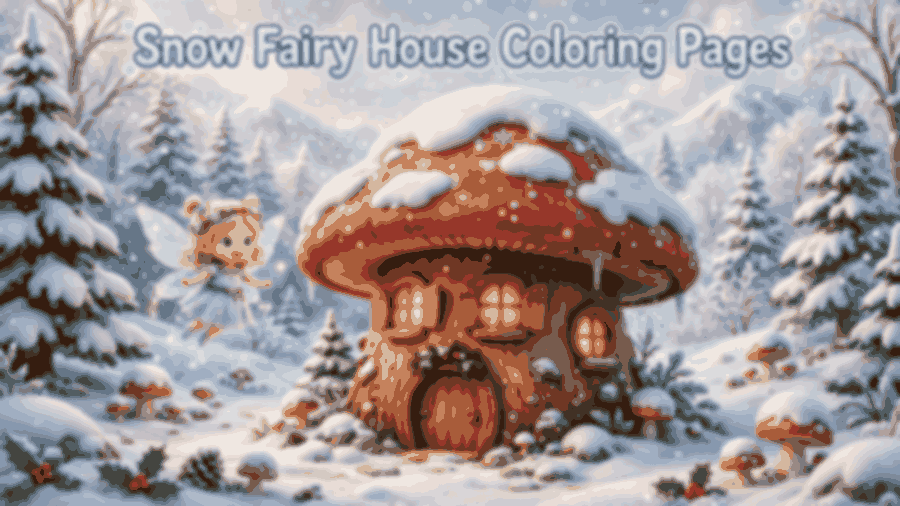
Snow Fairy House Coloring Pages invite children into a magical winter world filled with imagination and creativity. These printable coloring activities let young artists explore enchanting fairy homes while experimenting with snowy landscapes, delicate details, and beautiful seasonal colors.
Discover the Magic of Snow Fairy Houses
A fairy house covered in snow creates a charming setting for a creative coloring activity. Unlike ordinary houses, fairy homes belong to a world where tiny magical creatures might live among frosty trees, sparkling snowflakes, and peaceful winter scenery. Their imaginative appearance gives children plenty of opportunities to experiment with colors and create their own interpretations of a winter fantasy.
The idea of a snow fairy house combines two familiar themes: the warmth of a little home and the quiet beauty of a snowy landscape. Children can imagine a tiny fairy returning home after exploring a frozen forest or preparing a cozy place to rest during a cold winter evening. These simple story ideas make the coloring experience more engaging without requiring complicated instructions.
Every child may picture a different kind of fairy home. Some might imagine a small cottage with a pointed roof, while others may think of a delicate woodland shelter surrounded by snow-covered plants. This freedom allows children to approach the same theme in their own creative way.
Exploring Winter Details Through Coloring
One enjoyable part of this theme is the opportunity to explore the visual contrast between a cozy fairy home and its chilly surroundings. Snow, icy surfaces, wooden textures, and winter plants can all inspire different coloring choices. Children do not need to follow realistic colors because a magical setting can be as imaginative as they like.
Snow-covered roofs are a natural starting point. White, pale blue, and very light gray can suggest layers of snow, while darker shades along the edges can create a little contrast. If children want a more fantastical appearance, they can add soft lavender or light pink to give the snowy roof a gentle magical atmosphere.
The house itself offers another interesting area to explore. Brown, beige, and warm orange can make a cottage look like a comfortable woodland home. Alternatively, pastel purple, mint green, or soft turquoise can transform it into a fairy dwelling from an imaginary winter kingdom.
Small details can also make the finished picture more interesting. Children can use yellow for glowing windows, green for evergreen plants, and different shades of blue for the surrounding snow. These choices help separate the house from the landscape while keeping the overall winter feeling.
Choosing Colors for a Dreamy Winter Scene
There is no single color combination that children must follow when working on Snow Fairy House Coloring Pages. The best approach is to let them experiment with different shades while thinking about the atmosphere they want to create.
Here are several color combinations worth trying:
- Classic winter cottage: Combine white, pale blue, gray, and natural brown for a peaceful snowy appearance.
- Fairy-tale pastel: Use lavender, blush pink, mint green, and light turquoise for a soft fantasy-inspired design.
- Warm woodland home: Choose earthy brown, forest green, golden yellow, and cream to create a welcoming atmosphere.
- Enchanted winter evening: Experiment with navy blue, violet, silver-gray, and warm yellow to suggest a magical nighttime setting.
Children can also create contrast by choosing different colors for the roof, walls, doors, and windows. For example, a pale blue roof paired with warm brown walls can make the house stand out clearly.
Encourage young artists to try their own combinations rather than correcting every unusual choice. A purple roof or pink snow-covered tree can be perfectly appropriate in an imaginary fairy world.
Simple Coloring Techniques for Delicate Details
Fairy houses often inspire children to pay attention to smaller decorative areas. Even a simple coloring design can become more interesting when different coloring techniques are introduced gradually.
For larger areas, such as the walls or snowy ground, crayons and colored pencils are practical choices. They allow children to fill spaces comfortably and experiment with lighter or darker pressure. Colored pencils are particularly useful when adding subtle shading around windows, roof edges, and small architectural details.
Markers can provide brighter colors for doors, decorative elements, and other noticeable parts of the illustration. However, it is helpful to test them on a separate sheet of paper first, especially when the printable is on thin paper. This can reduce the possibility of ink showing through the other side.
Another simple technique is layering. Children can begin with a light shade and gradually add a darker color near the edges. For example, a pale blue snowbank can receive a little darker blue along its lower edge. The result creates a sense of depth without requiring advanced drawing skills.
If the illustration includes small details, remind children to work slowly and use coloring tools with suitable tips. They can leave tiny spaces white to represent snow or add gentle highlights to make certain areas appear brighter.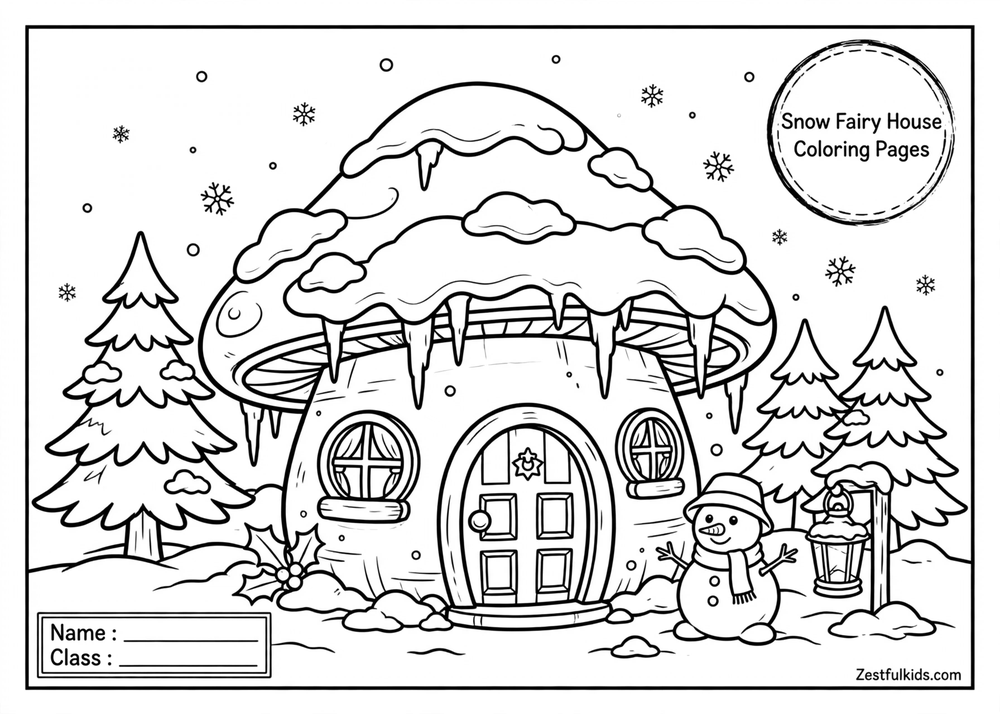
Turning a Fairy House Into a Winter Story
Coloring does not have to end when the last area is filled. The finished illustration can become the starting point for a short imaginative storytelling activity at home or in the classroom.
Parents and teachers can invite children to imagine who lives inside the fairy house. Perhaps a snow fairy looks after the winter forest, or a tiny family of magical creatures gathers inside when the temperature drops. Children can invent names, describe the house, and explain what happens during a snowy day.
Another enjoyable activity is creating a name for the imaginary home. A child might choose something like Snowflake Cottage, Frosty Garden House, or Little Moonlight Shelter. Writing the chosen name beneath the finished artwork gives the picture a personal touch.
For a related landscape-inspired activity, children may also enjoy exploring Countryside Farm. Its rural setting offers a different environment to imagine and color, making it an interesting companion to a magical winter home.
Teachers can use this theme during an art session focused on seasonal environments or imaginative places. After coloring, children can describe the difference between a snowy fairy house and a home in a warmer landscape. This provides a simple opportunity to practice observation and express ideas through conversation.
Creating a Peaceful Winter Background
If children want to expand the scene beyond the house, they can imagine a surrounding environment that matches their chosen color palette. A few snow-covered trees, tiny plants, distant hills, or falling snowflakes can help establish the atmosphere of a winter fairy world. These are optional creative additions that children can draw on a separate sheet or include when the illustration provides suitable open space.
A daytime background might feature a light blue sky with white clouds and gentle snowflakes. For an evening scene, darker blue and purple can create the appearance of a quiet winter night. A pale yellow moon or a few bright stars can add another imaginative element.
Children can also think about how the house would look in different weather conditions. Would it sit beside a frozen stream, stand in a quiet forest, or appear on a snowy hillside? There is no need to make the scene complicated. A few thoughtful details can be enough to communicate the setting.
For another landscape-based coloring experience, Mountain Sunset introduces a different atmosphere through mountain scenery and changing sky colors. Comparing a snowy fairy setting with a sunset landscape can inspire children to experiment with contrasting backgrounds.
Making Printable Coloring Time Enjoyable
A comfortable coloring space can make this activity easier for children. Parents and caregivers can prepare crayons, colored pencils, or washable markers before printing the selected design. Keeping the materials within easy reach allows children to concentrate on their artwork without frequent interruptions.
Before printing, check the available print preview to make sure the illustration is positioned correctly on the page. Choose paper that works well with the coloring tools being used, particularly if children prefer markers or heavier pencil shading. The appropriate paper setting can depend on the printer and the file provided.
It is also helpful to let children work at their own pace. Some may prefer to finish the fairy house first and color the surrounding scenery afterward. Others might begin with the snowflakes or background before moving toward the main structure. Both approaches are perfectly reasonable.
Snow Fairy House Coloring Pages offer a lovely opportunity to combine winter scenery, fairy-tale imagination, and hands-on creativity. With thoughtful color choices and a little storytelling, children can turn a simple printable illustration into a magical place that reflects their own ideas.
