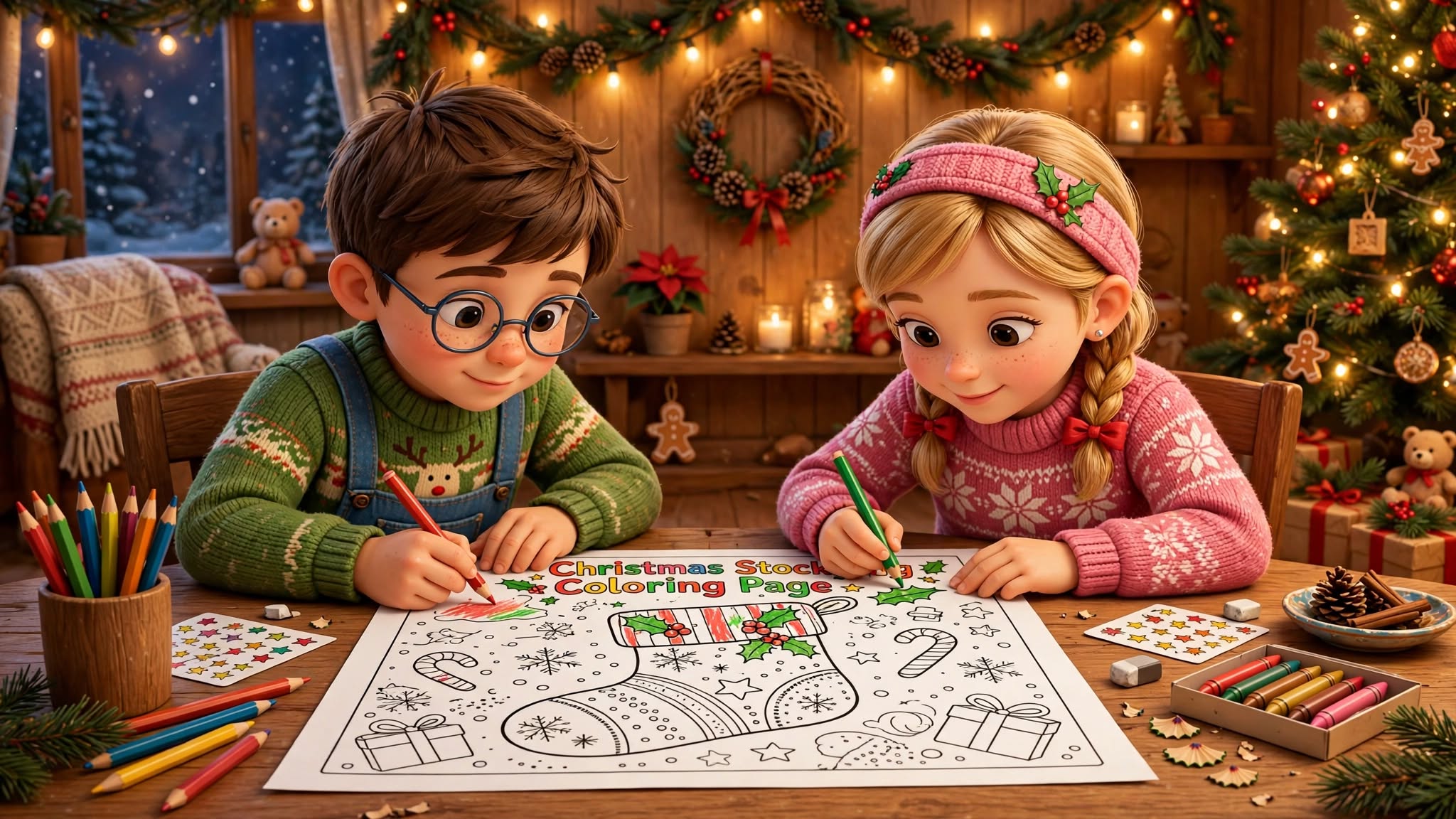
Christmas Stocking Coloring Page brings holiday cheer to children’s creative time, with a classic Christmas decoration that invites colorful designs, playful patterns, and imaginative gift-filled scenes.
A Christmas Tradition Children Can Color
A Christmas stocking is more than a festive decoration. In many families, it is hung near a fireplace, on a wall, or beside the Christmas tree, ready to be filled with small surprises during the holiday season. Its familiar shape, roomy top, and decorative cuff make it an enjoyable subject for children’s artwork. A Christmas Stocking Coloring Page lets children explore this seasonal tradition while deciding how their own stocking should look.
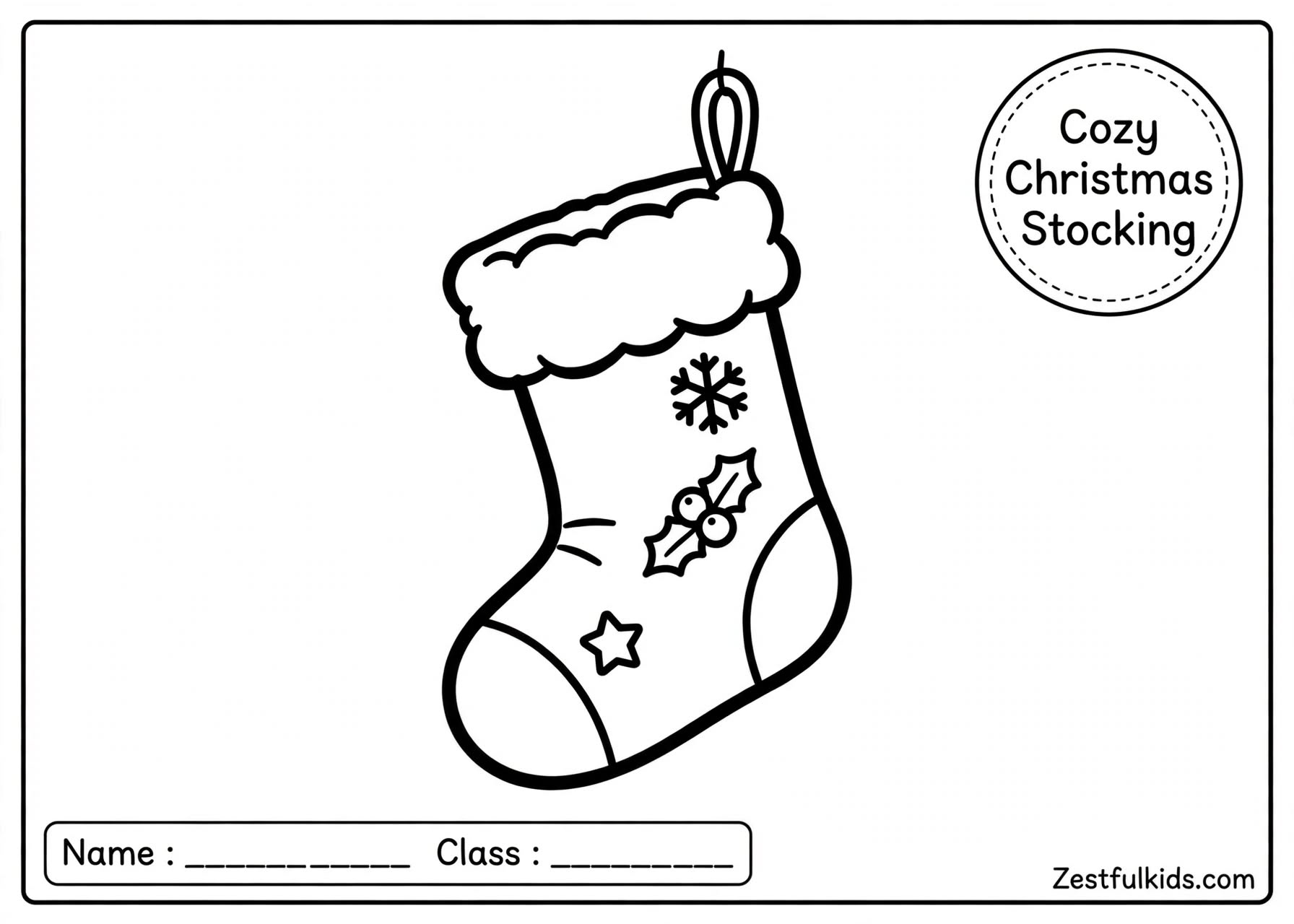
Traditional Christmas stockings often feature red fabric, white cuffs, and green or gold decorations, but children do not need to follow a particular color scheme. One stocking might have blue and silver stripes, while another could feature purple stars, yellow bells, and colorful dots. Some children may prefer a simple design, while others enjoy adding as many festive details as the available space allows. Every finished picture can reflect a different idea of Christmas.
This activity can fit naturally into a family craft afternoon, a classroom holiday station, or a quiet moment during the busy weeks before Christmas. Parents, teachers, and caregivers can offer a few coloring tools and let children work at their own pace. The familiar holiday theme also provides an easy starting point for conversations about family traditions, decorations, and the little things that make the season special.
What Belongs Inside a Christmas Stocking?
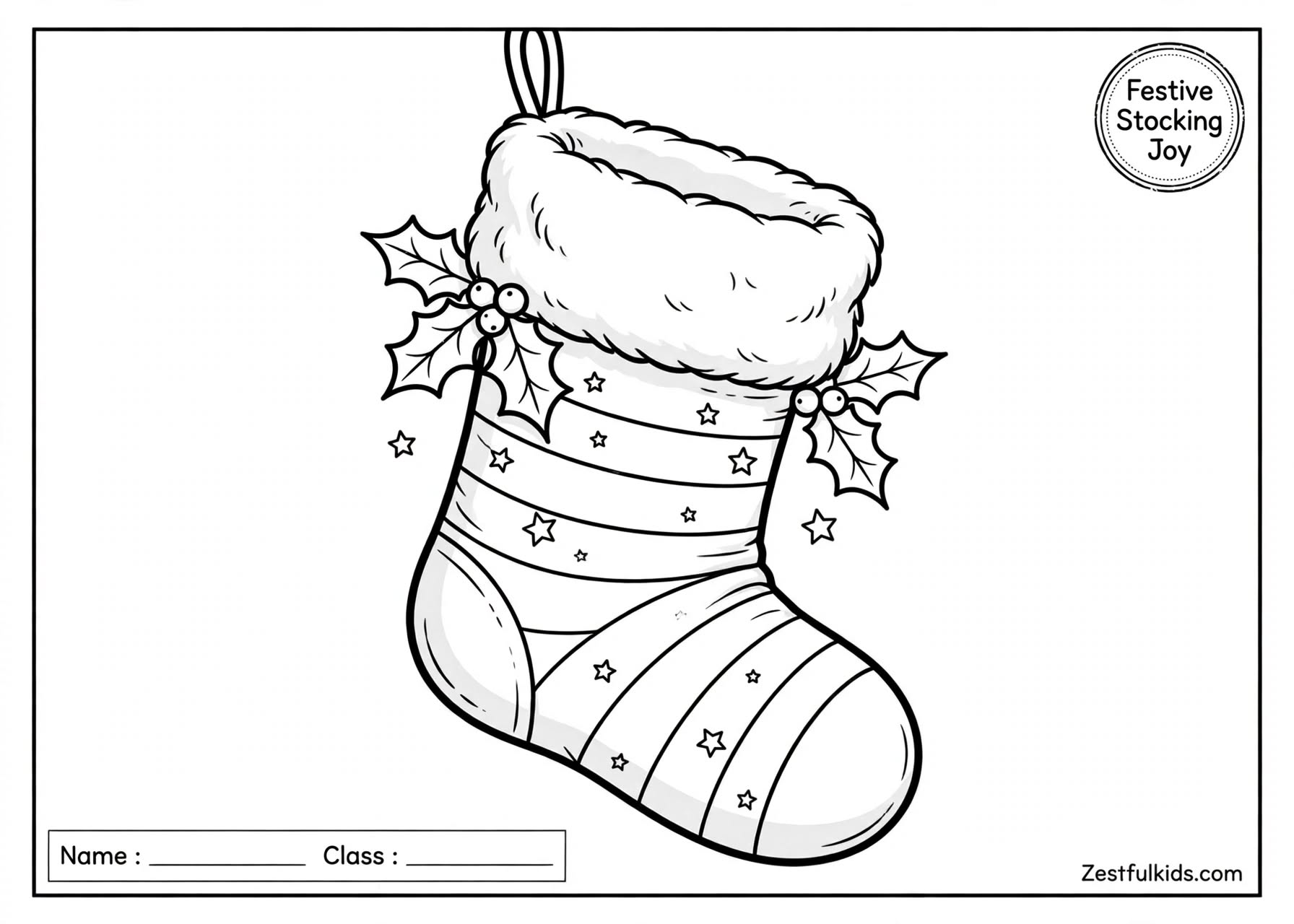
One of the most enjoyable ways to approach a stocking illustration is to imagine what might be tucked inside it. Depending on the design, the stocking may be shown with decorative patterns or as a simple outline ready for children to personalize. If there is open space around the main shape, children can draw small presents, candy canes, toy cars, wrapped sweets, or tiny teddy bears beside it. These additions are optional ideas rather than details that need to appear in every printable.
Children can also invent a stocking for an imaginary character. A stocking for a snowman might feature snowflakes and icy blue stripes, while one for a reindeer could have brown patches and little golden bells. A stocking for Santa might include a red-and-white pattern inspired by his familiar outfit. Thinking about the intended owner gives children a reason to select particular colors and decorations.
For a simple storytelling activity, invite each child to choose three imaginary items for their stocking. They can explain why those objects belong together and who might receive them on Christmas morning. A child might choose a tiny book, a chocolate treat, and a miniature toy train, while another imagines finding a handmade ornament and a note from a family member. This turns coloring time into a small creative exercise without making the activity feel like a formal lesson.
Color Ideas for a Festive Stocking Design
Red and green are classic Christmas colors, but a stocking can look festive in many different combinations. Red fabric with a white cuff creates a traditional appearance, while dark green paired with gold suggests a more elegant decoration. Blue and silver can evoke a wintry atmosphere, and pink with purple offers a playful alternative for children who enjoy brighter, less traditional palettes.
Patterns provide another way to make the illustration distinctive. Children can alternate red and white stripes, fill the stocking with green polka dots, or create a row of tiny stars along the cuff. If the design includes a hanging loop, they might color it to match the stocking or choose a contrasting shade. Small details such as bells, snowflakes, hearts, and holly leaves can add variety where the illustration provides room for them.
Encourage children to think about contrast before filling every area. A pale cuff can stand out against a dark stocking, while yellow decorations become more visible on a red or green background. Colored pencils are useful for small patterns, and crayons can cover larger sections of fabric. Children who enjoy bold colors may prefer washable markers, although a spare sheet beneath the paper can help protect the surface from marks that pass through.
Make a Christmas Craft Session More Personal
A completed stocking picture can become part of a larger holiday display. Children can write their names beside the artwork, add a short seasonal greeting, or draw a border of stars and snowflakes around the page. If several family members or classmates participate, their pictures can be arranged together to create a colorful collection of different stocking designs.
Another option is to pair the activity with a discussion about holiday decorations from different homes and cultures. Some families hang stockings, while others focus on decorating trees, exchanging gifts, or sharing special meals. Children can describe the traditions they know without being expected to celebrate Christmas in exactly the same way as their classmates. This keeps the activity welcoming and gives everyone room to contribute their own experiences.
For families who enjoy seasonal art, Halloween-themed illustrations can offer a contrasting creative project at another time of year. These cute Halloween designs feature a different seasonal atmosphere, giving children a chance to move from Christmas decorations to pumpkins, costumes, and spooky-but-playful imagery. Comparing the two themes can inspire children to think about how colors and decorative details help communicate the mood of a celebration.
Pair the Stocking with Other Creative Themes
Children who enjoy coloring familiar shapes can also explore subjects that are less connected to holiday traditions. For example, a dinosaur illustration offers a completely different set of details, from large bodies and long tails to tiny arms and distinctive facial expressions. These chubby dinosaur designs can be a fun choice for a separate art session when children want to switch from festive decorations to prehistoric creatures.
You can also invite children to create a stocking for a dinosaur character. They might imagine a green dinosaur receiving a stocking decorated with orange footprints, or a purple dinosaur finding a tiny toy egg inside. If the original stocking illustration has limited space, the dinosaur can be drawn on another sheet and placed beside the colored stocking. This simple combination connects two different themes through imaginative play.
Teachers can adapt the idea for a seasonal classroom activity by letting students design stockings for fictional characters, storybook animals, or imaginary winter visitors. Each child can explain the colors and patterns they selected. The finished pictures may look completely different, which is part of the appeal of an open-ended art activity.
Printing and Coloring Tips for Holiday Artwork
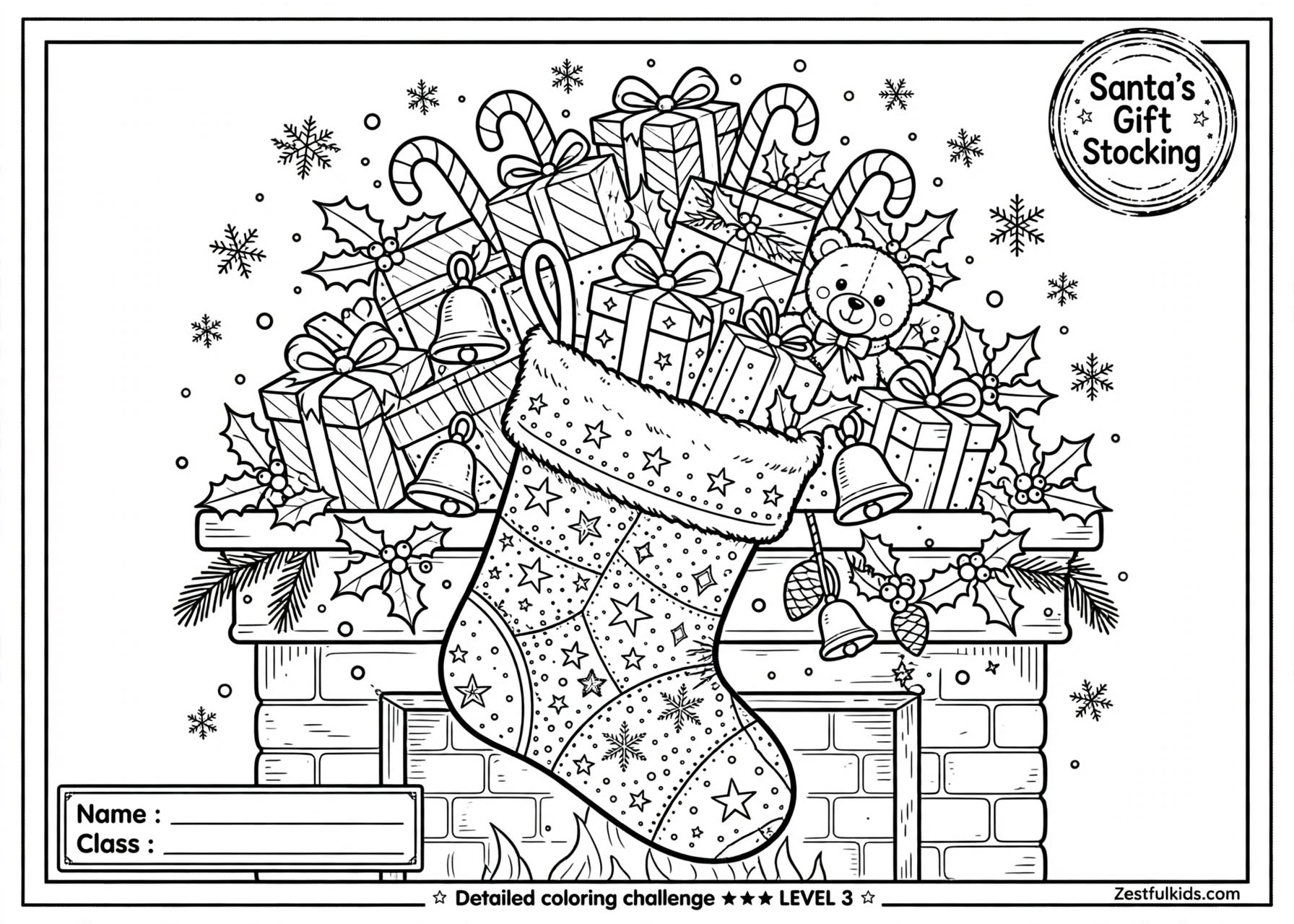
Before printing a downloadable design, check its available instructions and review the print preview. Make sure the stocking outline fits within the page and that important details are not cut off around the edges. Use paper that suits the chosen coloring materials; standard printer paper is generally practical for crayons and colored pencils, while heavier paper may work better for some marker activities if the printer supports it.
Set out a small selection of colors before children begin. Red, green, white, gold, and blue provide a useful starting palette, but additional shades can be added as the design develops. Children do not need to finish the entire page at once, especially if they are working on detailed patterns. They can color the main stocking first and return later to add decorations or a background.
Once the artwork is finished, invite children to give their stocking a name or describe who it belongs to. They might imagine it hanging beside a Christmas tree, resting near a fireplace, or waiting for Santa’s visit. With a few colors and a little imagination, a simple stocking outline becomes a personal piece of holiday art that children can proudly share with family, friends, or classmates.

