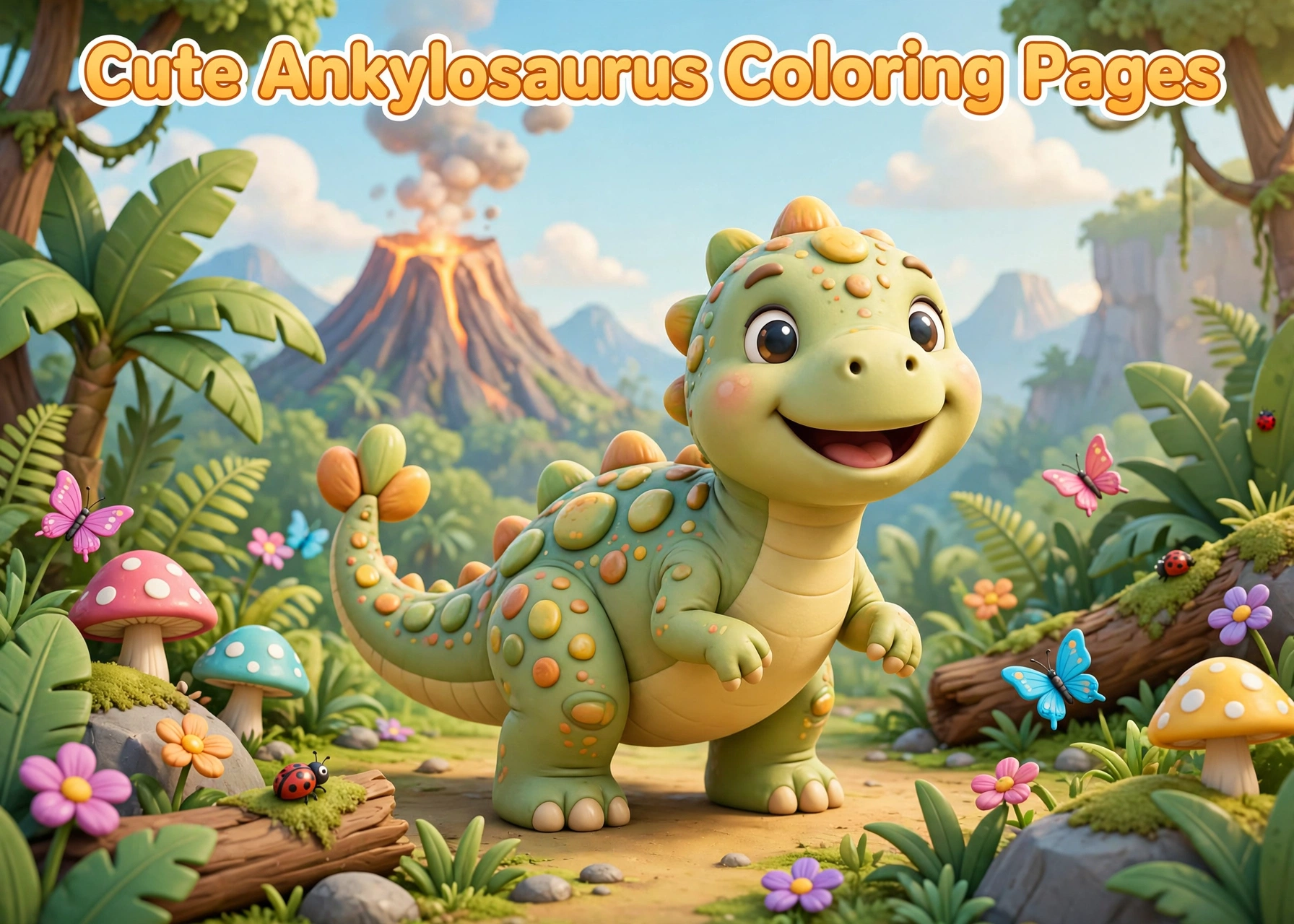
Cute Ankylosaurus Coloring Pages introduce children to a fascinating armored dinosaur through fun and imaginative artwork. With its protective body plates, sturdy legs, and distinctive tail club, this prehistoric creature offers plenty of interesting details to explore with colors.
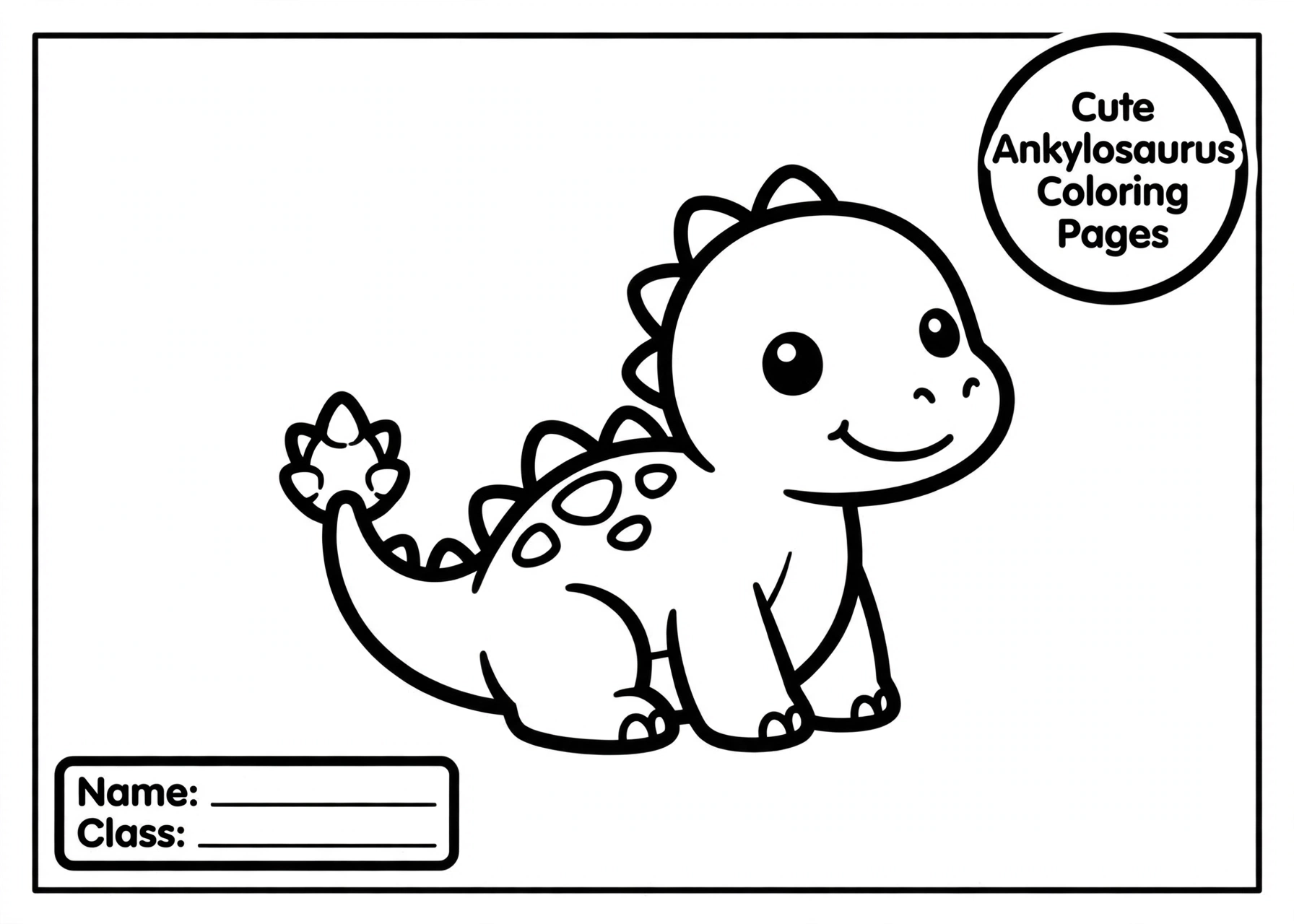
Meet the Ankylosaurus, the Dinosaur with Natural Armor
The Ankylosaurus is one of the most recognizable armored dinosaurs from prehistoric times. It lived during the Late Cretaceous Period, approximately 68 to 66 million years ago, and belonged to a group of dinosaurs known for their heavily protected bodies.
What made this dinosaur unusual was its extensive body armor. Its back and sides were covered with bony plates and smaller structures called osteoderms. These protective features gave the animal a distinctive appearance, making it look rather different from familiar dinosaurs such as Triceratops or Brachiosaurus.
Another remarkable feature was its large tail club. The tail ended in a heavy, bony structure that may have been used for defense against predators. Combined with its low, wide body and short, strong legs, this feature made Ankylosaurus look like a prehistoric creature wearing natural armor.
Its appearance is especially appealing in cute dinosaur illustrations. Artists can turn its powerful features into friendly-looking details, such as a rounded body, expressive eyes, and a cheerful expression. This combination of prehistoric characteristics and approachable artwork makes the dinosaur an enjoyable subject for children’s creative activities.
What Details Can Children Explore When Coloring?
Ankylosaurus illustrations offer several interesting areas to work on. Rather than coloring the entire dinosaur in one shade, children can explore the different parts of its body and give each feature its own appearance.
The armored back: The rows of bony plates are among the most recognizable details. Children can use different shades of brown, olive green, gray, or earthy orange to distinguish individual sections. If the illustration has clearly separated armor shapes, alternating colors can make the pattern more noticeable.
The rounded body: The main body provides a larger space for coloring. Green is a familiar choice for dinosaur illustrations, but there is no single confirmed color for Ankylosaurus skin. Children can choose natural-looking earth tones or invent an entirely different color combination.
The short legs: Its sturdy legs help give the dinosaur its low-slung appearance. A slightly darker shade around the feet can create contrast with the body, especially when the illustration has visible outlines between these parts.
The tail club: This is a particularly distinctive feature worth highlighting. Children can use a darker brown or gray shade for the club and a lighter tone along the tail. The contrast can help the shape stand out.
These details make the coloring experience more varied without requiring complicated techniques. Children can take their time with the smaller armor sections and use broader strokes for the larger body areas.
Creative Color Combinations for an Armored Dinosaur
Although Ankylosaurus is often represented in shades of green and brown in children’s artwork, its actual skin color is not known with certainty. This gives children plenty of freedom to experiment.
For a nature-inspired design, olive green can be combined with sandy brown and muted gray. These colors create an earthy appearance that fits a prehistoric setting. A lighter cream shade can also be used for the underside if the illustration includes that area.
Children who prefer brighter artwork can try turquoise, orange, purple, or even a combination of several contrasting colors. The armor plates can be colored individually to create a playful pattern. A blue body with yellow armor, for example, can make the dinosaur look like a character from an imaginary prehistoric world.
Colored pencils are useful for working around small armor details and creating gradual changes in shade. Crayons are convenient for filling larger areas, while markers can produce stronger outlines and noticeable colors. When using markers, check the paper thickness first to reduce the chance of ink showing through.
There is no need to follow a particular color scheme. The goal is to let children decide how their Ankylosaurus should look while enjoying the different shapes in the illustration.
Imagine Where an Ankylosaurus Lived
Coloring becomes more interesting when children imagine the environment surrounding their dinosaur. Ankylosaurus lived in what is now western North America, in landscapes that included rivers, coastal plains, vegetation, and wooded areas.
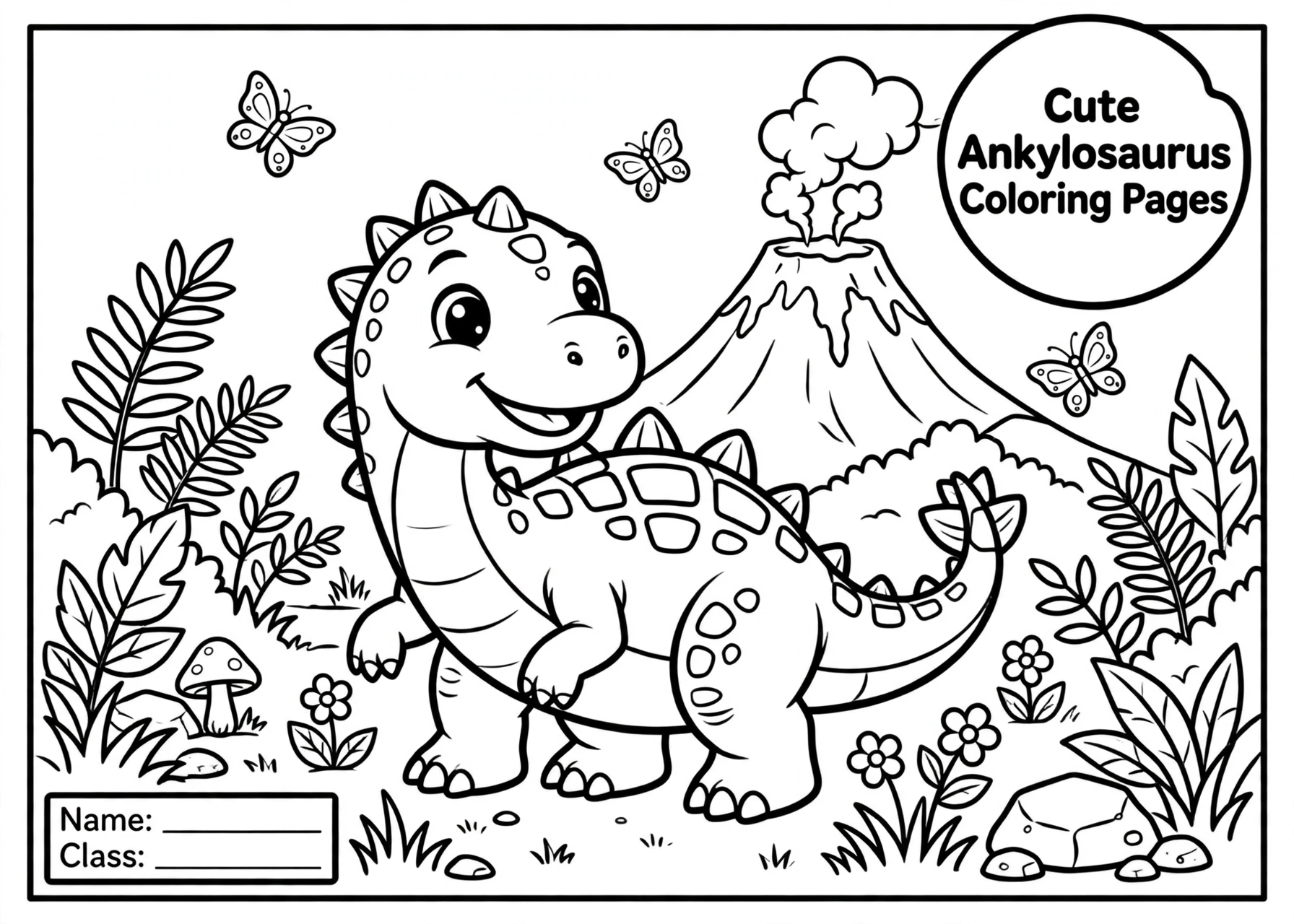
These ancient environments were different from modern landscapes, but children can use familiar nature elements to create a prehistoric setting. If there is open space around the dinosaur, they might draw ferns, low-growing plants, trees, rocks, or patches of grass.
Ferns are particularly suitable for a dinosaur-themed background because they were part of many ancient plant communities. Children can use several shades of green to distinguish the leaves from the surrounding vegetation. Brown and gray can be added to rocks or the ground.
A warm sunset background is another creative possibility. Orange, yellow, and reddish tones can suggest a prehistoric landscape under the evening sky. Alternatively, blue skies and green vegetation can create a brighter outdoor scene.
Parents and teachers can encourage children to think about the difference between dinosaurs and the animals living today. This provides an opportunity to introduce the idea that Earth’s environments have changed considerably over millions of years.
Simple Ways to Make the Activity More Engaging
Cute Ankylosaurus Coloring Pages can be used for more than an individual coloring session. A few simple additions can turn the activity into a small dinosaur-themed project at home or in the classroom.
One idea is to create a dinosaur profile after finishing the picture. Children can give their Ankylosaurus a name and write down a few details, such as what it eats, where it lives, and what makes its appearance special. Since Ankylosaurus was a plant-eating dinosaur, its imaginary favorite food could include ferns and other prehistoric vegetation.
Another activity is to compare its body shape with that of other dinosaurs. Children can notice how the Ankylosaurus had a low, heavily armored body, while long-necked dinosaurs had very different proportions. This comparison makes it easier to appreciate the variety of prehistoric animals.
For a broader nature-themed activity, children can explore a countryside farm and compare familiar farm animals with creatures that lived millions of years ago. The difference between modern agricultural landscapes and prehistoric habitats can also become an interesting conversation.
A dinosaur gallery is another enjoyable option for classrooms. Each child can display a completed picture and introduce their dinosaur using a few simple sentences. Different color choices and background ideas will make the collection varied and personal.
Preparing the Printable for Coloring Time
Before using a downloadable illustration, parents and teachers can check the file format and open its print preview. This makes it easier to see whether the image fits the selected paper and whether the outlines are clearly visible.
Choose coloring materials according to the child’s preference and the available paper. Crayons are convenient for broad spaces, colored pencils offer more control over small armor patterns, and washable markers are useful for children who enjoy stronger colors.
A flat working surface can help prevent the paper from moving while children color. It is also useful to provide a few reference pictures of Ankylosaurus so children can see its distinctive armor and tail club. These references can inspire more realistic coloring choices without limiting their imagination.
For another outdoor-inspired theme, a summer lake scene offers a refreshing change from prehistoric landscapes. Children can explore a peaceful natural setting after spending time imagining the world of dinosaurs.
Bringing a Friendly Prehistoric Giant to Life
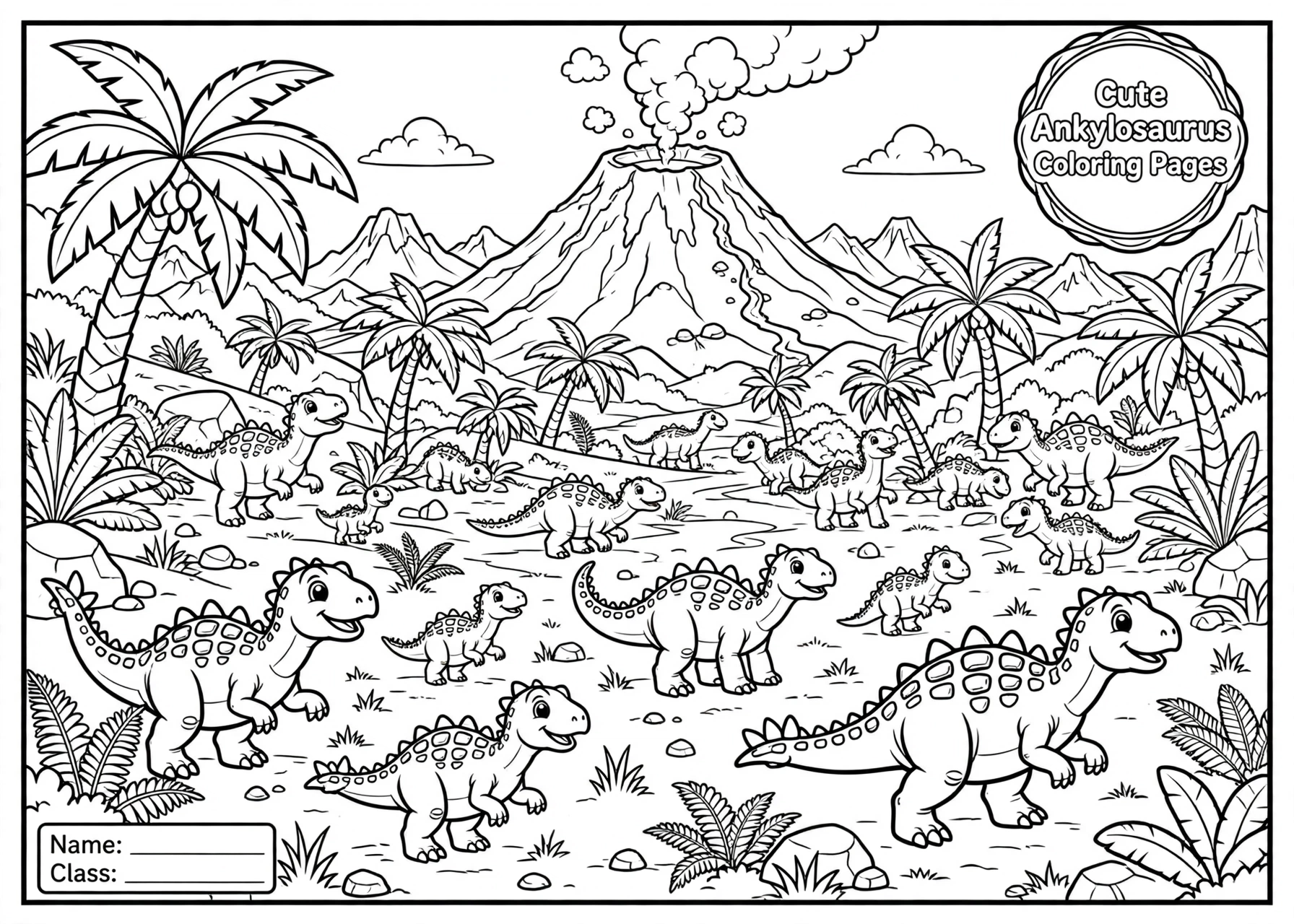
Ankylosaurus stands out because of its unusual combination of body armor, sturdy legs, and heavy tail club. These features provide plenty of visual details for children to explore, while cute illustrations make the dinosaur approachable and fun to color.
Whether children choose earthy natural tones or create a colorful prehistoric character, the activity gives them an opportunity to enjoy dinosaur artwork in their own way. Each finished picture can become a small expression of creativity inspired by one of the most distinctive armored dinosaurs to have lived on Earth.
