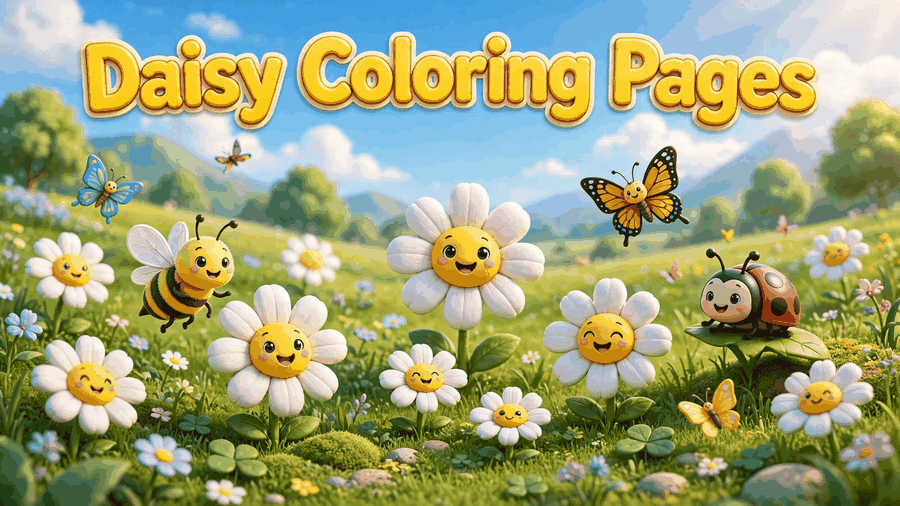
Daisy Coloring Pages introduce children to the simple beauty of cheerful garden flowers through enjoyable creative activities. With their rounded petals and distinctive centers, daisies offer an inviting subject for experimenting with colors, patterns, and imaginative floral scenes.
The Simple Beauty of Daisies on a Coloring Page
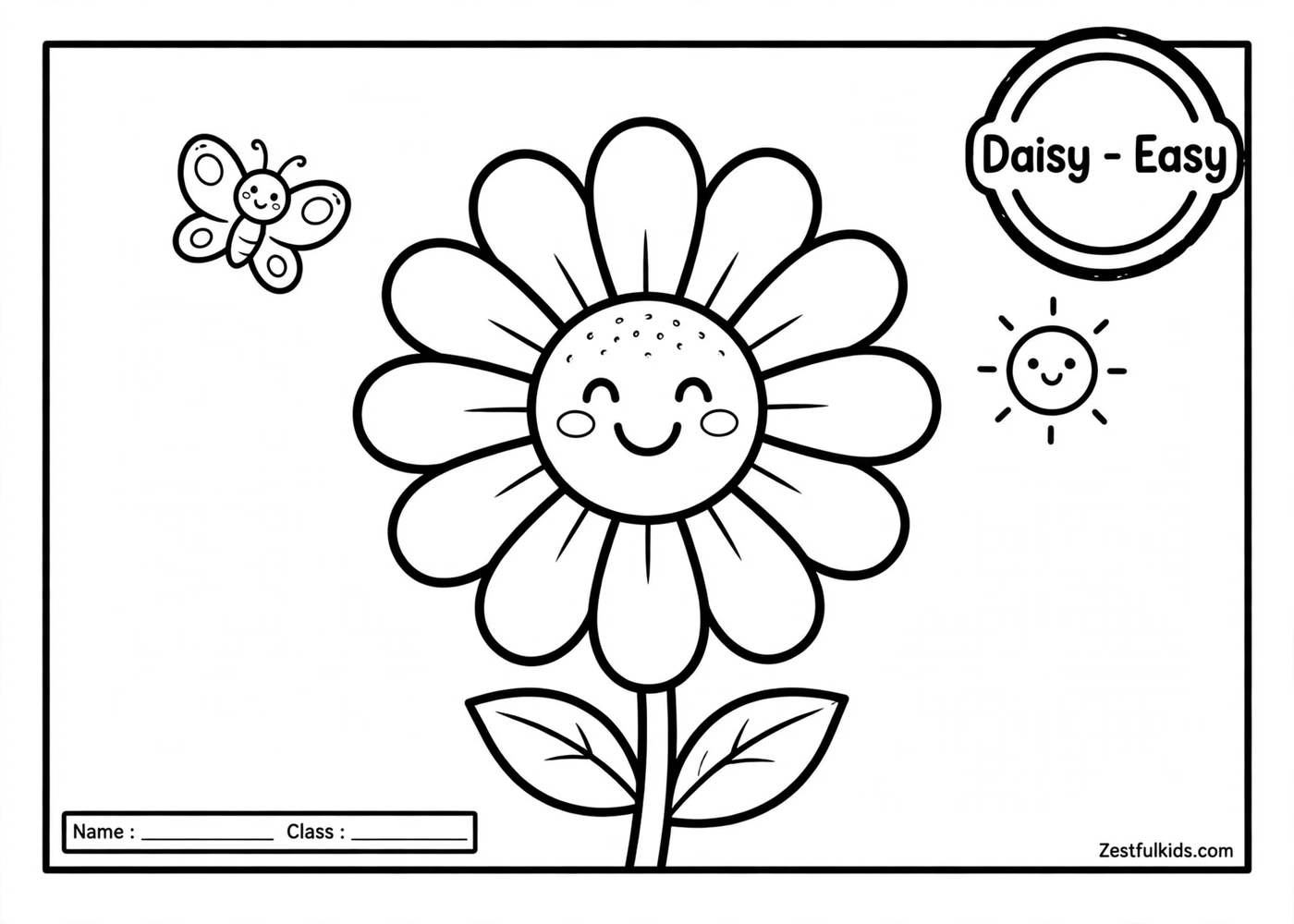
Daisies are among the easiest flowers for children to recognize because of their familiar appearance. A typical daisy has a round central disk surrounded by delicate petals that spread outward like a little sun. Its simple structure makes it an interesting subject for coloring, especially for children who enjoy working with repeated shapes. Although white petals and yellow centers are commonly associated with daisies, children can explore many other color combinations.
One reason daisies work particularly well as an art theme is their recognizable shape. Each petal provides a separate space for coloring, while the center offers an opportunity to experiment with contrasting shades. Children can choose traditional white petals with a yellow center or create flowers in pink, purple, orange, and blue. There is no need to follow a realistic color scheme when the goal is to enjoy making something personal.
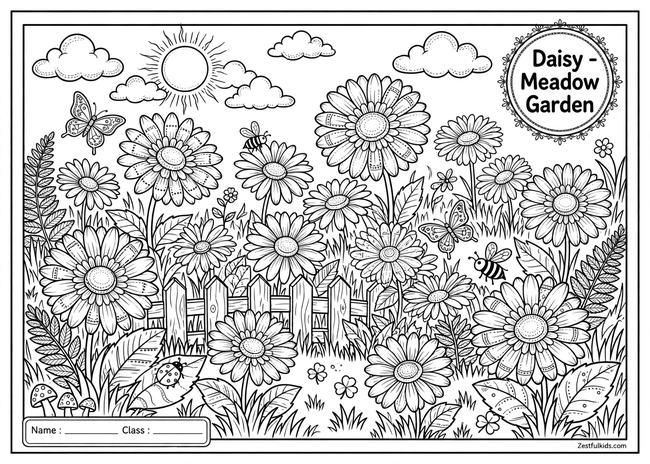
Daisies also bring to mind familiar outdoor settings such as gardens, grassy fields, and sunny meadows. These associations give children plenty of ideas for decorating the space around a flower. They might imagine a butterfly resting nearby, a bee visiting the center, or several flowers growing together among green leaves. Such additions can turn a simple floral illustration into a scene inspired by nature.
Explore Different Ways to Color Daisy Petals
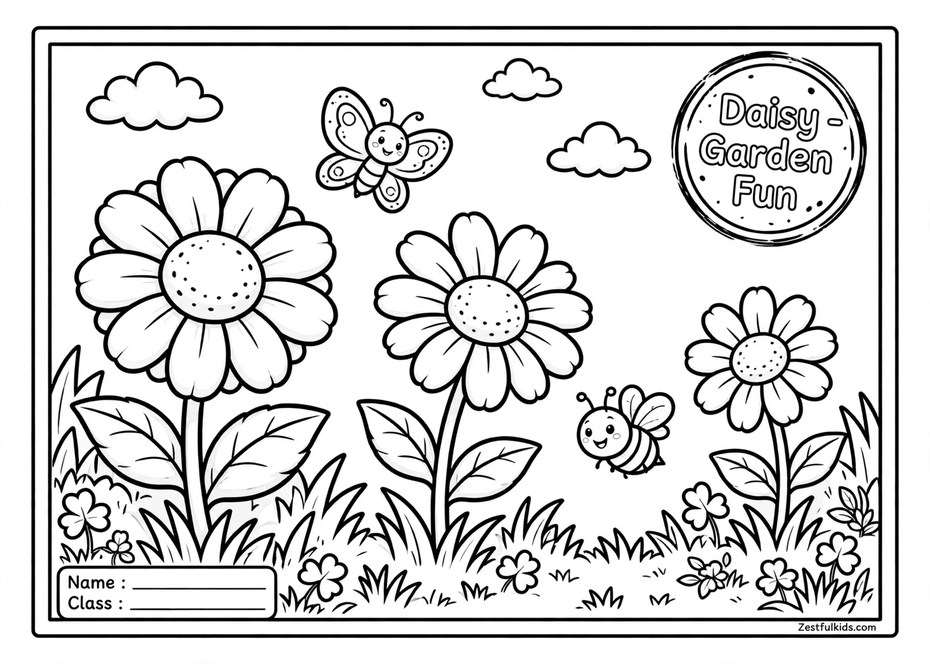
The petals are often the most noticeable part of a daisy illustration, making them a natural starting point for a coloring activity. Children can fill every petal with the same shade or alternate between different colors to create a repeating pattern. For a softer appearance, colored pencils can be used to blend two shades gently. Crayons are another practical choice for covering larger petal areas.
The flower center offers a useful opportunity to introduce color contrast. Yellow, golden orange, and light brown can suggest the appearance of a familiar daisy center. Children who prefer imaginative designs might choose a completely different color, such as purple or turquoise. Adding small dots or gentle shading around the center can also make the flower look more detailed.
Leaves and stems provide another part of the illustration to explore. Different shades of green can help distinguish the leaves from the stem, while a little yellow-green can suggest sunlight falling across the plant. If the design includes several flowers, children can give each one a different color combination. This makes the finished artwork more varied without requiring complicated coloring techniques.
Creative Color Combinations for a Floral Picture
A daisy does not have to look exactly like a flower found in the garden. Children can use familiar colors as inspiration and then develop their own combinations. Parents and teachers can suggest a few palettes without insisting that everyone follow the same example.
Here are some ideas to try:
-
Classic garden daisy: White petals, a yellow center, green leaves, and a natural green stem.
-
Pink spring flower: Light pink petals with a darker pink accent and a warm yellow center.
-
Purple fantasy daisy: Lavender and violet petals surrounding a bright golden center.
-
Sunny orange flower: Yellow and orange petals with a deeper orange center.
-
Rainbow daisy: Alternate several bright colors around the flower to create a playful pattern.
-
Soft pastel daisy: Combine pale blue, peach, pink, lavender, and mint green for a gentle appearance.
Children can also experiment with the background. Light blue can represent an open sky, while green shades can suggest grass beneath the flowers. A few small clouds, butterflies, or additional leaves can make the picture feel like a garden scene. If the original illustration has limited background details, these elements can be drawn in the available space.
Turn Flower Coloring Into a Small Nature Activity
Daisies provide a convenient starting point for noticing the details of real flowers. During a walk in a garden or a visit to a park, adults can invite children to observe the shape of petals, the center of a flower, and the arrangement of leaves. They can then compare those details with the flower they are coloring. This simple connection between observation and art makes the activity more meaningful without requiring a formal lesson.
Another idea is to introduce a small flower-counting challenge. Children can count the petals on a daisy illustration, compare the sizes of different flowers, or identify which ones have the same colors. If several flowers appear together, they can decide which one is the largest or which has the brightest center. These activities can be adjusted according to the child’s interests and the details actually visible in the illustration.
For a more imaginative approach, children can give their flower a name and describe where it grows. Perhaps it belongs in a quiet countryside meadow, a colorful backyard garden, or a magical place filled with unusual plants. They can even create a short story about a butterfly visiting the flower. This gives the coloring session a playful storytelling element while keeping the daisy as the main subject.
Choosing the Right Coloring Tools for Daisy Designs
The best coloring materials depend on the amount of detail in the illustration and the child’s preferred drawing style. Crayons work well for filling broad petals and leaves, particularly when children prefer making bold marks. Colored pencils offer greater control around the flower center and smaller decorative details. Washable markers can produce bright, solid colors, although it is worth checking whether the paper is thick enough to prevent ink from showing through.
For children who enjoy adding texture, colored pencils can create subtle differences between individual petals. Light strokes near the outer edges and slightly stronger shading toward the center can make a flower appear more dimensional. Another option is to use two shades of green on the leaves to create a simple contrast. These techniques are optional, so children who prefer uncomplicated coloring can simply fill each area with their favorite colors.
Before printing a design, check the preview to make sure the flower and its surrounding details fit comfortably within the printable area. Adjust the scaling or margins if necessary to prevent important parts of the illustration from being cut off. Keeping a few different coloring materials nearby also allows children to change tools when they move from larger petals to smaller details.
Combine Daisy Coloring With Other Imaginative Themes
Flower-themed activities can be part of a wider collection of creative printables. After spending time coloring a peaceful garden scene, children might enjoy exploring a completely different subject, such as the fascinating world of dragons. The dragon designs offer an opportunity to move from familiar flowers into imaginative creatures, unusual shapes, and fantasy-inspired artwork.
Seasonal themes can also provide a natural change of pace. During the holiday season, children may enjoy switching from floral illustrations to a charming winter subject. A Christmas owl introduces a festive theme that can inspire different color choices and creative ideas. Alternating between nature, fantasy, and seasonal activities helps keep a collection of printable projects interesting.
Make Daisy Coloring Pages Part of Everyday Creativity
Daisy Coloring Pages can be used during quiet afternoons at home, classroom art sessions, or simple family activities. Parents can let children choose their own color combinations, while teachers can use the flower theme when introducing basic plant vocabulary or discussing springtime gardens. Children can work independently or share their finished pictures with friends and family. Each approach allows them to enjoy the activity at their own pace.
At Duniakreasianak.com, flower-themed printables offer families another way to bring creative activities into everyday routines. A daisy’s familiar petals, cheerful center, and leafy stem provide plenty of opportunities for artistic exploration without requiring complicated instructions. Children can follow traditional flower colors, invent unusual combinations, or add their own garden details. The result is a personal floral creation that reflects their imagination and enjoyment of coloring.
