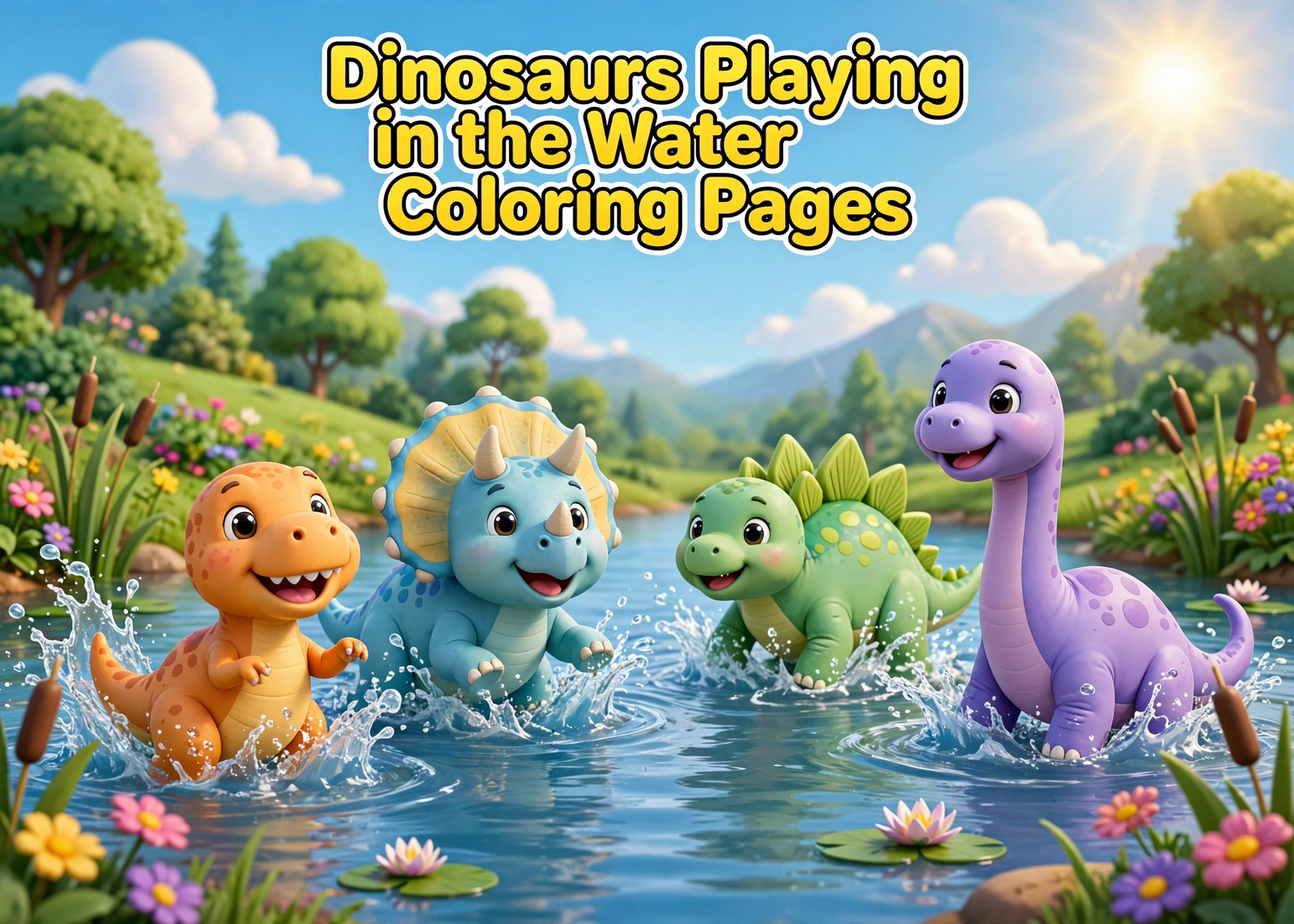
Dinosaurs Playing in the Water Coloring Pages bring prehistoric creatures into a playful aquatic adventure. These fun coloring activities let children imagine dinosaurs splashing, swimming, and enjoying refreshing moments while exploring creative color combinations.
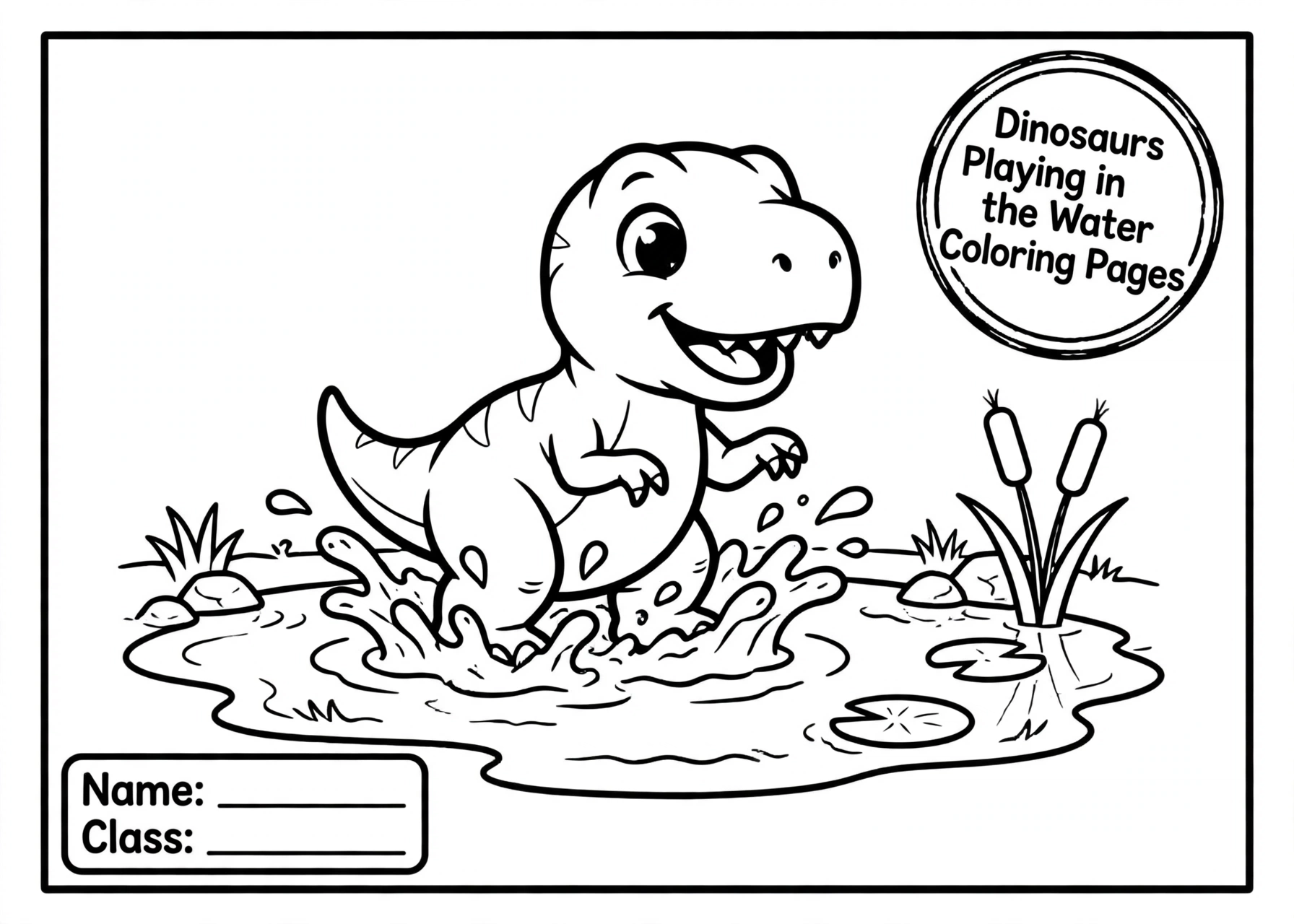
When Prehistoric Dinosaurs Meet Water Adventures
Dinosaurs are often imagined walking through ancient forests, roaming across open plains, or searching for food in prehistoric landscapes. However, imagining them playing in the water creates a completely different kind of adventure. A dinosaur enjoying a splash in a lake or paddling through a shallow pool gives children a cheerful subject that combines their interest in prehistoric creatures with the familiar fun of water activities.
This theme also offers plenty of opportunities to explore different dinosaur shapes and appearances. Children may recognize familiar dinosaurs such as Tyrannosaurus rex, Triceratops, Stegosaurus, and Brachiosaurus. Each has distinctive features that can make the coloring experience more interesting. Large bodies, short arms, horns, back plates, long necks, and powerful tails provide different areas to decorate with colors.
The water setting introduces another visual element. Blue shades can represent a pond, river, or swimming area, while splashes and ripples can be highlighted with lighter tones. Children can decide whether their imaginary dinosaur adventure takes place in a peaceful lake, a tropical waterhole, or a playful prehistoric swimming spot.
Choosing Colors for Dinosaurs and Their Watery Surroundings
One of the enjoyable parts of coloring dinosaurs is that children do not have to follow a single color reference. Scientists study dinosaur fossils to understand their anatomy and characteristics, but the exact colors of many dinosaur species remain uncertain. This leaves plenty of room for artistic imagination.
Children might choose green for a Stegosaurus, dark blue for a Tyrannosaurus rex, or orange for a friendly Triceratops. A Brachiosaurus could have a yellow body with brown spots, while another dinosaur might feature colorful stripes along its back. These combinations can make every finished picture look different.
Water requires a slightly different approach. Light blue works well for shallow water, while darker blue can suggest greater depth. Children can add white or pale blue to represent splashes, foam, and reflections. If the illustration includes waves or ripples, alternating light and dark shades can help distinguish the moving water from the surrounding scenery.
The environment can also contribute to the overall appearance. Green plants, brown rocks, sandy riverbanks, and leafy trees can create a natural prehistoric setting. Children who prefer a more imaginative scene might add colorful flowers, unusual plants, or a bright sunset in the background.
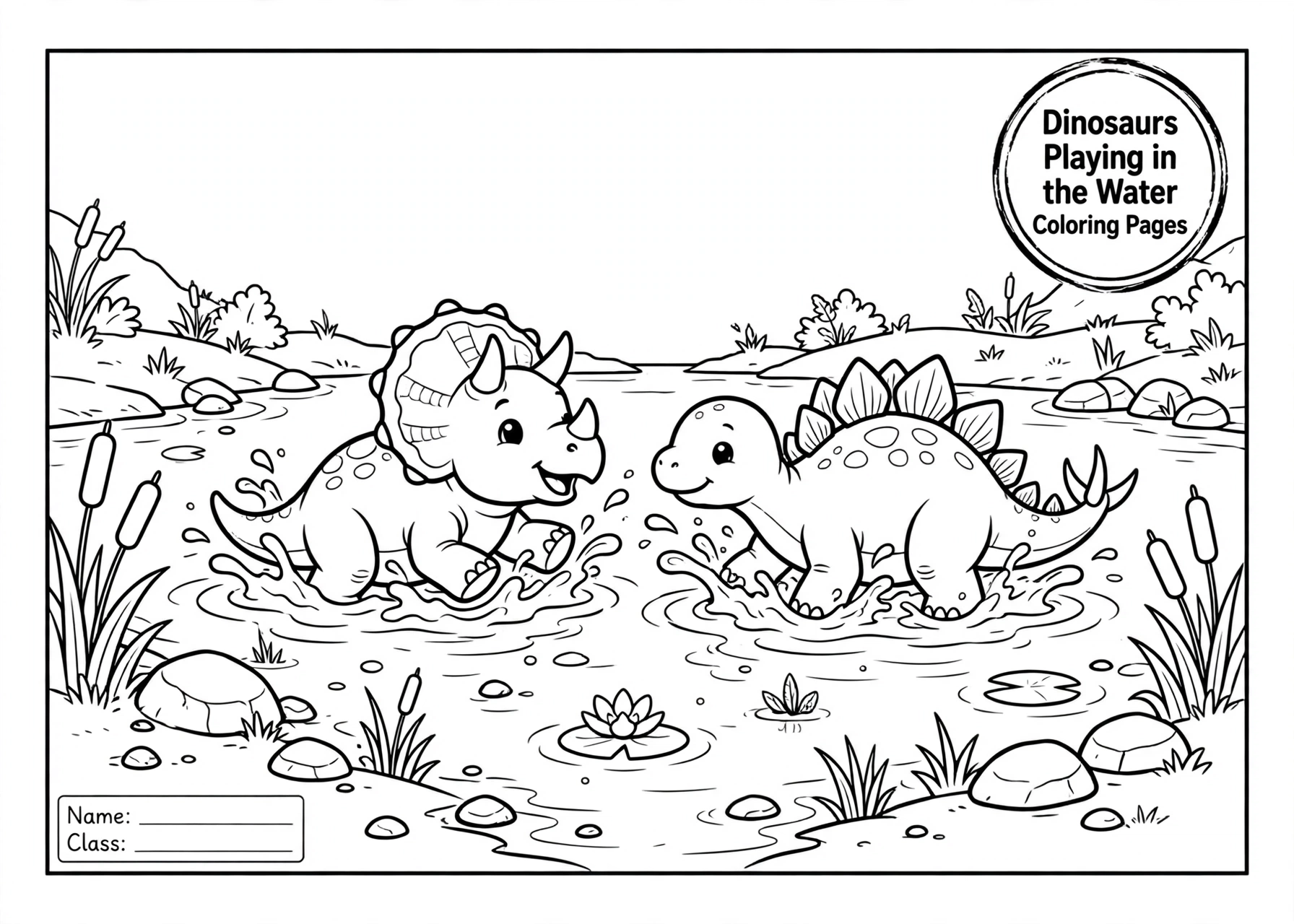
Fun Details to Look for in Dinosaur Water Scenes
A dinosaur playing in water can offer more than one large shape to color. Small visual details often make the activity more engaging, especially when children take time to notice how different parts of the illustration fit together.
Here are some optional details to explore when they appear in a design or when children want to add their own ideas:
- Water splashes: Use light blue, white, or turquoise to make splashing water stand out.
- Dinosaur skin: Experiment with green, brown, orange, purple, or patterned combinations.
- Back plates and horns: Choose contrasting shades to make distinctive dinosaur features noticeable.
- Water plants: Add different greens to leaves, reeds, and other vegetation.
- Rocks and riverbanks: Use gray, beige, or brown to create a natural outdoor atmosphere.
- Ripples and reflections: Combine several blue shades to suggest movement across the water.
Children can also invent a small story around the picture. Perhaps a dinosaur is learning to swim, another is cooling off on a warm prehistoric afternoon, or a group of dinosaurs is enjoying a playful water adventure together. These ideas give the illustration a personal meaning without requiring additional materials.
A Creative Opportunity to Discover Dinosaur Types
Although the main focus is a fun water adventure, the theme can also introduce children to different dinosaur characteristics. Parents and teachers can use familiar dinosaur names to encourage simple conversations about how these prehistoric animals looked and lived.
For instance, Triceratops had three facial horns and a large bony frill around its head. Stegosaurus is recognized by the plates along its back and the spikes on its tail. Brachiosaurus had a long neck and a body supported by four strong legs. Tyrannosaurus rex, meanwhile, had a large head, powerful hind legs, and comparatively small forelimbs.
Not every dinosaur was adapted to an aquatic lifestyle, so it is helpful to explain that the water-play setting is an imaginative activity rather than a claim about how these particular dinosaurs behaved. Children can enjoy the fantasy while still learning a few accurate facts about prehistoric animals.
For a different kind of imaginative setting, families can also explore a Christmas house scene. It offers a change from prehistoric adventures and introduces seasonal details that children can decorate with their own favorite colors.
Turn the Coloring Activity into a Small Prehistoric Adventure
A coloring session can become more engaging when children are invited to make creative decisions about the scene. Instead of simply filling every area with color, parents and caregivers can suggest a few playful challenges.
One idea is to create a colorful dinosaur character. Children can choose a main body color, add contrasting patterns, and decide whether the dinosaur has spots, stripes, or unusual markings. They might even give their dinosaur a name and describe its favorite place to play.
Another activity is to design the surrounding water. Children can decide whether the water is part of a quiet pond or a fast-moving stream. They can add imaginary water plants, small stones, or floating leaves if the available space allows. A simple blue background can become a much more interesting environment with a few thoughtful details.
For a group activity, each child can choose a different dinosaur and use a unique color combination. Once the pictures are finished, they can be displayed together as an imaginary prehistoric water park. Children can describe their characters and explain what makes each dinosaur different.
Selecting Coloring Materials for Different Dinosaur Features
The choice of coloring tools can influence how children approach the illustration. Crayons are useful for filling larger areas, such as dinosaur bodies and open water spaces. Colored pencils offer more control when working on small details, including facial features, scales, horns, and patterns. Washable markers can produce brighter colors for children who enjoy bold-looking artwork.
Combining different shades can also make the dinosaur illustrations more interesting. A light green body with darker green patches can create a simple pattern, while a blue dinosaur might have a lighter-colored belly. Children can use different shades of blue for water and leave small areas white to represent splashes or reflections.
If the illustration contains many small details, working from larger areas toward smaller ones can make the process easier. Children can color the dinosaur first, followed by the water and any surrounding scenery. There is no need to rush; the activity can be completed in several short sessions if necessary.
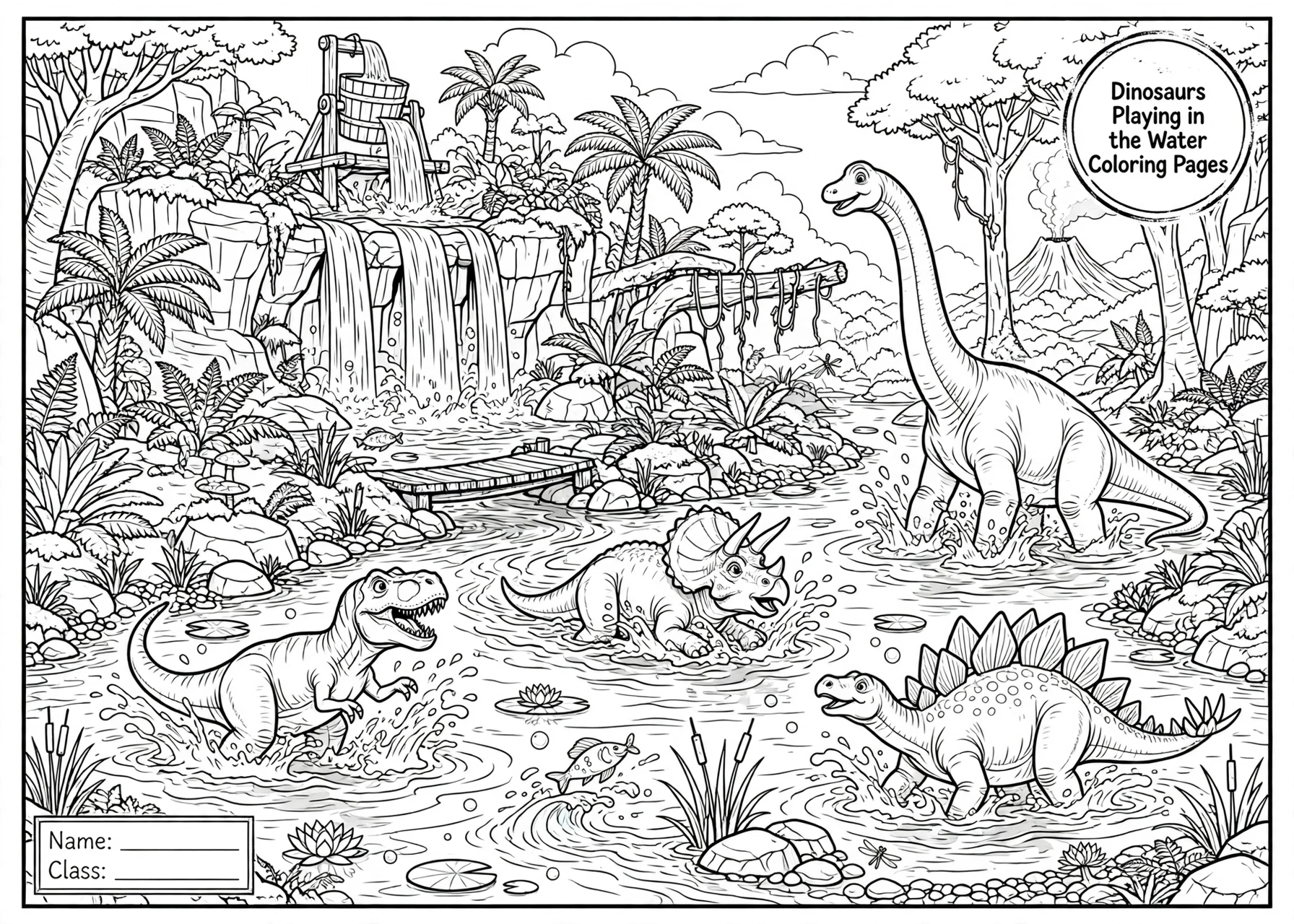
Enjoy Prehistoric Water Adventures at Home or School
Dinosaurs Playing in the Water Coloring Pages can be incorporated into many everyday creative activities. Parents may offer them during a quiet afternoon, while teachers can include dinosaur-themed artwork in classroom sessions about prehistoric animals or imaginative storytelling. Caregivers can also use the pictures as a starting point for conversations about water, habitats, and the differences between ancient and modern animals.
Before printing a selected design, check the print preview to make sure the illustration is positioned properly. Prepare suitable paper and coloring materials according to the tools children will use. A spare sheet underneath the page can be helpful when working with markers.
Children who enjoy seasonal activities may also like exploring an Easter egg hunt scene. Its playful details provide another opportunity to experiment with patterns, decorations, and cheerful color combinations.
A dinosaur playing in the water brings together two enjoyable themes: prehistoric creatures and refreshing outdoor adventures. From choosing unusual dinosaur colors to creating imaginary lakes and splashing effects, children have plenty of ways to make each illustration their own. The result is a creative activity that combines playful storytelling with the simple pleasure of coloring.
