
Fighter Jet Coloring Pages let children explore the shapes, markings, and impressive designs of military aircraft through creative coloring. These printable activities offer an engaging way to discover aviation-inspired details while imagining the skies above.
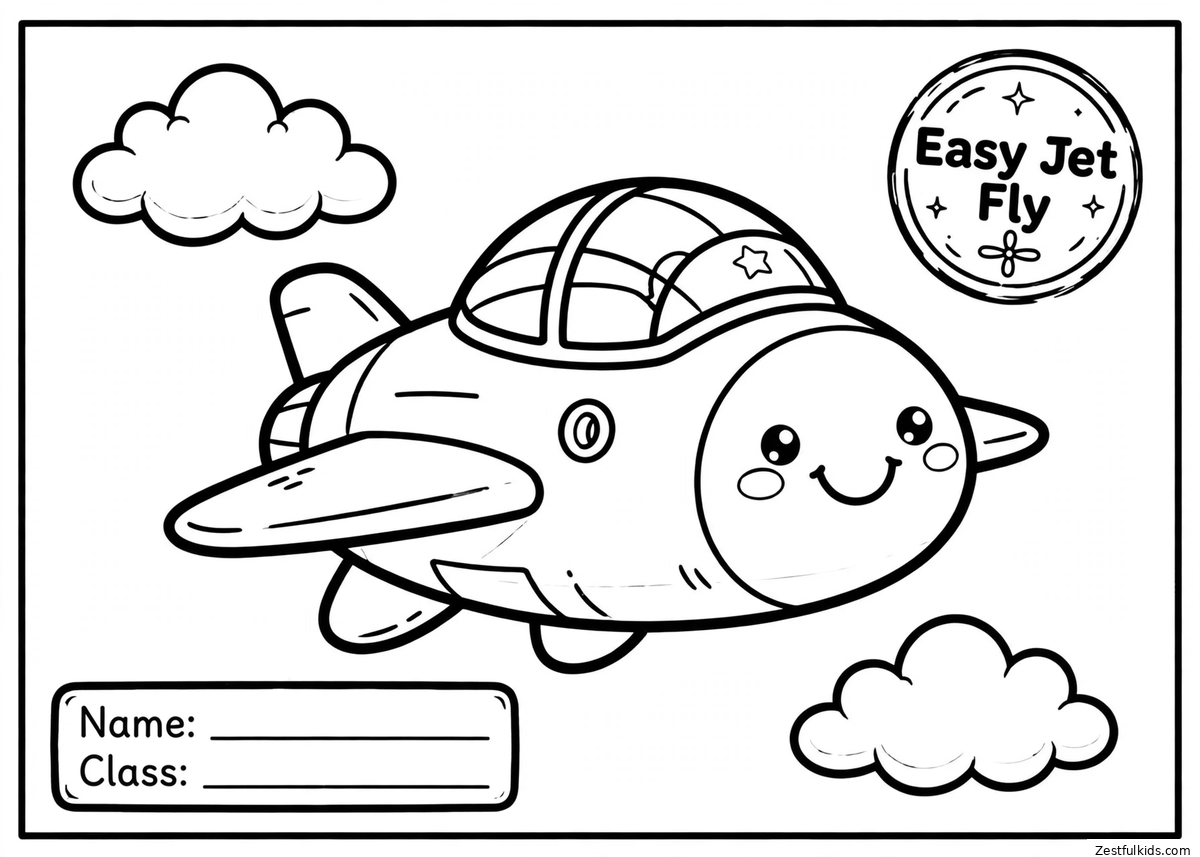
Exploring the Design of a Fighter Jet
A fighter jet has a distinctive appearance that makes it an interesting subject for a coloring activity. Its pointed nose, swept-back wings, tail fins, and streamlined body create a combination of geometric shapes that children can recognize and color in different ways. Unlike pictures of ordinary passenger airplanes, fighter jet illustrations often feature compact bodies and angular wing designs that invite children to pay attention to the aircraft’s overall silhouette. Each section offers an opportunity to experiment with colors while noticing how the different parts fit together.
Fighter Jet Coloring Pages can appeal to children who enjoy airplanes, engineering-inspired toys, airport visits, or stories about pilots. Some may prefer to give their aircraft a realistic appearance, while others might imagine a bright blue jet, a silver aircraft with colorful accents, or a completely fictional design. The goal is not to reproduce a real military aircraft perfectly but to let children explore its visual features through their own artistic choices.
The activity can also introduce simple aviation vocabulary in a natural way. As children color, parents or teachers can point out the wings, cockpit, tail, and nose of the aircraft. If the illustration includes wheels, children can identify the landing gear, which supports an aircraft when it is on the ground. These small observations provide useful context without turning a relaxing art session into a technical lesson.
Choosing Colors for Wings, Cockpit, and Aircraft Body
One of the most enjoyable parts of coloring a fighter jet is deciding how the aircraft should look. A realistic-inspired color scheme might include gray, white, olive green, or muted blue, depending on the design being imagined. Children can use a darker shade along the underside of the wings or around selected edges to create a sense of depth. A lighter shade across the main body can help distinguish different sections of the aircraft.
For a more imaginative approach, encourage children to design a jet that belongs to an invented flying team. They could choose a bright red body, yellow wing tips, and a blue tail, or create a coordinated pattern using two or three favorite colors. If the illustration includes a cockpit, a pale blue or blue-gray shade can suggest glass without requiring realistic reflections. Children can also add small decorative stripes or symbols if the page has enough open space.
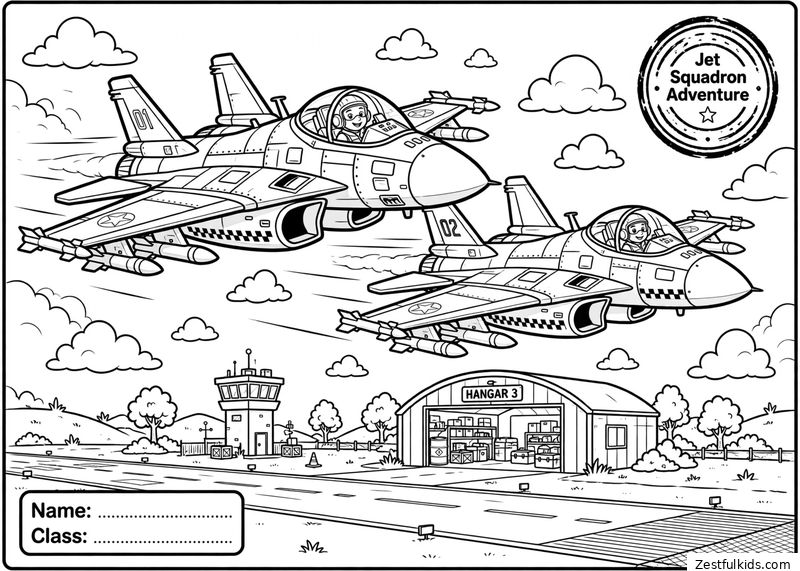
The background offers another way to personalize the picture. A blue sky with soft white clouds creates a familiar flying scene, while a sunset with orange, pink, and purple tones can make the aircraft stand out. Children who prefer a ground-level setting might draw a runway, distant hangars, or simple airport buildings on a separate sheet. These additions are optional, especially when the original illustration already contains background details.
Rather than selecting every color before starting, children can begin with the main aircraft body and make additional decisions as the picture develops. This approach gives them time to see which colors work well together. It also allows them to change their plans if a particular combination looks different on paper than it did in their imagination.
Learning About Aircraft Through Visual Details
Coloring provides a natural starting point for discussing the basic parts of a fighter jet. The wings help generate lift, while the tail surfaces contribute to stability and control. The cockpit is where the pilot sits, and the pointed front section is commonly called the nose. These features can be introduced with simple explanations that match the child’s interest and the details visible in the illustration.
Children may also notice that aircraft are designed for different purposes. Passenger airplanes carry people between destinations, cargo planes transport goods, and fighter jets are military aircraft designed primarily for air-to-air combat and other military missions. A coloring activity does not need to explore weapons or combat in detail to help children understand that different aircraft have different roles. Adults can keep the conversation focused on flight, design, pilots, and the engineering involved in aviation.
Another useful activity is comparing the fighter jet with an ordinary passenger airplane. Ask children to look at the wing shapes, body proportions, and tail arrangements in pictures of the two aircraft. They can then draw a simple comparison on another sheet, labeling the features they recognize. The exercise encourages careful observation while keeping the emphasis on visual differences rather than memorizing technical information.
Turn the Finished Picture into an Aviation Adventure
After coloring the aircraft, children can invent a short story about a fictional pilot preparing for a flight. The pilot might be checking the weather, following a planned route, or practicing a safe landing at an airfield. Children can name their imaginary aircraft and decide where it is traveling, then draw a map showing clouds, mountains, coastlines, or other landmarks along the route.
For a classroom activity, each child could create a different aircraft design and explain the colors or markings they chose. One child might design a silver jet with blue stripes, while another might prefer a green aircraft with a bright orange tail. Displaying the pictures together creates an opportunity to discuss how the same basic subject can produce many different artistic results.
Families can also connect the activity with other kinds of aircraft and imaginative vehicles. Children might compare the shape of a fighter jet with that of a helicopter or a passenger airplane, then draw their own flying machine using features inspired by several designs. This is a creative drawing challenge rather than a request to construct a technically accurate aircraft, so unusual wings, colorful engines, and fictional features are welcome.
Bring Prehistoric Adventures into the Same Creative Session
Children who enjoy machines and unusual shapes may also like exploring creatures from prehistoric times. A dinosaur and a fighter jet belong to very different worlds, but both offer distinctive outlines and interesting areas to color. For another printable activity, families can explore these cute Brachiosaurus designs. The long neck and substantial body of a Brachiosaurus provide a visual contrast to the narrow body and angular wings of a jet.
The two themes can inspire a simple storytelling challenge. Children might imagine a fictional museum where a model aircraft is displayed beside a dinosaur skeleton, or create a make-believe adventure in which a pilot flies over a landscape inhabited by prehistoric animals. The story can remain entirely imaginary, with no need to suggest that fighter jets and living dinosaurs existed during the same period. This distinction also gives adults an opportunity to separate creative fantasy from information about the past.
Using different printable subjects in one session can help keep an art table interesting. Children can alternate between the aircraft and dinosaur pictures, choosing different colors and techniques for each. The aim is to enjoy the process of creating rather than finish every page at once.
Practical Tips for Printing and Coloring
Before printing a fighter jet illustration, check the preview to make sure the aircraft fits comfortably within the printable area and that its outlines are not cut off. Select the paper size supported by the file and printer settings instead of assuming that every design uses the same dimensions. Standard printer paper generally works for crayons and colored pencils, while thicker paper may be preferable for some markers if the printer supports it.
Choose coloring tools based on the amount of detail in the illustration. Colored pencils can help children work around narrow wing edges and small cockpit details, while crayons are useful for larger areas of the aircraft body and sky. Washable markers offer stronger colors, but testing them on spare paper can help prevent unwanted marks from showing through the page.
A flat workspace and a small selection of colors are usually enough to get started. Children can work on the aircraft first, then decide whether they want to add clouds, a runway, or other background elements. If they prefer to keep the picture simple, leaving the background white is perfectly acceptable.
Fighter Jet Coloring Pages combine aviation-inspired shapes with opportunities for artistic experimentation and imaginative storytelling. Children can choose realistic colors, invent a fictional aircraft, or use the illustration as the starting point for a story about flight. With room for personal choices and a few simple coloring tools, the activity offers an approachable way to explore the visual world of aircraft.
