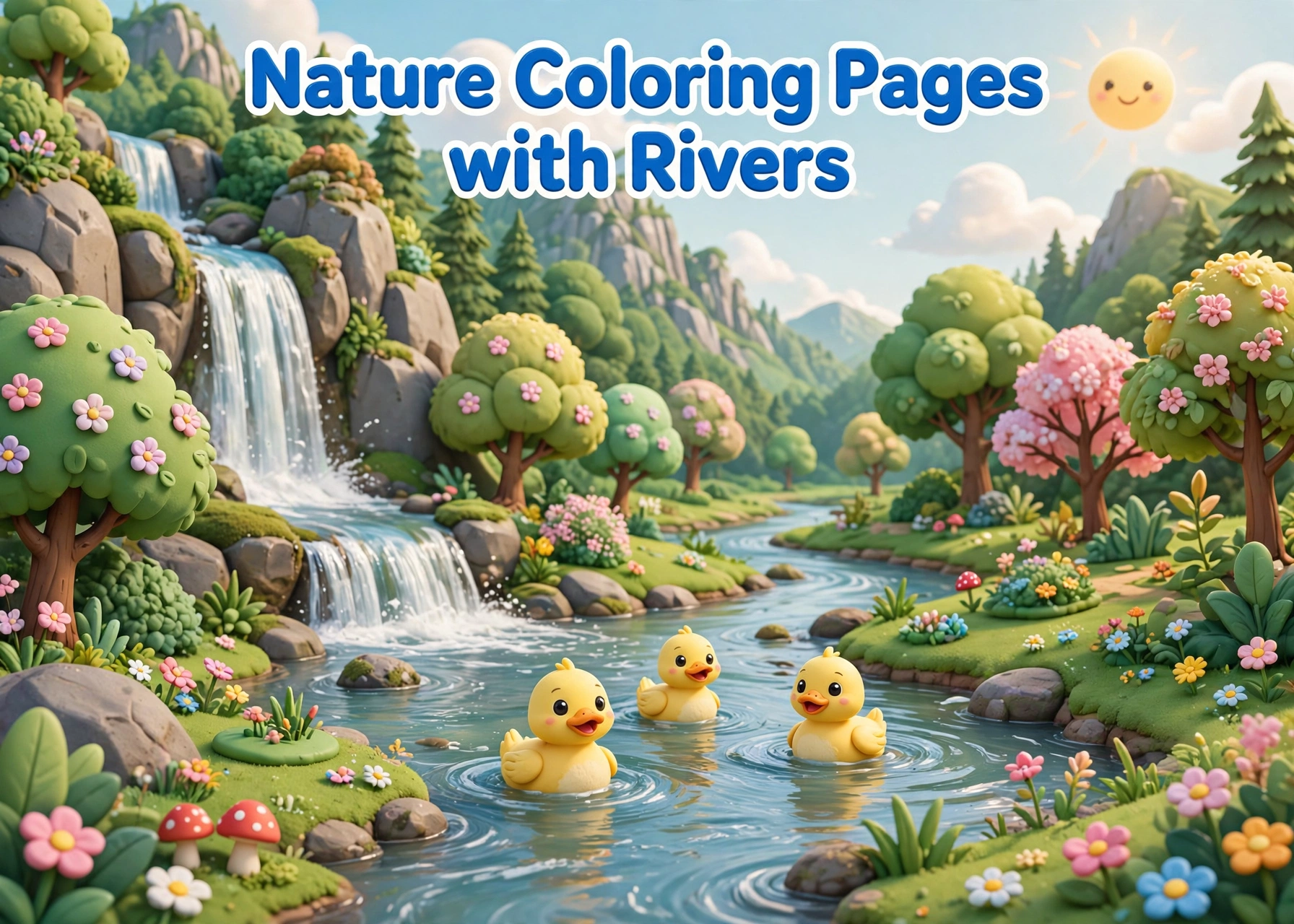
Nature Coloring Pages with Rivers introduce children to the beauty of flowing water, green landscapes, and peaceful outdoor scenery. These nature-inspired activities offer an enjoyable way to explore rivers, surrounding plants, and the details of the natural world through coloring.
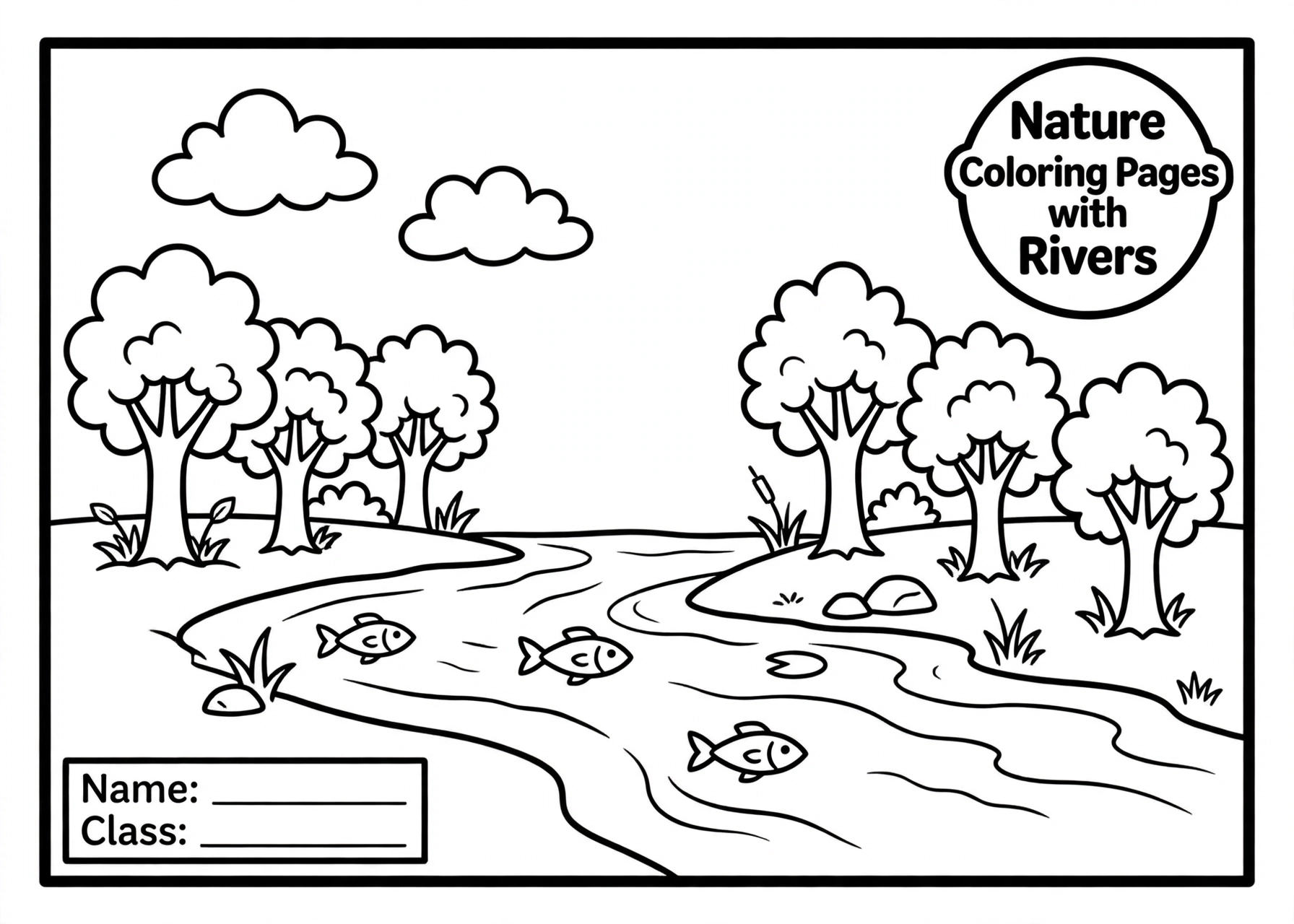
Where Flowing Rivers Meet the Beauty of Nature
A river can completely change the appearance of a landscape. It may wind through green valleys, pass between rocky hills, flow beneath wooden bridges, or travel through forests filled with trees and plants. Unlike a still pond, a river has a sense of movement that makes it an interesting subject for children’s artwork.
Nature Coloring Pages with Rivers bring these outdoor scenes into a creative activity that children can enjoy at home or in the classroom. The combination of flowing water, riverbanks, vegetation, and distant scenery provides different shapes and textures to explore. Children can decide whether they want to create a realistic landscape or an imaginative natural setting.
Rivers also appear in many different environments. Some are wide and calm, while others move quickly over stones and small waterfalls. A river surrounded by tall trees looks very different from one crossing an open meadow. These variations give children plenty of inspiration when choosing colors and imagining the scenery around the water.
Look Beyond the Water: Details That Shape a River Landscape
The river itself may be the main attraction, but the surrounding environment is what makes each landscape distinctive. Children can pay attention to these natural elements before deciding how to color their pictures.
The Flow and Appearance of River Water
Water is often represented with shades of blue, but rivers do not always appear bright blue in nature. Their colors can change depending on the depth, surrounding vegetation, weather, and the materials beneath the surface.
Children can experiment with light blue, turquoise, and deeper blue to create different appearances. A shallow section might use pale blue, while deeper areas can have darker shades. White spaces can suggest sunlight reflecting on the surface or small ripples moving downstream.
For a more imaginative approach, children can create a river with unusual colors. Purple, green, or turquoise water can transform an ordinary landscape into a fantasy setting. There is no need to make every illustration scientifically realistic.
Riverbanks, Rocks, and Pebbles
The edges of a river often contain interesting natural details. Rocks, sand, pebbles, and patches of grass can create a varied landscape around the water.
Brown, beige, and gray are useful choices for coloring stones and riverbanks. Children can combine lighter and darker shades to make individual rocks look different from one another. Small green areas can represent grass growing near the water.
If the illustration includes several stones along the river, children can give each one a slightly different shade rather than coloring them all identically. This creates a more varied appearance without requiring complicated techniques.
Trees and Plants Along the Water
Trees and plants provide contrast against the flowing water. A river passing through a forest may be surrounded by tall trees, bushes, and different types of vegetation.
Children can use several shades of green to distinguish leaves and grassy areas. Tree trunks can be colored brown, reddish-brown, or gray, depending on the appearance they want to create. Small flowers along the riverbank can introduce brighter colors such as yellow, pink, orange, and purple.
These natural details also make it possible to create different seasonal settings. Fresh green leaves can suggest spring or summer, while orange and brown foliage can represent an autumn landscape.
Four Ways to Give a River Scene Its Own Atmosphere
The colors selected for a landscape can change how the entire picture feels. Instead of choosing random shades, children can imagine the weather, time of day, or season they want to represent.
1. A bright summer river
Use clear blue water, fresh green grass, and bright sunlight. Yellow flowers and leafy trees can make the landscape feel warm and lively.
2. A peaceful forest river
Combine dark green trees, brown trunks, gray stones, and turquoise water. This palette creates the impression of a river flowing through a shaded woodland.
3. An autumn riverside
Choose orange, golden yellow, reddish-brown, and deep green for the surrounding plants. The water can remain blue to create a contrast with the warm autumn colors.
4. A magical river landscape
Experiment with lavender skies, colorful flowers, unusual water shades, and imaginative trees. This approach is ideal for children who enjoy creating places that exist only in their imagination.
Children can also add a sunrise or sunset atmosphere if there is enough open space in the illustration. Soft orange and pink shades near the horizon can make the landscape look completely different from a bright midday scene.
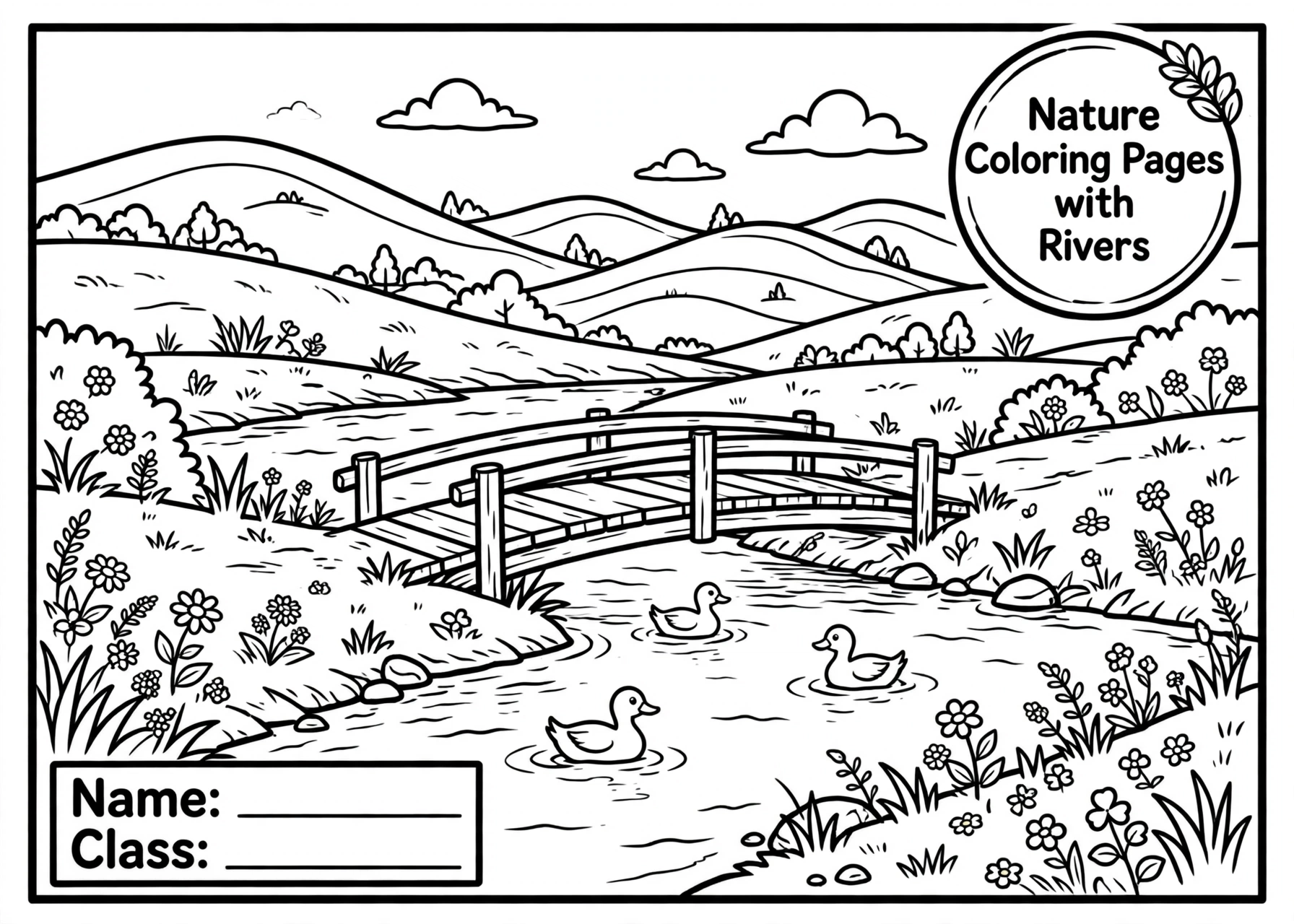
Understanding the Natural World Through River Scenes
A river landscape can inspire simple conversations about how water moves through the environment. Parents and teachers can explain that rivers generally flow from higher ground toward lower areas and eventually join larger bodies of water or other waterways.
The surrounding landscape can provide additional topics for discussion. Trees and plants grow near many rivers, while rocks and soil form parts of their banks. Some animals also depend on freshwater environments for food, shelter, and other parts of their lives.
Children can imagine which creatures might visit a river. Fish may swim beneath the surface, birds might stand near the water, and frogs can be found in suitable wet habitats. These animals can be added as optional creative details if the illustration has room.
A simple follow-up activity is to ask children to draw a small river ecosystem on a separate sheet of paper. They can include the water, plants, rocks, and a few animals they associate with freshwater environments. This gives them another way to explore the relationship between a river and its surroundings.
Coloring Techniques for Water and Natural Textures
River landscapes often contain large areas of water alongside smaller details such as leaves, stones, and branches. Choosing the right coloring tools can make the activity more manageable.
Colored pencils are useful for creating gentle changes between light and dark shades. Children can use short horizontal or curved strokes to suggest the movement of water. Leaving small white sections between blue areas can also create the appearance of reflections.
Crayons work well for filling larger sections of grass, sky, and water. Markers can produce stronger colors for details that children want to emphasize, although adults should check whether the paper is suitable for marker use.
For rocks, try combining gray with a little brown or beige. A lighter section on one side can suggest sunlight, while a darker area can represent shadow. Leaves can also be colored using two or three shades of green to create a more varied appearance.
There is no need to apply advanced techniques to every part of the picture. Simple coloring choices can already make a river landscape look interesting and personal.
Take Inspiration from Other Landscape and Water Scenes
Children who enjoy outdoor scenery may want to explore different environments beyond rivers. A collection of landscape scenes can introduce additional natural settings, from open countryside to beautiful outdoor views.
For a more peaceful water-themed activity, a lily pond with flowers offers a different setting where still water and flowering plants become the main subjects. These themes provide a nice contrast between a flowing river and a quiet pond.
Families and teachers can use different landscape subjects together to create a nature-inspired coloring collection. Children might compare the appearance of the water, surrounding plants, and scenery in each picture.
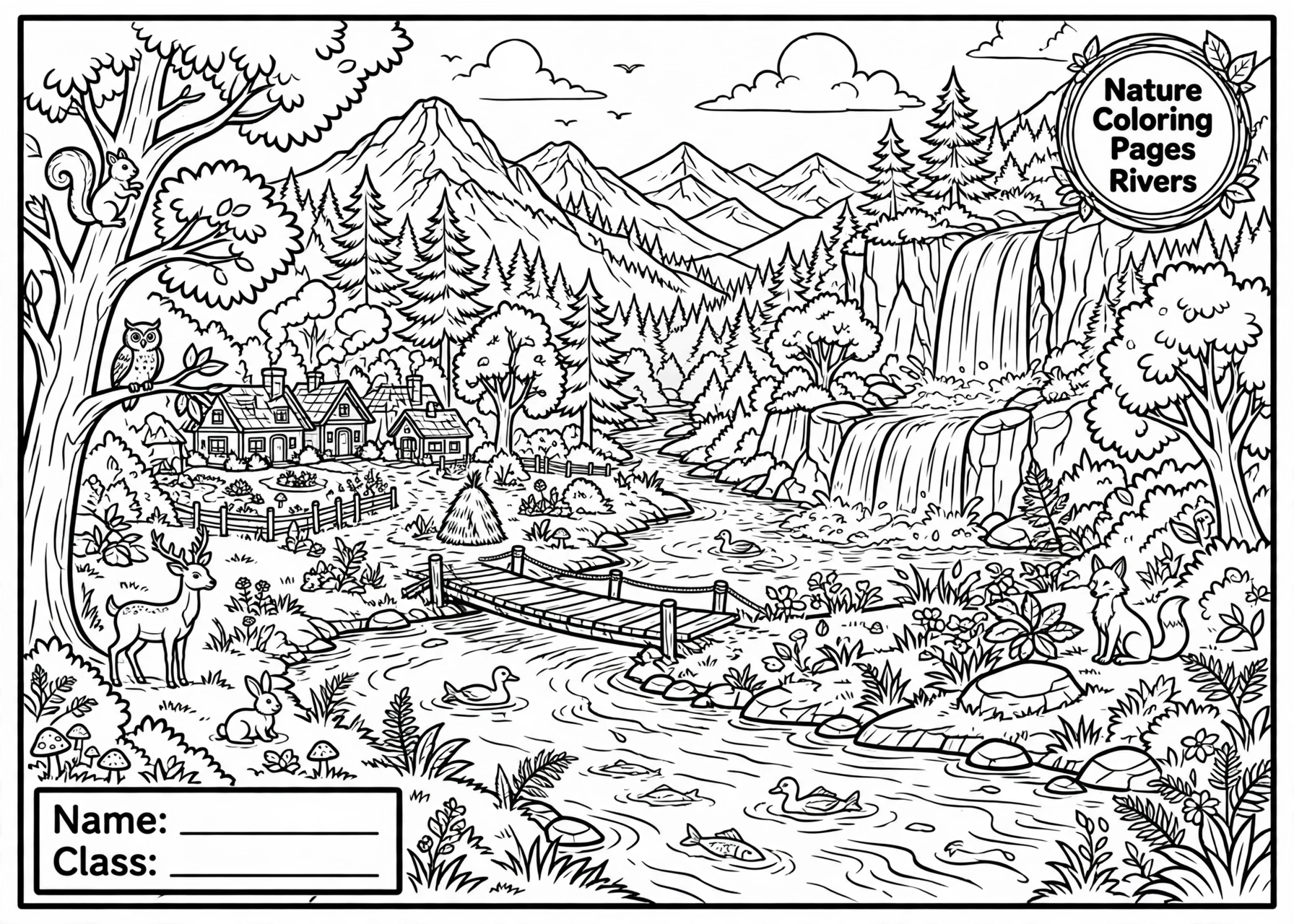
Preparing a Nature Coloring Session
Before printing a selected illustration, check the print preview to make sure the landscape fits properly on the page and that important details are visible. Choose paper that matches the coloring materials children intend to use. Ordinary printing paper is generally suitable for crayons and colored pencils, while thicker paper may be preferable for marker-based activities.
Prepare several shades of blue, green, brown, and gray as a starting selection. Children can add brighter colors for flowers, sunlight, and other details. Allow them to work at their own pace, especially when the illustration contains several small elements along the riverbank.
Nature Coloring Pages with Rivers provide an opportunity to explore flowing water and the landscapes that surround it through creative expression. From peaceful forest streams to wide rivers crossing green valleys, children can use colors and imagination to create their own interpretation of the natural world.
