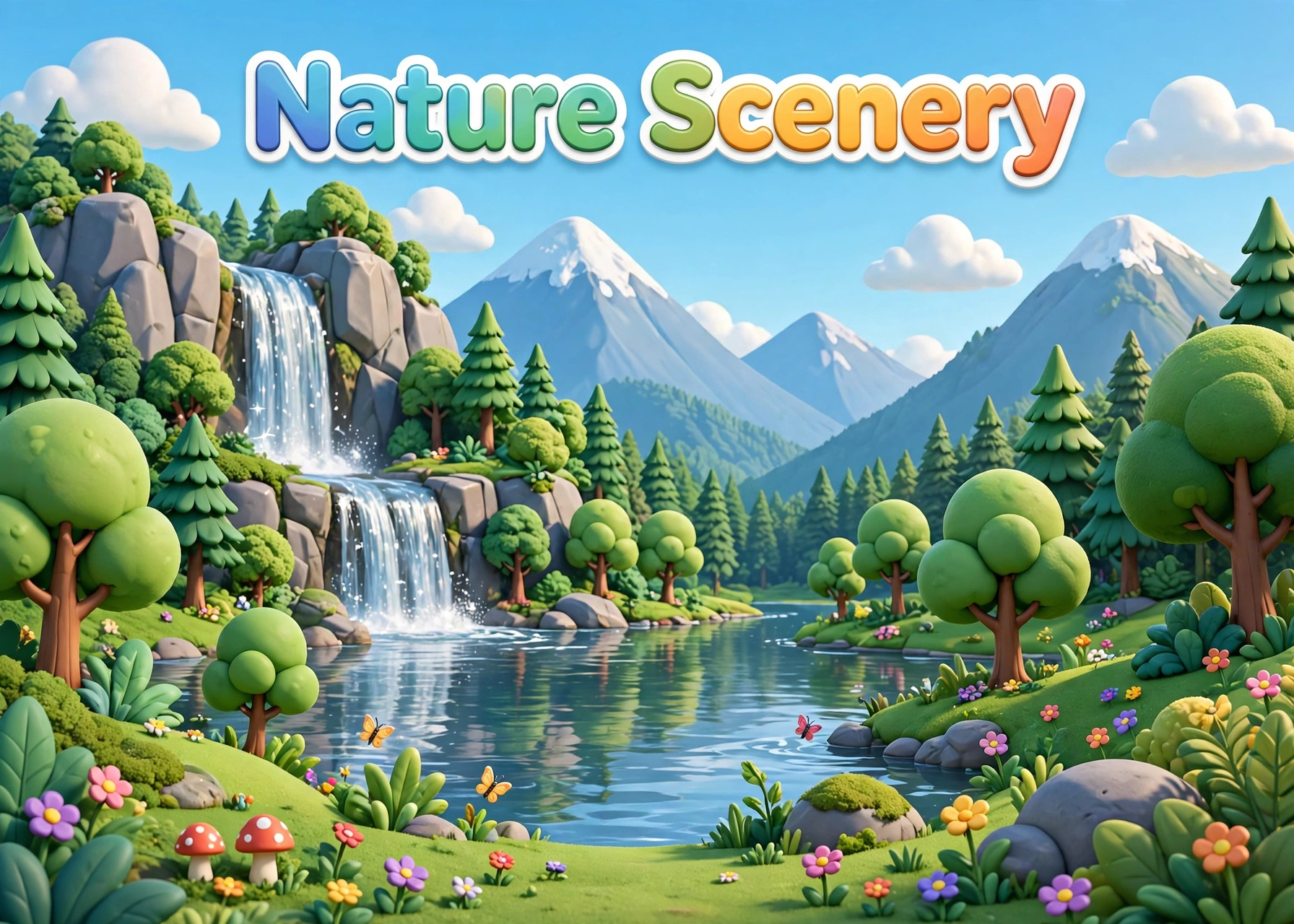
Nature Scenery Coloring Pages introduce children to beautiful outdoor landscapes through creative coloring activities. From rolling hills and leafy trees to rivers, mountains, and open skies, these printable designs offer opportunities to explore natural scenery, experiment with colors, and create imaginative landscapes.
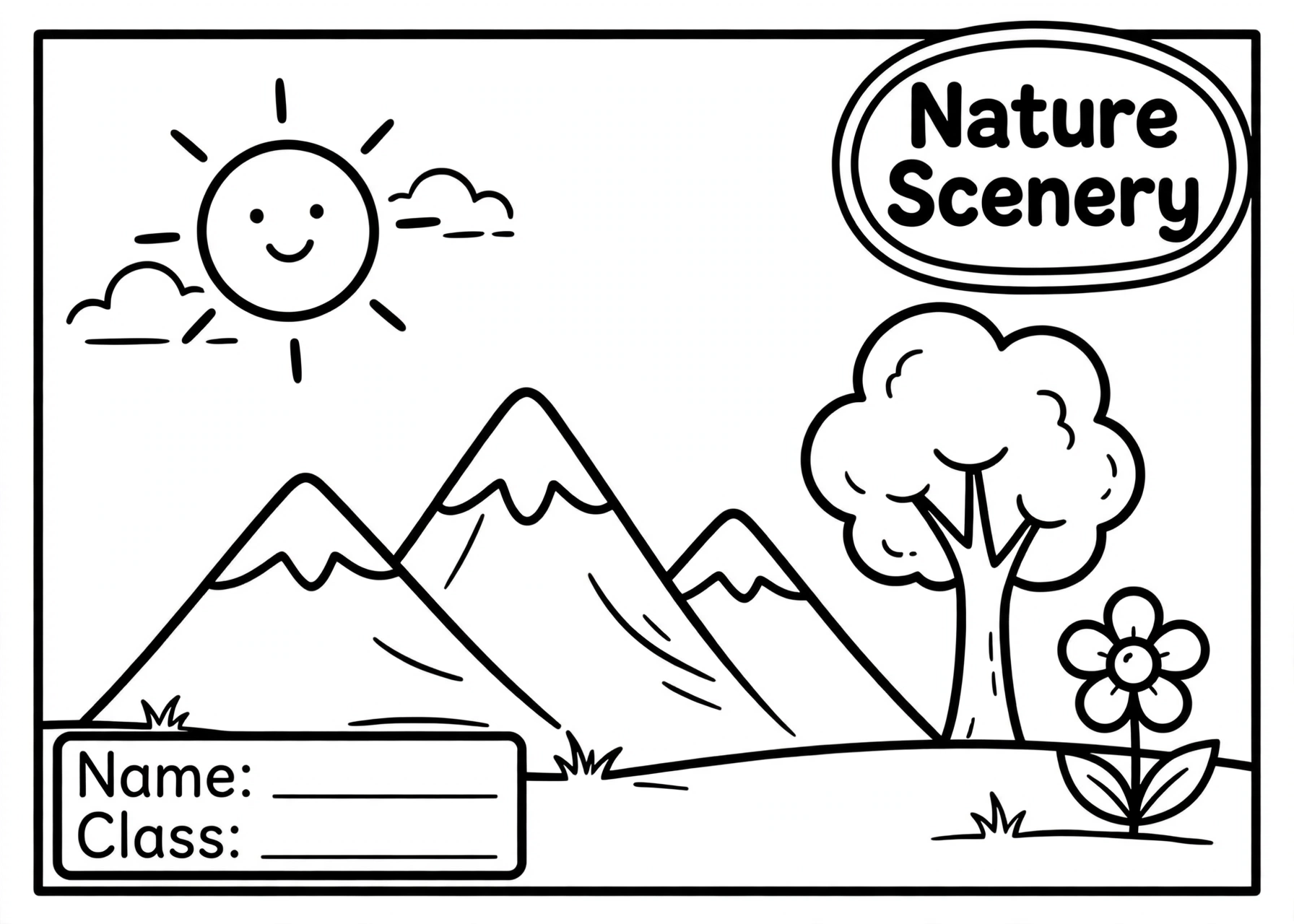
Discovering the Details Hidden in Natural Landscapes
A natural landscape is made up of many elements that work together to create a beautiful outdoor view. Mountains rise in the distance, trees grow along the edges of fields, rivers wind through valleys, and clouds move across the sky. Each element has its own shape and texture, making nature scenery an interesting subject for children to explore through art.
Unlike illustrations that focus on a single character or object, landscape artwork invites children to look at the entire composition. They can decide which parts should attract attention and how different colors can make the scenery feel connected. A distant mountain might use a lighter shade than a tree in the foreground, while a river can create a visual path through the picture.
Natural scenery also changes depending on the environment. A countryside landscape may feature open fields and small houses, while a mountain setting might include rocky slopes and tall trees. Coastal scenery has a different atmosphere, with sandy beaches, waves, and wide horizons.
These differences make landscape coloring suitable for a variety of creative approaches. Children can use familiar natural colors or invent an imaginary environment that does not exist anywhere in the real world.
How to Choose Colors for a Balanced Landscape
Coloring a landscape can be easier when children begin by separating the picture into different areas. The sky, land, plants, water, and distant scenery can each have their own color group. This approach helps children plan their artwork before filling in the smaller details.
The sky is often one of the largest sections. Light blue is a familiar choice for a clear day, while pale orange, pink, and purple can suggest sunrise or sunset. Children can also use gray or darker blue to create the appearance of cloudy weather.
For mountains and hills, green, brown, and gray are useful starting points. Green works well for grassy slopes, while gray and brown can represent rocky surfaces. If the mountains appear far away, lighter shades can help distinguish them from objects closer to the viewer.
Trees and plants offer plenty of opportunities to combine different greens. Dark green can represent dense foliage, while lighter shades can suggest fresh leaves. Children may also use yellow-green or olive tones to create variety across the landscape.
Water can be colored in blue, turquoise, or even green, depending on the imagined setting. Adding a few white spaces can suggest reflections or sunlight on the surface. Children do not need to make every section perfectly realistic; the goal is to create a landscape that reflects their own ideas.
Look Beyond the Main Objects
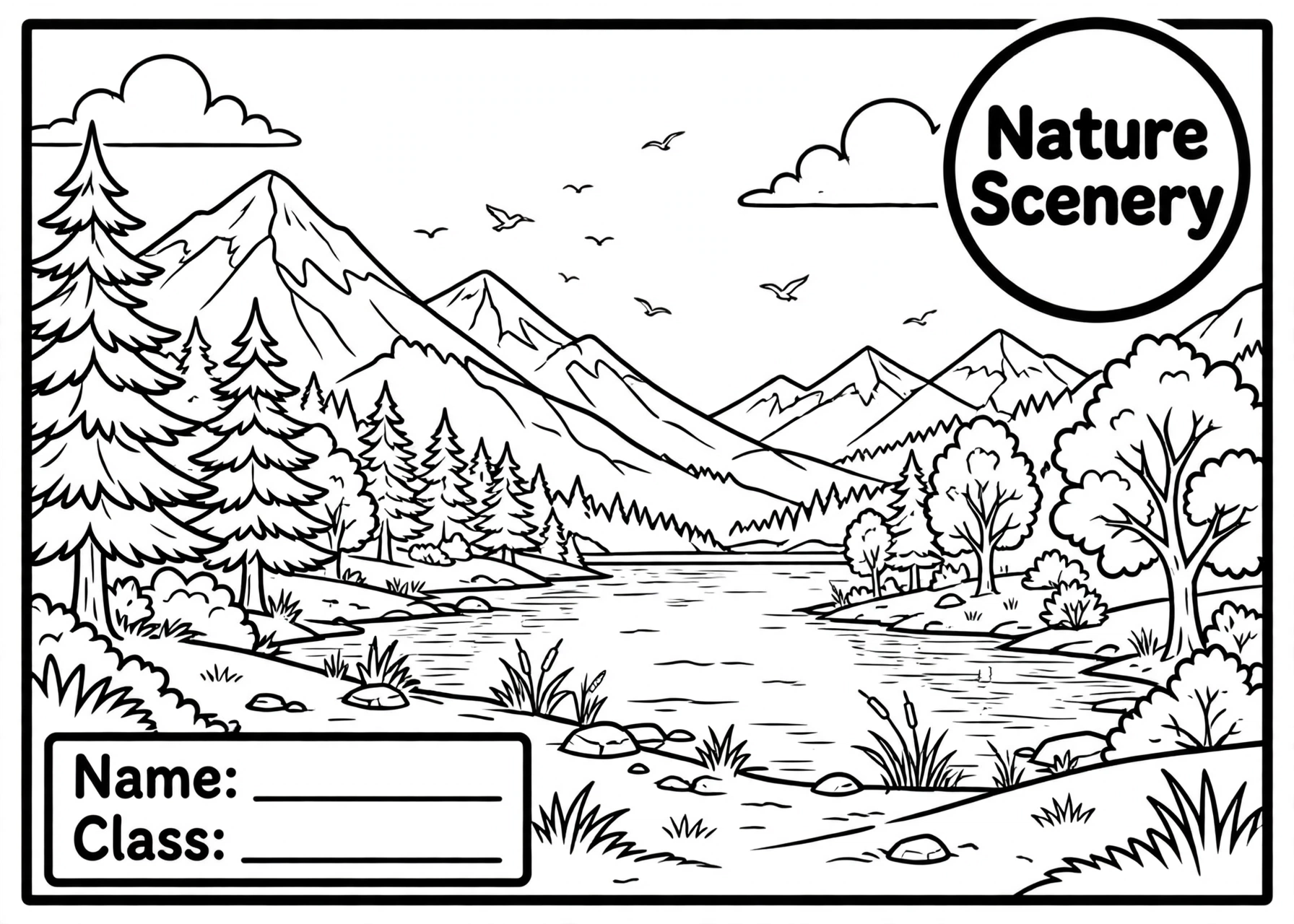
One of the most interesting parts of coloring nature scenery is discovering the smaller details. A landscape may contain tiny plants, distant clouds, rocks, flowers, or other elements that are easy to overlook at first.
Encourage children to examine the illustration before choosing their colors. They can identify the largest objects and then look for smaller features that help complete the scene. This simple observation makes the activity more engaging without turning it into a complicated task.
The position of objects can also influence color choices. A tree in the foreground may have stronger, darker colors, while distant trees can be lighter. Similarly, a nearby riverbank might include visible grass and stones, whereas the far end of the river may appear narrower.
Children who enjoy adding their own details can draw small birds in the sky, flowers along a path, or additional clouds. These additions should remain optional so that the original illustration can still be enjoyed on its own.
Another creative idea is to give the landscape a particular time of day. A morning scene could include a bright sky and fresh green fields, while an evening landscape might use warmer colors and longer-looking shadows. The same scenery can feel completely different depending on the palette.
Explore Different Types of Nature Scenery
Nature does not look the same everywhere. Exploring different environments through coloring can introduce children to a variety of landscapes and the features that make each one recognizable.
Mountain and Forest Landscapes
Mountain scenery often combines tall peaks, sloping hills, trees, and rocky areas. Children can use different shades of green for forest sections and gray or brown for exposed rocks. If the illustration includes snow-covered peaks, white and pale blue can help create a cool mountain atmosphere.
Forest landscapes offer another opportunity to explore natural patterns. Tall tree trunks, overlapping branches, and groups of leaves can be colored using different combinations of green and brown.
Rivers, Lakes, and Coastal Views
Water-based landscapes have their own visual character. A river may wind between grassy banks, while a lake can create a wide open area surrounded by trees or hills. Children can use blue and turquoise for the water, then add green and brown to the surrounding land.
Coastal scenery offers additional choices, such as sandy beaches, waves, rocks, and distant horizons. Warm beige and yellow work well for sand, while different blues can represent shallow and deeper water.
Countryside and Open Fields
Countryside landscapes often feature wide fields, small plants, trees, and open skies. Children can imagine a peaceful rural environment with green grass, flowering plants, or a winding path. They may also add optional details such as butterflies, birds, or a small farmhouse if there is enough space.
For another imaginative outdoor theme, children can explore baby pterodactyl illustrations. This provides a playful way to combine prehistoric creatures with ideas about natural environments.
Turn a Landscape into a Personal Art Project
A nature scenery illustration can become the starting point for a small art challenge. Instead of simply coloring each section, children can choose a theme for their landscape and make decisions based on that idea.
One activity is to create a four-season landscape. Children can imagine how the same environment might look during spring, summer, autumn, and winter. Spring could feature fresh green plants and colorful flowers, while autumn might use orange, red, and golden leaves. Winter can introduce white snow and cool blue shades.
Another idea is to create a landscape using only warm colors or cool colors. Warm palettes include yellow, orange, red, and related shades, while cool palettes use blue, green, and purple. Comparing the finished results can help children notice how color choices influence the atmosphere of a picture.
Parents and teachers can also invite children to give their scenery a name. They might choose The Quiet Mountain Valley, A Sunny Countryside Morning, or The Hidden River Garden. Older children can write a short description explaining what makes their imaginary place special.
For children who enjoy fantasy characters, kawaii dragon illustrations can provide another creative direction. They can imagine placing a friendly dragon in a colorful mountain valley or a magical forest, extending the landscape theme into their own storytelling.
Coloring Materials and Simple Printing Preparation
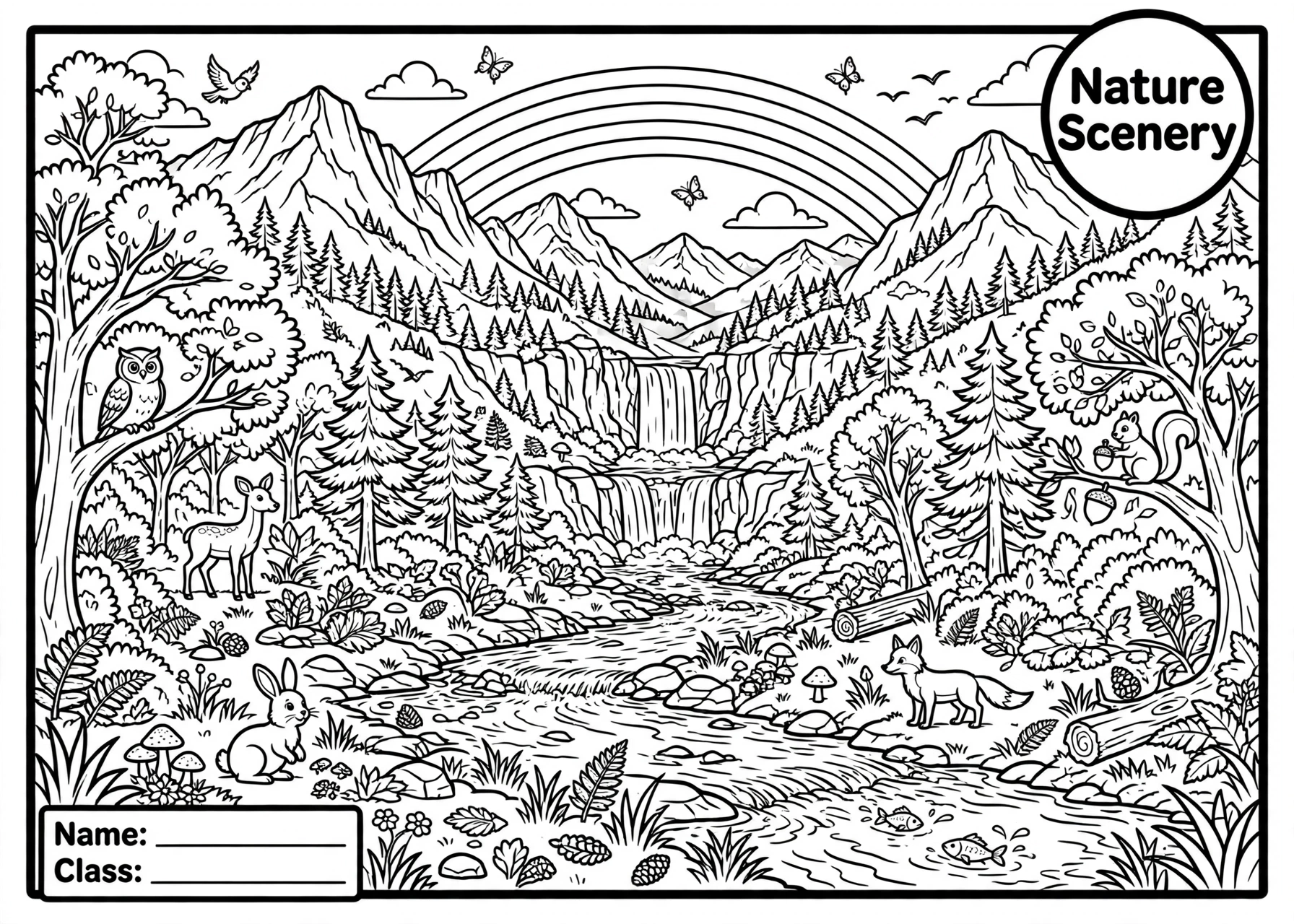
Different coloring tools are useful for different landscape details. Crayons work well for large areas such as skies, fields, and water. Colored pencils are helpful for smaller elements, including tree branches, leaves, distant mountains, and textured ground.
Washable markers can create bright, noticeable colors, particularly in areas where children want stronger contrast. However, adults should consider the paper thickness because some markers may show through thinner sheets. Using another sheet underneath can help protect the working surface.
Before printing, check the available file and review the print preview. Make sure the selected paper size matches the printer settings and that the landscape fits comfortably within the printable area. This helps prevent important parts of the scenery from being cut off.
A comfortable table and neatly arranged coloring materials are usually enough to prepare the activity. Children can work on the largest areas first and finish with smaller details whenever they feel ready.
The completed landscapes can be displayed on a classroom board, bedroom wall, or family art corner. Each picture may represent a different environment, season, or imaginary destination, creating a small collection of nature-inspired artwork.
Nature Scenery Coloring Pages offer more than a collection of outdoor objects to fill with color. They invite children to observe how landscapes are arranged, explore the variety of natural environments, and make creative decisions about the world they want to portray. Whether they choose a peaceful forest, a mountain valley, or a colorful countryside, every finished picture can become a personal interpretation of nature’s beauty.
