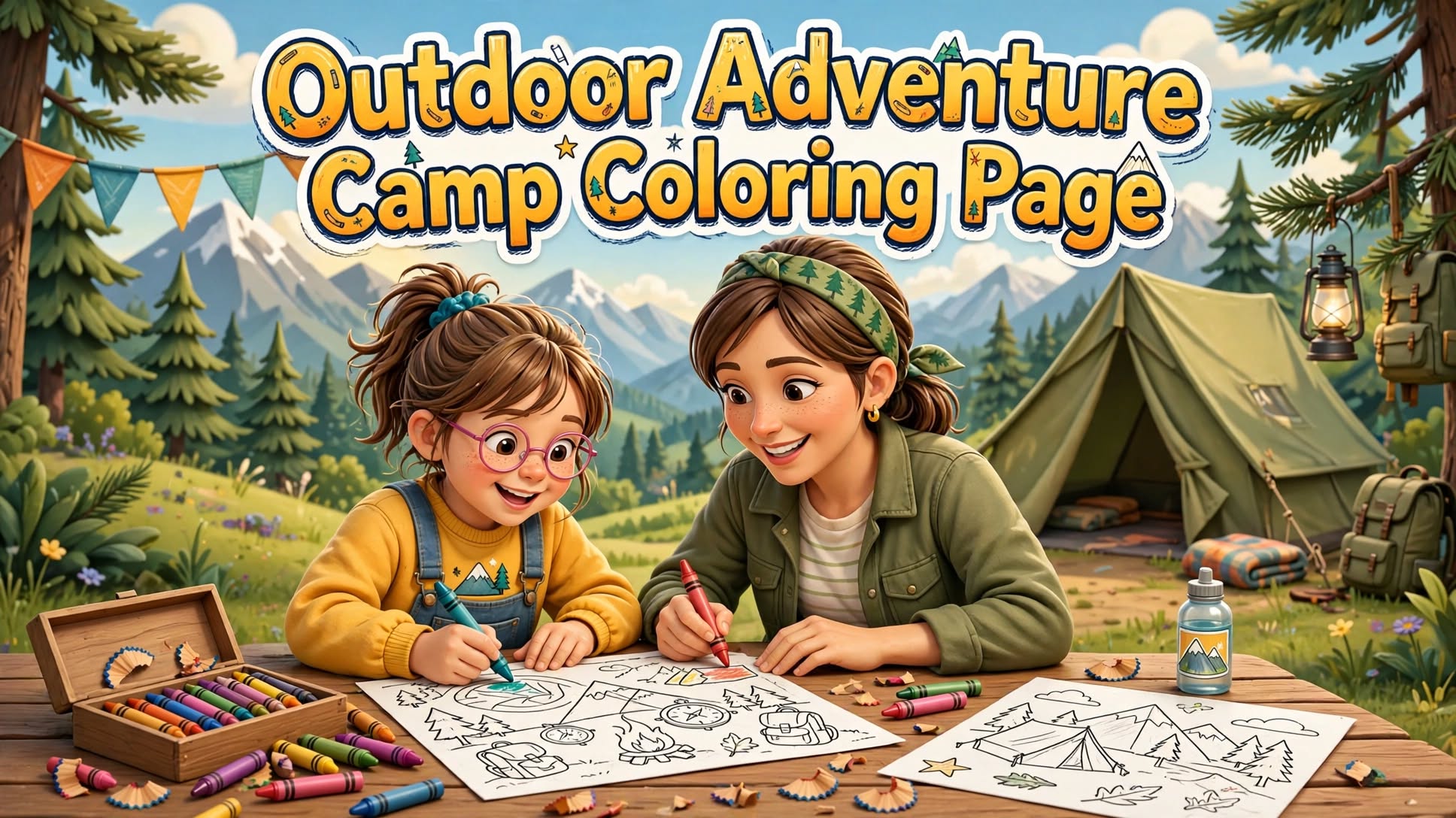
Outdoor Adventure Camp Coloring Page brings the excitement of camping, exploring nature, and spending time outdoors into children’s creative activities. With imaginative coloring ideas inspired by camp life, children can enjoy creating their own outdoor adventure while exploring colors and details.
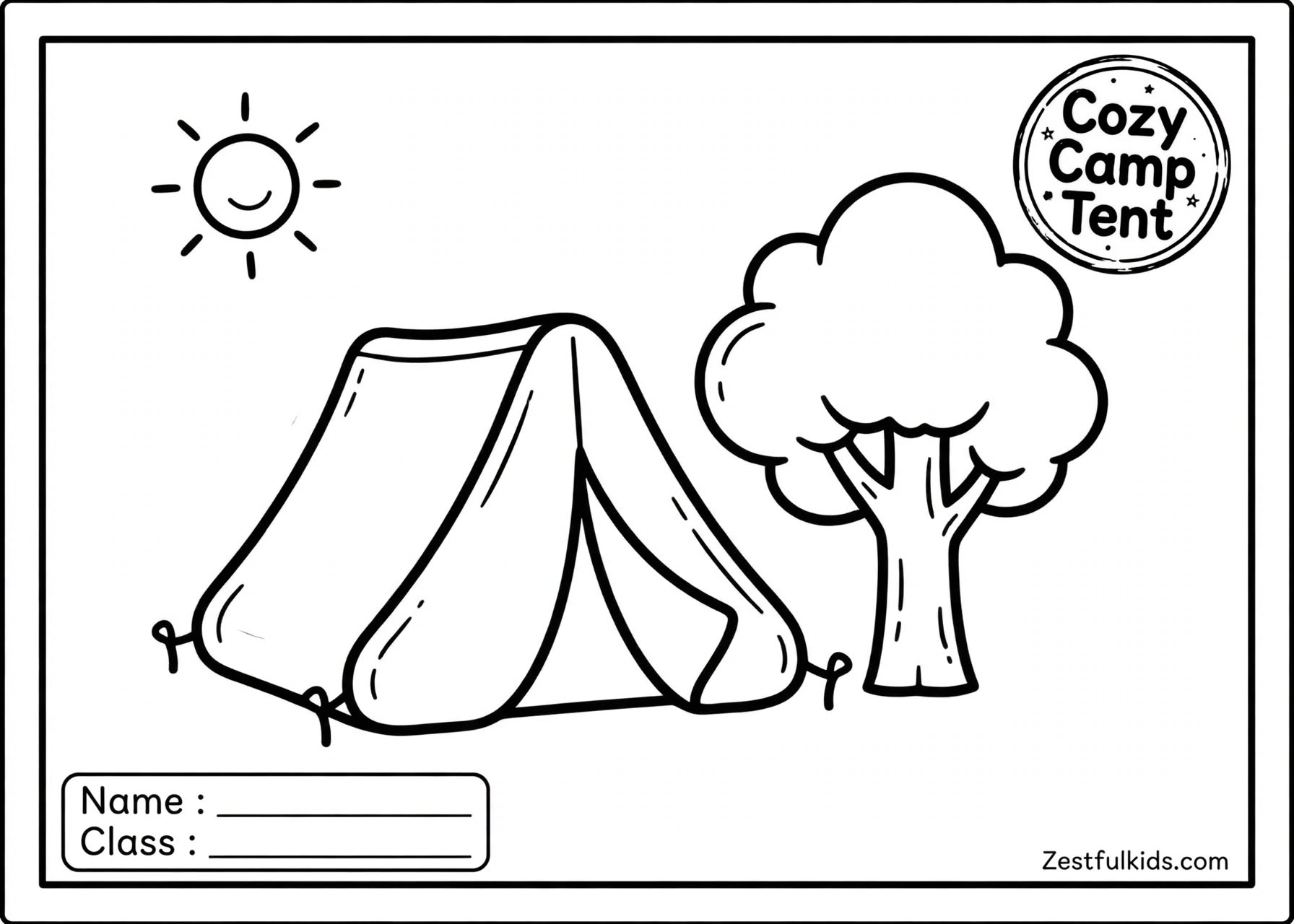
A Little Adventure Begins on the Page
A camping adventure can begin with something as simple as a tent beneath a wide sky. The thought of spending time outdoors, exploring a trail, or sitting around a campsite creates a setting full of possibilities for children’s imagination.
Outdoor Adventure Camp Coloring Page captures the spirit of these experiences through a theme that combines nature, exploration, and outdoor fun. Children can imagine themselves as campers preparing for a trip, discovering a new place, or enjoying a peaceful evening outside.
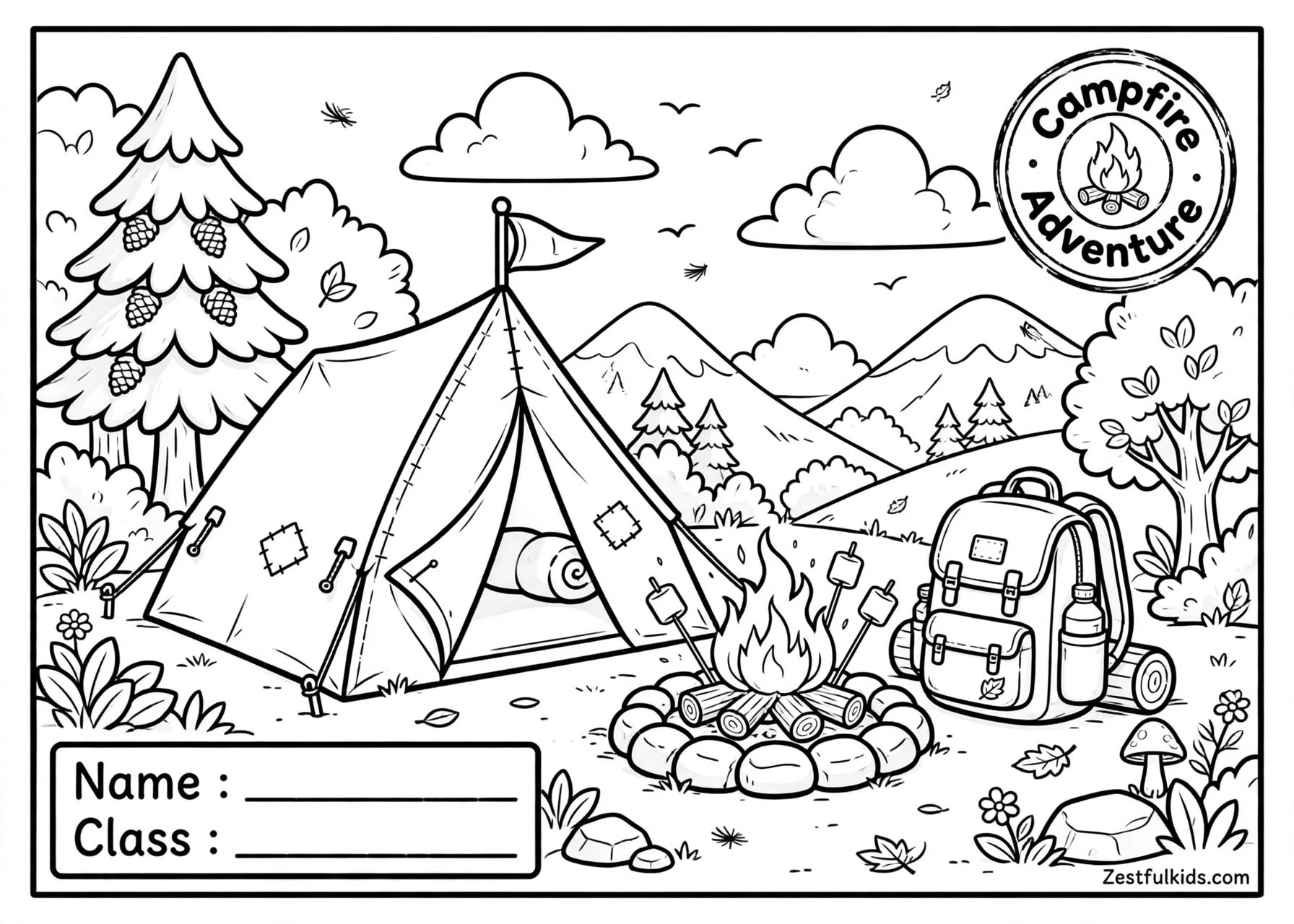
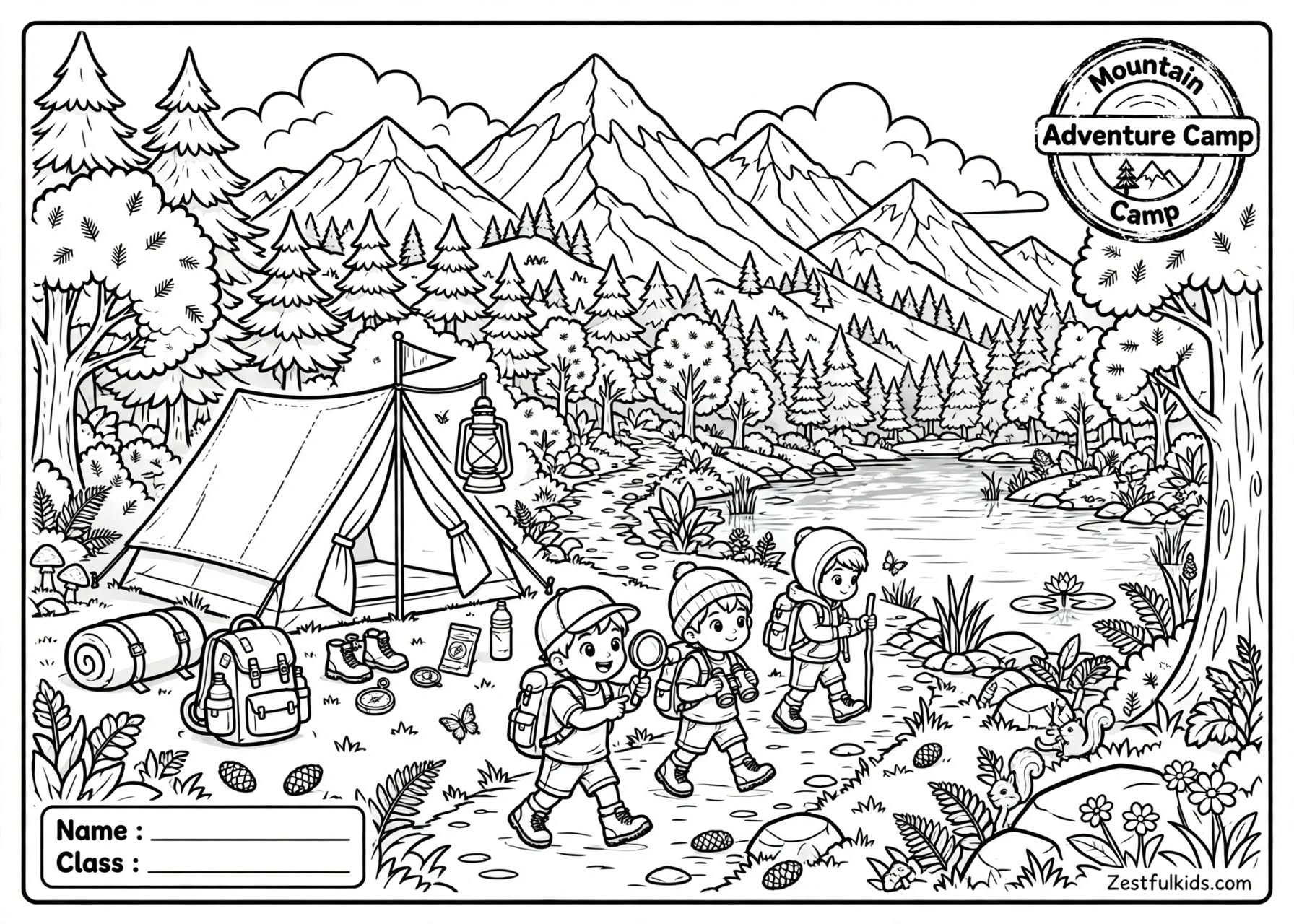
The appeal of this theme comes from the many details associated with camping. Tents, backpacks, campfires, trees, and mountains are familiar objects that children can recognize and color in their own way. Each detail can help build a picture of an imaginary adventure.
Rather than treating the illustration as a picture that needs to be colored in a particular way, children can approach it as a scene they are creating. They can choose the setting, imagine the weather, and decide what kind of outdoor experience the picture represents.
Choosing Colors for a Campsite
Camping scenes offer an opportunity to combine natural colors with bright outdoor equipment. Children can use green for grass, brown for tree trunks, and blue for the sky, but there is no need to follow realistic colors throughout the picture.
A tent could be orange, purple, or bright red. A backpack might have colorful pockets, while a sleeping bag could feature stripes or unusual patterns. These choices make the campsite feel personal and imaginative.
Here are some color combinations children might enjoy:
- Forest adventure: Combine dark green, brown, and earthy shades with a bright tent.
- Sunny camping trip: Use light blue for the sky, yellow for sunlight, and fresh green for the grass.
- Mountain campsite: Try gray and brown for rocky surroundings, with contrasting colors for camping equipment.
- Fantasy outdoor adventure: Give the tent, backpack, and other objects unusual colors that would make the campsite look magical.
- Nighttime camping: Use dark blue, purple, and black for the sky, with warm yellow or orange for a campfire if one appears in the illustration.
Children can also choose one main color for their imaginary camping gear. This creates a coordinated look without requiring every object to match.
Exploring the Details of Outdoor Adventure
One of the enjoyable parts of a camping-themed illustration is the opportunity to notice how different objects fit together.
A tent may have a curved entrance, supporting poles, or small details that help it look like a place to rest. A backpack can suggest that a camper is preparing to explore a trail. Trees and mountains can help establish the setting.
Children may want to start by coloring the largest objects first. For example, they could begin with a tent or a large section of the landscape, then move on to smaller items such as camping equipment.
This approach can make the activity feel manageable, especially when the illustration contains several objects.
If the picture includes a natural setting, children can experiment with different shades of green to create variation in the landscape. A darker shade may represent distant trees, while a lighter shade can be used for grass or smaller plants.
Imagine a Story Behind the Campsite
An outdoor adventure becomes more interesting when children imagine what is happening in the picture.
Perhaps the campers have just arrived at their destination and are preparing to set up their tent. Maybe they are taking a break after walking along a trail. Another possibility is that they are spending a quiet evening at a campsite before returning home the next day.
Children can invent their own story and use the coloring page as its starting point.
Parents and teachers might encourage them to describe the adventure in a few sentences. They can explain where the campers are going, what they brought in their backpacks, or what they hope to discover during the trip.
The story can remain simple. A child might imagine finding an interesting leaf, watching clouds move across the sky, or spotting a bird near the campsite.
These imaginative details do not need to appear in the original illustration. Children can add them to a separate sheet of paper or simply describe them while coloring.
Create a Campsite of Your Own
For children who enjoy drawing, the coloring activity can lead to a small creative project.
After completing the main illustration, they can draw a campsite on a separate piece of paper. They might include a tent, a path, a few trees, and a place to sit.
Another idea is to design a camper’s backpack. Children can decide what they would bring on an imaginary outdoor adventure, such as a water bottle, a flashlight, a notebook, or a map.
They can also invent a campsite name. A location surrounded by trees might become Pine Tree Camp, while a pretend campsite near a mountain could be called Cloud Peak Camp.
The finished picture can become part of a larger imaginary journey. Children may choose to draw another scene showing what happens after the campers leave their campsite.
Coloring Tools for Outdoor Scenes
The choice of coloring tools depends on the illustration and the child’s preferred style.
Crayons are useful for filling larger areas such as the sky, grass, or tent. Colored pencils offer more control for small details, including backpack straps, tent openings, and tree branches. Markers can create bold colors for camping equipment and other objects that children want to make stand out.
When coloring a landscape, children may find it helpful to work from the background toward the foreground. They can color distant mountains or trees first, then move on to the main campsite and its objects.
Before printing, check the print preview to ensure the illustration fits comfortably on the page. A clear outline helps children identify individual objects and decide how to color them.
Discover More Imaginative Adventures
Children who enjoy outdoor themes may also like exploring other imaginative subjects. The <a href=”https://zestfulkids.com/dragon-coloring-pages-free-printable-designs-for-kids/“>dragon coloring pages</a> offer a different kind of adventure, with fantasy creatures that can inspire stories about magical forests, hidden caves, and mysterious journeys.
For a more familiar animal theme, the <a href=”https://zestfulkids.com/lion-cub-playing-coloring-page/“>lion cub playing coloring page</a> introduces a playful young animal that children can color and imagine in its own environment.
These different themes can be used together as part of a creative activity collection. Children may enjoy switching between outdoor exploration, fantasy adventures, and animal scenes depending on what interests them.
Outdoor Adventure Camp Coloring Page gives children a chance to bring an imaginary camping experience to life. Through thoughtful color choices, simple storytelling, and optional drawing activities, the finished artwork can become more than a picture of a campsite—it can be the beginning of an adventure created entirely by the child.
