Rice Field Coloring Pages offer children a wonderful opportunity to discover the beauty of rural landscapes while enjoying a fun and creative activity. Rice fields are an important part of farming life in many countries, especially in places where rice is a staple food. These beautiful landscapes often feature rows of growing rice plants, winding paths, irrigation channels, farmers working in the fields, and mountains in the distance. Through coloring, children can explore these familiar scenes, learn simple facts about agriculture, and use their imagination to create colorful pictures of countryside life.
Discover the Beauty of the Countryside
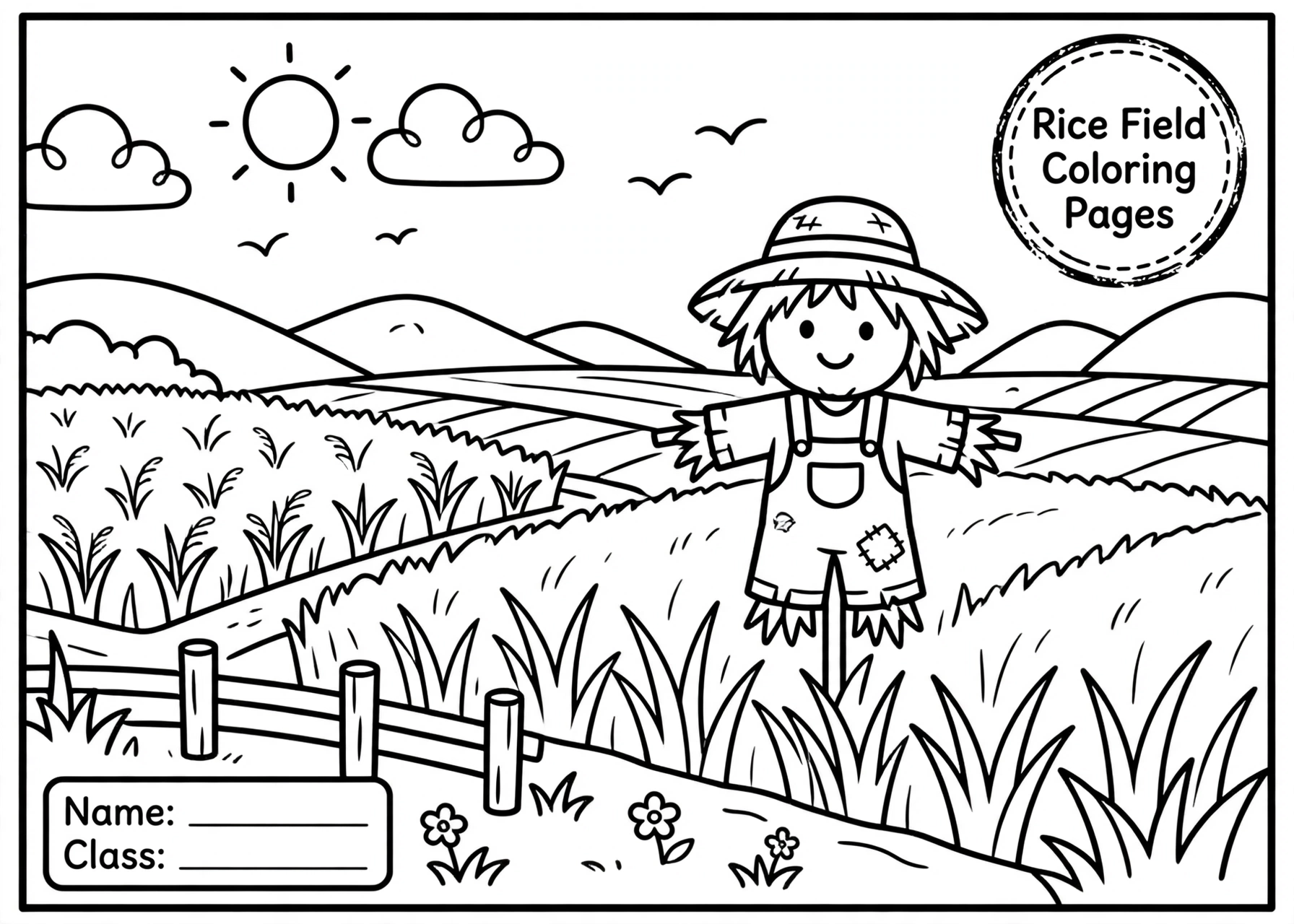
A rice field can be a fascinating subject for children because it contains many natural details to explore. Young rice plants often create a carpet of green across the land, while water in the fields reflects the sky and surrounding scenery. Some rice fields appear flat and wide, while others are arranged in terraces along hillsides and mountains. Rice Field Coloring Pages allow children to discover these different landscapes through illustrations that are enjoyable for a variety of ages.
A simple coloring page might show a peaceful rice field with a small path running between rows of plants. More detailed illustrations may include a traditional farmhouse, tall coconut trees, birds searching for food, and clouds floating above the hills. Children can use different shades of green for the plants, brown for the soil, and blue for the sky to make their pictures look lively. They can also add their own details, such as butterflies, flowers, or a little stream flowing beside the field.
Rice fields can look different throughout the growing season, which makes them especially interesting to color. Young rice plants are often green, while mature rice plants may turn golden yellow as the grains develop. Some fields contain standing water during particular stages of cultivation, creating beautiful reflections of the surrounding landscape. By exploring these scenes, children can learn that nature changes over time and that farmers work through different stages to grow food.
Meet the Farmers Who Grow Our Rice
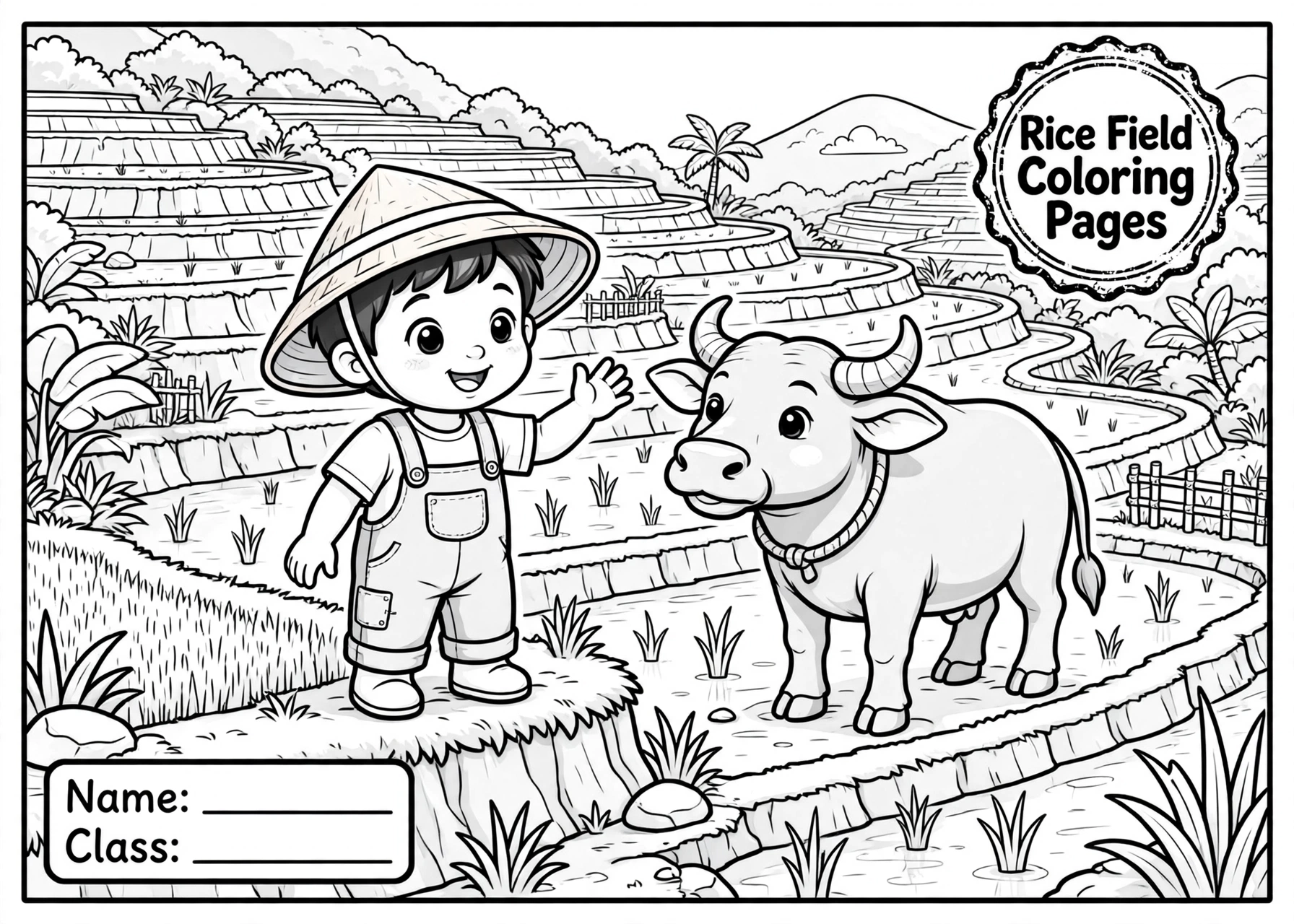
Farmers play an important role in bringing rice from the fields to our tables. They prepare the soil, plant rice seedlings, manage water, and care for the crops as they grow. When the rice is ready to harvest, farmers gather the mature plants and separate the grains from the stalks. Rice Field Coloring Pages featuring farmers can help children understand where rice comes from and appreciate the effort involved in producing everyday food.
Some illustrations may show a farmer wearing a wide hat while working among the rice plants. Other designs might include farmers carrying baskets, planting seedlings in neat rows, or harvesting golden rice with simple farming tools. Children can color the farmer’s clothes, the plants, and the surrounding landscape using whichever shades they prefer. These pictures also provide an opportunity for parents to explain how farming supports families and communities.
Children can make the activity more interesting by inventing a story about the farmer in their picture. Perhaps the farmer starts working early in the morning while birds sing nearby, or a family comes to help gather the rice when harvest season arrives. They might draw a small house beside the field or add a bicycle parked along a village path. These imaginative details turn a simple coloring sheet into a story about daily life in the countryside.
Why Rice Field Coloring Pages Are Great for Children
Coloring is an enjoyable activity that can help children practice fine motor skills, hand-eye coordination, and concentration. Following the outlines of rice plants, farm tools, and landscape features encourages children to control their hand movements carefully. Choosing colors also allows them to make decisions and express their personal ideas. With Rice Field Coloring Pages, children can combine these benefits with an introduction to nature and agricultural life.
Different rice field designs can suit children with different coloring abilities. Younger children may enjoy pictures with large plants, simple clouds, and a few easy shapes. Older children might prefer detailed scenes with terraced hills, irrigation channels, small buildings, and farmers working across the landscape. Giving children a choice helps them find illustrations that match their interests while allowing them to gradually explore more challenging designs.
Parents and teachers can also use rice field coloring activities to introduce basic learning concepts. Children can count the number of plants in a row, identify different shapes in the landscape, or compare light and dark shades of green. They can discuss which parts of the picture are closest to the viewer and which appear farther away. These simple activities encourage observation and early mathematical thinking while keeping the experience relaxed and enjoyable.
Explore Rice Fields in Different Seasons
One exciting feature of Rice Field Coloring Pages is the opportunity to explore how a rice field changes during the growing season. A picture of newly planted rice may include small green seedlings surrounded by water. Children can color the water light blue and use fresh green shades for the young plants. A scene showing mature rice, on the other hand, might feature golden stalks ready for harvesting beneath a bright afternoon sky.
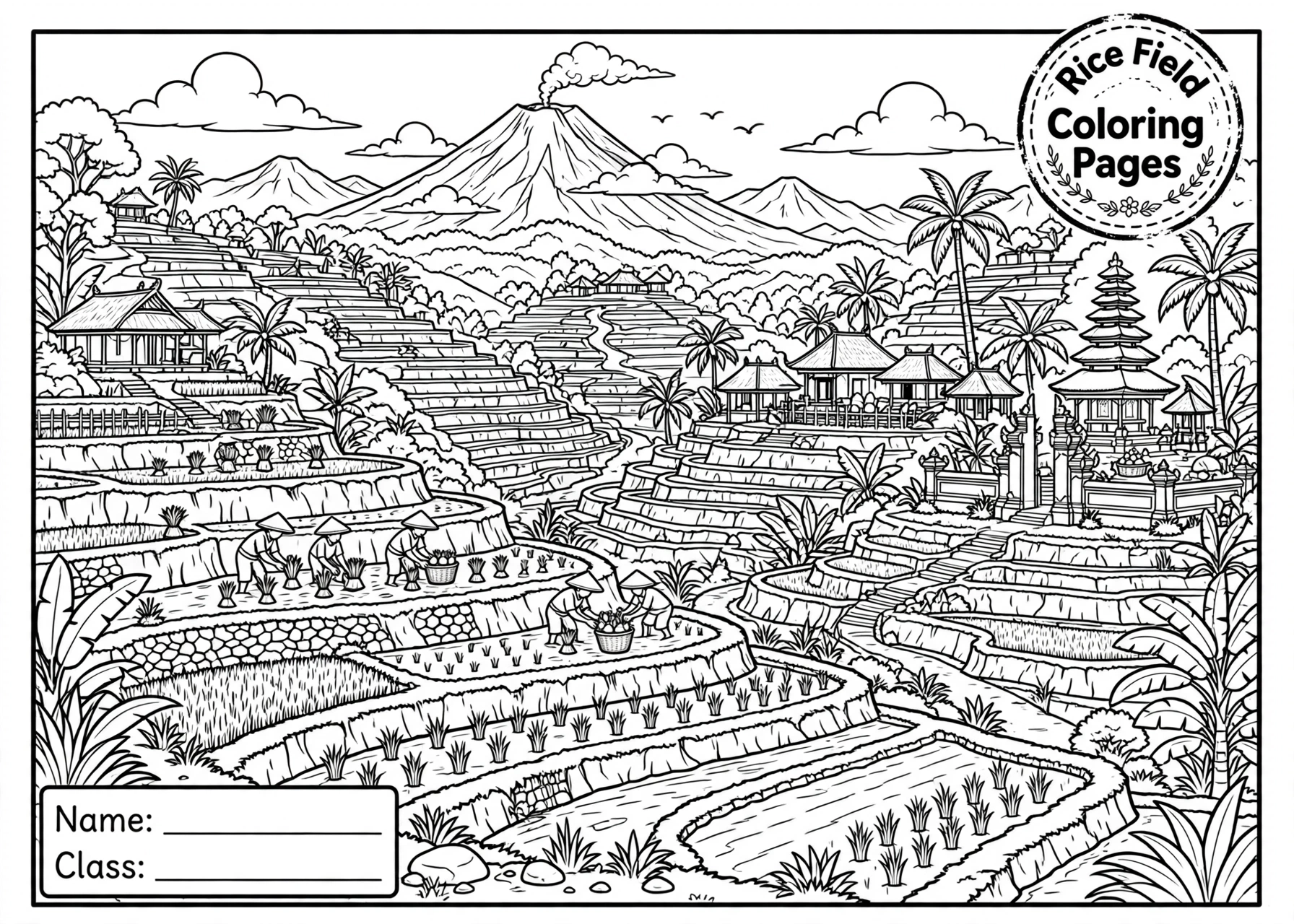
Rice terraces offer another beautiful landscape for children to discover. These fields are arranged in steps along hillsides, creating layers of green that follow the shape of the land. Some illustrations may show narrow paths connecting the terraces, with trees and distant mountains surrounding the fields. Children can experiment with different shades of green and brown to make each level look distinct and add clouds or sunlight to complete the scenery.
Weather can also change the appearance of a rice field. A sunny day may create bright reflections in the water, while a cloudy scene can use softer shades of gray and blue. Children might color a field after a light rain, adding puddles along the path and tiny drops of water on the leaves. These variations encourage young artists to explore how light, weather, and seasons influence the appearance of natural environments.
Learn Where Rice Comes From
Rice is an important food for millions of people around the world, and learning about its journey can help children better understand everyday meals. Before rice reaches a kitchen, it grows as a crop in fields where farmers carefully manage water and plant growth. After harvesting, the grains are processed to remove their outer coverings before being prepared for cooking and eating. Coloring a rice field gives children a simple starting point for discovering the connection between farming and the food on their plates.
Parents can explain the basic stages of rice farming while children work on their pictures. They might talk about preparing the field, planting seedlings, caring for the growing plants, and collecting the mature rice. Children can then arrange their own drawings to show these stages in the correct order. This activity introduces sequencing and helps them understand that producing food takes time, effort, and care.
For children who enjoy combining pictures with other educational activities, Alphabet Worksheets for Kids: 26 Fun Printable A–Z Activities offers another way to explore learning through playful printables. Parents can connect the activities by asking children to identify letters in words such as rice, farmer, field, and plant. They can even write the names of objects in their rice field picture after finishing the coloring activity. Combining art with simple literacy exercises helps children practice different skills without making learning feel too formal.
Add Animals and Nature to the Rice Field Scene
Rice fields are not just places where crops grow; they can also provide habitats for different animals and insects. Depending on the location and farming practices, birds may visit the fields to find food, frogs may live near water channels, and insects may move among the plants. Children can include these creatures in their Rice Field Coloring Pages to create a more lively countryside scene. A little bird standing beside an irrigation ditch or a butterfly flying above the rice plants can add charm to the illustration.
Trees and other plants can make the landscape even more interesting. Children might draw coconut trees near a farmhouse, bushes along the path, or wildflowers growing beside a small stream. They can use several shades of green to distinguish the leaves and add bright colors to the flowers. These extra details encourage them to look closely at the variety of living things found in rural environments.
Parents can also introduce simple ideas about caring for nature. They can explain why clean water, healthy soil, and suitable habitats are important for both crops and wildlife. Children might add a clean stream to their picture or imagine a farmer protecting the plants and animals around the field. Through these creative choices, coloring becomes a gentle way to encourage curiosity and appreciation for the environment.
Creative Ways to Enjoy Rice Field Coloring Activities
To begin, prepare crayons, colored pencils, or washable markers and choose a rice field illustration that your child finds interesting. Encourage them to start with the largest areas, such as the sky, hills, and fields, before moving on to smaller details. They can use realistic colors or invent a fantasy landscape with purple rice plants, orange rivers, and rainbow-colored mountains. The goal is to enjoy the process and give every child the freedom to develop their own artistic style.
A finished coloring page can also become part of a larger countryside art project. Children might draw a farmhouse on another sheet, cut out paper trees with adult supervision, or create a simple village scene using their completed pictures. Older children can write a short story about a day on the farm and describe what happens from morning until evening. These projects combine creativity, storytelling, and an understanding of rural life.
Families and teachers can make the experience more engaging by discussing the details children include in their artwork. Ask which part of the rice field they like best, what the farmer is doing, or why the plants need water to grow. Children can compare their pictures and notice how each person chooses different colors and details. Sharing these ideas helps build communication skills while encouraging children to appreciate one another’s creativity.
With Rice Field Coloring Pages, children can explore peaceful countryside landscapes while learning about plants, farmers, animals, and the food people eat every day. Each illustration offers an opportunity to practice coloring skills, discover new details, and imagine life in a rural community. Whether they choose a simple green field or a detailed landscape filled with terraces and farmhouses, young artists can create pictures that reflect their own ideas. A few coloring materials and a little imagination are all they need to begin their countryside adventure.

