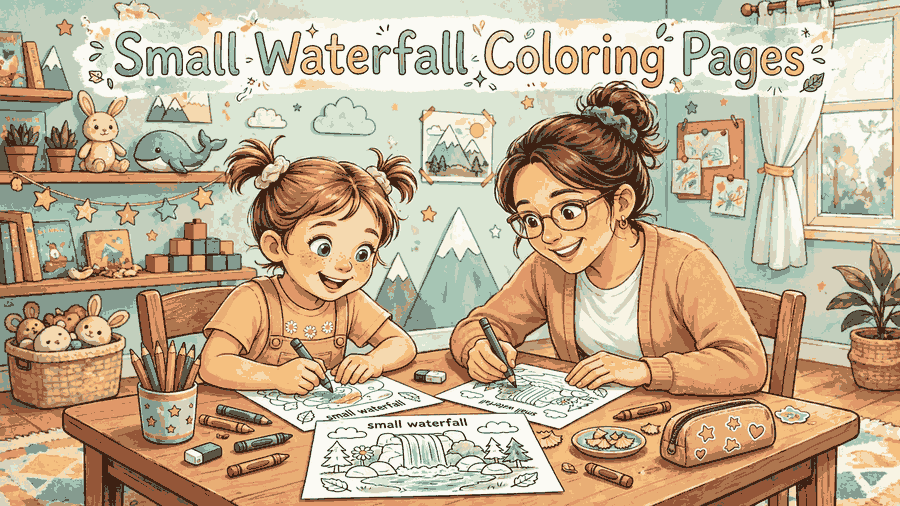
Small Waterfall Coloring Pages invite children to explore flowing water, rocky streams, and peaceful natural scenery through creative coloring. Discover practical ideas for choosing colors, adding backgrounds, and turning a simple nature illustration into an imaginative activity.
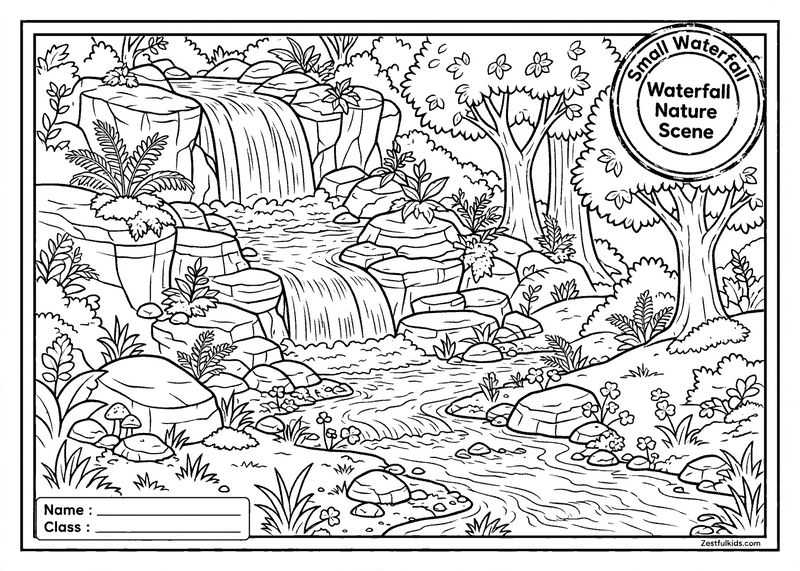
Discover the Beauty of a Small Waterfall
A small waterfall can transform an ordinary stream into a fascinating natural scene. Water spills over rocks, follows the shape of the land, and gathers in a pool before continuing downstream. Small Waterfall Coloring Pages give children an opportunity to explore these details through art while imagining what a quiet spot in nature might look like.
Unlike illustrations of enormous waterfalls with towering cliffs and clouds of mist, a small waterfall can feel close to the ground and easy to observe. Its beauty often comes from the relationship between moving water, uneven stones, plants, and the surrounding landscape. Depending on the illustration, children might see a narrow cascade, a rocky ledge, a shallow pool, or vegetation growing near the water’s edge.
These details make the theme appealing to children who enjoy nature, outdoor adventures, and landscape pictures. They can follow the direction of the water with their crayons, choose different shades for individual rocks, and decide whether the surrounding environment looks like a sunny forest, a mountain stream, or a peaceful garden. Every color choice helps them create their own interpretation of the scene.
How to Choose Colors for Flowing Water
Water is often associated with blue, but a waterfall does not need to be colored entirely in one shade. Real water reflects the sky, surrounding plants, and nearby surfaces, so its appearance can change from one part of a stream to another. Children can use this observation to experiment with several colors instead of filling every section with the same blue crayon.
Light blue works well for areas where the water appears bright, while deeper blue can suggest a pool or a shaded section beneath the cascade. Pale gray or a very light blue may represent the foam where water meets the rocks. If the illustration contains clear spaces between the falling water and the surrounding stones, leaving small areas white can create the impression of splashing or reflected light.
Colored pencils are particularly useful for blending light and dark shades along narrow streams. Crayons work well for larger pools and broad sections of water, while washable markers can create strong, clean colors when used on suitable paper. Children do not need to reproduce realistic water effects perfectly; simple changes in color can make the waterfall appear lively and distinct from its surroundings.
Give Rocks and Stones Their Own Character
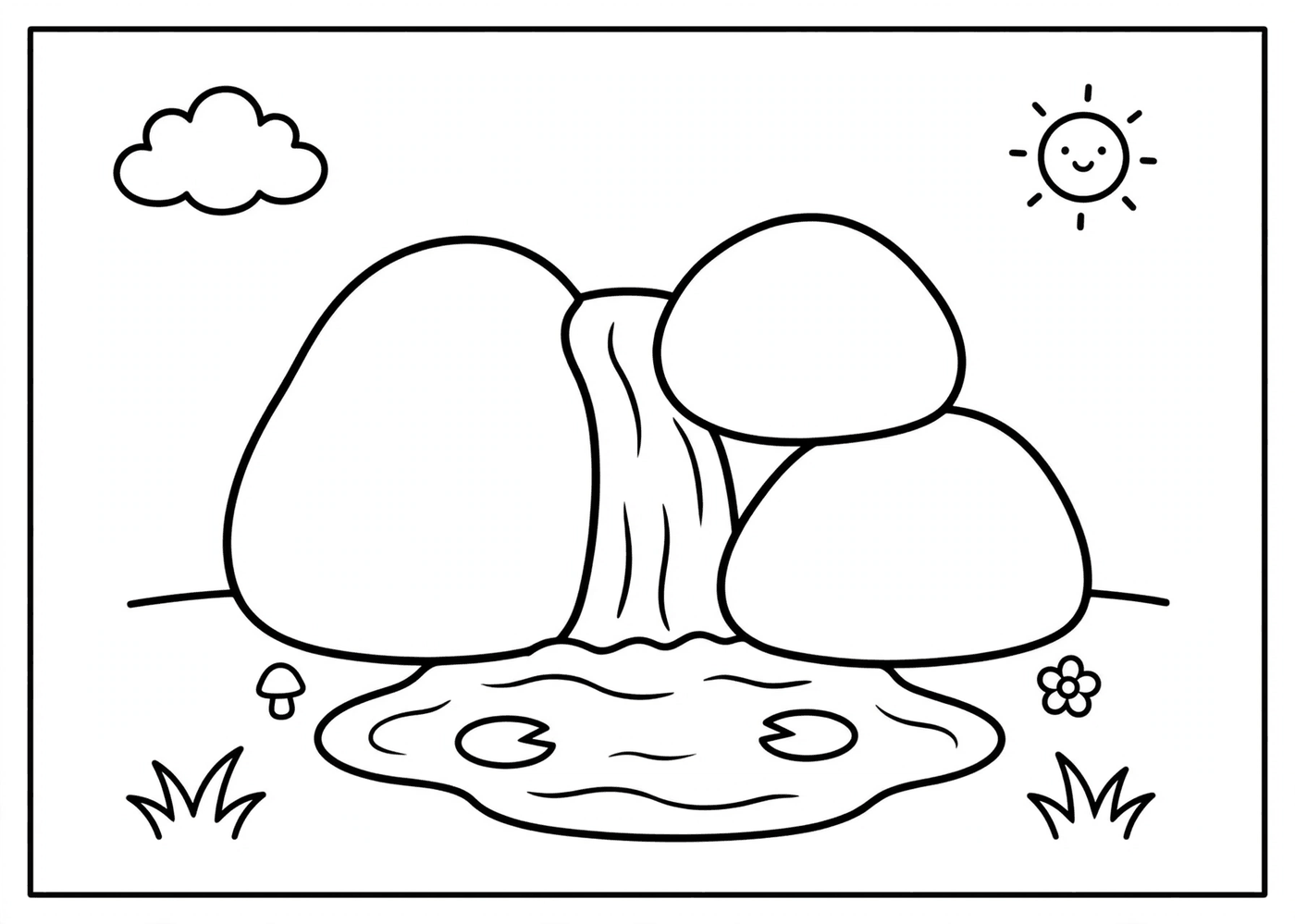
The rocks surrounding a small waterfall provide another opportunity to explore color combinations. Gray, brown, beige, and muted green can suggest different surfaces, while darker shades help separate one stone from another. Children may also choose reddish or golden tones if they imagine the waterfall flowing through a landscape with warm-colored rocks.
Instead of coloring every stone identically, encourage children to vary the shades slightly. A lighter upper surface can suggest sunlight, while a darker lower edge may make a rock appear shaded. These small choices can give the landscape more variety without requiring complicated drawing techniques.
Create a Landscape Around the Waterfall
The surrounding scenery can change the entire mood of a waterfall illustration. A few carefully chosen colors may suggest a cool forest, a bright summer afternoon, or a secluded stream high in the mountains. If the printable includes trees, bushes, grass, or flowers, children can use those details to establish the setting.
For a forest waterfall, several shades of green can distinguish nearby grass from distant trees. Dark green may suit dense foliage, while lighter green can represent leaves receiving sunlight. Brown tree trunks and earthy rocks help balance the blue water, creating a natural-looking palette without making every part of the picture equally bright.
A mountain stream can use cooler colors and a more restrained background. Gray rocks, blue water, and green patches of vegetation may be enough to suggest a fresh, shaded environment. Children can imagine that the water begins farther up the mountain, even if the source is outside the printed illustration.
For a cheerful garden scene, brighter flowers and fresh green plants can add contrast. Yellow, pink, purple, or orange flowers are optional additions if the illustration leaves room for children to draw their own details. This approach works especially well when the printable is used as the starting point for a larger landscape project.
Turn Coloring Into a Simple Nature Discovery
Small Waterfall Coloring Pages can introduce children to a few basic ideas about how water moves through the natural environment. Adults can explain that waterfalls form when flowing water passes over a drop in the land, often where a stream or river crosses a rocky ledge. The water continues moving downstream, sometimes collecting in a pool before flowing onward.
While coloring, invite children to trace the water’s path from the upper edge to the bottom of the waterfall. They can identify where the water begins, where it lands, and which direction it travels next. If the illustration includes rocks, plants, or a stream, ask them to describe how those features fit into the landscape.
A simple observation game can make the session more interactive. Ask children to find the darkest rock, the widest section of water, or the greenest plant in the picture. They can also point out areas that might receive sunlight and places that appear shaded. These prompts encourage careful looking without turning a relaxing art activity into a test.
For a follow-up activity, children can draw a second waterfall with a different setting. One might imagine a narrow stream surrounded by tall trees, while another creates a waterfall flowing into a wide pool. Comparing the two pictures offers an easy way to discuss how changes in the landscape can make natural scenes look different.
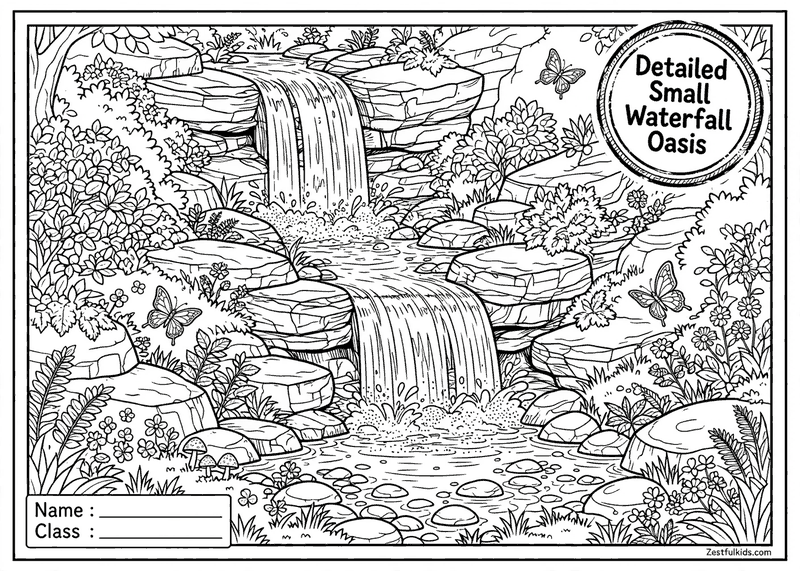
Make the Printable Session Comfortable and Enjoyable
Before printing a selected illustration, check the preview to see how much detail it contains and whether the main shapes are clearly visible. The appropriate page size and orientation depend on the particular file, so review those settings before printing. If the picture contains many small rocks or plants, a clear print will make the separate areas easier to identify.
Set out a manageable selection of coloring tools rather than an entire box of supplies. A few blues, greens, browns, and grays provide a useful starting palette, while a brighter color or two can be reserved for flowers and other accents. Children who prefer imaginative designs can choose their own combinations without needing to follow a realistic color scheme.
There is also no need to finish the picture in one sitting. A child might begin with the waterfall, return later to color the rocks, and complete the background another day. If the activity is part of a classroom nature lesson, the finished picture can accompany a short description of the landscape or a drawing of a different water feature.
Parents and caregivers can use the same idea during conversations about outdoor experiences. A visit to a park, stream, or nature trail may provide familiar examples of rocks, flowing water, and plants. If a real waterfall is not nearby, photographs or books about landscapes can help children imagine the different environments where waterfalls occur.
Continue the Creative Adventure With Other Themes
Nature coloring can lead naturally to other subjects that invite children to build stories around their artwork. For a seasonal activity, the Christmas Penguin Family offers a different setting in which children can experiment with cool colors, winter details, and a festive atmosphere. It provides a change from flowing streams while keeping the emphasis on personal color choices.
Children who enjoy inventing stories may also like Animals Having a Birthday Party. This playful theme encourages them to imagine what the animals might be doing and how the scene could be decorated. Moving between nature landscapes and imaginative celebrations gives children a variety of subjects to explore without limiting their creativity to one style of illustration.
Small Waterfall Coloring Pages offer a simple way to bring the movement and variety of nature into an art session. From choosing different shades for falling water to imagining plants growing beside a rocky stream, children can build a scene that reflects their own ideas. With a few coloring tools and room to experiment, a small waterfall becomes an invitation to explore landscapes one color at a time.
