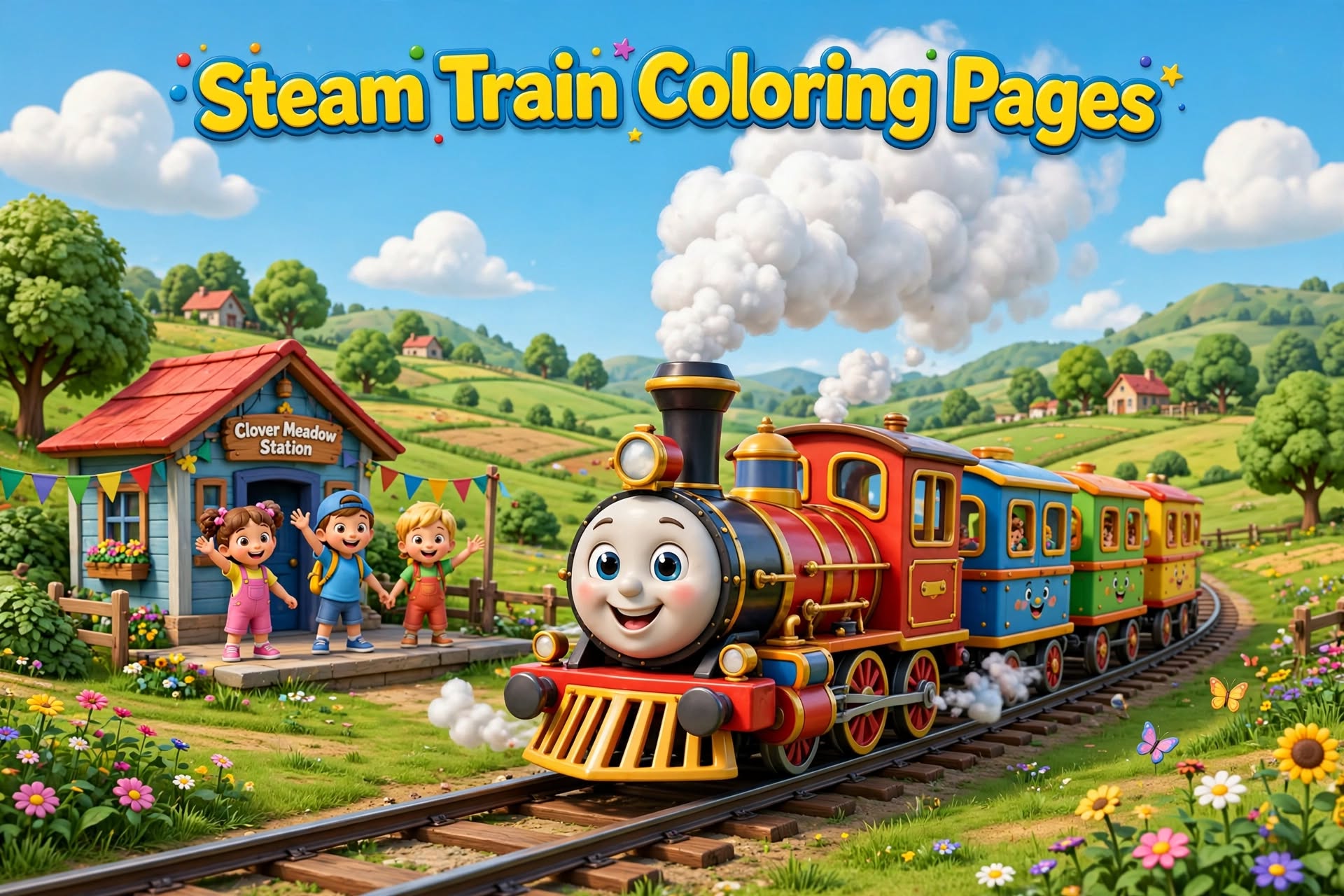
Steam Train Coloring Pages bring the charm of historic railway travel to children’s creative activities. With their distinctive locomotives, large wheels, and billowing steam, these printable coloring themes invite young artists to imagine journeys through a fascinating world of trains.
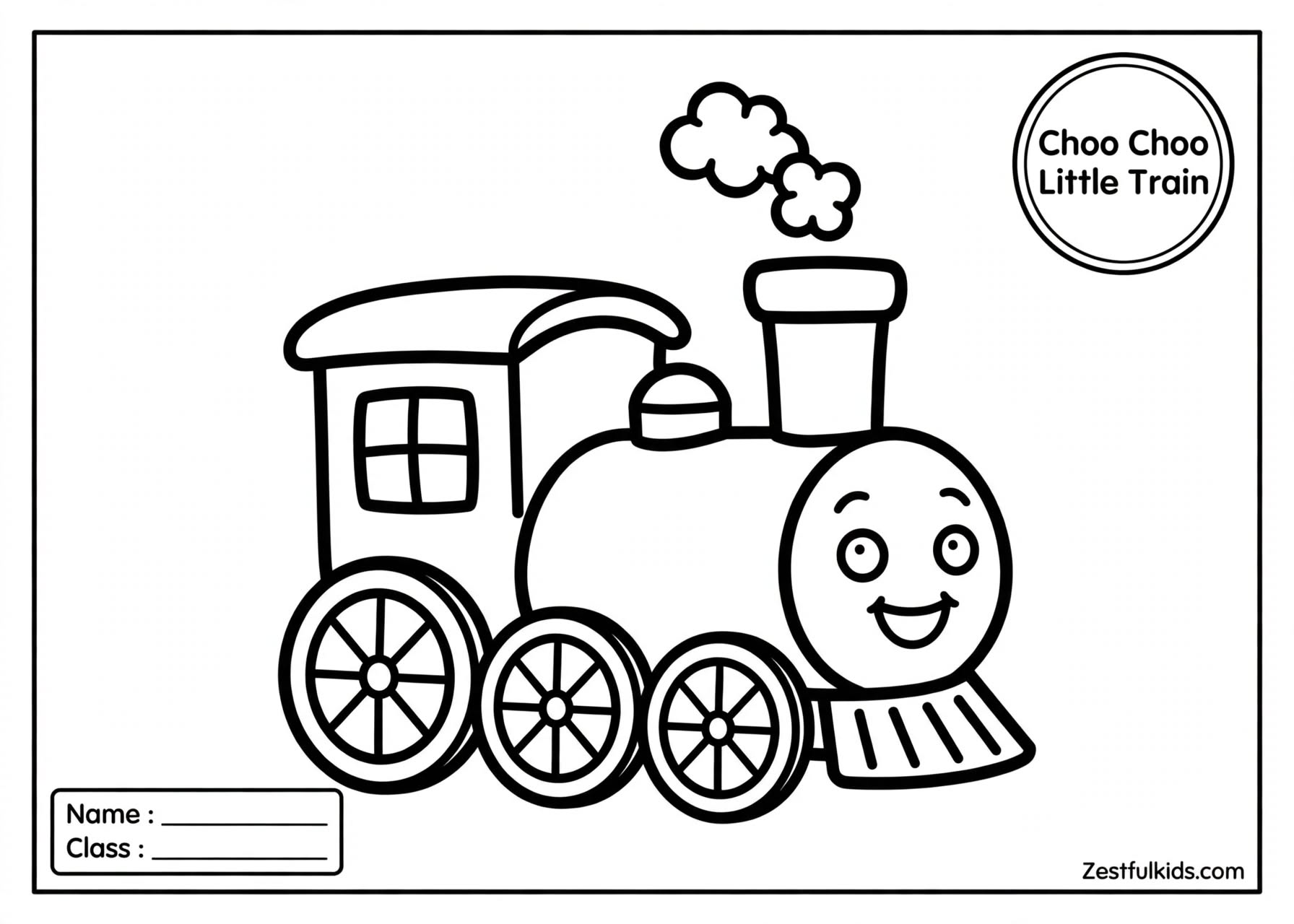
Discover the Fascinating Details of a Steam Train
A steam train has a distinctive appearance that makes it interesting to explore through coloring. Its tall chimney, rounded boiler, large driving wheels, and long connecting rods create a recognizable shape that stands apart from modern trains. Even children who have never seen a real steam locomotive can discover its features through an illustration.
Steam Train Coloring Pages offer an opportunity to look closely at these details while making individual color choices. Children can notice the locomotive’s front, the shape of its wheels, and the different parts that help it move. These visual features give the coloring activity a subject-specific focus rather than simply asking children to fill in a picture.
The steam itself can also become an interesting detail. In a coloring illustration, clouds of steam may appear above or around the locomotive, creating a sense of movement. Children can leave these areas white, add pale blue shading, or use light gray to suggest soft clouds.
For children who enjoy vehicles, trains offer a different kind of adventure from cars, buses, or motorcycles. A steam locomotive can inspire stories about long journeys, railway stations, countryside views, and the people who traveled by train in earlier times.
What Makes Steam Locomotives Different?
Steam locomotives belong to an important chapter in railway history. Unlike modern electric or diesel trains, traditional steam engines use steam produced by heating water to power their movement. This distinctive technology is one reason they remain fascinating subjects for children and adults.
The locomotive’s chimney is one of its most recognizable features. It releases exhaust from the engine, while the boiler forms a large part of the train’s body. The driving wheels and connecting rods are also visually interesting because they show how different parts of the locomotive work together.
Children do not need to memorize technical names to enjoy coloring these features. Simply noticing the differences between the front of the locomotive, its wheels, and the train cars can make the picture more engaging.
Parents and teachers can introduce a few basic facts while children color. For example, they can explain that steam trains were widely used before modern railway technology became common. This provides a natural connection between the artwork and a simple discussion of transportation history.
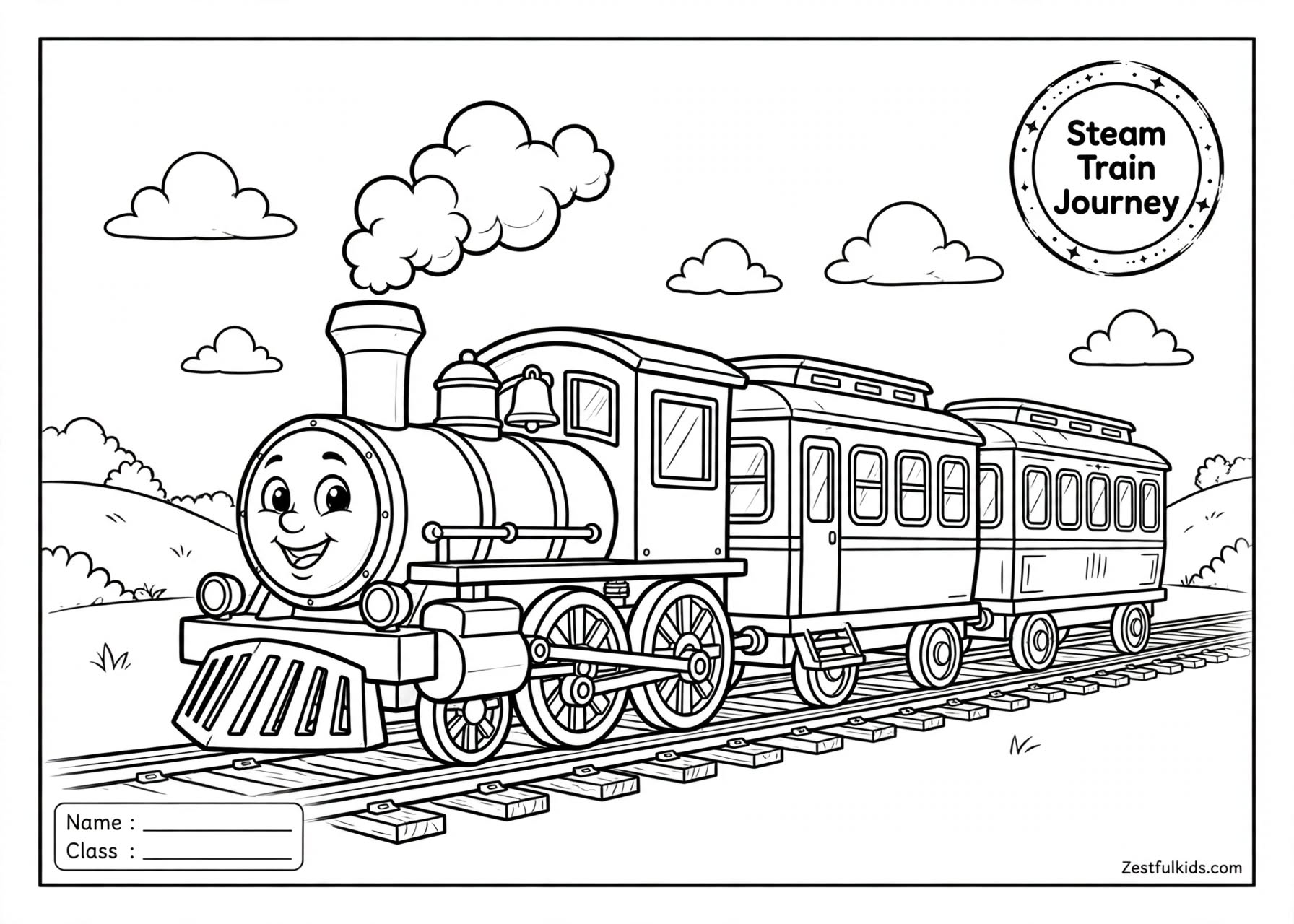
Choosing Colors for a Classic Railway Scene
Steam locomotives are often associated with traditional railway colors, but children can choose any palette they like. Some may prefer a classic black engine with red details, while others might imagine a bright blue locomotive with yellow wheels.
A simple color plan can help children organize their artwork. They might choose one main color for the locomotive, another for the wheels, and a third for smaller details. If the illustration includes train cars, children can use matching colors to make the entire train look connected.
The surrounding scenery can change the mood of the picture. A green landscape suggests a journey through the countryside, while a blue sky can create the feeling of a clear travel day. If the picture includes a railway station, children might use warm colors for the building and contrasting shades for the train.
Steam clouds offer another chance to experiment. Instead of coloring them with a solid shade, children can use gentle strokes of gray or pale blue around the edges. Leaving the middle white can help the steam appear lighter.
Imagine a Journey Behind the Picture
A steam train coloring activity can become the beginning of a travel story. Children might imagine the locomotive leaving a station, crossing a bridge, or traveling through a quiet valley. These ideas can be introduced as optional storytelling prompts rather than details that must appear in the illustration.
Parents and caregivers can invite children to give their imaginary train a name. They might decide where it is going, who is traveling aboard, and what passengers can see from the windows. A simple coloring page can then become the starting point for a short story.
For children who enjoy combining different subjects, the train can also be part of a larger imaginative adventure. A little boy who loves dinosaurs might picture a prehistoric expedition by railway, inspired by the little boy and dinosaur illustrations. This kind of imaginative connection lets children explore a familiar interest in a new way.
Creative Ways to Use Steam Train Coloring Pages
These railway-themed printables can fit into several activities at home or in the classroom. A parent might introduce the picture during a quiet afternoon, while a teacher could use it as part of a transportation-themed art session.
One simple activity is to ask children to observe the locomotive before coloring. They can identify its wheels, chimney, and main body, then decide which parts they want to color first. This gives them time to notice the illustration rather than immediately filling it with color.
Another idea is to create a railway journey story. After coloring, children can describe the train’s destination and imagine what happens along the way. They might draw an additional station, a railway crossing, or a landscape on a separate sheet of paper.
For a group activity, each child can color a different imaginary train. Once the pictures are finished, children can share their train names and destinations. The activity can become a playful classroom display about different kinds of transportation.
Selecting Coloring Tools for Train Details
Colored pencils are a useful choice for steam train illustrations because they allow children to work carefully around small details. They can shade the wheels, add subtle tones to the locomotive’s body, and create gentle transitions in the steam.
Crayons are suitable for larger areas, such as the train body or the sky. Children who enjoy stronger colors may prefer markers, particularly when coloring bold patterns or making the locomotive stand out from the background.
The best tool depends on the child’s preference and the illustration’s level of detail. Younger children may enjoy coloring the larger shapes first, while older children can spend more time on the wheels, connecting rods, and smaller railway features.
There is no need to complete the picture in one sitting. Children can return to it later and add extra details if they wish.
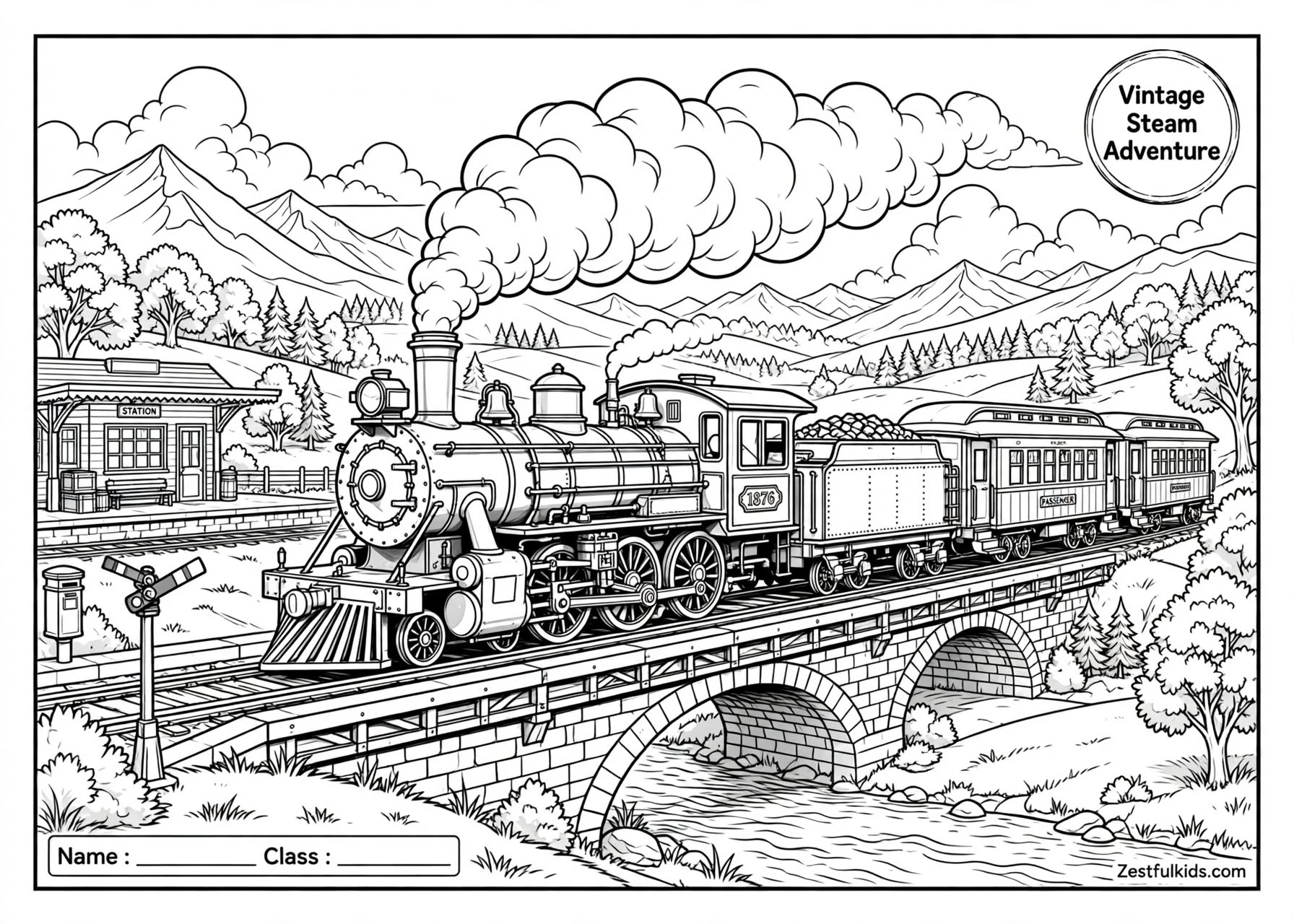
Bringing Railway History into Creative Time
Steam trains offer a connection between art, transportation, and the history of travel. Their distinctive design gives children plenty to observe, while their association with long journeys encourages imaginative storytelling.
Steam Train Coloring Pages can be enjoyed as a standalone coloring activity or used alongside simple discussions about how trains have changed over time. Children can explore the appearance of an old locomotive, choose their own colors, and imagine where the railway might take them.
Families looking for other themed activities can also explore a seasonal subject such as the Christmas kitten, which offers a different creative theme for children to enjoy.
With coloring tools and a little imagination, a steam train illustration can become much more than a picture of a locomotive. It can inspire a journey through railway history, an imaginary adventure, or a colorful scene created entirely by the child.
