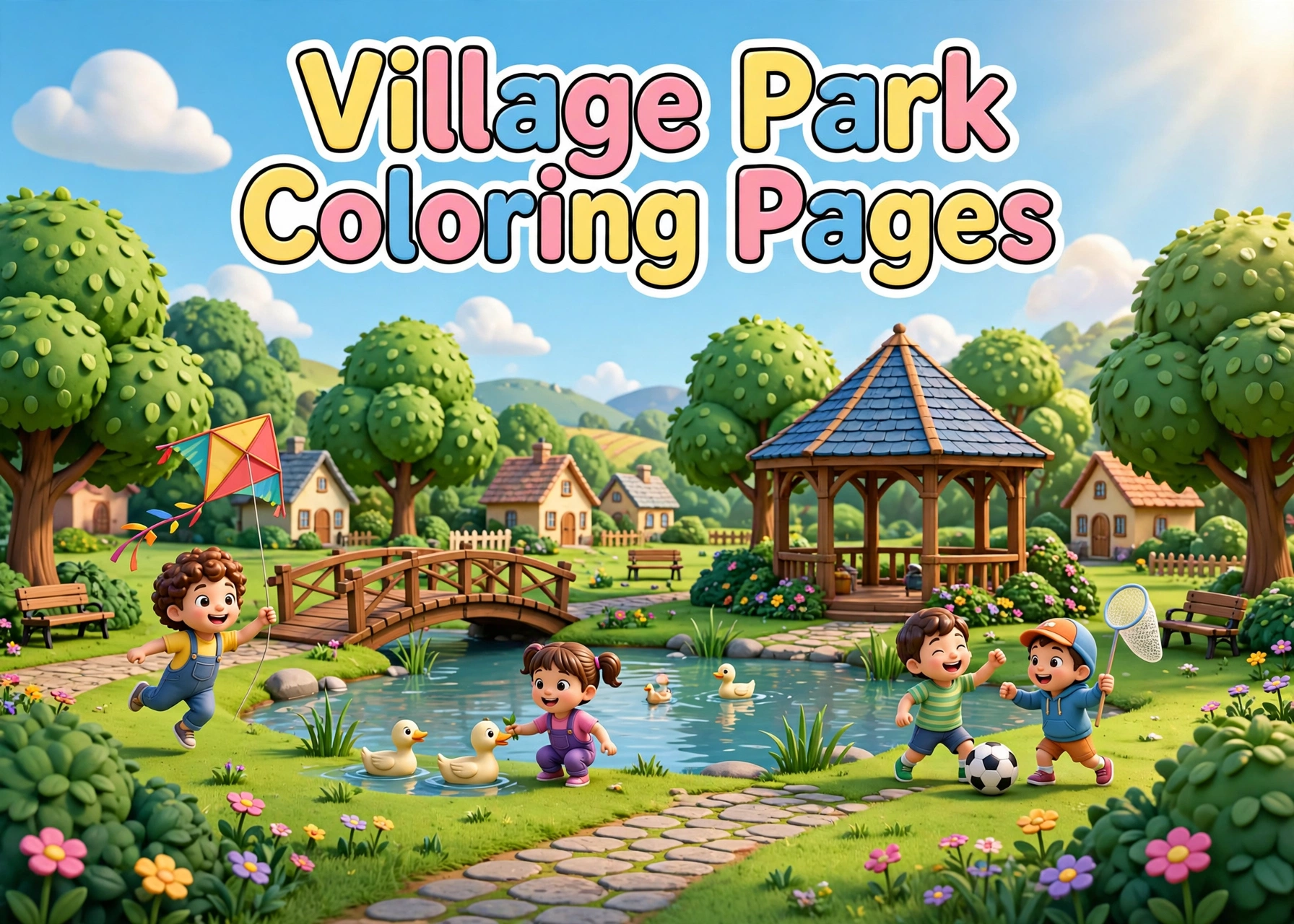
Village Park Coloring Pages bring the charm of outdoor spaces to children’s creative time, with opportunities to explore green scenery, open spaces, and everyday moments in a peaceful community setting.
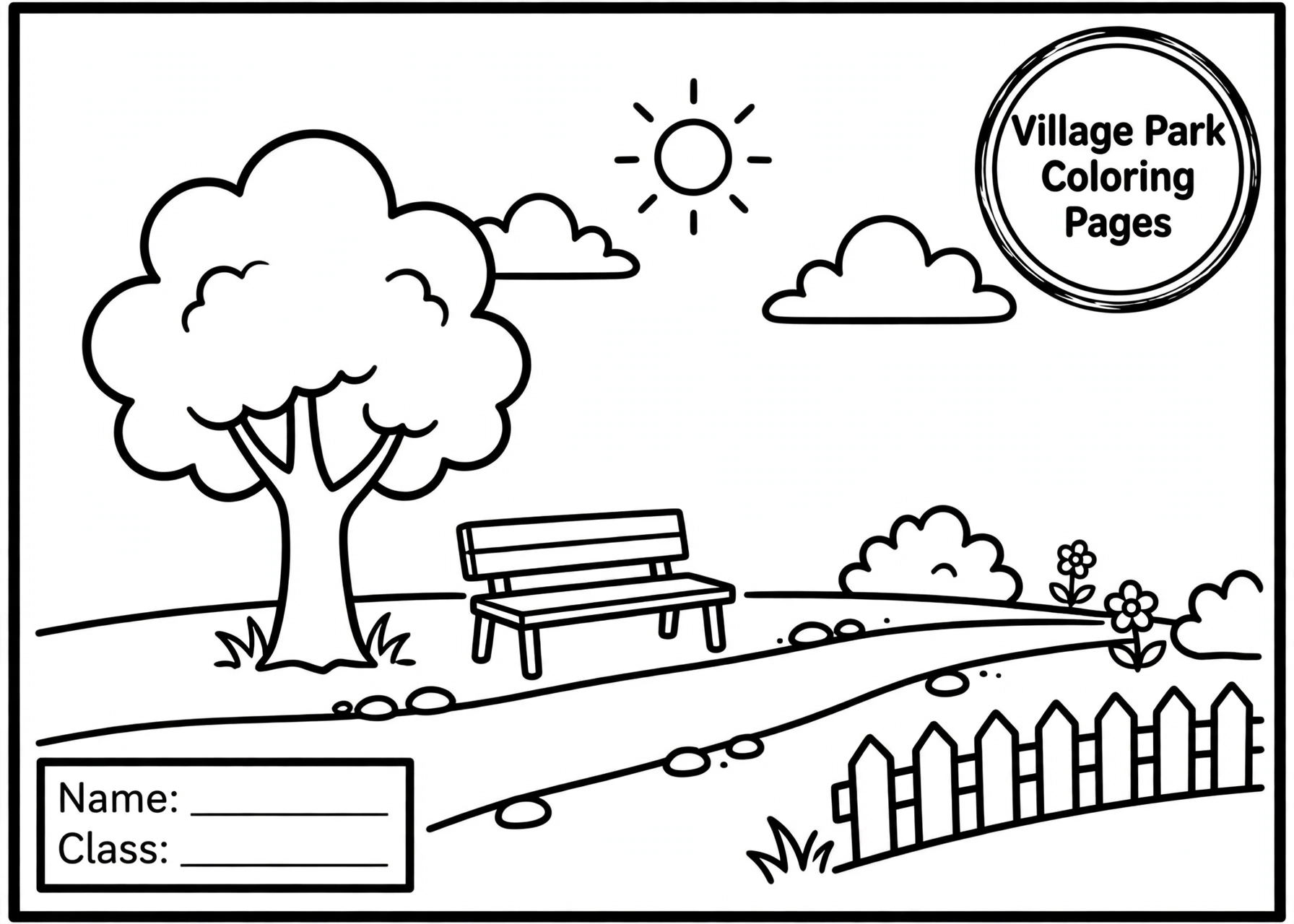
Discover the Charm of a Village Park
A village park is a welcoming place where nature and community life meet. It may bring to mind shady trees, grassy areas, winding paths, colorful flowers, and open spaces where people can spend time outdoors. Village Park Coloring Pages give children a chance to imagine this relaxing environment while choosing colors for the scenery.
Unlike a picture focused on a single object, a park scene can contain many elements that work together. A tree might stand beside a walking path, flowers may grow near a grassy area, and an open space can become the center of an imagined outdoor gathering. Each detail offers a different coloring opportunity.
The village setting also gives the theme a familiar, everyday feeling. Children can picture a quiet afternoon outside, a short family walk, or neighbors enjoying the fresh air. They do not need to recreate a real location. Their colors and added details can turn the scene into a park that exists entirely in their imagination.
Look Closely at the Details of the Landscape
A park scene is a good opportunity to explore how different parts of an outdoor environment fit together. Start by identifying the largest areas, such as the ground, trees, or open sky. These elements can establish the overall atmosphere before smaller details are colored.
Trees can be represented in many shades of green, from bright spring leaves to deeper tones that suggest thick shade. Children can use brown for trunks and branches, although there is no need to make every tree identical. A mixture of greens and browns can make an imagined park feel more varied.
Grass offers another simple area for experimentation. Light green can suggest a sunny lawn, while darker green may represent shaded ground. If the illustration includes a path, children might choose gray, beige, or soft brown to create contrast with the surrounding grass.
Flowers can provide small bursts of color throughout the scene. Red, yellow, purple, pink, and orange are all possible choices. Children can repeat a color across several flowers for a coordinated look or give each one a different shade for a lively garden effect.
Plan a Color Palette for the Park
Before coloring, children can decide what kind of atmosphere they want their village park to have. A bright palette may suggest a sunny afternoon, while softer shades can create the feeling of a calm morning. Choosing a few related colors can help the different parts of the landscape look balanced.
Here are some combinations to consider:
- Fresh and sunny: Light green, yellow, sky blue, and warm brown.
- Flower garden: Pink, purple, orange, leafy green, and cream.
- Quiet afternoon: Olive green, soft blue, beige, and muted brown.
- Autumn atmosphere: Golden yellow, orange, rust, and brown.
- Fantasy park: Turquoise, lavender, mint green, and other imaginative shades.
The sky can influence the whole picture. Pale blue creates a familiar daytime setting, while a warm yellow or peach sky can suggest early morning or late afternoon. If children prefer a more imaginative scene, they can choose unusual colors and create a park unlike any place they have visited.
Colored pencils are useful for blending different shades of grass and tree foliage. Crayons work well for larger areas, while washable markers can make flowers and other small details stand out. When using markers, testing them on spare paper first can help children choose suitable shades and avoid unwanted marks.
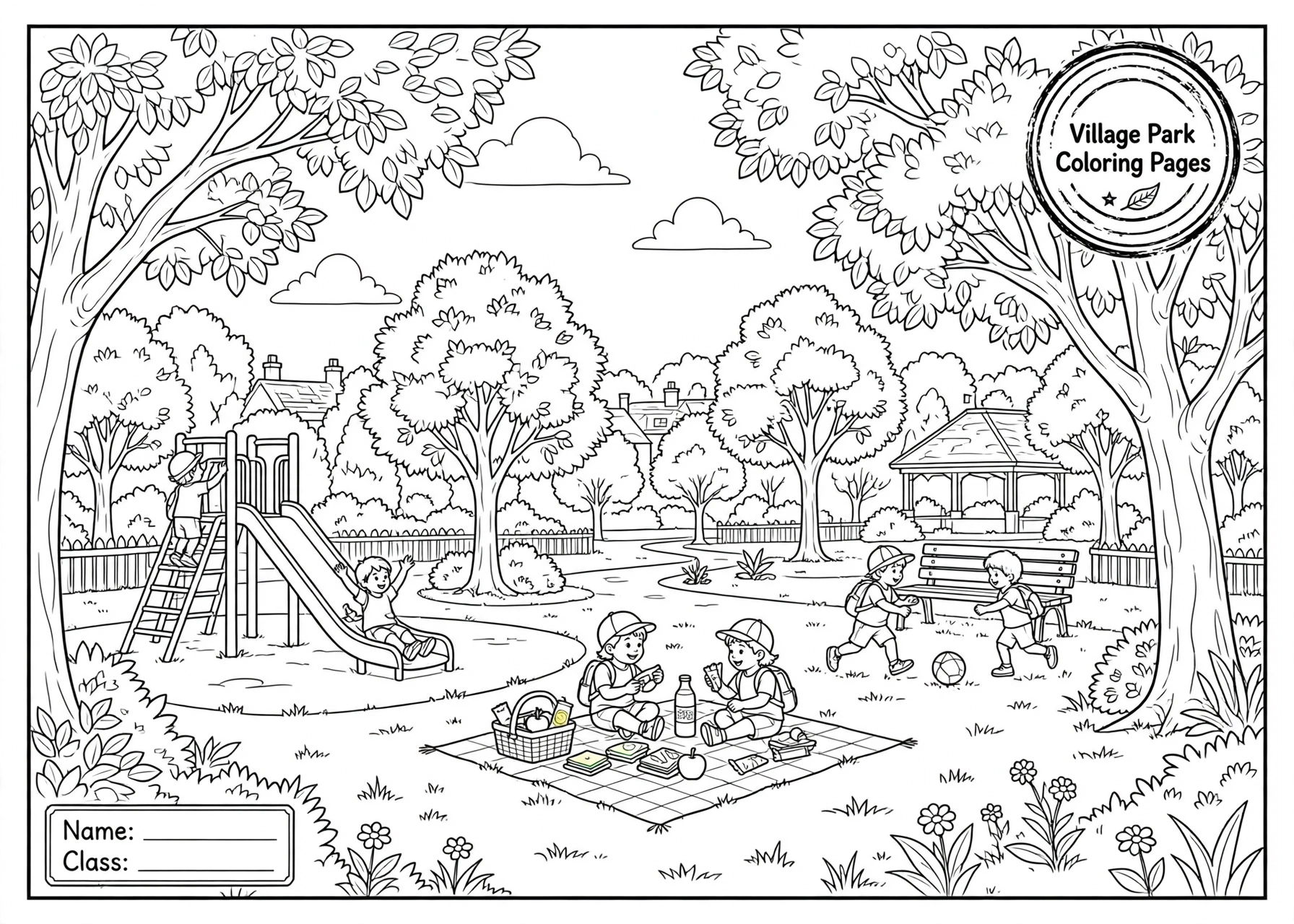
Give the Park Its Own Story
A village park is not only a landscape. It can also be the setting for a small story. Children might imagine that the park is a meeting place for neighbors, a quiet corner for reading, or a favorite destination for a family walk.
After coloring the main scenery, invite children to invent an activity that could take place there. Perhaps someone is enjoying a picnic, a family is walking along the path, or friends are spending time together outdoors. These ideas can be added as small drawings if there is enough open space, but they are optional ways to personalize the picture.
Another idea is to give the park a name. It could be called Willow Corner, Sunny Meadow Park, or Flower Lane Garden. Children can write the name on a separate piece of paper or beside their artwork. They can then describe what makes their park special.
For a more detailed creative challenge, ask children to imagine how the park changes throughout the day. Morning light might make the grass look fresh and bright, while an evening scene could use warmer colors and longer shadows. The same outdoor setting can feel different simply through color choices.
Connect the Village Park with Other Imaginary Places
The village setting can lead naturally into other imaginative environments. Children who enjoy creating outdoor scenery may also like exploring unusual places and fantasy landscapes. For example, a story about a hidden dragon’s home could begin with an ordinary walk through the village before leading to a mysterious discovery.
The dragon egg designs can inspire a fantasy story in which a special discovery takes place near a quiet park. Children could imagine where the egg was found, what its shell looks like, and how the surrounding environment might change as the story unfolds.
A different adventure could introduce a mythical creature visiting the village. The hippogriff designs offer inspiration for a story about a magical visitor arriving from a distant land. Children can imagine the creature resting near the park or flying above the village rooftops.
These storytelling connections are optional, but they offer a way to combine landscape coloring with character creation. A familiar park can become the starting point for a much larger imagined world.
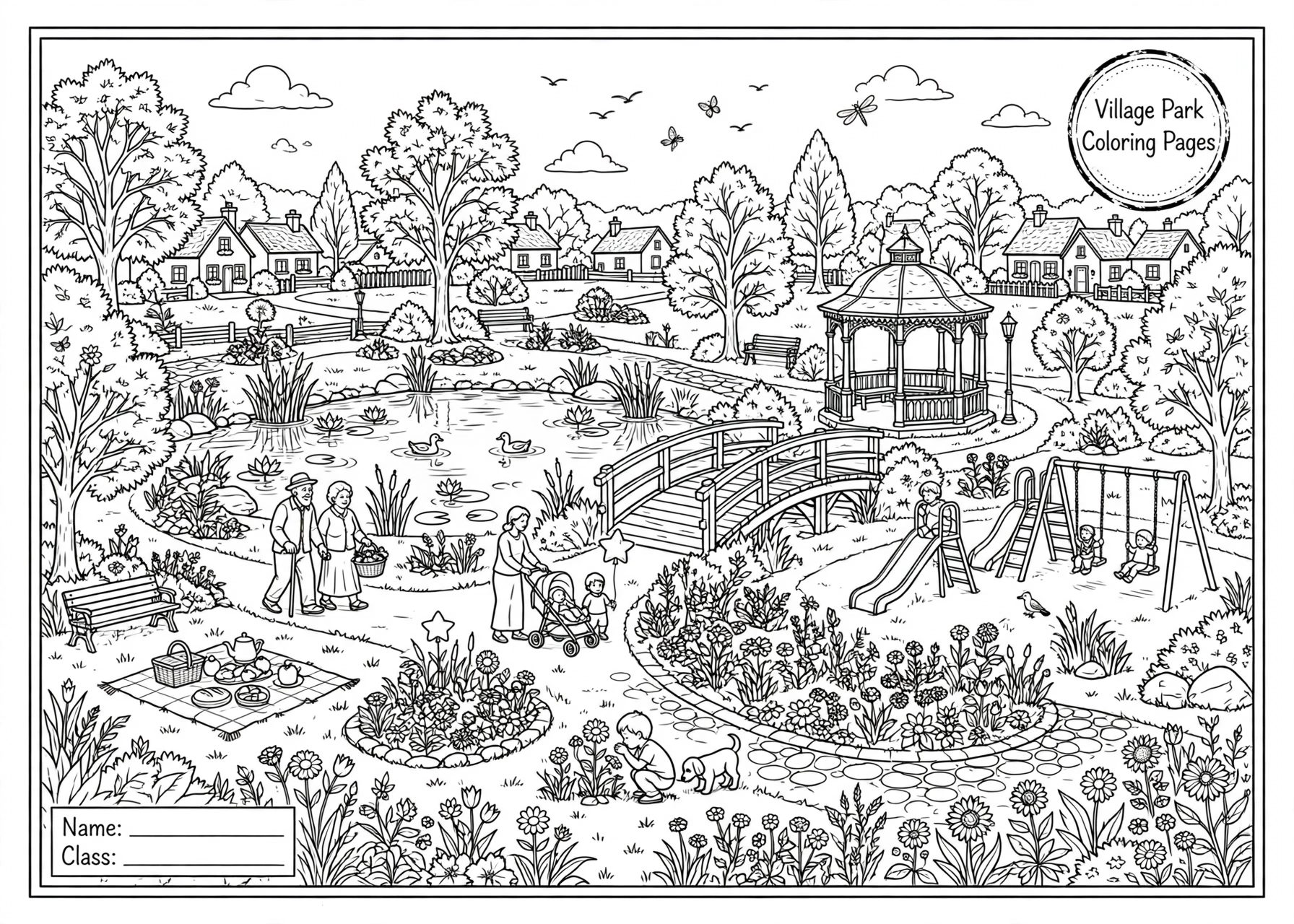
Make the Coloring Activity Comfortable and Enjoyable
A comfortable workspace helps children concentrate on the picture without unnecessary distractions. Place the coloring sheet on a flat surface and arrange pencils, crayons, or markers nearby. If the artwork is being printed, check the print preview first to ensure that the main design fits within the printable area.
Children can approach the picture in stages. Coloring the largest areas first gives the scene a foundation, while smaller details can be completed afterward. There is no need to finish everything in one sitting. Taking a break and returning later can be useful when a design contains many separate elements.
Parents and teachers can also encourage children to compare different color choices without judging one version as better than another. One child might create a bright flower-filled park, while another imagines a quiet green space beneath tall trees. Both interpretations can be equally interesting.
Village Park Coloring Pages offer a simple way to bring outdoor scenery into a creative activity. Through trees, grass, flowers, paths, and imagined community moments, children can build a colorful park that reflects their own ideas. The finished picture may even inspire a story about a favorite place to relax, explore, and spend time outdoors.
