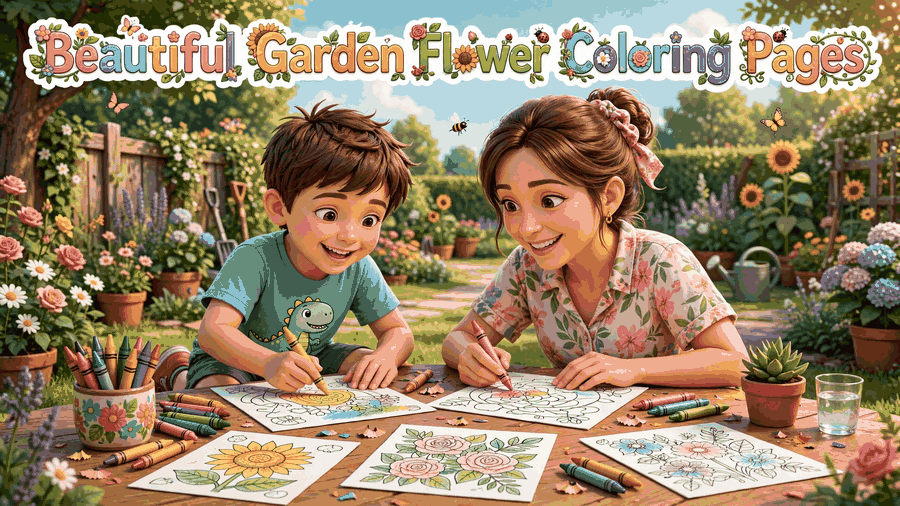
Beautiful Garden Flower Coloring Pages invite children to explore the colors, shapes, and patterns found in blooming gardens. These creative activities offer a delightful way to enjoy flowers while making each picture their own.
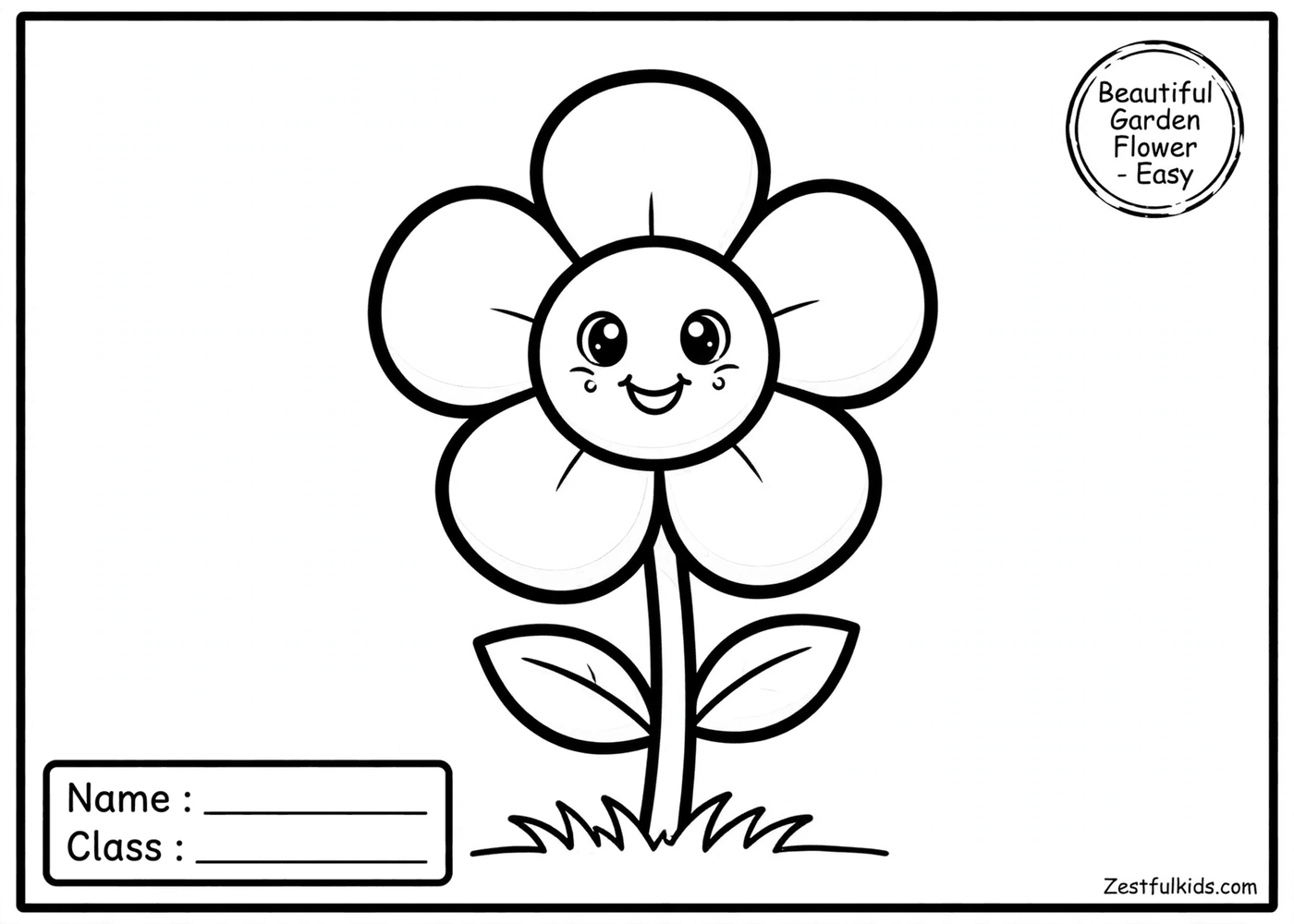
A Garden Full of Color and Possibility
A garden can look completely different from one day to the next. Some flowers have wide, rounded petals, while others feature narrow petals arranged in delicate layers. Leaves may grow in pairs, spread along a stem, or form a cluster beneath a colorful bloom. Beautiful Garden Flower Coloring Pages bring these familiar details into a creative activity that children can enjoy at home, in the classroom, or during a quiet afternoon.
Flowers are especially interesting subjects because they do not have to follow a single color scheme. A child might color a rose red, a sunflower yellow, or a tulip purple, but there is also room to invent something entirely different. A flower with blue petals and an orange center can become part of an imaginary garden. This freedom gives children a chance to make their artwork personal rather than simply copying the colors they see outdoors.
Garden-themed coloring activities can also connect naturally with everyday experiences. Children who have visited a park, helped water plants, or seen flowers growing beside a walkway may recognize some of the shapes in their pictures. They can use those memories as inspiration or create a garden that exists only in their imagination.
Notice the Details That Make Flowers Different
Not all flowers look alike, and that variety is one of the most enjoyable parts of coloring a garden scene. A flower with broad petals may need a different approach from one with many small, overlapping petals. Some blooms have a clearly defined center, while others appear as a collection of petals arranged around a stem.
Before coloring, children can take a moment to look at the outlines and decide which parts they want to emphasize. The petals might receive one main color, with a slightly darker shade near the center. Leaves can be colored in different greens, while stems may use a deeper shade to stand out against the background. These choices can make the finished picture look more varied without requiring complicated techniques.
If the illustration contains several flowers, children can decide whether to use matching colors or give each bloom a different appearance. Repeating one color throughout the picture can create a coordinated garden, while using many colors makes the scene feel more playful. Either approach works, depending on the child’s preference.
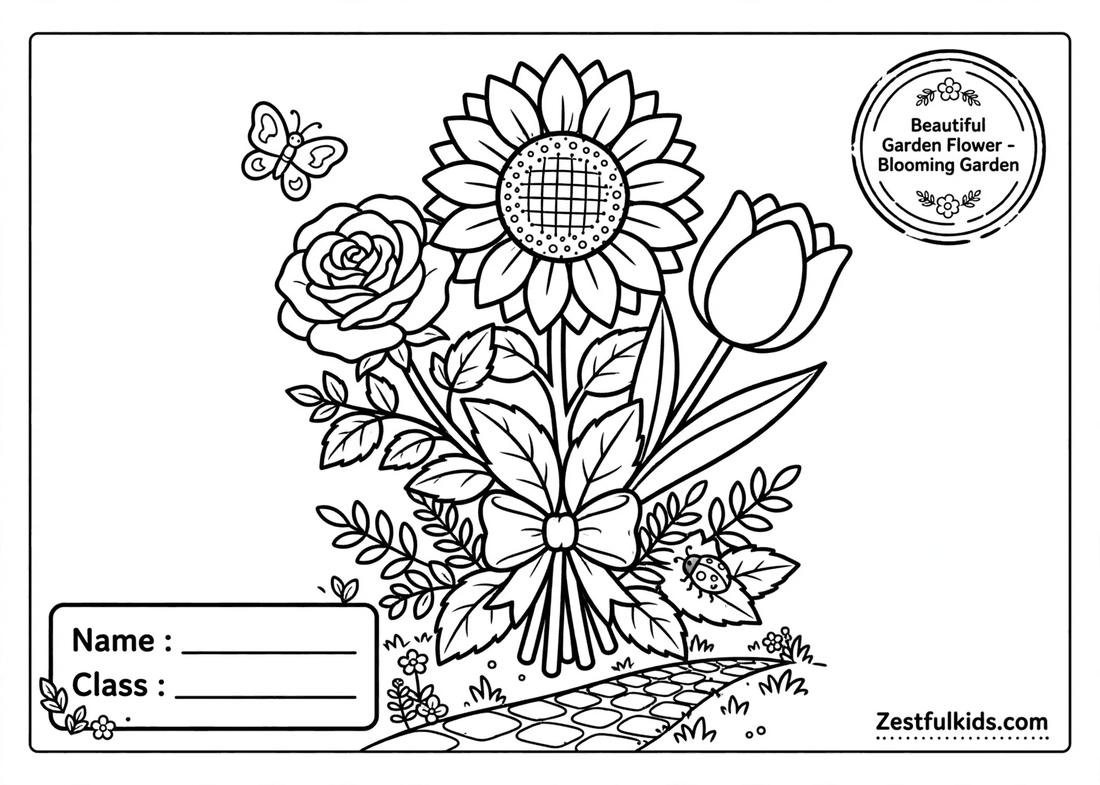
Create a Color Palette Before Starting
Choosing colors can be part of the fun rather than something children need to decide all at once. Parents and teachers can place a few crayons or colored pencils on the table and invite children to select a small group for their garden. A palette might include pink, yellow, purple, green, and blue, or it could focus on warm shades such as red, orange, and golden yellow.
Children can also explore how neighboring colors change the appearance of a flower. A pink bloom surrounded by dark green leaves may stand out more clearly than the same bloom beside pale green leaves. A yellow flower with a brown center can look different from one with an orange center. These simple combinations allow children to experiment with contrast while keeping the activity relaxed.
For a softer look, they can use light shades and leave some areas white. For a brighter picture, stronger colors can fill the petals and leaves. There is no need to color every part of the page if a child prefers a simple composition.
Add a Garden Background of Your Own
A flower illustration can become a larger scene when children imagine what might grow around it. If the picture has an open background, they may add grass, a small garden path, clouds, or a butterfly. These additions are optional ideas rather than features that every coloring design will contain.
A garden path could be colored light brown or gray, while the grass might use several shades of green. Children can draw tiny flowers along the path or add a fence behind the plants if they have space. The background should complement the flowers instead of making the picture too crowded.
Another idea is to imagine the garden at a particular time of day. A morning garden might have a pale blue sky, while an evening scene could use soft orange and purple shades. Children can decide whether their flowers are growing in bright sunshine, beneath cloudy skies, or in a magical garden with unusual colors.
Make the Activity Enjoyable for Different Ages
Flower coloring can be adapted to different levels of experience without changing the basic activity. Younger children may prefer to focus on filling large petals and leaves with their favorite colors. They can use broad crayons and make simple choices about the appearance of each flower.
Children who enjoy more detailed artwork may experiment with shading, color patterns, and carefully chosen background details. They might use two shades of pink on one flower or create a repeating pattern across several petals. Some may want to give every flower a different color combination, while others prefer a neat and consistent design.
Adults can support the activity by offering suggestions without taking over the child’s decisions. Asking which flower should be the brightest or what colors might look good together can encourage children to think about their choices. The finished picture does not need to resemble a real garden to be enjoyable.
Choose Tools That Suit the Illustration
The coloring tools can make a difference when working with flower shapes and smaller details. Crayons are convenient for larger petals and broad areas of grass. Colored pencils allow children to work around narrow outlines and add subtle differences between petals. Washable markers can create bold colors, although children should use them carefully if the paper is thin.
It may help to begin with the larger flower areas before moving to small centers, stems, and leaves. This approach gives children time to settle on a color combination before completing the details. If they want to add a background, they can decide whether to color it lightly or leave some white space around the flowers.
Before printing a coloring activity, check the print preview to make sure the illustration fits the page and the outlines remain visible. The paper and tools should be suitable for the kind of coloring children plan to do.
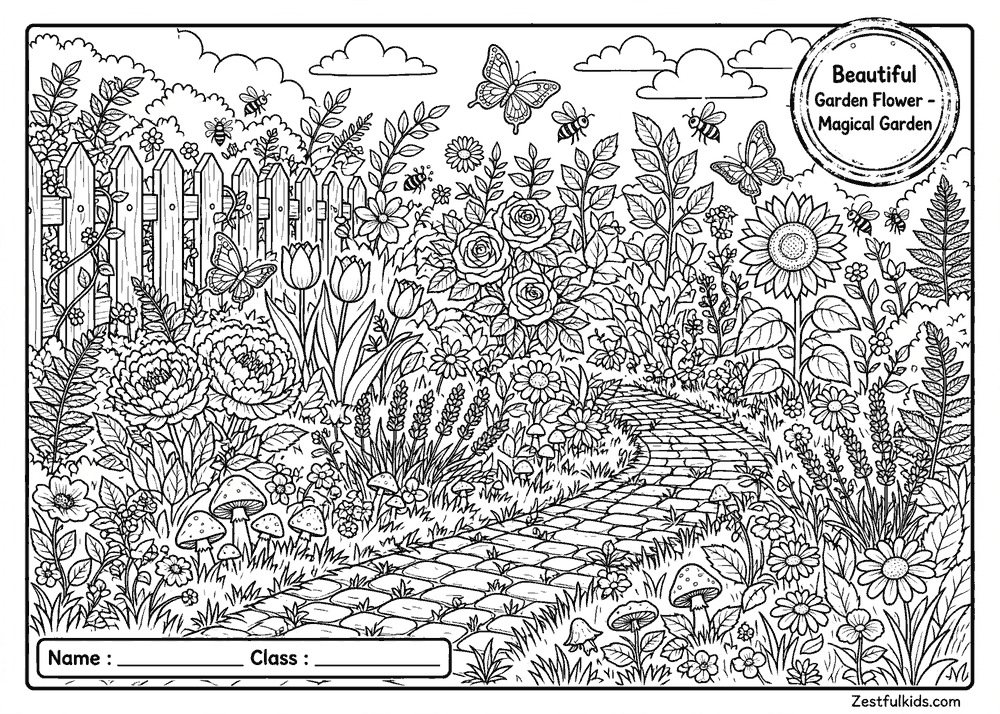
Explore More Nature-Inspired Activities
Children who enjoy garden flowers may also like exploring different kinds of blossoms. The baby flower designs offer another nature-inspired activity, giving children an opportunity to imagine smaller blooms and experiment with fresh color combinations. They can create a collection of flower pictures with different styles and appearances.
For a different kind of coloring scene, children can discover police helicopter designs. This provides a change from petals and leaves to an object with different shapes and details, while keeping the same creative freedom to choose colors and backgrounds.
Beautiful Garden Flower Coloring Pages can be used for independent coloring, a family art session, or a classroom activity about plants and nature. Children can make a bright garden, a peaceful flower patch, or a completely imaginary landscape. Each picture offers a fresh opportunity to explore color, notice small details, and enjoy creating something that reflects their own ideas.
