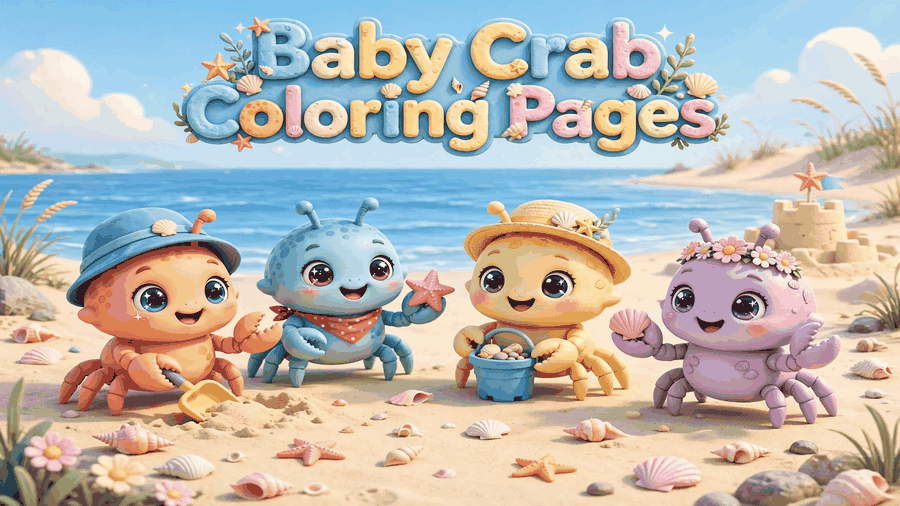
Baby Crab Coloring Pages bring the little creatures of the seashore to life through creative coloring activities. These printable designs invite children to discover tiny crabs, explore ocean-inspired colors, and enjoy a playful art experience while learning about life near the beach.
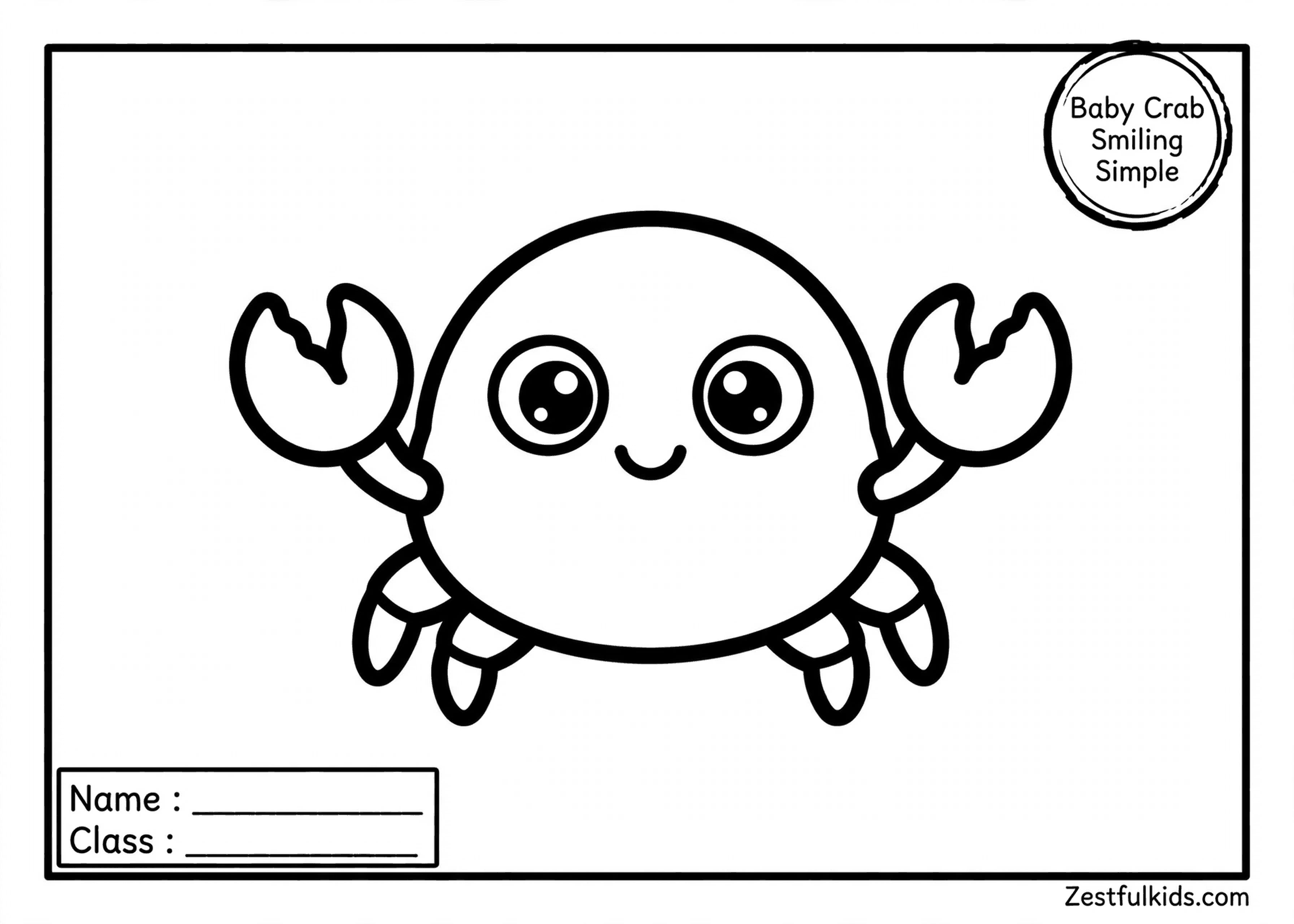
Discover the Little World of Baby Crabs
Baby crabs may be small, but they have plenty of interesting features that make them fun subjects for coloring. Their rounded bodies, little eyes, and pairs of legs offer children different shapes to explore with crayons, colored pencils, or markers. Some crabs have one claw that looks larger than the other, while many have two claws that can be colored in matching or contrasting shades.
Unlike coloring pages featuring large ocean animals, baby crab illustrations offer a closer look at a small creature that children might discover hiding beneath a rock or moving across wet sand. This makes the theme especially appealing for families who enjoy beach trips, nature walks, and learning about marine life together.
Baby Crab Coloring Pages can also inspire children to imagine their own little seaside stories. A crab might be searching for a safe place to hide, walking sideways across the beach, or exploring a shallow pool left behind by the waves.
What Makes Baby Crab Coloring Pages Interesting?
The appeal of baby crab coloring sheets comes from their simple yet recognizable shapes. Children can focus on the crab’s body, claws, legs, and eyes without needing to manage too many complicated details at once.
For younger children, a basic crab outline offers a comfortable starting point. They can choose one color for the body and another for the claws, or experiment with different shades to create a crab that looks entirely their own.
Older children may enjoy thinking about the crab’s surroundings. If the illustration includes a beach or ocean setting, they can add colors to the sand, water, rocks, or plants. If the design features only a crab, they can imagine a background and draw it on a separate sheet of paper.
The coloring experience does not have to follow realistic colors. A baby crab can be orange, pink, purple, blue, or even green. Letting children make these choices gives them room to express their imagination while enjoying the activity.
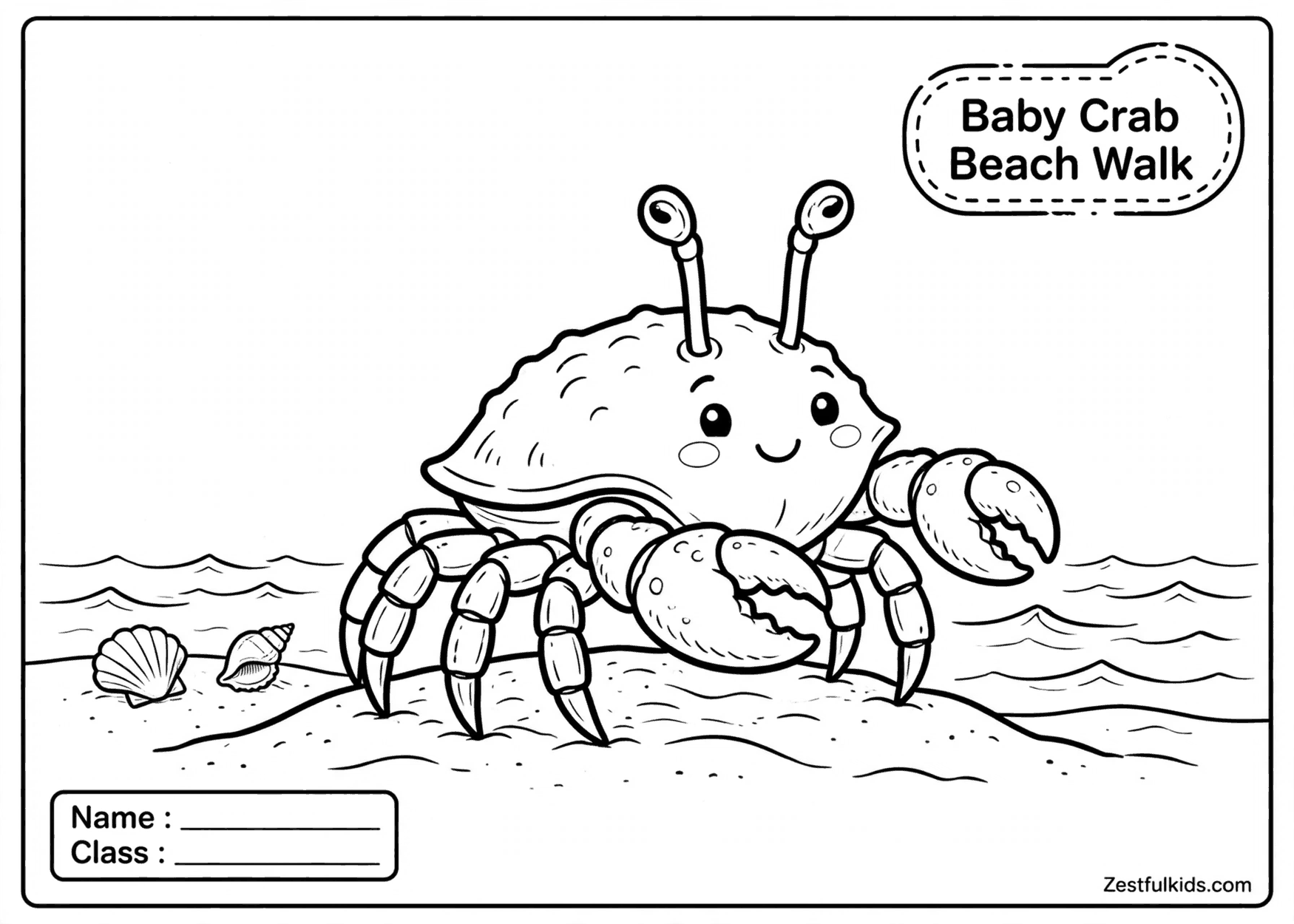
Choosing Colors for a Little Seaside Creature
A real crab’s appearance can vary depending on its species, age, and habitat. Some crabs have brownish or grayish coloring that helps them blend into their surroundings, while others display brighter shades.
When coloring a baby crab illustration, children can use these natural colors as inspiration without feeling restricted by them.
Here are a few ideas to try:
- Warm beach colors: Use orange, peach, reddish brown, and sandy beige for a crab inspired by a sunny shoreline.
- Cool ocean colors: Try blue, turquoise, and soft green for a playful underwater-inspired design.
- Natural rock-pool colors: Combine gray, brown, olive green, and muted blue to suggest a crab exploring a rocky beach.
- Fantasy colors: Choose pink, purple, yellow, or rainbow shades to create an imaginative little sea creature.
Children can also experiment with light and dark shades. A lighter color on the crab’s body and a darker shade on its claws may help the illustration look more interesting.
Turn Coloring Time into a Seashore Adventure
Baby Crab Coloring Pages can become part of a larger creative activity at home or in the classroom. Rather than treating coloring as an activity that ends when the page is complete, parents and teachers can encourage children to build a simple story around their artwork.
For example, after coloring a baby crab, invite the child to imagine where it lives. Does it hide under a rock? Does it walk across the sand looking for food? Is it exploring a small pool near the beach?
Children can draw additional details on another sheet of paper, such as seashells, seaweed, tiny fish, or gentle waves. These additions should be optional, allowing children to decide how much they want to include.
Another enjoyable idea is to create a small seaside scene with several different animals. Children can color their crab and then add other creatures they might find near the ocean. They may enjoy exploring ocean coloring ideas and discovering how unusual color choices can make an artwork more personal.
This activity can also encourage conversations about the beach and the animals that live there. Parents might share simple facts about how crabs move sideways, use their claws, or find shelter along the shore.
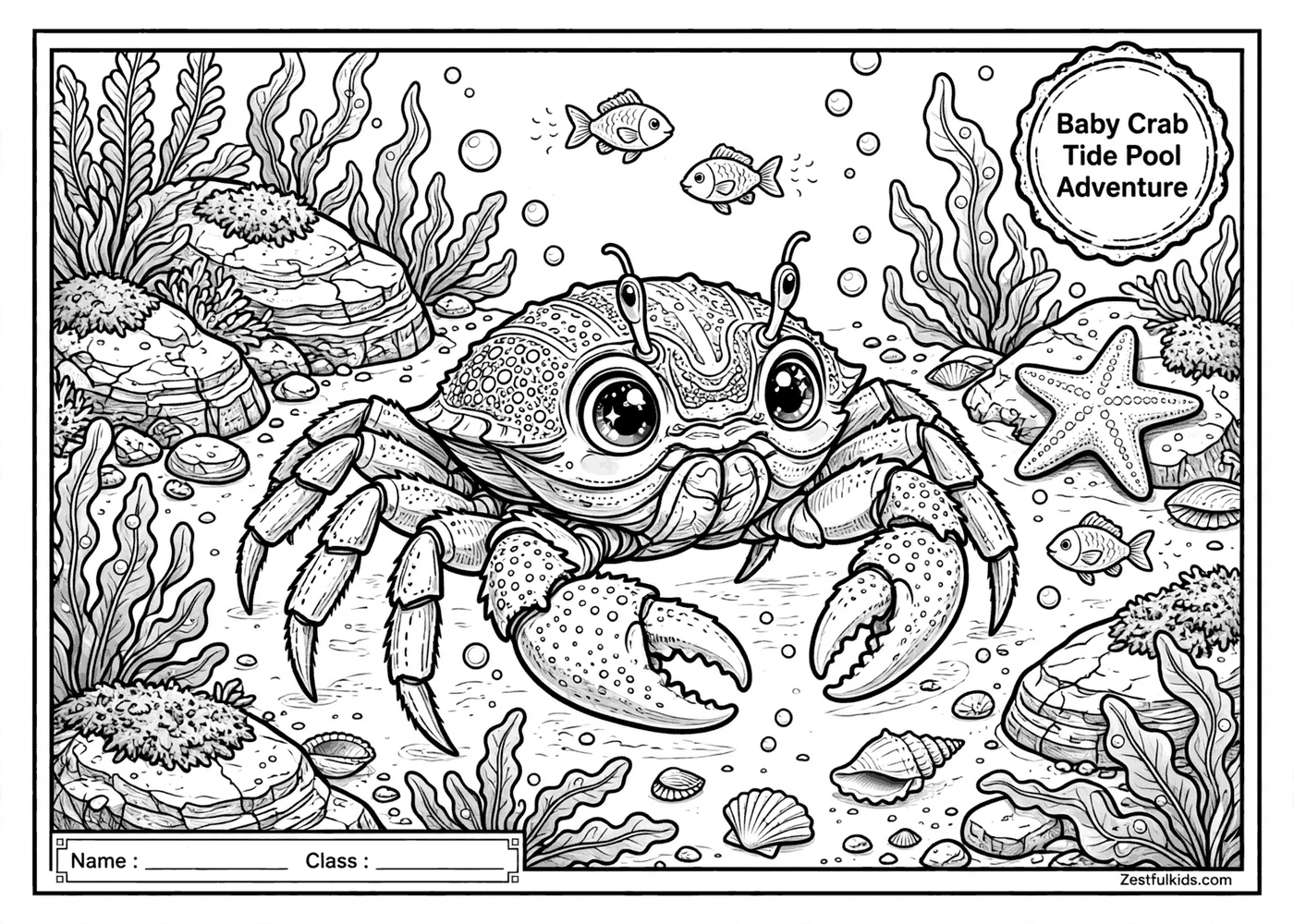
Simple Coloring Techniques for Young Artists
Baby crab illustrations offer a useful opportunity to try different coloring techniques without making the activity feel complicated.
Children who prefer crayons can begin by filling in the larger parts of the crab’s body with gentle, even strokes. They can use a different color for the legs and claws to make the various parts easier to recognize.
Colored pencils are useful for children who want to experiment with blending. For example, they might combine light orange with reddish brown to create a warm body color. They can also use gentle pressure to make the crab look lighter in some areas and darker in others.
Markers work well when children want bright, bold colors. However, if the printable is on thin paper, placing another sheet underneath may help protect the surface they are working on.
There is no need to make every coloring choice perfectly neat. A child’s artwork can have unusual color combinations, uneven strokes, and imaginative details. These are all part of the creative experience.
Bring the Beach into Other Coloring Activities
Children who enjoy Baby Crab Coloring Pages may also like exploring other nature-themed printable activities. Connecting different themes can make coloring time feel like a continuing adventure rather than a collection of unrelated pages.
For instance, a child who colors a crab near the beach might enjoy a mountain landscape next. The change from a seaside setting to a highland view offers different shapes, scenery, and color choices to explore.
Parents and teachers can introduce mountain sunset coloring pages as another opportunity to experiment with warm and cool colors. Children can compare the colors they used for the beach with the shades they choose for a mountain sky.
This simple comparison can lead to interesting discussions about how different places look and feel. A beach scene may inspire bright blues and sandy colors, while a sunset over the mountains might encourage children to use orange, pink, purple, and deep blue.
Enjoy a Creative Moment with Baby Crab Coloring Pages
Baby Crab Coloring Pages offer a charming way for children to explore a small but fascinating creature from the seaside. The simple shapes of a crab make the subject approachable, while the possibility of adding colors, backgrounds, and imaginative details keeps the activity open-ended.
Whether used during a quiet afternoon at home, as part of a classroom nature theme, or after a family trip to the beach, these coloring activities can bring a little seaside inspiration into everyday life.
Children can choose realistic colors, invent a fantasy crab, or create an entire beach story around their artwork. With a few coloring tools and plenty of imagination, a tiny crab can become the starting point for a memorable creative adventure.
