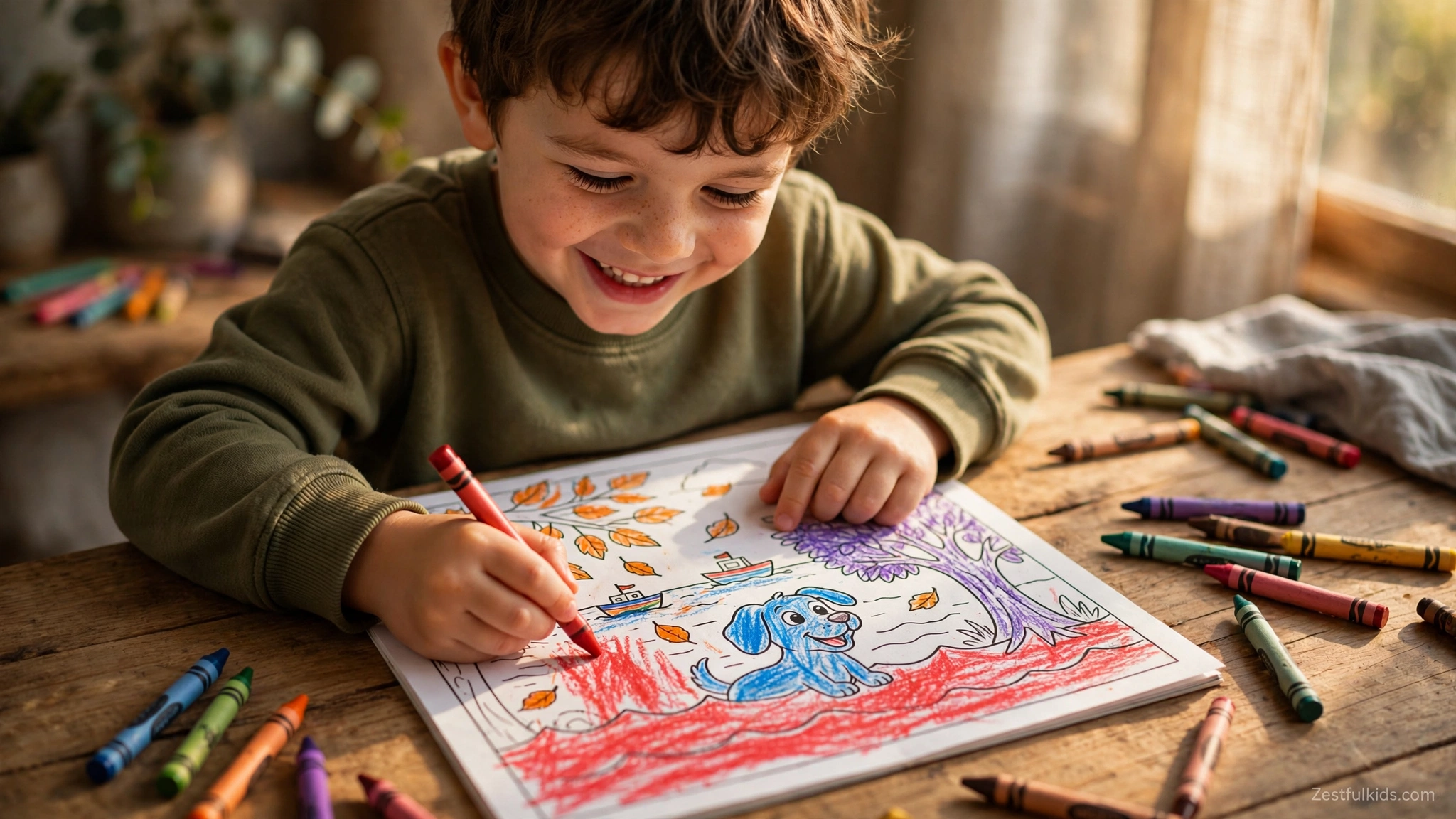
Your Child Colored the Ocean Red? That’s Not a Mistake – Your child just finished coloring the ocean—and it’s bright red. The leaves are orange, the trees are purple, and the dog is blue. You might be tempted to say, “That’s not the right color.”
But what if there is no “wrong” color at all?
When children color, they aren’t trying to reproduce the world exactly as adults see it. They’re making choices, testing ideas, and turning their imagination into something they can see on paper. A red ocean may not look realistic to us—but to a child, it could be an ocean on another planet, a magical sea, or simply their favorite color.
That’s why a child coloring the ocean red isn’t necessarily making a mistake. It may simply be a child being creative.
Coloring pages can give children something that is easy to overlook: the freedom to make their own choices. There is no single answer that every child has to follow, and the same coloring page can become completely different depending on a child’s imagination. Before reaching for the “right” crayon, take a moment to look at the picture through your child’s eyes.
There Is No Single “Correct” Color in Creative Activities
Creative activities don’t always have one right answer. A leaf can be green in real life, but a child may decide that orange looks more interesting. A tree may become purple, and the ocean may become red. This isn’t wrong. Coloring gives children a chance to make their own decisions and explore different possibilities. They have a blank page and a box of colors—and they get to decide what happens next.
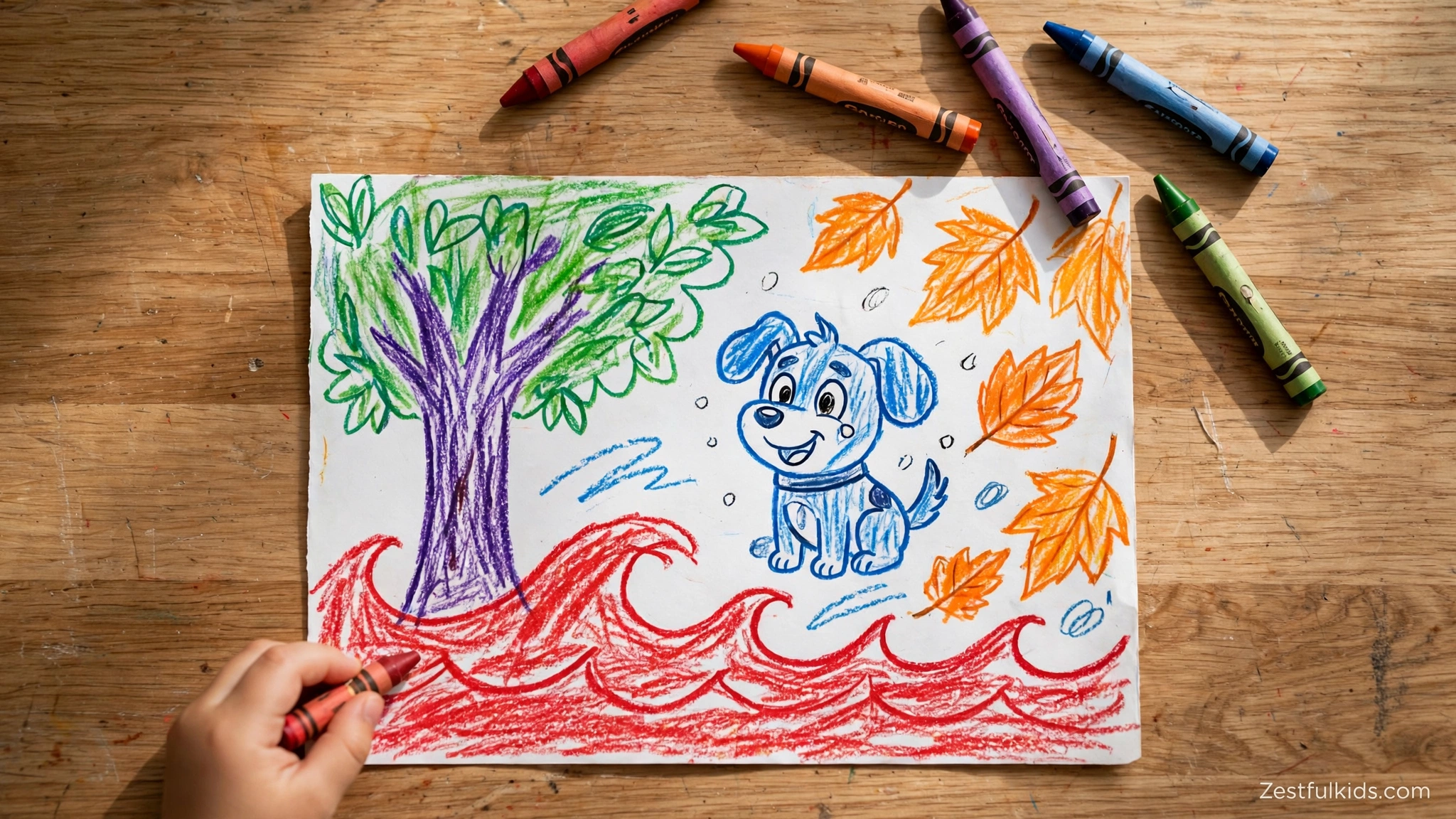
Instead of focusing only on whether the finished picture looks realistic, parents can pay attention to the process. What colors did your child choose? What ideas might be behind those choices?
There doesn’t have to be only one “correct” way to color. Every child approaches the same page differently, and that difference is what makes creative activities interesting. The finished picture doesn’t need to look exactly like an adult’s version.
Why Children Choose Unusual Colors
Children don’t always see the world in exactly the same way adults do. Sometimes they choose a color simply because it’s their favorite. Other times, they’re experimenting with something new, or they want the picture to look funny, exciting, magical, or completely different from reality.
A child may choose purple for a tree because purple is their favorite color. Another may color the ocean red because they like red, while someone else may create a blue dog because they’re imagining a character from a fantasy world.
Children also learn through experimentation. They discover how colors look together, how they can be combined, and how their choices change the appearance of a picture. A coloring page can therefore become much more than a picture to fill in.
It can become a small space where children are free to make decisions and explore their imagination. There is no need for every decision to be realistic. Sometimes, the unusual choices are what make a child’s artwork unique.
Coloring Is a Form of Self-Expression
Children don’t always have the words to explain what they think or imagine. Creative activities give them another way to express their ideas, interests, and imagination. Coloring can therefore become a simple form of self-expression.
The colors they choose, the details they add, and the way they fill a page make their artwork different from everyone else’s. This doesn’t mean parents need to interpret every color as having a hidden psychological meaning. Sometimes, an orange leaf is simply an orange leaf.
What matters is that the child has the opportunity to make that choice and see their idea appear on the page. Giving children this freedom can help make creative activities feel enjoyable rather than like a task with strict rules.
When children feel comfortable experimenting, they can become more willing to try combinations they have never tried before. The goal isn’t to make every picture perfect. It’s to give children space to create.
Why Adults Sometimes Unintentionally Limit Creativity
Adults naturally see the world through experience. We know grass is usually green, the sky is often blue, and ocean water is commonly represented with shades of blue. Because these associations are familiar, we may instinctively expect children to use the same colors.
When a child colors grass purple, an adult may automatically say, “Grass isn’t purple.” It sounds harmless—especially when the intention is simply to teach. However, repeated corrections can sometimes make children more hesitant to experiment with their own ideas.
Children may eventually start asking, “What color should I use?” before making a creative decision. Instead of thinking about what they want to create, they may focus on finding the answer they believe an adult wants to hear. That can gradually take some of the spontaneity out of the activity.
This doesn’t mean adults should never teach children about real-world colors. It simply means there’s a difference between teaching and correcting every creative choice. Both learning and creative freedom can exist at the same time.
What Parents Can Say Instead of “That’s the Wrong Color”
Instead of saying, “That’s the wrong color,” respond with curiosity. Try saying, “I see you chose orange for the leaves,” or “That’s an interesting color for the ocean.” These simple comments acknowledge the child’s choice without immediately judging it.
You can also ask questions such as, “What made you choose that color?” or “Tell me about your picture.” Another option is to say, “I like how you combined those colors,” or “Your picture is different from mine, and I like that.”
These responses let children explain their ideas without feeling judged. They also turn a simple coloring activity into a conversation between the child and the parent. Sometimes, the best response may be as simple as, “Tell me about your picture.”
You may be surprised by the story your child has created. What looks like a red ocean to an adult could be an ocean on another planet in the child’s imagination. Giving children an opportunity to explain their ideas can make the activity much more meaningful.
How to Encourage Creativity Without Correcting Every Detail
Encouraging creativity doesn’t mean staying completely silent. You can still teach children about real-world colors while allowing them to make their own creative choices. The key is to provide information without making every creative decision feel like a mistake.
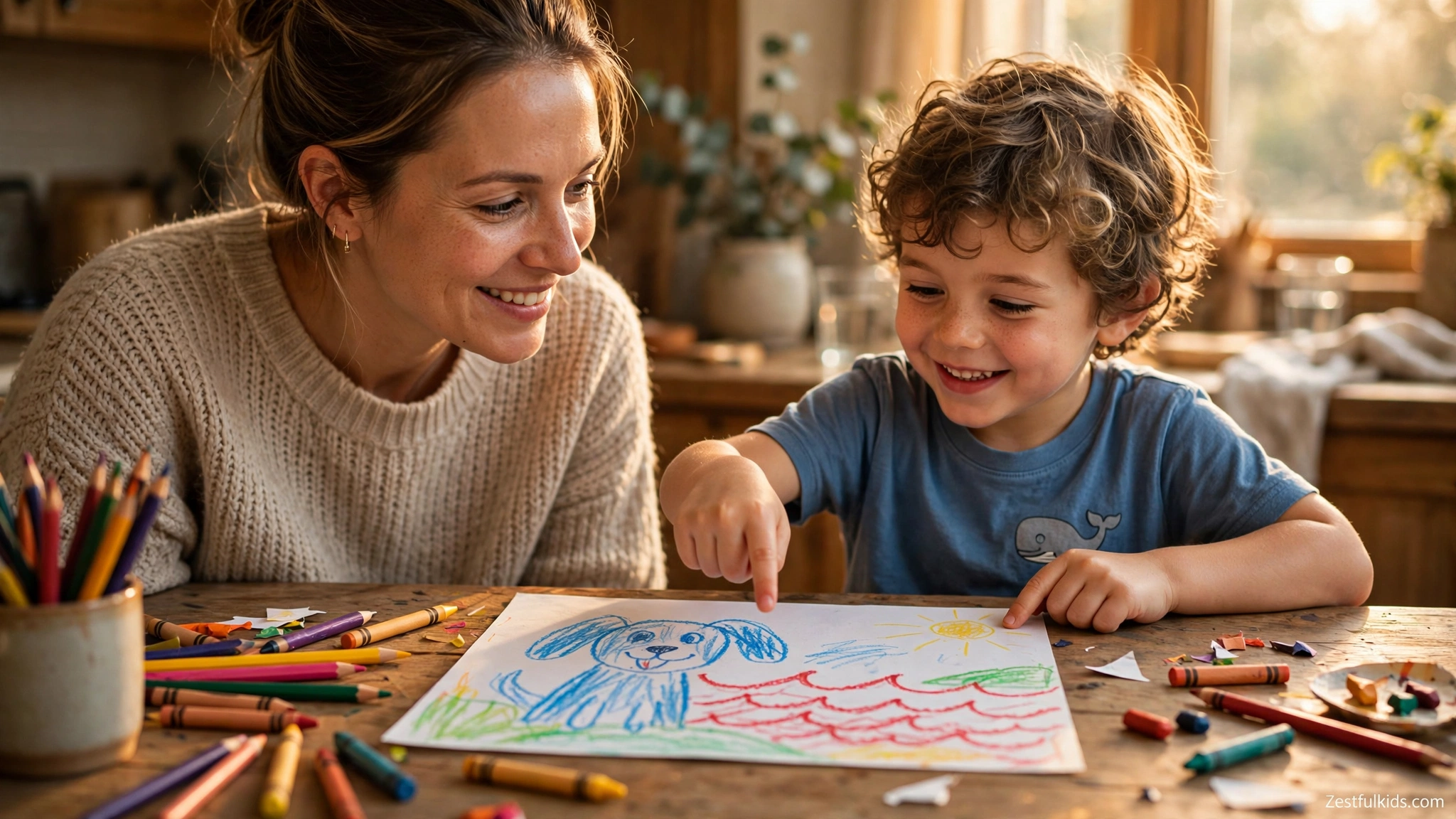
For example, you could say, “Leaves are often green, but I like the orange leaves you made.” Then follow up with, “What kind of tree is it?” This introduces real-world knowledge while still respecting the child’s imagination.
Parents can also introduce different shades and color combinations. Encourage children to experiment with light blue and dark blue, yellow and orange, pink and purple, or any combination they find interesting. The goal isn’t to make every coloring page look realistic, but to give children opportunities to experiment.
It also helps to provide different types of coloring activities. Some pages can encourage realistic coloring, while others invite children to use their imagination. A good collection of coloring pages gives children the freedom to decide how they want their finished artwork to look.
Free Printable Coloring Pages for Creative Exploration
One of the easiest ways to encourage creative exploration at home is through free printable coloring pages. You don’t need complicated materials or expensive equipment to get started. A printer, some paper, and a box of crayons, colored pencils, or markers are enough.
Parents can print different themes and let children decide how they want to color them. Some children prefer animals, while others enjoy dinosaurs, unicorns, nature, vehicles, or everyday scenes. Giving them different subjects can help keep the activity interesting.
For example, a unicorn coloring page naturally gives children plenty of opportunities to experiment with unusual colors. A unicorn doesn’t have to be limited to realistic animal colors—children can create a pink, purple, rainbow, or even green character. If you’re looking for a ready-to-print option, these Kawaii Unicorn Coloring Pages – 5 Free Printable Cute Unicorns include five adorable designs that combine coloring with simple early-learning activities such as letters, counting, and storytelling.
For children who love dinosaurs, the same creative freedom applies. A dinosaur can be any color a child imagines—bright green, purple, or even rainbow-striped. A fun example is this Dinosaur Has 500 Teeth Coloring Page, which pairs a cute, friendly dinosaur with an interesting science fact about Nigersaurus.
Coloring can also be combined with storytelling. If a child colors a dog blue, perhaps it’s a magical dog. A red ocean might belong to another planet, while purple trees could be part of an imaginary forest.
An unusual color can become the beginning of an entire story. This is one reason it’s valuable to avoid immediately correcting every unrealistic color choice. The coloring page may become the starting point for a much bigger creative idea.
How to Guide Children Toward Realistic Colors Without Limiting Creativity
Teaching children about real-world colors and encouraging creative freedom don’t have to be opposing forces. You can do both—gently, intentionally, and without making your child feel that their choices are wrong. The goal is to expand their awareness while preserving their freedom to experiment.
1. Use a “Teach First, Color Later” Approach
Before your child starts coloring, take a moment to talk about the picture together. Ask questions like, “What colors do you think we might see in a real ocean?” or “Have you ever seen a tree? What color was it?” These questions introduce real-world knowledge without telling the child what they must do.
Once coloring begins, let your child decide what to do with that information. They may choose blue for the ocean, or they may still choose red. Either choice can become part of the creative process.
2. Create a “Real or Imaginary?” Game
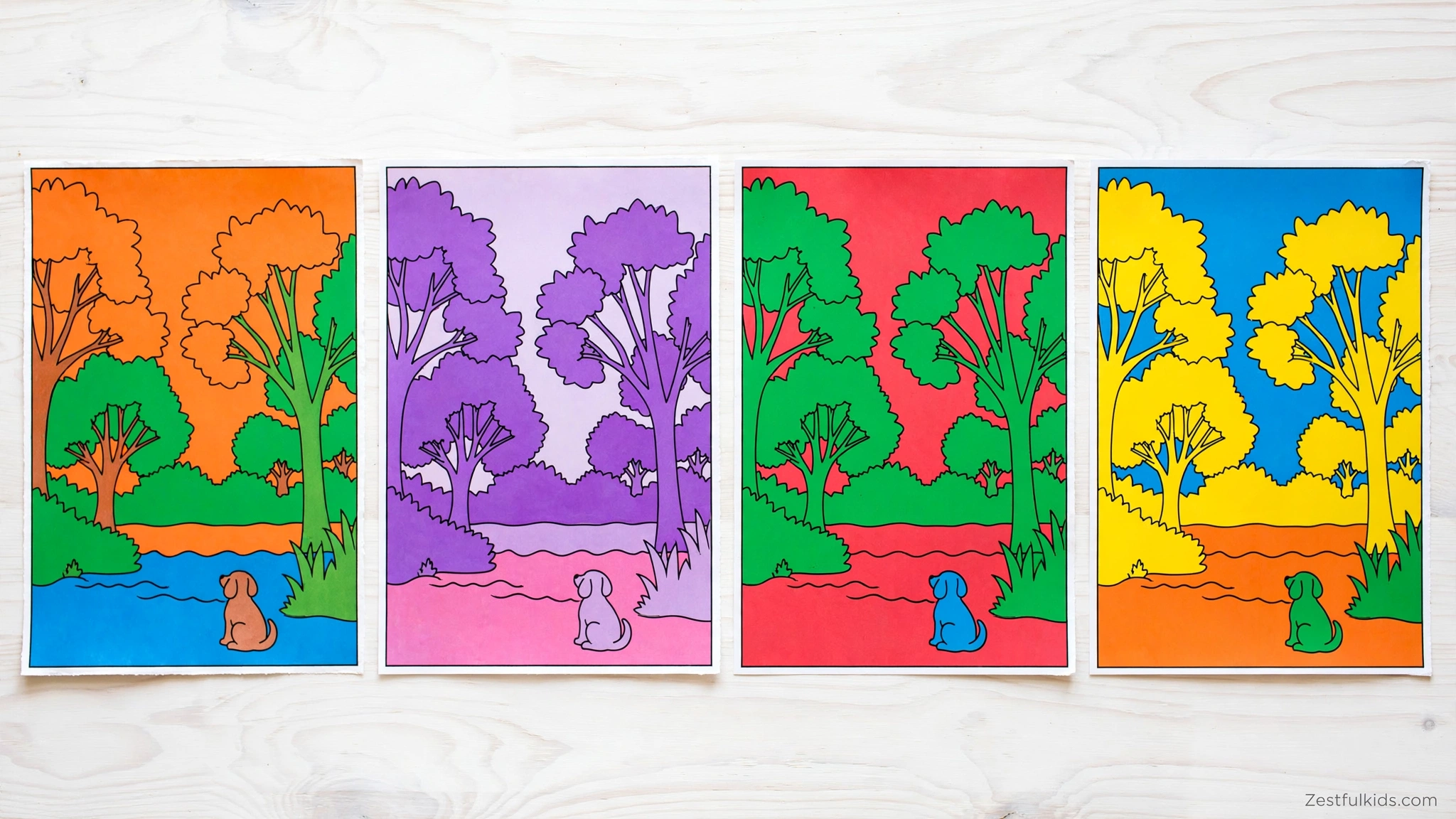
Turn color learning into a playful activity. You could say, “Let’s color this page in two ways—one with real colors and one with your imagination colors!” Print two copies of the same page. On the first, encourage realistic colors, while on the second, let your child experiment freely.
This teaches children that both realistic and imaginative approaches can have a place. They learn the difference without feeling that one approach is automatically better than the other.
3. Use Gentle Observations Instead of Corrections
Instead of saying, “That’s wrong,” try making a gentle observation. You could say, “In real life, oceans are usually blue, but your red ocean looks really interesting. Tell me about it.”
You might also say, “I’ve seen green leaves outside. What made you choose orange today?” This acknowledges what is common in the real world while still validating the child’s creative choice. The goal isn’t to pretend that all colors are realistic. It’s to teach children about reality without making imagination feel like a mistake.
4. Provide “Realistic” and “Creative” Coloring Pages
Offer a mix of different coloring activities. Realistic pages can feature animals, nature scenes, or everyday objects where children can practice observing real-world colors.
Fantasy pages can feature unicorns, dinosaurs, imaginary creatures, or magical scenes where almost any color can work. This helps children understand that different activities can have different purposes while keeping creativity enjoyable.
5. Praise the Process, Not Just the Outcome
Instead of only saying “Good job!” when colors match reality, praise the child’s effort and thinking. You might say, “I love how carefully you chose that color,” or “You worked really hard on this picture.”
You can also ask, “Tell me how you decided to use purple for the tree.” This shows that you are interested in the child’s creative process, not just whether the final picture looks realistic.
6. Model Realistic Coloring Occasionally
Children often learn by watching the people around them. Sit and color alongside your child sometimes, and use realistic colors in your own picture without telling them to do the same.
You might casually say, “I’m using blue for my ocean because that’s what I usually see at the beach.” Your child can follow your example if they want to, or continue creating their own version.
7. Introduce Color Theory Through Play
Coloring can also become an introduction to basic color theory. Teach children simple ideas such as how blue and yellow can make green or how red and blue can create purple.
Then let them experiment with their own combinations. Ask questions such as, “What happens if we mix orange and blue?” This builds color awareness naturally without making any creative choice feel wrong.
8. Create a “Color Detective” Activity
Turn learning into a simple game by becoming color detectives together. Ask your child, “Can you find three things in this room that are green?”
You can continue with other colors and encourage them to look carefully at their surroundings. This builds observation skills and reinforces real-world color associations while keeping the activity light and playful.
The Balance: Freedom Within Guidance
The goal isn’t to force children to color realistically. The goal is to expand their awareness while preserving their creative freedom. Think of it as giving children knowledge and then allowing them to decide how they want to use it.
You can show them how a recipe works, explain why certain ingredients go together, and still let them experiment with their own combinations. Sometimes they’ll follow the recipe, and sometimes they’ll invent something new. Both experiences can be valuable.
The same applies to coloring. A child who knows that oceans are usually blue and feels free to color them red is a child who can understand reality while still using their imagination.
Quick Guide: Guiding Without Limiting
- Teach real-world colors before coloring begins.
- Use “Real or Imaginary?” games.
- Offer both realistic and fantasy coloring pages.
- Say “Tell me about it” instead of “That’s wrong.”
- Model realistic coloring without forcing it.
- Praise effort and thinking, not just accuracy.
Let Children Create Their Own Version
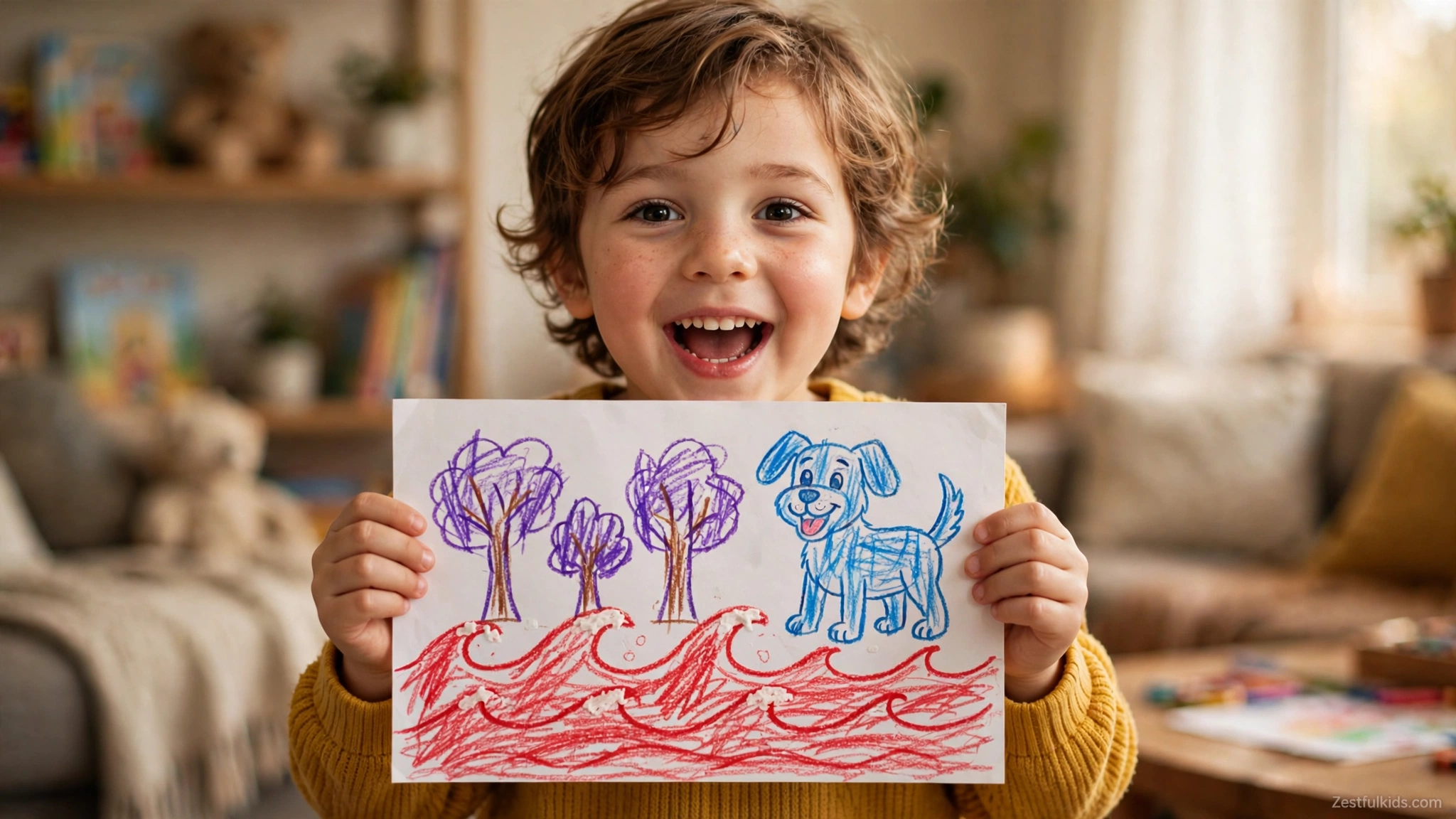
The next time your child colors the ocean red, pause before saying, “That’s the wrong color.” Look at the picture and ask them about it instead. Maybe they simply like red, maybe they’re experimenting, or maybe they’re creating an imaginary world.
Whatever the reason, there’s value in giving children room to make their own choices. Coloring doesn’t have to be about producing a perfect picture or copying the colors of the real world. It can be about exploring, imagining, choosing, and creating.
So let the leaves be orange. Let the trees be purple, and let the dogs be blue. If your child wants to color the ocean red, let them.
There is no wrong way to be creative.

