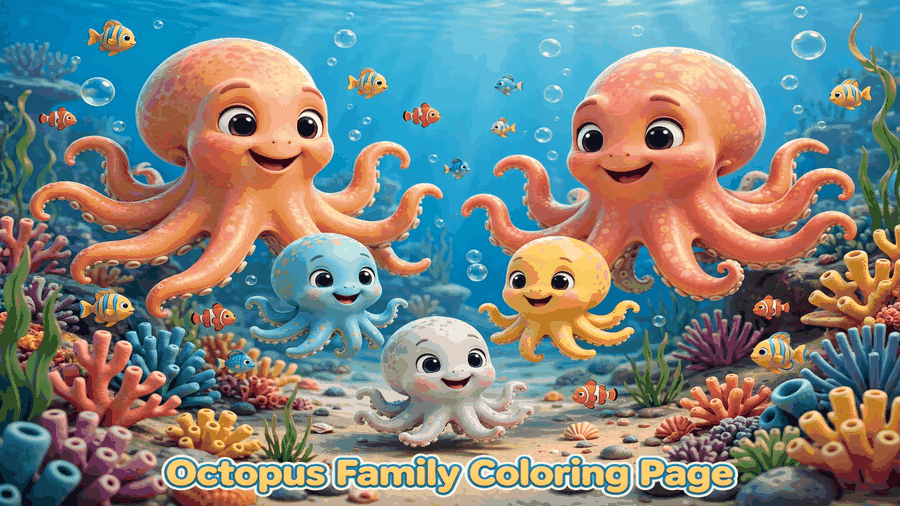
Octopus Family Coloring Page brings the fascinating world of underwater animals to life through a creative activity for children. Explore the charm of octopus families, enjoy imaginative coloring, and discover fun ways to turn printable pages into a memorable learning experience.
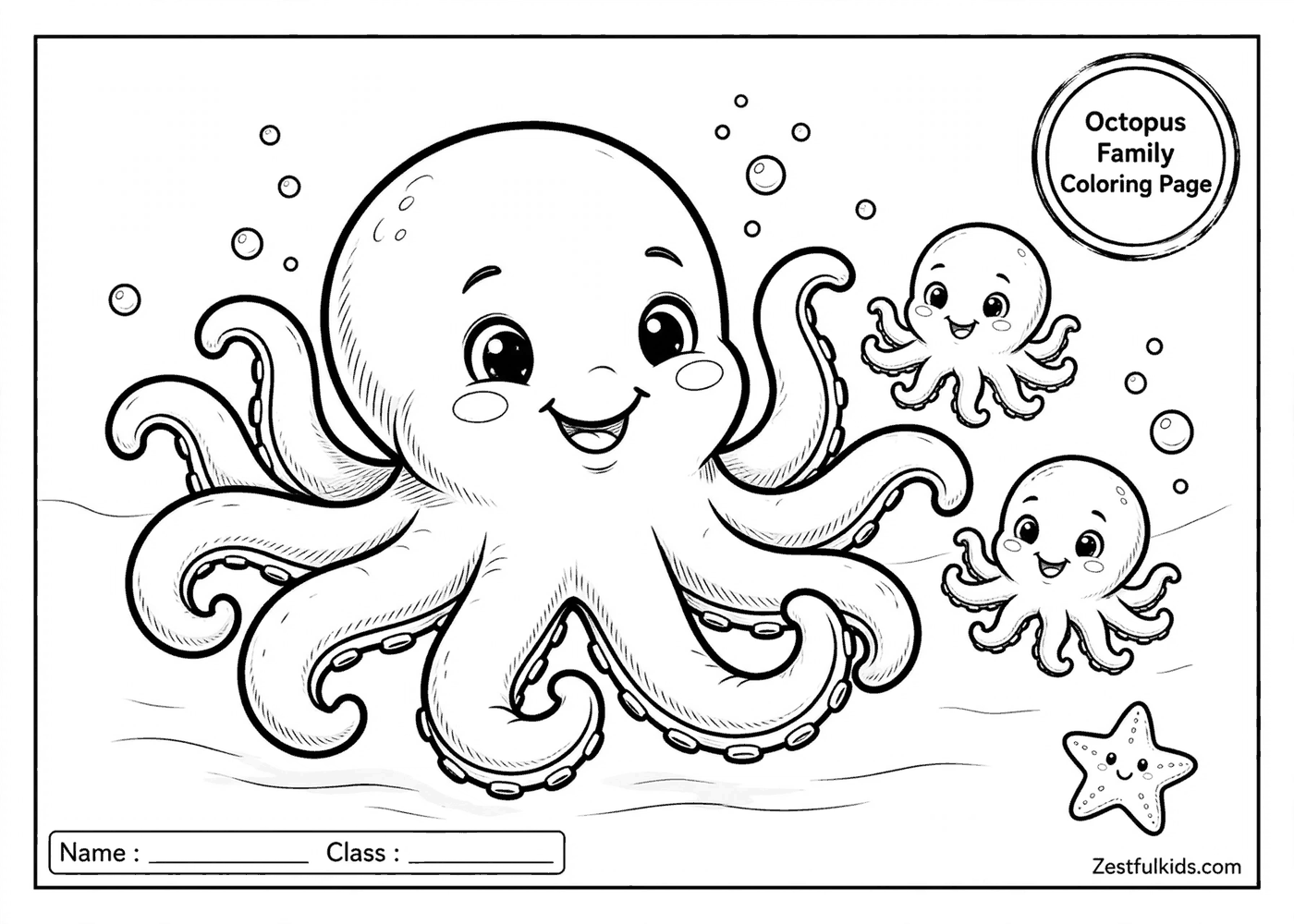
Discover the Charm of an Octopus Family Coloring Page
An octopus has a distinctive appearance that makes it an interesting subject for children’s coloring activities. Its rounded head, large eyes, and eight flexible arms create a shape that is instantly recognizable. Unlike many familiar land animals, an octopus moves through water by using its arms and body in a unique way.
An Octopus Family Coloring Page introduces children to this remarkable sea creature through art. Depending on the illustration, the family may include a large octopus alongside smaller ones, inviting children to imagine how these underwater animals might explore their surroundings together. The theme combines animal discovery with the simple enjoyment of choosing colors and filling in shapes.
For parents and teachers, this coloring activity offers an opportunity to introduce marine life without making the experience feel like a formal lesson. Children can focus on the illustrations, talk about what they notice, and create their own colorful interpretation of an underwater world.
What Makes Octopuses Interesting to Color?
Octopuses have several distinctive features that make them especially appealing for coloring pages. Their eight arms are the most noticeable detail, offering plenty of space for different coloring techniques. Children can use one color for all the arms or experiment with alternating shades to create a playful pattern.
The head and eyes also provide opportunities for creative expression. A child might choose a bright color for the body, a contrasting shade for the arms, and a different color around the eyes. These choices help make each finished picture feel personal.
Another interesting detail is the texture of an octopus’s skin. Some octopuses can change their appearance, including their color and texture, to blend into their surroundings or communicate. Children do not need to reproduce realistic colors when coloring an illustration. Instead, they can imagine an octopus in a coral garden, swimming through blue water, or exploring a mysterious underwater cave.
This freedom makes the theme suitable for both realistic animal coloring and imaginative artwork.
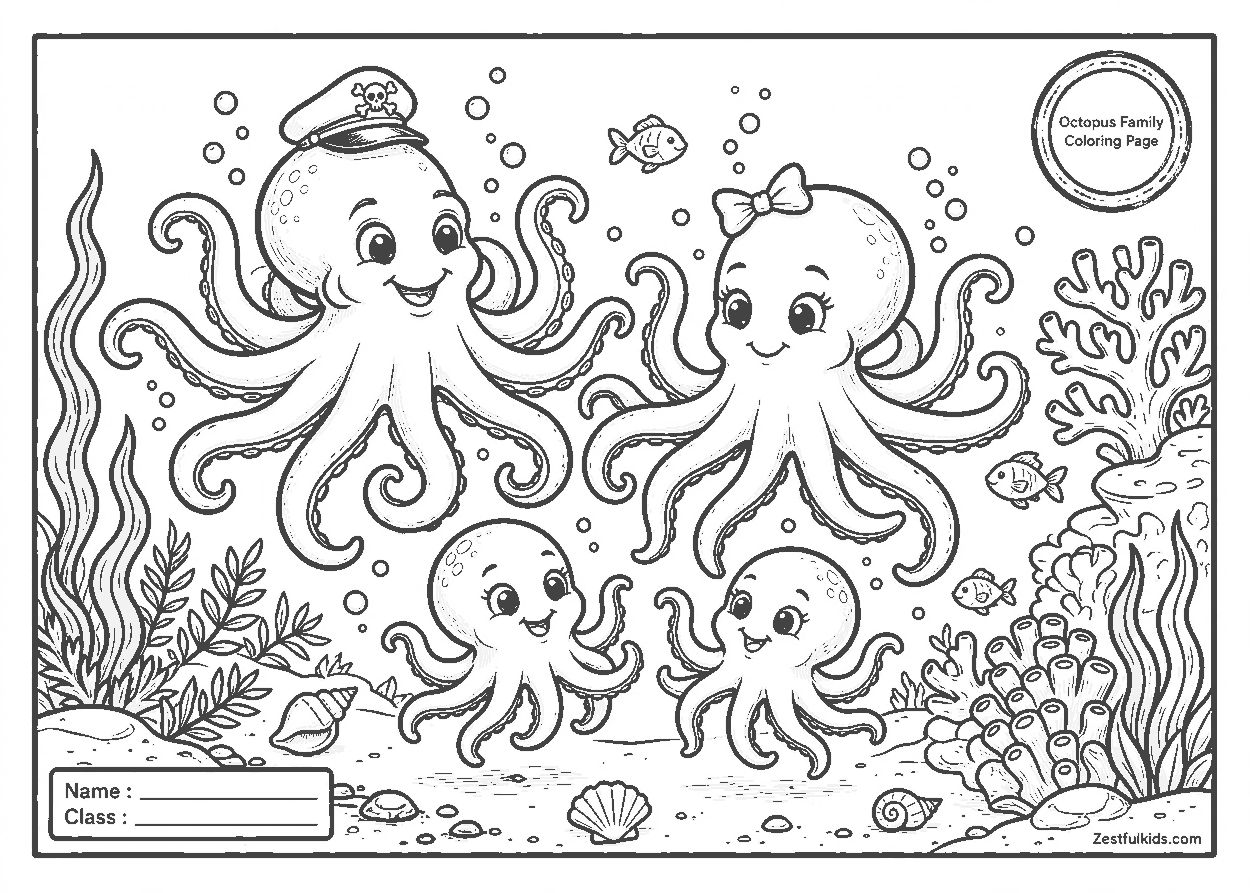
Choosing Colors for an Underwater Family
Color selection can turn a simple printable into a creative exploration. Children may enjoy choosing different colors for each member of the octopus family, making it easy to distinguish the larger and smaller animals in the picture.
Here are some ideas to try:
- Ocean-inspired colors: Blue, turquoise, and sea green can create an underwater atmosphere.
- Bright and playful shades: Pink, orange, purple, and yellow can give the octopuses a cheerful appearance.
- Natural combinations: Brown, reddish orange, and muted green can suggest the colors found in marine environments.
- Fantasy colors: Rainbow arms, sparkling purple bodies, or colorful patterns can turn the family into imaginary sea creatures.
There is no need to follow a strict color guide. Children can use their favorite shades and make their own decisions about how the animals should look.
If the illustration includes several octopuses, try giving each one a different color combination. This small challenge encourages children to think about the entire picture rather than coloring every animal in exactly the same way.
Creative Activities to Try With the Printable
An Octopus Family Coloring Page can be used for more than a single coloring session. With a little imagination, parents and teachers can turn it into a short activity that combines drawing, storytelling, and conversation.
Imagine an Underwater Home
After coloring the octopuses, children can imagine where the family lives. They might describe a rocky ocean floor, a hidden underwater garden, or a quiet place among sea plants.
If the illustration leaves open space around the animals, children can add their own background details. Small fish, bubbles, seaweed, shells, and coral are possible additions, depending on what they want to include.
This activity gives children a chance to make creative decisions about the setting without needing to follow a complicated drawing guide.
Create a Story About the Family
Invite children to give the octopuses names and imagine what they might be doing. Perhaps one octopus is exploring a new part of the ocean, while another is resting near a rock.
Children can tell the story aloud or write a few sentences beside their finished picture. Younger children may prefer to describe their ideas while an adult writes them down.
The story does not need to be long. Even a simple idea about where the family is going can make the coloring activity more engaging.
Count the Arms
Octopuses are known for having eight arms, which makes the animal a natural subject for a simple counting activity.
Children can count the arms they see in the illustration, pointing to each one as they go. If the picture includes multiple octopuses, they can count the arms of each animal separately.
This activity should follow the actual illustration. Some arms may overlap or be partly hidden, so children can discuss which ones are easy to see and which ones are more difficult to identify.
Tips for a Comfortable Coloring Session
The best coloring experience does not require a large collection of art supplies. Crayons, colored pencils, or washable markers can all work well, depending on the paper and the child’s preferences.
For younger children, crayons are often a practical choice because they are easy to hold and allow broad coloring strokes. Colored pencils can be useful for adding smaller details around the eyes or along the arms. Markers may produce brighter colors, although adults should check whether the paper is suitable for them.
Before printing, review the available print settings and preview the page. Make sure the illustration is positioned as intended and that important details are not cut off.
Children can work at their own pace. Some may prefer to finish the entire picture in one sitting, while others might enjoy coloring one octopus at a time.
Explore More Ocean and Animal Coloring Activities
Children who enjoy the Octopus Family Coloring Page may also like exploring other marine animals through printable coloring activities.
For a different underwater subject, Baby Dolphin Coloring Pages offer another opportunity to discover the appearance of a familiar ocean mammal. Children can compare the dolphin’s body shape with the octopus’s arms and imagine how these animals move through the water.
Families can also explore animal-themed coloring activities beyond the ocean. The Christmas Owl Coloring Page introduces a different animal and a festive setting, offering a change of theme while keeping the same creative approach.
These activities can be enjoyed individually or as part of a small collection of printable pages for home or classroom use.
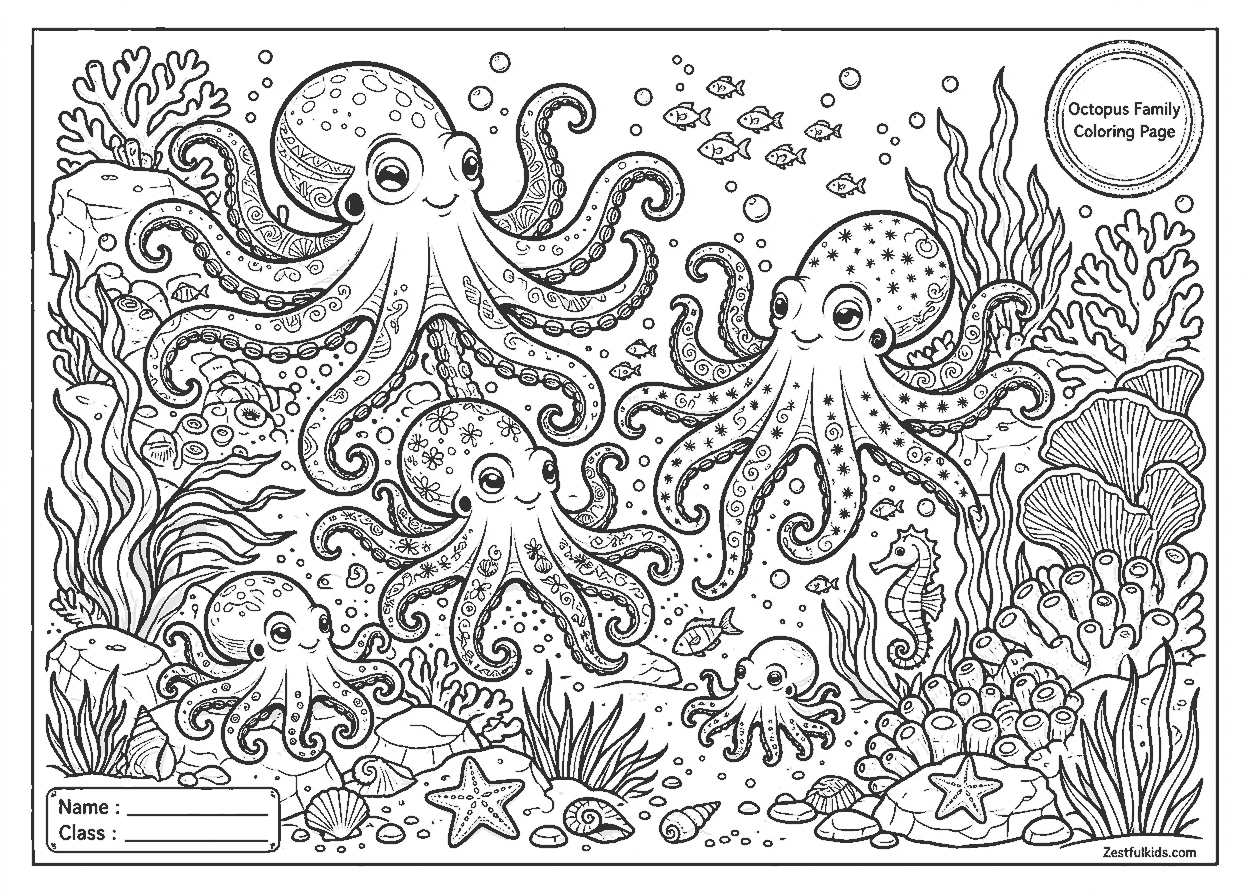
Make the Finished Artwork Special
Once the coloring is complete, children can display their octopus family picture on a wall, place it in a folder of favorite artwork, or share it with family members.
Parents and teachers can invite children to explain their color choices or describe the underwater scene they imagined. Rather than focusing on whether the colors look realistic, encourage them to talk about the details they enjoyed creating.
An Octopus Family Coloring Page offers a simple way to combine creativity and curiosity about marine life. With its distinctive arms, expressive appearance, and imaginative underwater possibilities, the theme gives children plenty of room to make the picture their own.
