Baby Dolphin Coloring Pages bring the charm of young dolphins to children’s art time, offering a playful way to explore ocean life through creative coloring. These printable activities invite children to experiment with ocean colors, imagine underwater adventures, and enjoy the distinctive shapes of these friendly marine mammals.
Discover the Charm of Baby Dolphins Through Coloring
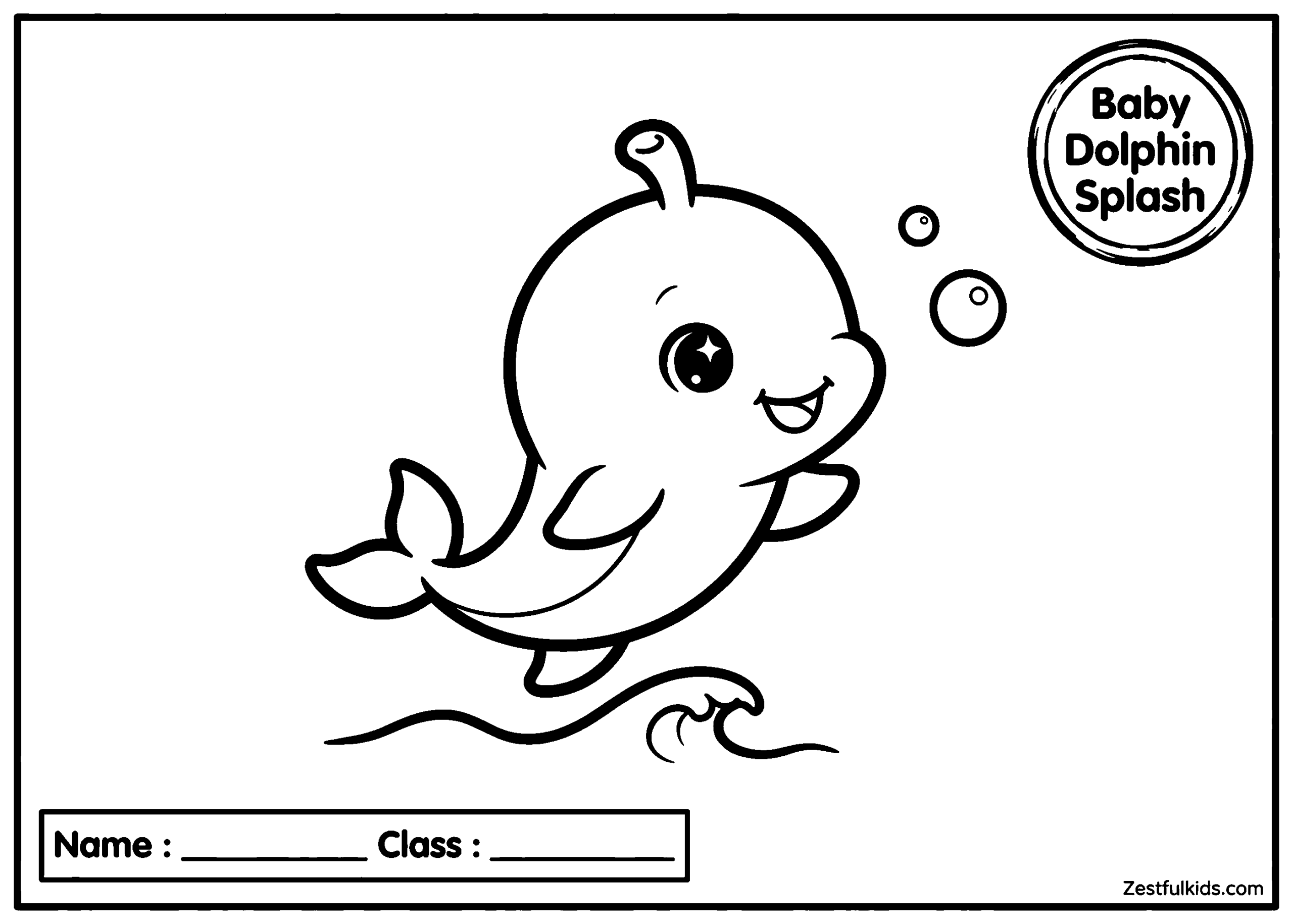
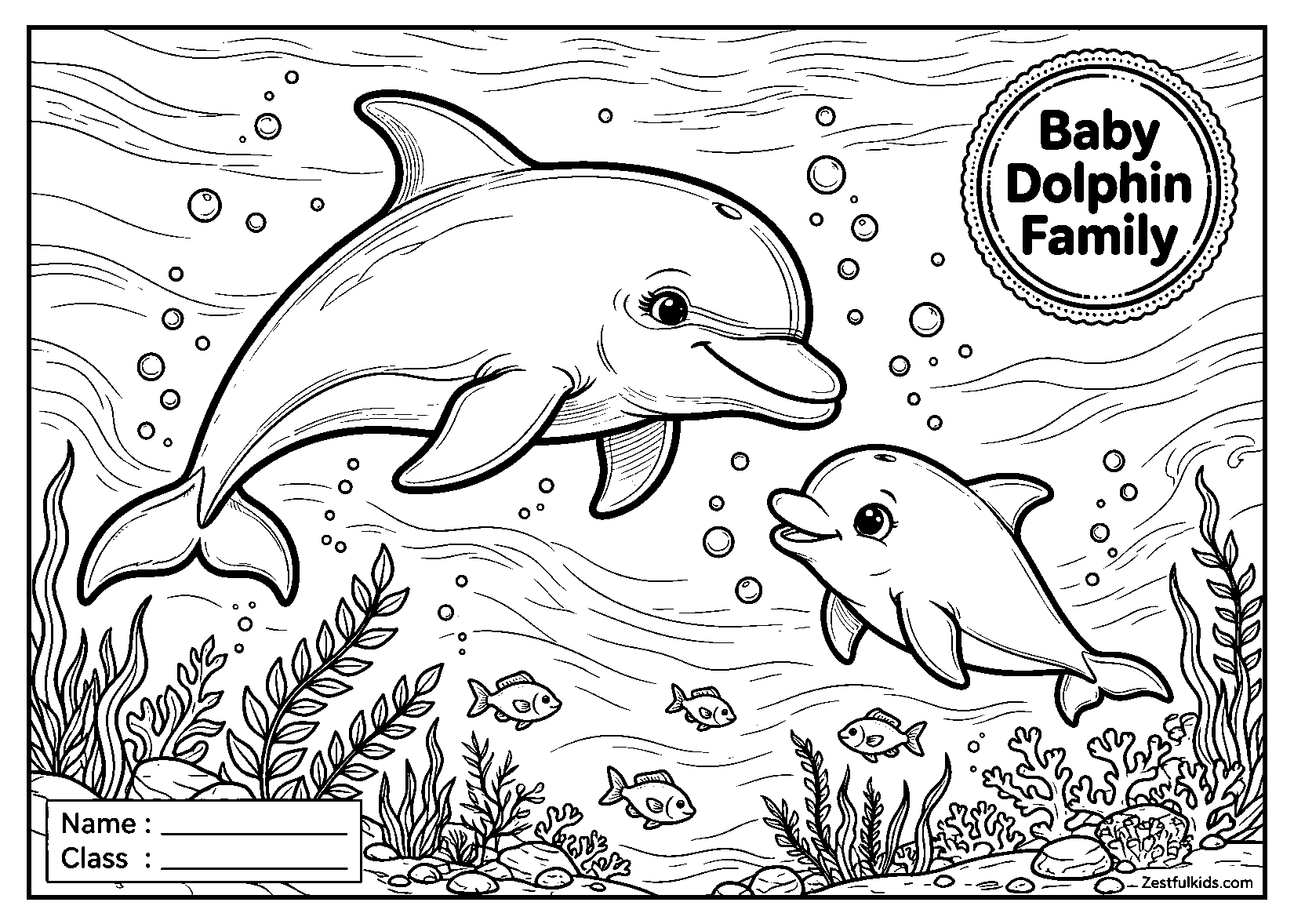
Baby dolphins have a special appeal because of their smooth bodies, rounded foreheads, short snouts, and curved dorsal fins. Their streamlined shapes make them interesting subjects for children who enjoy coloring animals with recognizable features. A young dolphin can be imagined swimming beside its mother, leaping above gentle waves, or exploring a coral reef filled with marine life. These possibilities give children plenty of room to create their own scenes, even when a coloring design contains only a single dolphin.
The natural color of many dolphins ranges from gray to darker shades along the back, with lighter coloring underneath. Children can use these details as a starting point or invent their own ocean-inspired combinations. Pale blue, turquoise, and deep navy can suggest different water environments, while silver-gray or soft charcoal works well for the dolphin’s body. For a more imaginative result, children might choose lavender, mint green, or other playful shades without worrying about matching real-life animals exactly.
Choosing a Baby Dolphin Design for Your Child
The most suitable coloring design depends on a child’s interests, comfort with small details, and preferred way of creating art. Some children enjoy large animal shapes that leave plenty of open space for broad strokes, while others like pictures that invite them to color several elements in one scene. Looking at the available designs before printing can help parents and teachers select an activity that feels enjoyable rather than frustrating.
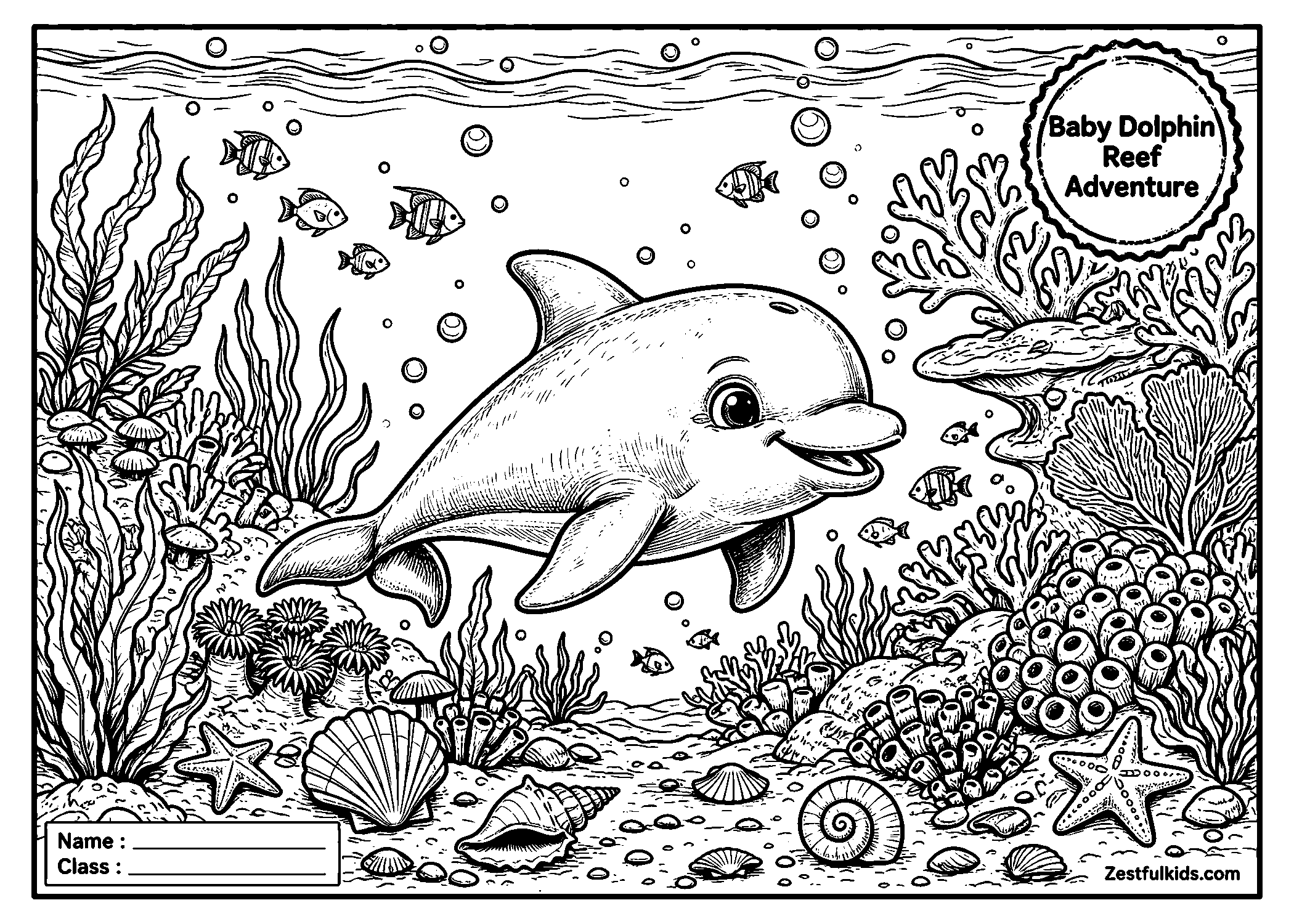
For younger children or beginners, a simple dolphin outline may be the easiest place to start. A clear silhouette allows them to focus on the body, fins, tail, and facial features without navigating too many small spaces. Children who already enjoy detailed coloring may prefer a scene with waves, bubbles, sea plants, or other ocean elements, if those features appear in the chosen illustration. Letting children select a design themselves can also make the activity feel more personal.
Families who want to extend the ocean theme into a wider imaginary world can pair dolphin coloring with other animal-themed activities. For example, children who enjoy mythical creatures may also like exploring dragon illustrations and inventing stories about creatures that live in different environments. Moving between ocean animals and fantasy subjects gives children an opportunity to experiment with different colors, settings, and storytelling ideas.
Creative Color Ideas for an Underwater Scene
A baby dolphin does not need to be colored entirely in gray. The surrounding environment can influence the overall appearance of the picture, helping children create anything from a realistic seascape to a bright underwater fantasy. Before coloring begins, invite children to choose whether their dolphin lives in clear tropical water, a deep blue ocean, or a colorful imaginary sea.
Here are several combinations worth trying:
- Natural ocean look: Use medium gray for the dolphin’s back, light gray for the sides, and a softer shade for the underside.
- Tropical water: Combine turquoise and light blue around the dolphin, adding sandy beige for a visible seabed if the illustration includes one.
- Deep-sea atmosphere: Use darker blues in the background, with lighter blue bubbles to create contrast.
- Fantasy dolphin: Choose pastel pink, purple, or mint green for the body and add contrasting colors to the fins.
- Sunlit ocean: Blend light blue water with pale yellow highlights near the surface, if the picture includes sunlight or open water.
Children can also experiment with different coloring techniques. Colored pencils are useful for adding gentle shading along the dolphin’s curved body, while crayons work well for filling larger areas with solid color. Washable markers can create vivid results, although adults should check that the paper is suitable for the chosen tools. Encourage children to color slowly around the eyes, mouth, fins, and tail so that these distinctive features remain visible.
Turn Coloring Time Into a Small Marine Discovery
Baby dolphin coloring can introduce simple facts about marine mammals without turning a relaxing art activity into a formal lesson. Parents and teachers can explain that dolphins breathe air through a blowhole on top of the head and must return to the surface to breathe. They can also point out that dolphins use sounds to communicate and echolocation to help locate objects and prey in the water. These facts provide natural conversation starters while children work on their pictures.
A useful activity is to ask children to observe the dolphin’s body shape before choosing their colors. They can identify the tail flukes, pectoral fins, dorsal fin, and blowhole when these features are clearly represented in the illustration. Adults should keep explanations appropriate to the child’s age and avoid expecting every anatomical detail to appear in a simplified drawing. The aim is to connect the picture with the real animal while leaving plenty of time for creativity.
Another idea is to invite children to give their dolphin a name and describe where it is swimming. Perhaps the dolphin is following a school of fish, greeting another dolphin, or exploring a quiet bay. Children who enjoy writing can add one or two sentences to accompany their finished artwork, while younger participants can simply tell their story aloud. This small addition combines visual creativity with imaginative expression without requiring a separate worksheet.
Make the Ocean Theme More Interactive
A finished dolphin picture can become the starting point for a broader ocean-themed activity. Children might draw extra waves around the original illustration, add bubbles with a pencil, or create a separate background on another sheet of paper. If the design already contains an elaborate scene, keeping additional decorations minimal may help the baby dolphin remain the main focus. Parents can also display several finished pictures together to create a homemade ocean gallery.
For children who love prehistoric creatures and beach settings, a related activity could feature dinosaurs enjoying a beach picnic. Although dinosaurs and dolphins belong to very different animal groups, both themes can inspire conversations about habitats, landscapes, and the imaginative stories children create around them. A child might even invent a fictional seaside adventure that connects several coloring subjects into one illustrated story.
Teachers can adapt the activity for individual work, small groups, or a classroom art station. One child might focus on coloring the dolphin, another might create an ocean background, and a third might draw fish or sea plants on separate sheets. These pieces can be combined into a collaborative display if the class enjoys working on a shared theme. Clear instructions and freedom to choose colors help keep the activity accessible to children with different artistic preferences.
Simple Printing and Coloring Tips for Better Results
Before printing a selected design, check the preview to ensure that the entire illustration fits within the printable area. Adjust the scaling or margins if necessary, especially when the drawing includes details close to the page edges. The appropriate paper depends on the printer and coloring materials, so ordinary printer paper may be sufficient for crayons and colored pencils, while heavier paper can be useful for some marker-based projects. Always follow the printer’s paper recommendations to avoid feeding problems.
Set up a comfortable workspace with enough room for the paper, coloring supplies, and a place to put finished artwork. Keep a few reference colors nearby if the child wants to imitate a real dolphin, but avoid treating realistic coloring as a strict requirement. Some children may prefer to fill the ocean with bright patterns, while others may carefully shade each part of the animal. Both approaches can produce a satisfying result.
When the picture is complete, invite the child to describe one detail they particularly enjoyed coloring. They might mention the dolphin’s curved tail, the blue water, or a colorful background they invented. This simple conversation gives children a chance to share their creative choices and helps adults understand what makes the activity engaging for them. With an appealing animal subject and plenty of room for individual ideas, Baby Dolphin Coloring Pages can provide an enjoyable addition to family art time, classroom activities, or a quiet afternoon at home.
