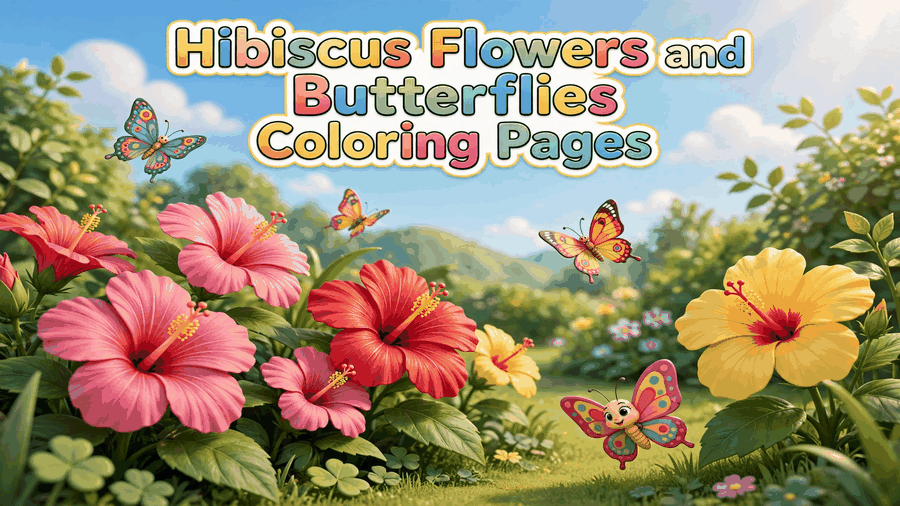
Hibiscus Flowers and Butterflies Coloring Pages invite children to explore a garden full of delicate wings and beautiful blossoms. This printable coloring theme brings together two familiar parts of nature, giving young artists an opportunity to experiment with colors, observe small details, and imagine their own garden scenes.
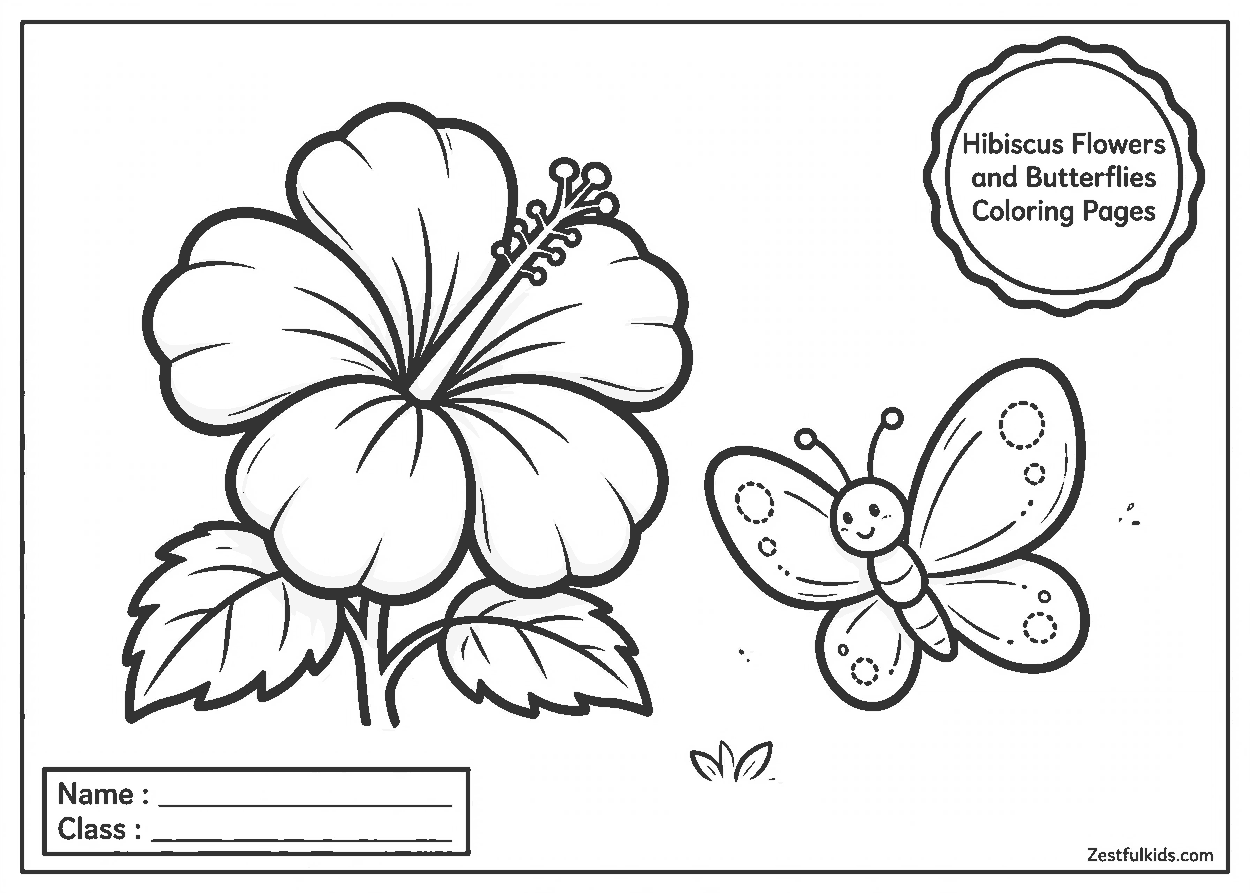
A Garden Scene Full of Color Possibilities
Hibiscus flowers are known for their large petals and distinctive shape. Their open blooms make them an appealing subject for coloring, especially for children who enjoy filling broad spaces with bright shades. Butterflies add a different kind of detail, with their wings, antennae, and delicate bodies creating interesting shapes to explore.
When these two subjects appear together, they offer a natural contrast. The broad petals of a hibiscus flower can be colored with smooth strokes, while butterfly wings invite smaller patterns, contrasting colors, and imaginative designs. Children can approach the picture as a simple coloring activity or spend more time creating a detailed garden scene.
Hibiscus Flowers and Butterflies Coloring Pages also provide a chance to notice how different parts of nature complement one another. A butterfly resting near a flower can inspire a story about a garden visit, a sunny afternoon, or a tiny creature exploring a colorful world.
Choosing Colors for Hibiscus Flowers
Hibiscus flowers come in a variety of colors, including red, pink, yellow, orange, and white. Children can use these natural colors as inspiration or choose completely different shades to create flowers that exist only in their imagination.
For a realistic-looking flower, try using one main color for the petals and a slightly darker shade near the center. This can help create the impression of depth without requiring complicated coloring techniques.
Here are a few combinations to explore:
- Pink and red: A warm combination for a vibrant garden flower.
- Yellow and orange: Bright shades that can suggest a sunny outdoor setting.
- Purple and pink: A playful pairing for a flower with a dreamy appearance.
- Blue and turquoise: Imaginative colors for a hibiscus that belongs in a fantasy garden.
The flower’s center can be colored in a contrasting shade to make it stand out. If the illustration includes a long central structure, children can use a different color to highlight that feature.
Green is a natural choice for leaves and stems, but it does not need to be the only option. Light green, dark green, olive, or even unusual shades can give the garden a distinctive appearance.
Give Every Butterfly Its Own Design
Butterflies are especially enjoyable to color because their wings provide space for different patterns. Some children may prefer to use a single color across both wings, while others might create a different design on each side.
A simple approach is to divide the wings into sections and assign a color to each one. For example, a butterfly could have yellow near the body, orange in the middle, and red along the outer edges. Another might use blue, purple, and pink to create a cool-toned pattern.
Children can also experiment with dots, stripes, and small shapes if the illustration provides suitable spaces. These details should remain optional, allowing children to decide how much decoration they want to add.
Butterfly wings often have similar patterns on the left and right sides. This can inspire a fun coloring challenge: choose matching colors for both wings, then see whether the butterfly looks balanced. Children who prefer imaginative designs can ignore this idea and make each wing different.
Create a Garden That Tells a Story
The combination of flowers and butterflies offers a natural starting point for creative storytelling. After coloring the main subjects, children can imagine what is happening in the garden.
Perhaps a butterfly has just landed on a hibiscus flower. Another butterfly might be flying toward a nearby bloom, while the garden is filled with sunlight and a gentle breeze.
If the illustration leaves space around the main subjects, children may choose to add their own garden details. These could include leaves, grass, small flowers, clouds, or a bright sun. The additions should fit the available space rather than crowding the original picture.
Parents and teachers can encourage children to describe their garden aloud. They might explain which flower the butterfly likes best or invent a name for the garden. Older children may enjoy writing a short caption to accompany their finished artwork.
Simple Coloring Techniques for Young Artists
A few practical techniques can make the coloring session more enjoyable without turning it into a formal art lesson.
Start with the larger areas. Coloring the flower petals and butterfly wings first can help children establish their main color choices before working on smaller details.
Use different shades of the same color. A flower can have light pink petals with darker pink near the center. Butterfly wings can also combine two or three related shades.
Leave room for small details. The flower center, butterfly body, and antennae may require more careful coloring. Colored pencils can be useful for these smaller areas, while crayons work well for larger spaces.
Try a background color. A pale blue or light green background can suggest an outdoor setting. Children may also leave the background white if they prefer the flowers and butterflies to remain the main focus.
There is no need to finish every detail in one sitting. Some children enjoy coloring the flowers first and returning to the butterflies later.
Turn Coloring Time Into a Nature Activity
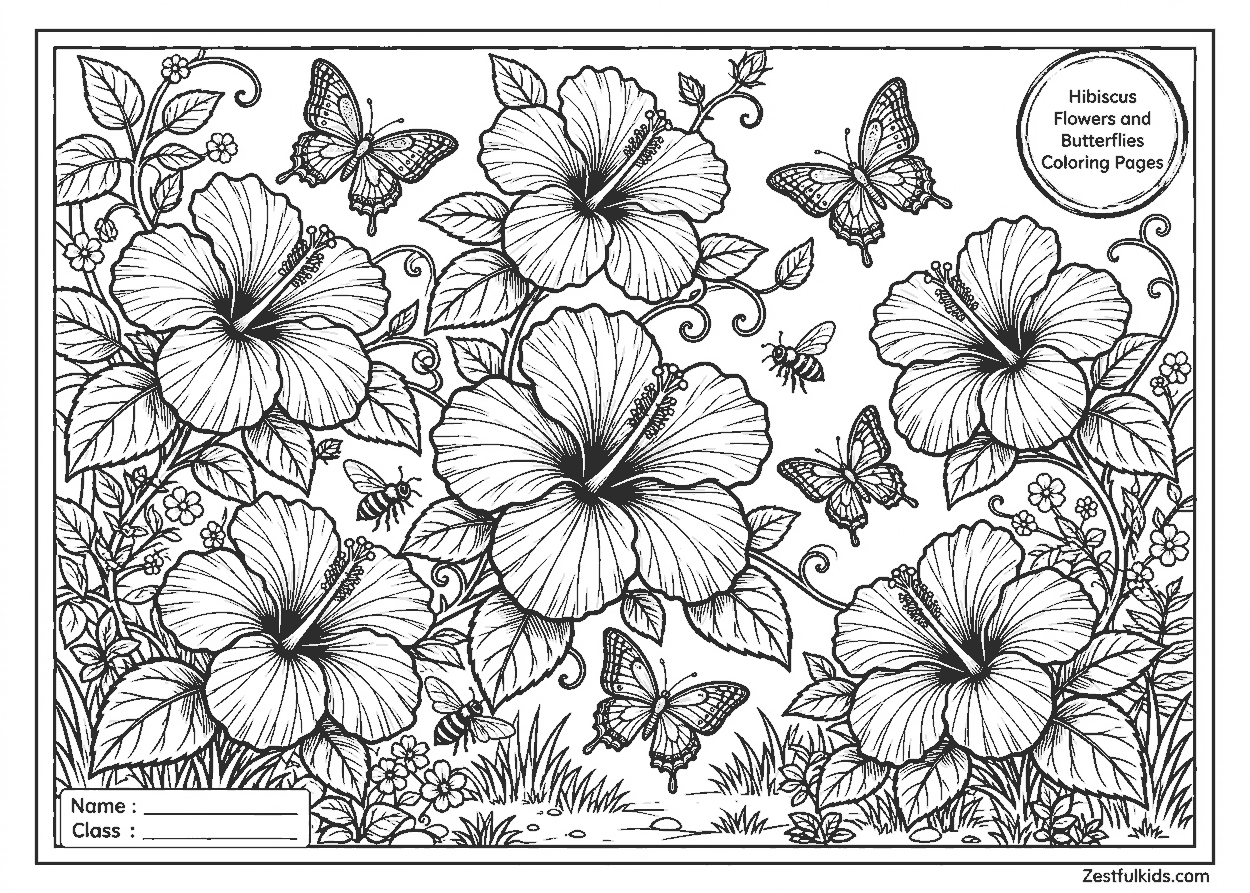
Hibiscus Flowers and Butterflies Coloring Pages can also be used as a starting point for observing nature.
If a hibiscus plant or butterfly is visible nearby, children can compare what they see with the subjects in their coloring page. They may notice differences in flower color, petal shape, or butterfly wing patterns.
For a classroom activity, teachers can invite children to name the colors they used and explain why they chose them. A simple discussion about flowers and butterflies can follow, focusing on what children already know or have observed.
Families can use the printable during a quiet afternoon at home, especially when children want an activity that combines drawing and nature-inspired creativity.
Explore More Creative Coloring Themes
Children who enjoy coloring flowers and butterflies may also appreciate other printable themes that bring imagination and nature together.
For a playful change of subject, Funny Dinosaur Coloring Pages offer a chance to explore prehistoric creatures with a humorous twist. The different shapes and characters provide a new coloring experience while keeping the activity fun and creative.
Children who prefer magical garden adventures may enjoy Fairy Tea Party Coloring Pages. This theme can inspire imaginative stories about tiny guests, garden gatherings, and colorful fantasy settings.
Each printable offers a different starting point for children’s artwork. They can choose a favorite subject, experiment with colors, and build a collection of pictures that reflects their own interests.
Display the Finished Garden Artwork
When the coloring is complete, children may want to show their picture to family members, classmates, or friends. A finished hibiscus and butterfly scene can be displayed on a bedroom wall, placed in an art folder, or shared as part of a classroom collection.
Parents and teachers can ask children to describe their favorite part of the picture. Some may enjoy explaining their butterfly patterns, while others may talk about the colors they chose for the flowers.
The finished artwork does not need to look realistic or follow a particular color scheme. What matters is that children have the freedom to explore the subject and create a garden scene that feels uniquely their own.
