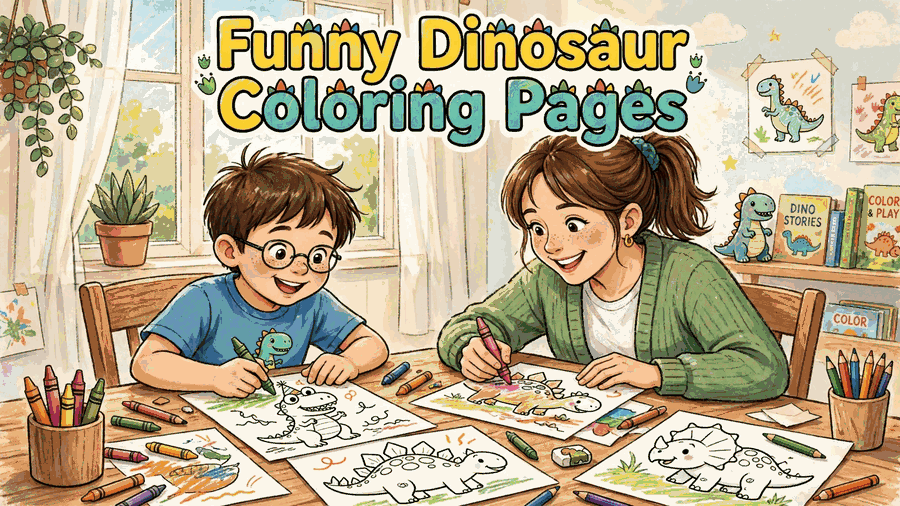
Funny Dinosaur Coloring Pages bring prehistoric creatures to life with playful personalities, amusing expressions, and plenty of room for imagination. Children can turn dinosaurs into colorful characters, invent silly adventures, and create their own prehistoric worlds while enjoying a simple, engaging art activity at home or in the classroom.
When Dinosaurs Become the Stars of a Funny Story
Dinosaurs may have lived millions of years ago, but they remain popular subjects for children’s creative activities. Their distinctive bodies, long tails, sharp teeth, horns, and enormous feet make them easy to recognize and fun to reinterpret. When dinosaurs are presented with humorous expressions or exaggerated features, coloring becomes more than filling in shapes. Each character can inspire a little story about what happened before, during, or after the moment captured in the illustration.
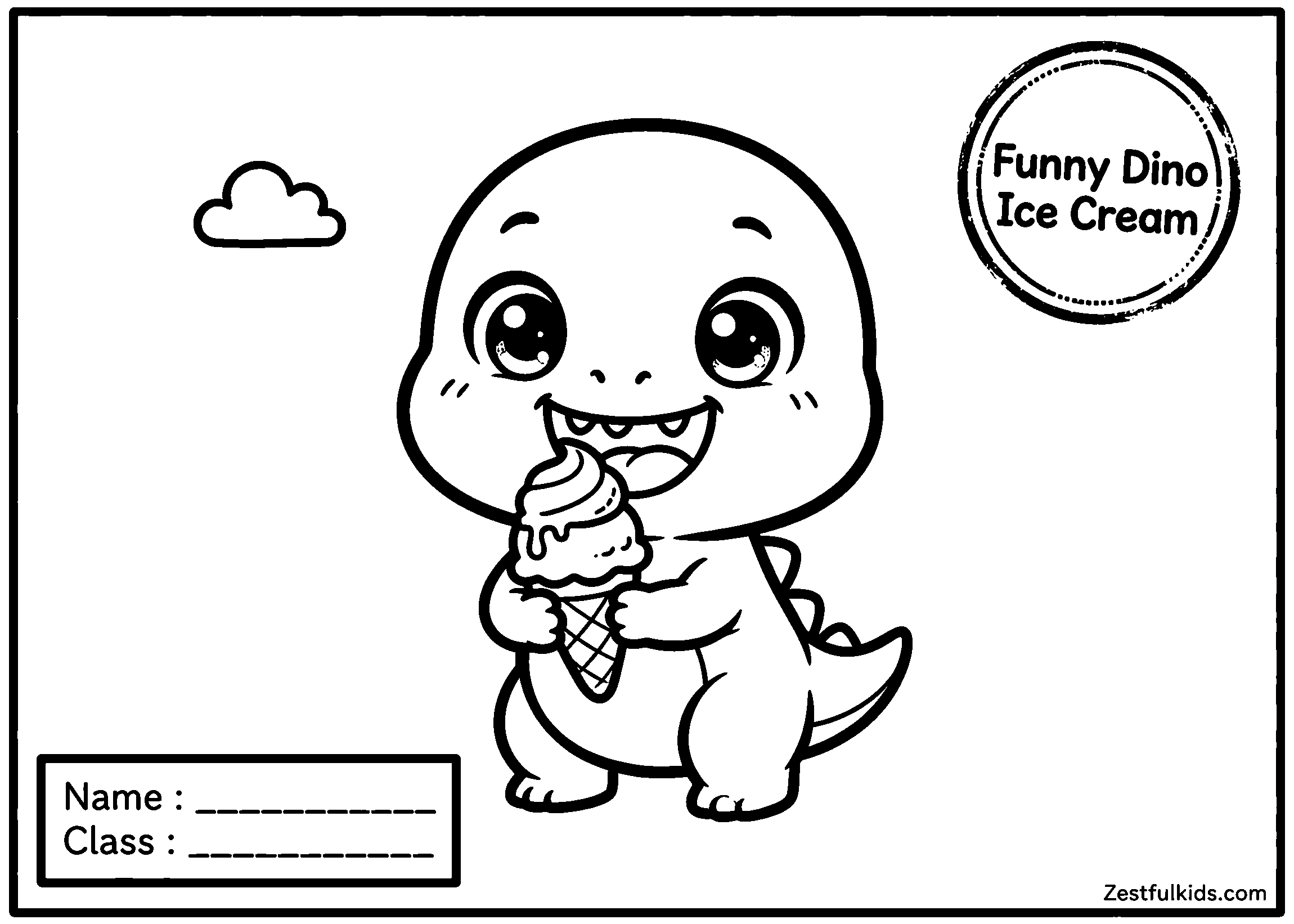
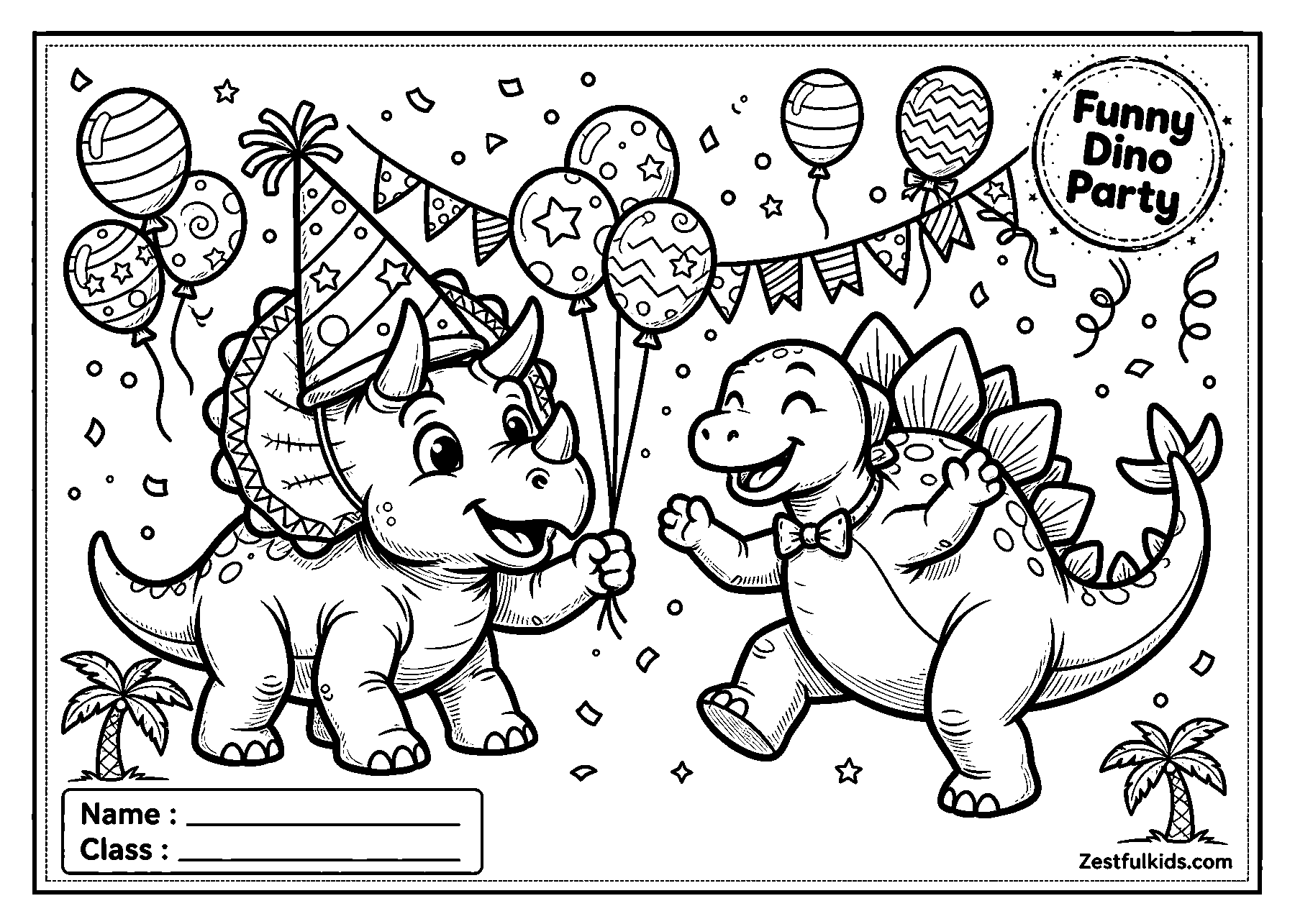
Imagine a T. rex trying to eat an ice cream cone with its tiny arms, a Triceratops wearing an oversized party hat, or a long-necked dinosaur peeking over a garden fence. These are optional ideas children can use when a design leaves room for additional details. They can also invent funny personalities for the dinosaurs already shown in their chosen pictures. One dinosaur might be shy, another might love dancing, and a third might always get into harmless trouble.
The humor makes this theme especially flexible. Children do not need to reproduce realistic dinosaur colors or create a scientifically accurate landscape. A purple dinosaur with orange spots can be just as entertaining as a green one with a brown back. The goal is to enjoy the process of making each prehistoric character feel unique.
Choose Colors That Match Each Dinosaur’s Personality
Instead of assigning every dinosaur the same shade of green, encourage children to think about the personality they imagine for each character. A cheerful dinosaur might have a bright yellow body, while a sleepy-looking creature could use soft blue or lavender. A dinosaur that seems energetic might inspire a combination of red, orange, and green.
Here are a few color ideas to get started:
- The jungle explorer: Combine leafy green, olive, and brown to suggest a dinosaur wandering through prehistoric vegetation.
- The silly party dinosaur: Use pink, turquoise, yellow, and purple for a lively character with a playful appearance.
- The friendly giant: Choose soft blue, mint green, or light gray, with a contrasting color for the belly.
- The fiery T. rex: Blend orange and red across the body, adding darker accents around the feet and tail.
- The spotted dinosaur: Pick a base color and decorate the body with circles, stripes, or irregular patches in contrasting shades.
Children can use crayons for broad areas, colored pencils for smaller details, and washable markers for strong, bright colors. If a dinosaur has plates along its back, horns on its head, or small claws, these features can be colored differently from the rest of the body to make them stand out.
There is no need to finish the entire picture in one sitting. Some children may prefer to color the dinosaur first and return to the background later. Others may start with the scenery and choose the dinosaur’s colors after deciding whether the setting will be a jungle, beach, or imaginary landscape.
Give Every Dinosaur a Comical Personality
Funny dinosaur illustrations are excellent starting points for short storytelling games. Once a child has selected a color palette, invite them to give the dinosaur a name and imagine what makes it funny. Perhaps a small dinosaur is convinced that it is the biggest creature in the forest, or a towering dinosaur is frightened by a tiny butterfly. These simple situations can turn an ordinary coloring session into an imaginative activity.
Parents and teachers can use a few gentle prompts to encourage storytelling:
- What is your dinosaur trying to do?
- What is the funniest thing that could happen next?
- Which food would your dinosaur love to eat?
- What would make your dinosaur laugh?
- If your dinosaur had a best friend, what kind of creature would it be?
Children can answer verbally, draw an extra object beside the character, or write a short caption under the finished picture. Younger children may enjoy making up a story together with an adult, while older children can create a series of pictures showing the beginning, middle, and end of one amusing adventure.
It is also helpful to let children decide what counts as funny. Some will focus on unusual colors, while others will invent elaborate situations involving dinosaurs that dance, cook, or play sports. Giving them the freedom to interpret the character keeps the activity personal rather than turning it into a task with one correct result.
Add a Prehistoric Setting Without Overcrowding the Picture
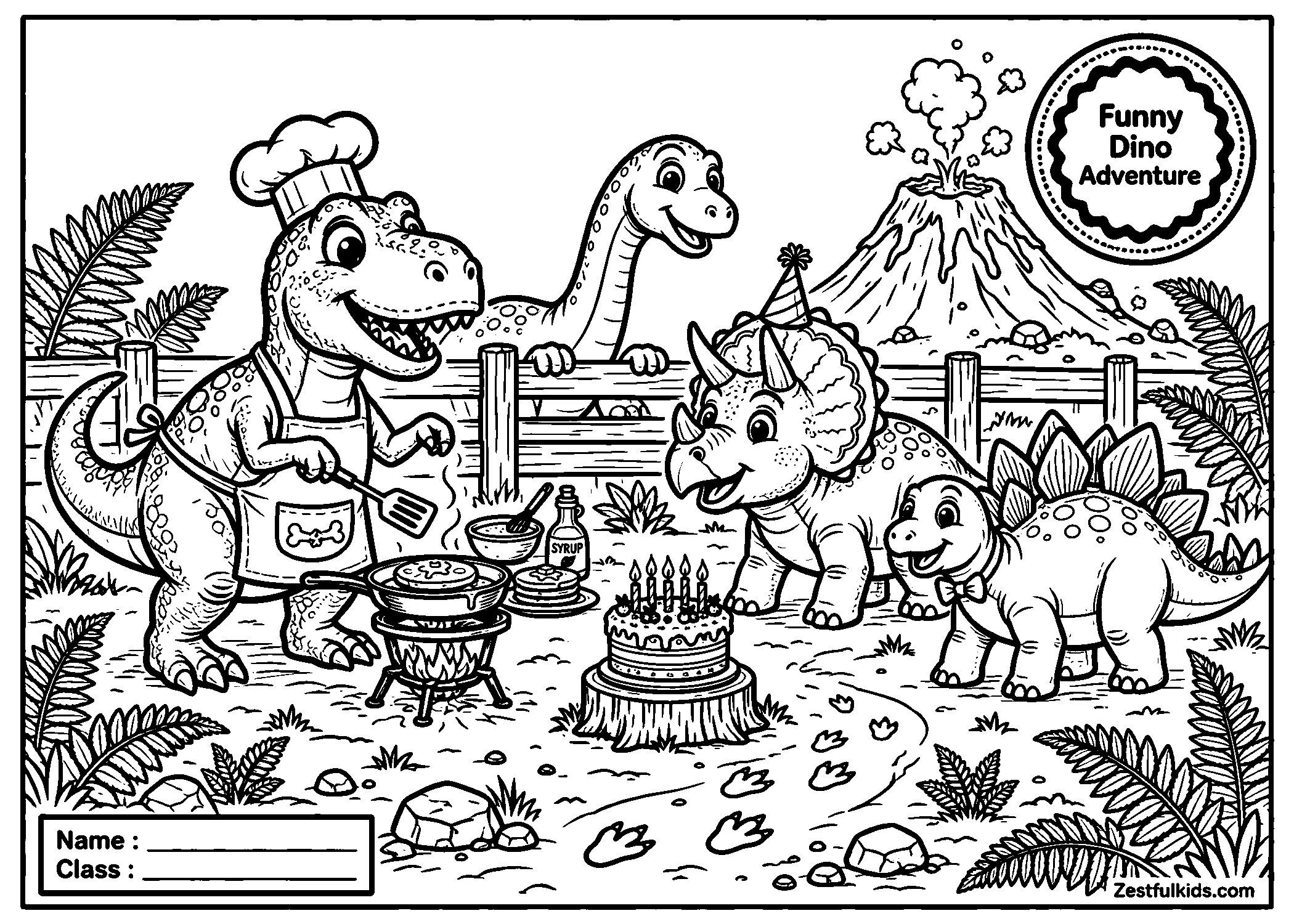
A dinosaur can be the main attraction even when the background is simple. If the chosen illustration includes open space, children might add a volcano in the distance, large ferns, palm-like plants, rocks, clouds, or footprints in the ground. A few details can suggest a prehistoric setting without making the page too complicated to color.
For a humorous twist, children could draw a dinosaur-sized birthday cake, a tiny pond that the dinosaur is trying to drink from, or a tree that seems much too small for its visitor. These additions are optional drawing ideas rather than features that should be expected in every illustration. If the original design already contains several characters and background details, leaving some areas uncluttered can help the main dinosaur remain easy to see.
Color can also help establish the scene. Different shades of green can suggest dense vegetation, while sandy yellow and orange can create a dry landscape. Blue skies and light green plants make a bright setting, whereas darker greens and purples can give an imaginary dinosaur world a more mysterious appearance.
Children who enjoy ocean-themed art may also find inspiration in the idea that there is no single correct way to color an imaginary scene. The article Your Child Colored the Ocean Red? That’s Not a Mistake offers a related perspective on creative color choices. The same principle applies to dinosaurs: a child’s unusual combination may be an intentional artistic decision rather than an error that needs correcting.
Combine Coloring With Simple Dinosaur Learning
Although funny dinosaurs are primarily entertaining characters, they can also introduce children to a few basic facts about prehistoric life. Adults can explain that different dinosaurs had different body shapes, diets, and ways of moving. For example, Triceratops had three prominent facial horns and a large frill, while Stegosaurus had distinctive plates along its back and spikes on its tail. Tyrannosaurus rex had a large head, powerful hind legs, and very short forelimbs.
These observations can be discussed while children color, without requiring them to memorize scientific terms. If a picture is deliberately cartoonish, explain that artists often exaggerate features to make characters funny or expressive. This distinction allows children to enjoy imaginative designs while learning that real dinosaurs were animals with different physical characteristics.
Counting can provide another small activity. Children might count the dinosaurs in a picture, tally the spots they have added, or count the plates along a dinosaur’s back when the illustration shows them clearly. For a separate number-based activity, try this dinosaur counting worksheet. Pairing coloring with a simple counting task can help create a themed activity session without making every art project feel like a formal lesson.
Make Coloring Time Easy for Families and Classrooms
Before printing a selected design, check the print preview to confirm that the illustration fits within the printable area. Adjust the scale or margins if necessary, especially when the drawing extends close to the edges. Ordinary printer paper is generally suitable for crayons and colored pencils, while heavier paper may be more practical for certain markers. The best choice depends on the printer and the materials being used.
Set out a manageable selection of coloring tools rather than every available color. A few greens, browns, blues, and bright accent colors can provide a useful starting point, while additional shades can be introduced when children want them. For group activities, let each child choose a different dinosaur or create a different color scheme so that the finished pictures feel individual.
Once the dinosaurs are colored, children can give their artwork a title such as The T. Rex Who Loved Pancakes or The Day the Dinosaurs Learned to Dance. They can display the pictures on a wall, arrange them into a homemade prehistoric gallery, or combine several drawings into a short illustrated story.
With their recognizable shapes, humorous possibilities, and endless color combinations, Funny Dinosaur Coloring Pages offer an enjoyable way for children to bring prehistoric characters into their own imaginative worlds. Whether the result is a carefully shaded dinosaur or a bright purple creature with rainbow spots, each finished picture can reflect the child’s unique sense of fun.
