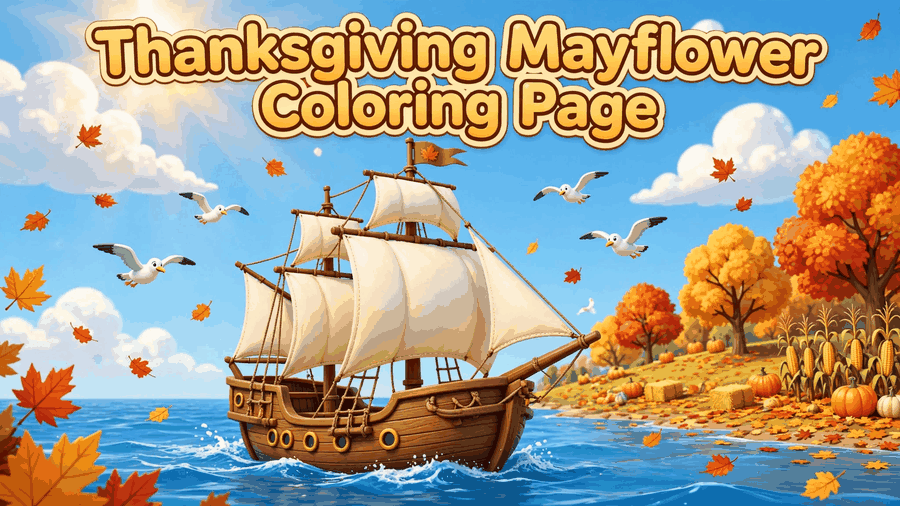
Thanksgiving Mayflower Coloring Page introduces children to the famous ship associated with the early history of Thanksgiving in America. Through coloring, young artists can explore an important historical journey, discover details of an old sailing vessel, and imagine life aboard a ship crossing the Atlantic Ocean.
Discover the Story Behind the Mayflower
The Mayflower was an English sailing ship that carried a group of English settlers across the Atlantic Ocean in 1620. The passengers, commonly known as the Pilgrims, traveled to North America in search of a place to establish a new community. Their journey was long and challenging, taking approximately 66 days before the ship reached the region near Cape Cod. This historic voyage is one of the stories often introduced when children learn about the origins of Thanksgiving in the United States.
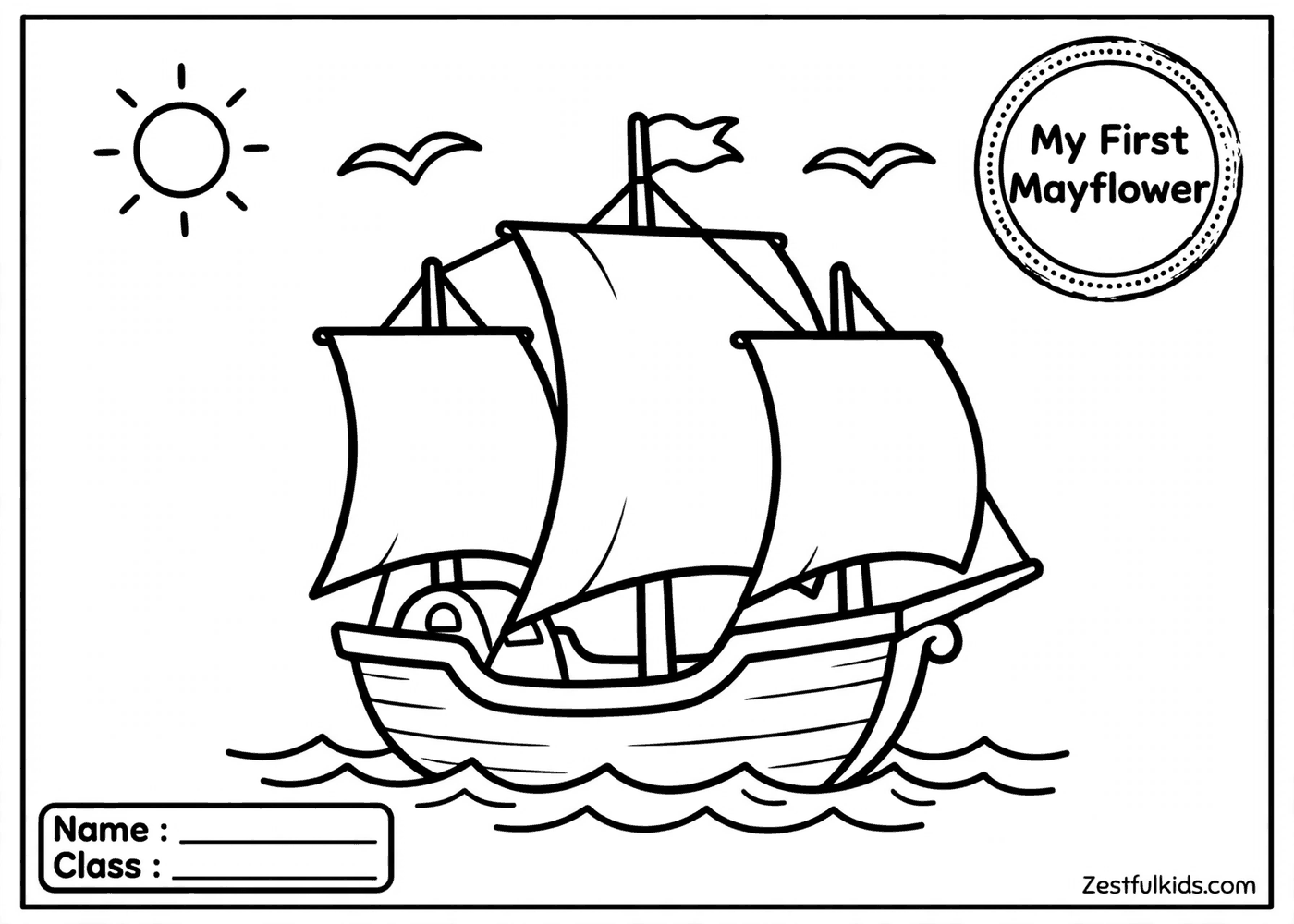
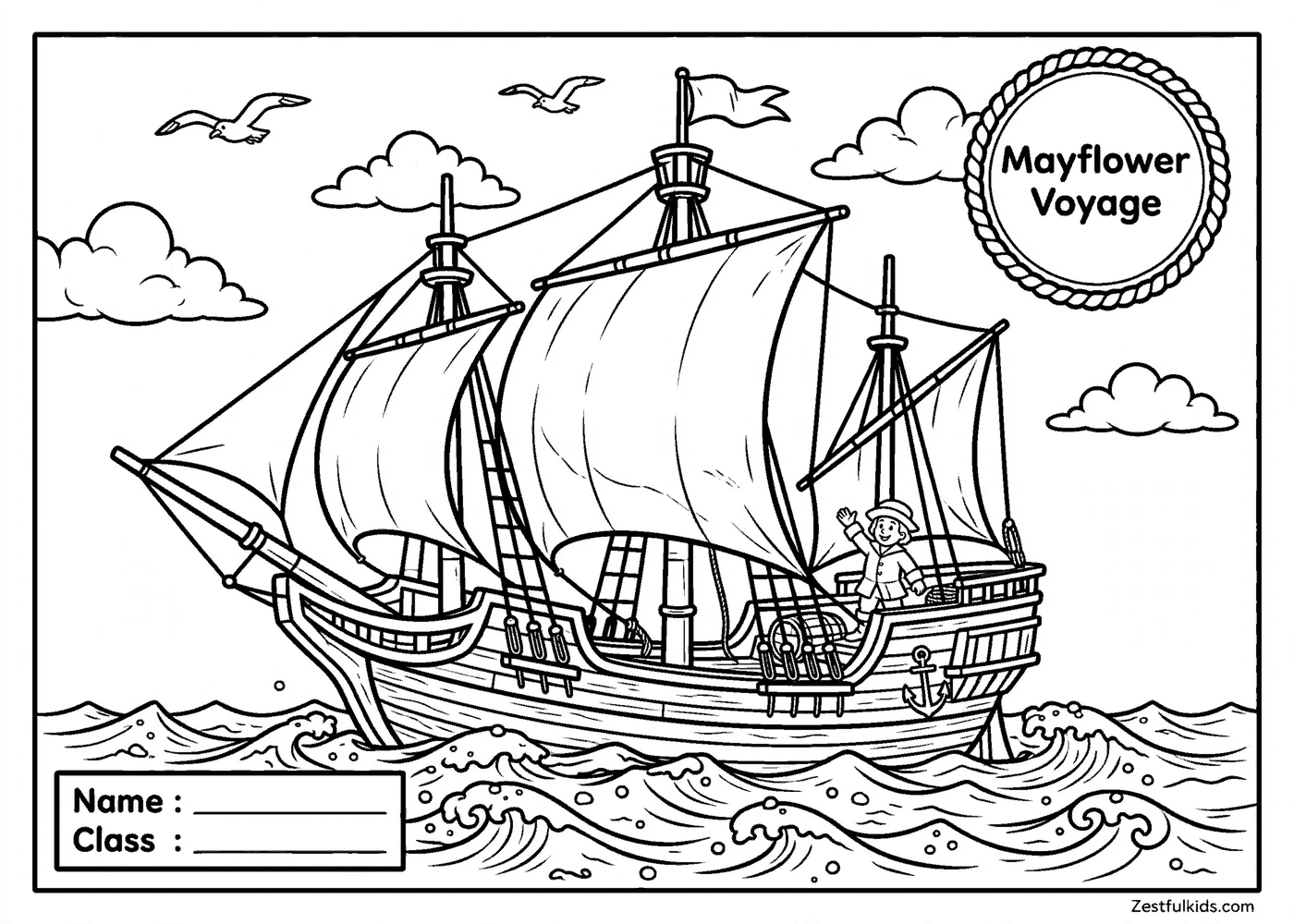
The Mayflower is an interesting subject for a coloring activity because its traditional sailing-ship design has several recognizable features. Its large sails, tall masts, wooden hull, and rigging offer different sections for children to decorate. The ship can be imagined moving across wide ocean waters with its sails catching the wind. Even a simple illustration of the vessel can inspire children to think about what an Atlantic crossing might have looked like centuries ago.
Parents and teachers can introduce the historical background before children begin coloring. A short explanation about the ship, its passengers, and their destination provides useful context without making the activity feel like a formal history lesson. Children can then use their imagination to picture the people aboard and the unfamiliar surroundings they encountered during their voyage.
Bring an Old Sailing Ship to Life With Color
Traditional sailing ships have a different appearance from modern boats. Instead of engines and metal structures, the Mayflower relied on sails and wind to travel across the ocean. Its wooden construction makes brown, tan, and dark beige natural choices for coloring the hull. Children can also experiment with different shades to create the appearance of wooden boards.
The sails offer another opportunity to explore color combinations. They can be left white or colored in soft cream, light gray, or pale beige to suggest the appearance of fabric. The masts and ropes can use brown or dark gray, while the ocean surrounding the ship can be filled with several shades of blue.
Here are some practical coloring suggestions:
- Wooden hull: Combine dark brown, medium brown, and tan to create a traditional wooden appearance.
- Large sails: Use cream, ivory, or light gray for a simple historical look.
- Masts and ropes: Choose brown or dark gray to distinguish these structural details.
- Ocean water: Mix light blue, turquoise, and deeper blue to create waves.
- Sky: Use pale blue with white clouds for a peaceful sailing atmosphere.
- Sunlight: Add soft yellow or orange if there is enough open space in the illustration.
Colored pencils are particularly useful for the ship’s smaller details, such as ropes and wooden sections. Crayons can cover larger areas like the ocean and sky, while markers can create stronger contrasts. Children can choose realistic colors or invent their own decorative ship design.
Understanding the Mayflower’s Journey Through Simple Details
The Mayflower’s voyage provides an interesting connection between coloring and historical exploration. In September 1620, the ship departed from Plymouth, England, carrying passengers and crew across the Atlantic. After arriving near Cape Cod in November, the passengers eventually established a settlement at Plymouth in present-day Massachusetts. The journey is remembered as an important event in early American colonial history.
Children do not need to remember every date or historical detail to enjoy the illustration. Instead, adults can focus on a few simple facts that help explain why the ship is significant. For example, they can point out that people traveled by sailing ships before modern passenger vessels and airplanes existed. Crossing the ocean required patience, preparation, and knowledge of wind and navigation.
It is also helpful to explain that the history surrounding the Mayflower and Thanksgiving is more complex than a single voyage. The Wampanoag people were already living in the region long before the English settlers arrived. Their knowledge of the land played an important role in the early interactions between the communities. A thoughtful, age-appropriate introduction can help children understand that history involves different groups of people and perspectives.
Imagine Life Aboard a Seventeenth-Century Ship
A voyage across the Atlantic during the seventeenth century was very different from traveling today. Passengers spent weeks aboard a relatively crowded wooden vessel, sharing limited living space and dealing with changing weather conditions. The ocean could become rough, and strong winds could make sailing difficult. These details offer an opportunity to imagine what daily life might have been like aboard the Mayflower.
After coloring the ship, children can create their own imaginary voyage story. They might picture a passenger looking out toward the horizon, a sailor adjusting the sails, or someone watching waves move around the wooden hull. If the illustration leaves room for extra drawings, they can add seagulls, clouds, distant land, or small ocean waves.
Parents can encourage children to describe what they would bring if they were traveling on an old sailing ship. They might mention food, warm clothing, blankets, or a favorite book. This simple conversation connects the historical subject with everyday objects children recognize.
For classroom activities, teachers can invite students to compare the Mayflower with a modern ship. They can discuss differences in transportation, navigation, and the way people travel across oceans today. The comparison can be kept simple, using the coloring illustration as a visual starting point.
Add More Imaginative Themes to Your Coloring Collection
Children who enjoy historical ships and imaginative journeys may also appreciate coloring subjects that explore different worlds. A varied collection can include prehistoric creatures, outdoor landscapes, transportation, and seasonal activities.
For young dinosaur enthusiasts, a baby dinosaur taking a nap offers a completely different subject. Instead of a historical sailing vessel, children can explore a playful prehistoric theme featuring a little dinosaur. They can experiment with soft colors, imagined surroundings, and creative details while enjoying another animal-inspired activity.
A summer lake scene provides another interesting change of atmosphere. Children can explore water, sunny skies, and outdoor scenery through a seasonal theme. It can also complement the Mayflower activity by introducing another setting connected to water, although the two subjects represent very different experiences.
Make the Coloring Activity Part of a Thanksgiving Learning Day
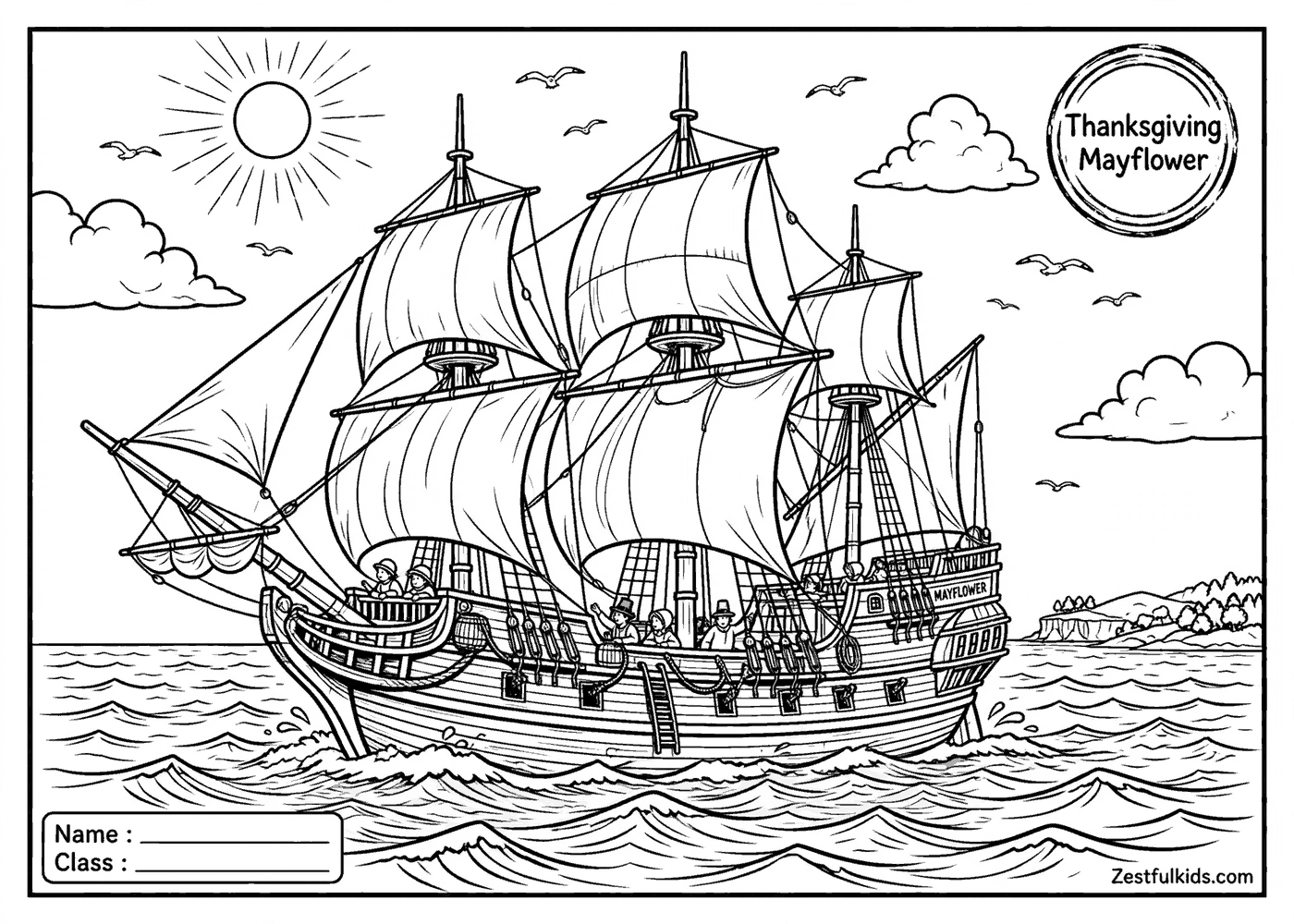
The Mayflower theme can fit naturally into a Thanksgiving activity at home or in the classroom. Parents can introduce the ship during a family discussion about Thanksgiving traditions and the historical events associated with the holiday. Teachers may include the illustration in a broader lesson about early American history, sailing ships, or historical transportation.
A simple activity is to ask children to give their finished ship a name and describe where they imagine it is sailing. They can also draw an ocean background on a separate sheet of paper and add their own details. Older children may enjoy writing a few sentences about an imaginary journey across the Atlantic.
Before printing, check the preview to make sure the complete illustration fits within the printable area. Prepare crayons, colored pencils, or markers according to the children’s preferences, and provide a comfortable surface for working. If markers are being used, an extra sheet underneath the paper can help protect the table.
There is no single correct way to color a historic sailing ship. Some children may prefer traditional wooden shades and pale sails, while others may choose bright colors for a more imaginative appearance. What matters is giving them room to explore the subject, ask questions, and create their own interpretation of the Mayflower’s famous voyage.
